Kinetic Energy - AP Physics C: Electricity and Magnetism
Card 0 of 44
A train car with a mass of 2400 kg starts from rest at the top of a 150 meter-high hill. What will its velocity be when it reaches the bottom of the hill, assuming that the bottom of the hill is the reference level.
A train car with a mass of 2400 kg starts from rest at the top of a 150 meter-high hill. What will its velocity be when it reaches the bottom of the hill, assuming that the bottom of the hill is the reference level.
Tap to see back →
The law of conservation of energy states:

If the car starts at rest, then the initial kinetic energy = 0 J.
If the car ends at the reference height, the final potential energy = 0 J.
Subsituting these values, the equation becomes:

The initial potential energy can be determined by:
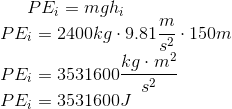
The final kinetic energy equation is:
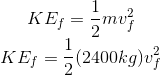
Substituting the initial potential energy and final kinetic energy into our modified conservation of energy equation, we get:
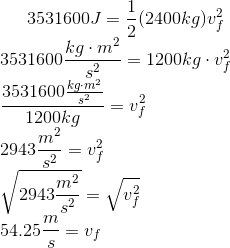
The law of conservation of energy states:
If the car starts at rest, then the initial kinetic energy = 0 J.
If the car ends at the reference height, the final potential energy = 0 J.
Subsituting these values, the equation becomes:
The initial potential energy can be determined by:
The final kinetic energy equation is:
Substituting the initial potential energy and final kinetic energy into our modified conservation of energy equation, we get:
A 120kg box has a kinetic energy of 2300J. What is its velocity?
A 120kg box has a kinetic energy of 2300J. What is its velocity?
Tap to see back →
The formula for kinetic energy of an object is:

The problem gives us the mass and the kinetic energy, and asks for the velocity, so we can rearrange the equation:

Use our given values for kinetic energy and mass to solve:
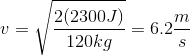
The formula for kinetic energy of an object is:
The problem gives us the mass and the kinetic energy, and asks for the velocity, so we can rearrange the equation:
Use our given values for kinetic energy and mass to solve:
An object has a mass of 5kg and has a position described by the given function:

What is the object's kinetic energy after two seconds?
An object has a mass of 5kg and has a position described by the given function:
What is the object's kinetic energy after two seconds?
Tap to see back →
Kinetic energy is defined by the equation:

Taking the derivative of the position function allows us to obtain the velocity function:

We can now determine the velocity after two seconds:

Now that we know our velocity, we can solve for the kinetic energy.

Kinetic energy is defined by the equation:
Taking the derivative of the position function allows us to obtain the velocity function:
We can now determine the velocity after two seconds:
Now that we know our velocity, we can solve for the kinetic energy.
An object starts from rest and accelerates at a rate of  . If the object has a mass of 10kg, what is its kinetic energy after three seconds?
An object starts from rest and accelerates at a rate of
Tap to see back →
Kinetic energy is given by the equation:

We can find the velocity using the given acceleration and time:


Use this velocity to find the kinetic energy after three seconds:

Kinetic energy is given by the equation:
We can find the velocity using the given acceleration and time:
Use this velocity to find the kinetic energy after three seconds:
A train car with a mass of 2400 kg starts from rest at the top of a 150 meter-high hill. What will its velocity be when it reaches the bottom of the hill, assuming that the bottom of the hill is the reference level.
A train car with a mass of 2400 kg starts from rest at the top of a 150 meter-high hill. What will its velocity be when it reaches the bottom of the hill, assuming that the bottom of the hill is the reference level.
Tap to see back →
The law of conservation of energy states:
If the car starts at rest, then the initial kinetic energy = 0 J.
If the car ends at the reference height, the final potential energy = 0 J.
Subsituting these values, the equation becomes:
The initial potential energy can be determined by:
The final kinetic energy equation is:
Substituting the initial potential energy and final kinetic energy into our modified conservation of energy equation, we get:
The law of conservation of energy states:
If the car starts at rest, then the initial kinetic energy = 0 J.
If the car ends at the reference height, the final potential energy = 0 J.
Subsituting these values, the equation becomes:
The initial potential energy can be determined by:
The final kinetic energy equation is:
Substituting the initial potential energy and final kinetic energy into our modified conservation of energy equation, we get:
A 120kg box has a kinetic energy of 2300J. What is its velocity?
A 120kg box has a kinetic energy of 2300J. What is its velocity?
Tap to see back →
The formula for kinetic energy of an object is:
The problem gives us the mass and the kinetic energy, and asks for the velocity, so we can rearrange the equation:
Use our given values for kinetic energy and mass to solve:
The formula for kinetic energy of an object is:
The problem gives us the mass and the kinetic energy, and asks for the velocity, so we can rearrange the equation:
Use our given values for kinetic energy and mass to solve:
An object has a mass of 5kg and has a position described by the given function:
What is the object's kinetic energy after two seconds?
An object has a mass of 5kg and has a position described by the given function:
What is the object's kinetic energy after two seconds?
Tap to see back →
Kinetic energy is defined by the equation:
Taking the derivative of the position function allows us to obtain the velocity function:
We can now determine the velocity after two seconds:
Now that we know our velocity, we can solve for the kinetic energy.
Kinetic energy is defined by the equation:
Taking the derivative of the position function allows us to obtain the velocity function:
We can now determine the velocity after two seconds:
Now that we know our velocity, we can solve for the kinetic energy.
An object starts from rest and accelerates at a rate of . If the object has a mass of 10kg, what is its kinetic energy after three seconds?
An object starts from rest and accelerates at a rate of
Tap to see back →
Kinetic energy is given by the equation:
We can find the velocity using the given acceleration and time:
Use this velocity to find the kinetic energy after three seconds:
Kinetic energy is given by the equation:
We can find the velocity using the given acceleration and time:
Use this velocity to find the kinetic energy after three seconds:
A train car with a mass of 2400 kg starts from rest at the top of a 150 meter-high hill. What will its velocity be when it reaches the bottom of the hill, assuming that the bottom of the hill is the reference level.
A train car with a mass of 2400 kg starts from rest at the top of a 150 meter-high hill. What will its velocity be when it reaches the bottom of the hill, assuming that the bottom of the hill is the reference level.
Tap to see back →
The law of conservation of energy states:
If the car starts at rest, then the initial kinetic energy = 0 J.
If the car ends at the reference height, the final potential energy = 0 J.
Subsituting these values, the equation becomes:
The initial potential energy can be determined by:
The final kinetic energy equation is:
Substituting the initial potential energy and final kinetic energy into our modified conservation of energy equation, we get:
The law of conservation of energy states:
If the car starts at rest, then the initial kinetic energy = 0 J.
If the car ends at the reference height, the final potential energy = 0 J.
Subsituting these values, the equation becomes:
The initial potential energy can be determined by:
The final kinetic energy equation is:
Substituting the initial potential energy and final kinetic energy into our modified conservation of energy equation, we get:
A 120kg box has a kinetic energy of 2300J. What is its velocity?
A 120kg box has a kinetic energy of 2300J. What is its velocity?
Tap to see back →
The formula for kinetic energy of an object is:
The problem gives us the mass and the kinetic energy, and asks for the velocity, so we can rearrange the equation:
Use our given values for kinetic energy and mass to solve:
The formula for kinetic energy of an object is:
The problem gives us the mass and the kinetic energy, and asks for the velocity, so we can rearrange the equation:
Use our given values for kinetic energy and mass to solve:
An object has a mass of 5kg and has a position described by the given function:
What is the object's kinetic energy after two seconds?
An object has a mass of 5kg and has a position described by the given function:
What is the object's kinetic energy after two seconds?
Tap to see back →
Kinetic energy is defined by the equation:
Taking the derivative of the position function allows us to obtain the velocity function:
We can now determine the velocity after two seconds:
Now that we know our velocity, we can solve for the kinetic energy.
Kinetic energy is defined by the equation:
Taking the derivative of the position function allows us to obtain the velocity function:
We can now determine the velocity after two seconds:
Now that we know our velocity, we can solve for the kinetic energy.
An object starts from rest and accelerates at a rate of . If the object has a mass of 10kg, what is its kinetic energy after three seconds?
An object starts from rest and accelerates at a rate of
Tap to see back →
Kinetic energy is given by the equation:
We can find the velocity using the given acceleration and time:
Use this velocity to find the kinetic energy after three seconds:
Kinetic energy is given by the equation:
We can find the velocity using the given acceleration and time:
Use this velocity to find the kinetic energy after three seconds:
A train car with a mass of 2400 kg starts from rest at the top of a 150 meter-high hill. What will its velocity be when it reaches the bottom of the hill, assuming that the bottom of the hill is the reference level.
A train car with a mass of 2400 kg starts from rest at the top of a 150 meter-high hill. What will its velocity be when it reaches the bottom of the hill, assuming that the bottom of the hill is the reference level.
Tap to see back →
The law of conservation of energy states:
If the car starts at rest, then the initial kinetic energy = 0 J.
If the car ends at the reference height, the final potential energy = 0 J.
Subsituting these values, the equation becomes:
The initial potential energy can be determined by:
The final kinetic energy equation is:
Substituting the initial potential energy and final kinetic energy into our modified conservation of energy equation, we get:
The law of conservation of energy states:
If the car starts at rest, then the initial kinetic energy = 0 J.
If the car ends at the reference height, the final potential energy = 0 J.
Subsituting these values, the equation becomes:
The initial potential energy can be determined by:
The final kinetic energy equation is:
Substituting the initial potential energy and final kinetic energy into our modified conservation of energy equation, we get:
A 120kg box has a kinetic energy of 2300J. What is its velocity?
A 120kg box has a kinetic energy of 2300J. What is its velocity?
Tap to see back →
The formula for kinetic energy of an object is:
The problem gives us the mass and the kinetic energy, and asks for the velocity, so we can rearrange the equation:
Use our given values for kinetic energy and mass to solve:
The formula for kinetic energy of an object is:
The problem gives us the mass and the kinetic energy, and asks for the velocity, so we can rearrange the equation:
Use our given values for kinetic energy and mass to solve:
An object has a mass of 5kg and has a position described by the given function:
What is the object's kinetic energy after two seconds?
An object has a mass of 5kg and has a position described by the given function:
What is the object's kinetic energy after two seconds?
Tap to see back →
Kinetic energy is defined by the equation:
Taking the derivative of the position function allows us to obtain the velocity function:
We can now determine the velocity after two seconds:
Now that we know our velocity, we can solve for the kinetic energy.
Kinetic energy is defined by the equation:
Taking the derivative of the position function allows us to obtain the velocity function:
We can now determine the velocity after two seconds:
Now that we know our velocity, we can solve for the kinetic energy.
An object starts from rest and accelerates at a rate of . If the object has a mass of 10kg, what is its kinetic energy after three seconds?
An object starts from rest and accelerates at a rate of
Tap to see back →
Kinetic energy is given by the equation:
We can find the velocity using the given acceleration and time:
Use this velocity to find the kinetic energy after three seconds:
Kinetic energy is given by the equation:
We can find the velocity using the given acceleration and time:
Use this velocity to find the kinetic energy after three seconds:
A train car with a mass of 2400 kg starts from rest at the top of a 150 meter-high hill. What will its velocity be when it reaches the bottom of the hill, assuming that the bottom of the hill is the reference level.
A train car with a mass of 2400 kg starts from rest at the top of a 150 meter-high hill. What will its velocity be when it reaches the bottom of the hill, assuming that the bottom of the hill is the reference level.
Tap to see back →
The law of conservation of energy states:
If the car starts at rest, then the initial kinetic energy = 0 J.
If the car ends at the reference height, the final potential energy = 0 J.
Subsituting these values, the equation becomes:
The initial potential energy can be determined by:
The final kinetic energy equation is:
Substituting the initial potential energy and final kinetic energy into our modified conservation of energy equation, we get:
The law of conservation of energy states:
If the car starts at rest, then the initial kinetic energy = 0 J.
If the car ends at the reference height, the final potential energy = 0 J.
Subsituting these values, the equation becomes:
The initial potential energy can be determined by:
The final kinetic energy equation is:
Substituting the initial potential energy and final kinetic energy into our modified conservation of energy equation, we get:
A 120kg box has a kinetic energy of 2300J. What is its velocity?
A 120kg box has a kinetic energy of 2300J. What is its velocity?
Tap to see back →
The formula for kinetic energy of an object is:
The problem gives us the mass and the kinetic energy, and asks for the velocity, so we can rearrange the equation:
Use our given values for kinetic energy and mass to solve:
The formula for kinetic energy of an object is:
The problem gives us the mass and the kinetic energy, and asks for the velocity, so we can rearrange the equation:
Use our given values for kinetic energy and mass to solve:
An object has a mass of 5kg and has a position described by the given function:
What is the object's kinetic energy after two seconds?
An object has a mass of 5kg and has a position described by the given function:
What is the object's kinetic energy after two seconds?
Tap to see back →
Kinetic energy is defined by the equation:
Taking the derivative of the position function allows us to obtain the velocity function:
We can now determine the velocity after two seconds:
Now that we know our velocity, we can solve for the kinetic energy.
Kinetic energy is defined by the equation:
Taking the derivative of the position function allows us to obtain the velocity function:
We can now determine the velocity after two seconds:
Now that we know our velocity, we can solve for the kinetic energy.
An object starts from rest and accelerates at a rate of . If the object has a mass of 10kg, what is its kinetic energy after three seconds?
An object starts from rest and accelerates at a rate of
Tap to see back →
Kinetic energy is given by the equation:
We can find the velocity using the given acceleration and time:
Use this velocity to find the kinetic energy after three seconds:
Kinetic energy is given by the equation:
We can find the velocity using the given acceleration and time:
Use this velocity to find the kinetic energy after three seconds: