How to find p-values - AP Statistics
Card 0 of 12
We are testing the hypothesis that the average gas consumption per day in Billings, Montana is greater than 7 gallons per day; we want 95% confidence.
We sample 30 drivers. The average is 8.4, and the sample standard deviation is 4.29.
Our null hypothesis is

-
What is the Z-value for a 1-tailed test at 95%?
-
What is the Z-value for our sample mean of 8.4?
-
What is the p-value for our sample mean of 8.4?
-
Do we reject the null hypothesis?
We are testing the hypothesis that the average gas consumption per day in Billings, Montana is greater than 7 gallons per day; we want 95% confidence.
We sample 30 drivers. The average is 8.4, and the sample standard deviation is 4.29.
Our null hypothesis is
-
What is the Z-value for a 1-tailed test at 95%?
-
What is the Z-value for our sample mean of 8.4?
-
What is the p-value for our sample mean of 8.4?
-
Do we reject the null hypothesis?
Tap to see back →


From the Z-table: 1.8 corresponds to .9641; p= 1 - .9641 = .036
We reject the null hypothesis since 1.8 > 1.64 (and .036 is less than 95%).
In plain English, we are 95% sure that we will not get a sample mean of 8.4 when the true population mean is 7.
From the Z-table: 1.8 corresponds to .9641; p= 1 - .9641 = .036
We reject the null hypothesis since 1.8 > 1.64 (and .036 is less than 95%).
In plain English, we are 95% sure that we will not get a sample mean of 8.4 when the true population mean is 7.

and the sample mean is 12.
Select the answer so that both statements indicate a rejection of the null hypothesis at the 95% confidence level.
and the sample mean is 12.
Select the answer so that both statements indicate a rejection of the null hypothesis at the 95% confidence level.
Tap to see back →
In order to reject the null hypothesis, the Z-value for the sample must be greater than (i.e. must lie outside of) the Z-value of the confidence level.
By definition, if the Z-value of the sample is greater than the Z-value of the confidence level, then the p-value of the sample must be less than the p-value for the confidence level.
In order to reject the null hypothesis, the Z-value for the sample must be greater than (i.e. must lie outside of) the Z-value of the confidence level.
By definition, if the Z-value of the sample is greater than the Z-value of the confidence level, then the p-value of the sample must be less than the p-value for the confidence level.
Under the null hypothesis, the distribution of a stock price is normal with mean  and standard deviation
  . The actual stock price now is
  . What is the probability that the stock price is this much or greater under the null hypothesis?
Under the null hypothesis, the distribution of a stock price is normal with mean
Tap to see back →
This exercise consists of computing the p-value. The null distribution is normal, so we must compute the z-score with the actual data we have and use it to compute the p-value.
We have:

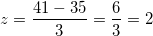
Now we calculate the chance that  , using the context from the problem.
Using a normal table, we get  , which is the answer.
This exercise consists of computing the p-value. The null distribution is normal, so we must compute the z-score with the actual data we have and use it to compute the p-value.
We have:
Now we calculate the chance that
Using a normal table, we get
We are testing the hypothesis that the average gas consumption per day in Billings, Montana is greater than 7 gallons per day; we want 95% confidence.
We sample 30 drivers. The average is 8.4, and the sample standard deviation is 4.29.
Our null hypothesis is
-
What is the Z-value for a 1-tailed test at 95%?
-
What is the Z-value for our sample mean of 8.4?
-
What is the p-value for our sample mean of 8.4?
-
Do we reject the null hypothesis?
We are testing the hypothesis that the average gas consumption per day in Billings, Montana is greater than 7 gallons per day; we want 95% confidence.
We sample 30 drivers. The average is 8.4, and the sample standard deviation is 4.29.
Our null hypothesis is
-
What is the Z-value for a 1-tailed test at 95%?
-
What is the Z-value for our sample mean of 8.4?
-
What is the p-value for our sample mean of 8.4?
-
Do we reject the null hypothesis?
Tap to see back →
From the Z-table: 1.8 corresponds to .9641; p= 1 - .9641 = .036
We reject the null hypothesis since 1.8 > 1.64 (and .036 is less than 95%).
In plain English, we are 95% sure that we will not get a sample mean of 8.4 when the true population mean is 7.
From the Z-table: 1.8 corresponds to .9641; p= 1 - .9641 = .036
We reject the null hypothesis since 1.8 > 1.64 (and .036 is less than 95%).
In plain English, we are 95% sure that we will not get a sample mean of 8.4 when the true population mean is 7.
and the sample mean is 12.
Select the answer so that both statements indicate a rejection of the null hypothesis at the 95% confidence level.
and the sample mean is 12.
Select the answer so that both statements indicate a rejection of the null hypothesis at the 95% confidence level.
Tap to see back →
In order to reject the null hypothesis, the Z-value for the sample must be greater than (i.e. must lie outside of) the Z-value of the confidence level.
By definition, if the Z-value of the sample is greater than the Z-value of the confidence level, then the p-value of the sample must be less than the p-value for the confidence level.
In order to reject the null hypothesis, the Z-value for the sample must be greater than (i.e. must lie outside of) the Z-value of the confidence level.
By definition, if the Z-value of the sample is greater than the Z-value of the confidence level, then the p-value of the sample must be less than the p-value for the confidence level.
Under the null hypothesis, the distribution of a stock price is normal with mean and standard deviation . The actual stock price now is . What is the probability that the stock price is this much or greater under the null hypothesis?
Under the null hypothesis, the distribution of a stock price is normal with mean
Tap to see back →
This exercise consists of computing the p-value. The null distribution is normal, so we must compute the z-score with the actual data we have and use it to compute the p-value.
We have:
Now we calculate the chance that , using the context from the problem.
Using a normal table, we get , which is the answer.
This exercise consists of computing the p-value. The null distribution is normal, so we must compute the z-score with the actual data we have and use it to compute the p-value.
We have:
Now we calculate the chance that
Using a normal table, we get
We are testing the hypothesis that the average gas consumption per day in Billings, Montana is greater than 7 gallons per day; we want 95% confidence.
We sample 30 drivers. The average is 8.4, and the sample standard deviation is 4.29.
Our null hypothesis is
-
What is the Z-value for a 1-tailed test at 95%?
-
What is the Z-value for our sample mean of 8.4?
-
What is the p-value for our sample mean of 8.4?
-
Do we reject the null hypothesis?
We are testing the hypothesis that the average gas consumption per day in Billings, Montana is greater than 7 gallons per day; we want 95% confidence.
We sample 30 drivers. The average is 8.4, and the sample standard deviation is 4.29.
Our null hypothesis is
-
What is the Z-value for a 1-tailed test at 95%?
-
What is the Z-value for our sample mean of 8.4?
-
What is the p-value for our sample mean of 8.4?
-
Do we reject the null hypothesis?
Tap to see back →
From the Z-table: 1.8 corresponds to .9641; p= 1 - .9641 = .036
We reject the null hypothesis since 1.8 > 1.64 (and .036 is less than 95%).
In plain English, we are 95% sure that we will not get a sample mean of 8.4 when the true population mean is 7.
From the Z-table: 1.8 corresponds to .9641; p= 1 - .9641 = .036
We reject the null hypothesis since 1.8 > 1.64 (and .036 is less than 95%).
In plain English, we are 95% sure that we will not get a sample mean of 8.4 when the true population mean is 7.
and the sample mean is 12.
Select the answer so that both statements indicate a rejection of the null hypothesis at the 95% confidence level.
and the sample mean is 12.
Select the answer so that both statements indicate a rejection of the null hypothesis at the 95% confidence level.
Tap to see back →
In order to reject the null hypothesis, the Z-value for the sample must be greater than (i.e. must lie outside of) the Z-value of the confidence level.
By definition, if the Z-value of the sample is greater than the Z-value of the confidence level, then the p-value of the sample must be less than the p-value for the confidence level.
In order to reject the null hypothesis, the Z-value for the sample must be greater than (i.e. must lie outside of) the Z-value of the confidence level.
By definition, if the Z-value of the sample is greater than the Z-value of the confidence level, then the p-value of the sample must be less than the p-value for the confidence level.
Under the null hypothesis, the distribution of a stock price is normal with mean and standard deviation . The actual stock price now is . What is the probability that the stock price is this much or greater under the null hypothesis?
Under the null hypothesis, the distribution of a stock price is normal with mean
Tap to see back →
This exercise consists of computing the p-value. The null distribution is normal, so we must compute the z-score with the actual data we have and use it to compute the p-value.
We have:
Now we calculate the chance that , using the context from the problem.
Using a normal table, we get , which is the answer.
This exercise consists of computing the p-value. The null distribution is normal, so we must compute the z-score with the actual data we have and use it to compute the p-value.
We have:
Now we calculate the chance that
Using a normal table, we get
We are testing the hypothesis that the average gas consumption per day in Billings, Montana is greater than 7 gallons per day; we want 95% confidence.
We sample 30 drivers. The average is 8.4, and the sample standard deviation is 4.29.
Our null hypothesis is
-
What is the Z-value for a 1-tailed test at 95%?
-
What is the Z-value for our sample mean of 8.4?
-
What is the p-value for our sample mean of 8.4?
-
Do we reject the null hypothesis?
We are testing the hypothesis that the average gas consumption per day in Billings, Montana is greater than 7 gallons per day; we want 95% confidence.
We sample 30 drivers. The average is 8.4, and the sample standard deviation is 4.29.
Our null hypothesis is
-
What is the Z-value for a 1-tailed test at 95%?
-
What is the Z-value for our sample mean of 8.4?
-
What is the p-value for our sample mean of 8.4?
-
Do we reject the null hypothesis?
Tap to see back →
From the Z-table: 1.8 corresponds to .9641; p= 1 - .9641 = .036
We reject the null hypothesis since 1.8 > 1.64 (and .036 is less than 95%).
In plain English, we are 95% sure that we will not get a sample mean of 8.4 when the true population mean is 7.
From the Z-table: 1.8 corresponds to .9641; p= 1 - .9641 = .036
We reject the null hypothesis since 1.8 > 1.64 (and .036 is less than 95%).
In plain English, we are 95% sure that we will not get a sample mean of 8.4 when the true population mean is 7.
and the sample mean is 12.
Select the answer so that both statements indicate a rejection of the null hypothesis at the 95% confidence level.
and the sample mean is 12.
Select the answer so that both statements indicate a rejection of the null hypothesis at the 95% confidence level.
Tap to see back →
In order to reject the null hypothesis, the Z-value for the sample must be greater than (i.e. must lie outside of) the Z-value of the confidence level.
By definition, if the Z-value of the sample is greater than the Z-value of the confidence level, then the p-value of the sample must be less than the p-value for the confidence level.
In order to reject the null hypothesis, the Z-value for the sample must be greater than (i.e. must lie outside of) the Z-value of the confidence level.
By definition, if the Z-value of the sample is greater than the Z-value of the confidence level, then the p-value of the sample must be less than the p-value for the confidence level.
Under the null hypothesis, the distribution of a stock price is normal with mean and standard deviation . The actual stock price now is . What is the probability that the stock price is this much or greater under the null hypothesis?
Under the null hypothesis, the distribution of a stock price is normal with mean
Tap to see back →
This exercise consists of computing the p-value. The null distribution is normal, so we must compute the z-score with the actual data we have and use it to compute the p-value.
We have:
Now we calculate the chance that , using the context from the problem.
Using a normal table, we get , which is the answer.
This exercise consists of computing the p-value. The null distribution is normal, so we must compute the z-score with the actual data we have and use it to compute the p-value.
We have:
Now we calculate the chance that
Using a normal table, we get