Multiplication with Fractions - Basic Math
Card 1 of 64
Multiply:

Multiply:
Tap to reveal answer
Multiply the numerators together, then multiply the denominators together.
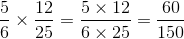
To simplfy we can pull out a  from the numerator and denominator, thus canceling them. The following answer is the result:

Multiply the numerators together, then multiply the denominators together.
To simplfy we can pull out a
← Didn't Know|Knew It →
In a classroom of 36,  of the students are girls. If
  of the girls enjoy eating strawberries, and
  of the boys also enjoy eating strawberries, how many total students in the class enjoy eating strawberries?
In a classroom of 36,
Tap to reveal answer
First, find out how many girls and boys are in the class.
Multiply 36 by  to find the number of girls.

Then, subtract the number of girls from the total number of students in the class to find the number of boys.

Now, we can figure out how many girls enjoy eating strawberries. Multiply the total number of girls by the fraction of girls who enjoy eating strawberries.

Now, do the same with the boys.

Add these two numbers together to get the total number of students who enjoy eating strawberries.

First, find out how many girls and boys are in the class.
Multiply 36 by
Then, subtract the number of girls from the total number of students in the class to find the number of boys.
Now, we can figure out how many girls enjoy eating strawberries. Multiply the total number of girls by the fraction of girls who enjoy eating strawberries.
Now, do the same with the boys.
Add these two numbers together to get the total number of students who enjoy eating strawberries.
← Didn't Know|Knew It →
Solve and simplify.

Solve and simplify.
Tap to reveal answer
When multiplying fractions, you simply multiply the numerators and then multiply the denominators. Then simplify the fraction.
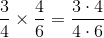
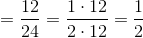
(Note: by dividing both our numerator and our denominator by  , gives us our final answer of
  .
.
When multiplying fractions, you simply multiply the numerators and then multiply the denominators. Then simplify the fraction.
(Note: by dividing both our numerator and our denominator by
← Didn't Know|Knew It →
Please choose the best answer for the question below.

Please choose the best answer for the question below.
Tap to reveal answer
To do this problem, simply multiply through (i.e. numerator by numerator and denominator by denominator):

And then reduce to find your answer--both  and
and  are divisible by two.

To do this problem, simply multiply through (i.e. numerator by numerator and denominator by denominator):
And then reduce to find your answer--both
← Didn't Know|Knew It →
Evaluate the following:

Evaluate the following:
Tap to reveal answer
This problem involves order of operations.
The correct order is: Parenthesis, Exponents, Multiplication, Division, Addition, and Subtraction.
Rewrite the exponent and cancel out the 4 on the numerator and denominator.
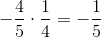
This problem involves order of operations.
The correct order is: Parenthesis, Exponents, Multiplication, Division, Addition, and Subtraction.
Rewrite the exponent and cancel out the 4 on the numerator and denominator.
← Didn't Know|Knew It →
Multiply these fractions:

Multiply these fractions:
Tap to reveal answer
When multiplying fractions, all we have to do is multiply the numerators together and multiply the denominators together:
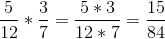
Simply the fraction to get the final answer:

When multiplying fractions, all we have to do is multiply the numerators together and multiply the denominators together:
Simply the fraction to get the final answer:
← Didn't Know|Knew It →
Multiply these fractions:

Multiply these fractions:
Tap to reveal answer
When multiplying fractions, all we have to do is multiply the numerators together and multiply the denominators together:
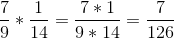
Simply the fraction to get the final answer:

When multiplying fractions, all we have to do is multiply the numerators together and multiply the denominators together:
Simply the fraction to get the final answer:
← Didn't Know|Knew It →
Multiply these fractions:

Multiply these fractions:
Tap to reveal answer
When multiplying fractions, all we have to do is multiply the numerators together and multiply the denominators together:
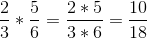
Simply the fraction to get the final answer:

When multiplying fractions, all we have to do is multiply the numerators together and multiply the denominators together:
Simply the fraction to get the final answer:
← Didn't Know|Knew It →
Multiply these fractions:

Multiply these fractions:
Tap to reveal answer
When multiplying fractions, all we have to do is multiply the numerators together and multiply the denominators together:
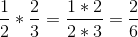
Simply the fraction to get the final answer:

When multiplying fractions, all we have to do is multiply the numerators together and multiply the denominators together:
Simply the fraction to get the final answer:
← Didn't Know|Knew It →
Multiply these fractions:

Multiply these fractions:
Tap to reveal answer
When multiplying fractions, all we have to do is multiply the numerators together and multiply the denominators together:
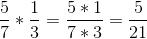
When multiplying fractions, all we have to do is multiply the numerators together and multiply the denominators together:
← Didn't Know|Knew It →
Multiply these fractions:

Multiply these fractions:
Tap to reveal answer
When multiplying fractions, all we have to do is multiply the numerators together and multiply the denominators together:

Simply the fraction to get the final answer:

When multiplying fractions, all we have to do is multiply the numerators together and multiply the denominators together:
Simply the fraction to get the final answer:
← Didn't Know|Knew It →
Multiply these fractions:

Multiply these fractions:
Tap to reveal answer
When multiplying fractions, all we have to do is multiply the numerators together and multiply the denominators together:

Simplify the fraction to get the final answer:

When multiplying fractions, all we have to do is multiply the numerators together and multiply the denominators together:
Simplify the fraction to get the final answer:
← Didn't Know|Knew It →
Multiply these fractions:

Multiply these fractions:
Tap to reveal answer
When multiplying fractions, all we have to do is multiply the numerators together and multiply the denominators together:

Simply the fraction to get the final answer:

When multiplying fractions, all we have to do is multiply the numerators together and multiply the denominators together:
Simply the fraction to get the final answer:
← Didn't Know|Knew It →
Multiply these fractions:

Multiply these fractions:
Tap to reveal answer
When multiplying fractions, all we have to do is multiply the numerators together and multiply the denominators together:

Simply the fraction to get the final answer:

When multiplying fractions, all we have to do is multiply the numerators together and multiply the denominators together:
Simply the fraction to get the final answer:
← Didn't Know|Knew It →
Multiply these fractions:

Multiply these fractions:
Tap to reveal answer
When multiplying fractions, all we have to do is multiply the numerators together and multiply the denominators together:

Simply the fraction to get the final answer:

When multiplying fractions, all we have to do is multiply the numerators together and multiply the denominators together:
Simply the fraction to get the final answer:
← Didn't Know|Knew It →
Multiply these fractions:

Multiply these fractions:
Tap to reveal answer
When multiplying fractions, all we have to do is multiply the numerators together and multiply the denominators together:

Simply the fraction to get the final answer:

When multiplying fractions, all we have to do is multiply the numerators together and multiply the denominators together:
Simply the fraction to get the final answer:
← Didn't Know|Knew It →
Multiply:
Multiply:
Tap to reveal answer
Multiply the numerators together, then multiply the denominators together.
To simplfy we can pull out a from the numerator and denominator, thus canceling them. The following answer is the result:
Multiply the numerators together, then multiply the denominators together.
To simplfy we can pull out a
← Didn't Know|Knew It →
In a classroom of 36, of the students are girls. If of the girls enjoy eating strawberries, and of the boys also enjoy eating strawberries, how many total students in the class enjoy eating strawberries?
In a classroom of 36,
Tap to reveal answer
First, find out how many girls and boys are in the class.
Multiply 36 by to find the number of girls.
Then, subtract the number of girls from the total number of students in the class to find the number of boys.
Now, we can figure out how many girls enjoy eating strawberries. Multiply the total number of girls by the fraction of girls who enjoy eating strawberries.
Now, do the same with the boys.
Add these two numbers together to get the total number of students who enjoy eating strawberries.
First, find out how many girls and boys are in the class.
Multiply 36 by
Then, subtract the number of girls from the total number of students in the class to find the number of boys.
Now, we can figure out how many girls enjoy eating strawberries. Multiply the total number of girls by the fraction of girls who enjoy eating strawberries.
Now, do the same with the boys.
Add these two numbers together to get the total number of students who enjoy eating strawberries.
← Didn't Know|Knew It →
Solve and simplify.
Solve and simplify.
Tap to reveal answer
When multiplying fractions, you simply multiply the numerators and then multiply the denominators. Then simplify the fraction.
(Note: by dividing both our numerator and our denominator by , gives us our final answer of .
When multiplying fractions, you simply multiply the numerators and then multiply the denominators. Then simplify the fraction.
(Note: by dividing both our numerator and our denominator by
← Didn't Know|Knew It →
Please choose the best answer for the question below.
Please choose the best answer for the question below.
Tap to reveal answer
To do this problem, simply multiply through (i.e. numerator by numerator and denominator by denominator):
And then reduce to find your answer--both and are divisible by two.
To do this problem, simply multiply through (i.e. numerator by numerator and denominator by denominator):
And then reduce to find your answer--both
← Didn't Know|Knew It →