Solving Equations with Whole Numbers - Basic Math
Card 1 of 28
Solve for  .
.

Solve for
Tap to reveal answer
First, add 6 to both sides so that the term with "x" is on its own.

Now, divide both sides by 2.

First, add 6 to both sides so that the term with "x" is on its own.
Now, divide both sides by 2.
← Didn't Know|Knew It →
Solve:

Solve:
Tap to reveal answer
The answer is  . The goal is to isolate the variable,
  , on one side of the equation sign and have all numerical values on the other side of the equation.
Since  is a negative number, you must add
  to both sides.

Then, divide both sides of the equation by  :
:
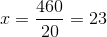
The answer is
Since
Then, divide both sides of the equation by
← Didn't Know|Knew It →
Solve for  .
.

Solve for
Tap to reveal answer
Start by isolating the term with  to one side. Add 10 on both sides.

Divide both sides by 7.

Start by isolating the term with
Divide both sides by 7.
← Didn't Know|Knew It →
If  , what is
  equal to?
If
Tap to reveal answer
When solving an equation, we need to find a value of x which makes each side equal each other. We need to remember that  is equal to and the same as
  . When we solve an equation, if we make a change on one side, we therefore need to make the exact same change on the other side, so that the equation stays equal and true. To illustrate, let's take a numerical equation:

If we subtract  from each side, the equation still remains equal:


If we now divide each side by  , the equation still remains equal:


This still holds true even if we have variables in our equation. We can perform the inverse operations to isolate the variable on one side and find out what number it's equal to. To solve our problem then, we need to isolate our  term. We can do that by subtracting
  from each side, the inverse operation of adding
  :
:


We now want there to be one  on the left side.
  is the same thing as
  , so we can get rid of the 6 by performing the inverse operation on both sides, i.e. dividing each side by
  :
:

 is therefore our final answer.
When solving an equation, we need to find a value of x which makes each side equal each other. We need to remember that
If we subtract
If we now divide each side by
This still holds true even if we have variables in our equation. We can perform the inverse operations to isolate the variable on one side and find out what number it's equal to. To solve our problem then, we need to isolate our
We now want there to be one
← Didn't Know|Knew It →
Solve for  .
.

Solve for
Tap to reveal answer
Start by adding 10 to both sides of the equation.

Then, divide both sides by  .
.

Start by adding 10 to both sides of the equation.
Then, divide both sides by
← Didn't Know|Knew It →
Solve for t.

Solve for t.
Tap to reveal answer
First start by distributing the 7.


Now, add both sides by 14.

Finally, divide both sides by 7.

First start by distributing the 7.
Now, add both sides by 14.
Finally, divide both sides by 7.
← Didn't Know|Knew It →
Solve for  :
:

Solve for
Tap to reveal answer
First, add  to both sides of the equation:

Then, divide both sides by  :
:

First, add
Then, divide both sides by
← Didn't Know|Knew It →
Solve for .
Solve for
Tap to reveal answer
First, add 6 to both sides so that the term with "x" is on its own.
Now, divide both sides by 2.
First, add 6 to both sides so that the term with "x" is on its own.
Now, divide both sides by 2.
← Didn't Know|Knew It →
Solve:
Solve:
Tap to reveal answer
The answer is . The goal is to isolate the variable, , on one side of the equation sign and have all numerical values on the other side of the equation.
Since is a negative number, you must add to both sides.
Then, divide both sides of the equation by :
The answer is
Since
Then, divide both sides of the equation by
← Didn't Know|Knew It →
Solve for .
Solve for
Tap to reveal answer
Start by isolating the term with to one side. Add 10 on both sides.
Divide both sides by 7.
Start by isolating the term with
Divide both sides by 7.
← Didn't Know|Knew It →
If , what is equal to?
If
Tap to reveal answer
When solving an equation, we need to find a value of x which makes each side equal each other. We need to remember that is equal to and the same as . When we solve an equation, if we make a change on one side, we therefore need to make the exact same change on the other side, so that the equation stays equal and true. To illustrate, let's take a numerical equation:
If we subtract from each side, the equation still remains equal:
If we now divide each side by , the equation still remains equal:
This still holds true even if we have variables in our equation. We can perform the inverse operations to isolate the variable on one side and find out what number it's equal to. To solve our problem then, we need to isolate our term. We can do that by subtracting from each side, the inverse operation of adding :
We now want there to be one on the left side. is the same thing as , so we can get rid of the 6 by performing the inverse operation on both sides, i.e. dividing each side by :
is therefore our final answer.
When solving an equation, we need to find a value of x which makes each side equal each other. We need to remember that
If we subtract
If we now divide each side by
This still holds true even if we have variables in our equation. We can perform the inverse operations to isolate the variable on one side and find out what number it's equal to. To solve our problem then, we need to isolate our
We now want there to be one
← Didn't Know|Knew It →
Solve for .
Solve for
Tap to reveal answer
Start by adding 10 to both sides of the equation.
Then, divide both sides by .
Start by adding 10 to both sides of the equation.
Then, divide both sides by
← Didn't Know|Knew It →
Solve for t.
Solve for t.
Tap to reveal answer
First start by distributing the 7.
Now, add both sides by 14.
Finally, divide both sides by 7.
First start by distributing the 7.
Now, add both sides by 14.
Finally, divide both sides by 7.
← Didn't Know|Knew It →
Solve for :
Solve for
Tap to reveal answer
First, add to both sides of the equation:
Then, divide both sides by :
First, add
Then, divide both sides by
← Didn't Know|Knew It →
Solve for .
Solve for
Tap to reveal answer
First, add 6 to both sides so that the term with "x" is on its own.
Now, divide both sides by 2.
First, add 6 to both sides so that the term with "x" is on its own.
Now, divide both sides by 2.
← Didn't Know|Knew It →
Solve:
Solve:
Tap to reveal answer
The answer is . The goal is to isolate the variable, , on one side of the equation sign and have all numerical values on the other side of the equation.
Since is a negative number, you must add to both sides.
Then, divide both sides of the equation by :
The answer is
Since
Then, divide both sides of the equation by
← Didn't Know|Knew It →
Solve for .
Solve for
Tap to reveal answer
Start by isolating the term with to one side. Add 10 on both sides.
Divide both sides by 7.
Start by isolating the term with
Divide both sides by 7.
← Didn't Know|Knew It →
If , what is equal to?
If
Tap to reveal answer
When solving an equation, we need to find a value of x which makes each side equal each other. We need to remember that is equal to and the same as . When we solve an equation, if we make a change on one side, we therefore need to make the exact same change on the other side, so that the equation stays equal and true. To illustrate, let's take a numerical equation:
If we subtract from each side, the equation still remains equal:
If we now divide each side by , the equation still remains equal:
This still holds true even if we have variables in our equation. We can perform the inverse operations to isolate the variable on one side and find out what number it's equal to. To solve our problem then, we need to isolate our term. We can do that by subtracting from each side, the inverse operation of adding :
We now want there to be one on the left side. is the same thing as , so we can get rid of the 6 by performing the inverse operation on both sides, i.e. dividing each side by :
is therefore our final answer.
When solving an equation, we need to find a value of x which makes each side equal each other. We need to remember that
If we subtract
If we now divide each side by
This still holds true even if we have variables in our equation. We can perform the inverse operations to isolate the variable on one side and find out what number it's equal to. To solve our problem then, we need to isolate our
We now want there to be one
← Didn't Know|Knew It →
Solve for .
Solve for
Tap to reveal answer
Start by adding 10 to both sides of the equation.
Then, divide both sides by .
Start by adding 10 to both sides of the equation.
Then, divide both sides by
← Didn't Know|Knew It →
Solve for t.
Solve for t.
Tap to reveal answer
First start by distributing the 7.
Now, add both sides by 14.
Finally, divide both sides by 7.
First start by distributing the 7.
Now, add both sides by 14.
Finally, divide both sides by 7.
← Didn't Know|Knew It →