Find the Amplitude of a Sine or Cosine Function - Pre-Calculus
Card 0 of 20
Which of the given functions has the greatest amplitude?
Which of the given functions has the greatest amplitude?
Tap to see back →
The amplitude of a function is the amount by which the graph of the function travels above and below its midline. When graphing a sine function, the value of the amplitude is equivalent to the value of the coefficient of the sine. Similarly, the coefficient associated with the x-value is related to the function's period. The largest coefficient associated with the sine in the provided functions is 2; therefore the correct answer is  .
.
The amplitude is dictated by the coefficient of the trigonometric function. In this case, all of the other functions have a coefficient of one or one-half.
The amplitude of a function is the amount by which the graph of the function travels above and below its midline. When graphing a sine function, the value of the amplitude is equivalent to the value of the coefficient of the sine. Similarly, the coefficient associated with the x-value is related to the function's period. The largest coefficient associated with the sine in the provided functions is 2; therefore the correct answer is
The amplitude is dictated by the coefficient of the trigonometric function. In this case, all of the other functions have a coefficient of one or one-half.
What is the amplitude of 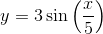 ?
?
What is the amplitude of
Tap to see back →
For any equation in the form  , the amplitude of the function is equal to
  .
.
In this case,  and
and  , so our amplitude is
  .
.
For any equation in the form
In this case,
What is the amplitude of  ?
?
What is the amplitude of
Tap to see back →
The formula for the amplitude of a sine function is  from the form:
 .
.
In our function,  .
.
Therefore, the amplitude for this function is  .
.
The formula for the amplitude of a sine function is
In our function,
Therefore, the amplitude for this function is
Find the amplitude of the following trig function: 
Find the amplitude of the following trig function:
Tap to see back →
Rewrite  so that it is in the form of:


The absolute value of  is the value of the amplitude.

Rewrite
The absolute value of
Find the amplitude of the function.

Find the amplitude of the function.
Tap to see back →
For the sine function
 where
where 
the amplitude is given as  .
.
As such the amplitude for the given function
is
 .
.
For the sine function
the amplitude is given as
As such the amplitude for the given function
Which of the given functions has the greatest amplitude?
Which of the given functions has the greatest amplitude?
Tap to see back →
The amplitude of a function is the amount by which the graph of the function travels above and below its midline. When graphing a sine function, the value of the amplitude is equivalent to the value of the coefficient of the sine. Similarly, the coefficient associated with the x-value is related to the function's period. The largest coefficient associated with the sine in the provided functions is 2; therefore the correct answer is .
The amplitude is dictated by the coefficient of the trigonometric function. In this case, all of the other functions have a coefficient of one or one-half.
The amplitude of a function is the amount by which the graph of the function travels above and below its midline. When graphing a sine function, the value of the amplitude is equivalent to the value of the coefficient of the sine. Similarly, the coefficient associated with the x-value is related to the function's period. The largest coefficient associated with the sine in the provided functions is 2; therefore the correct answer is
The amplitude is dictated by the coefficient of the trigonometric function. In this case, all of the other functions have a coefficient of one or one-half.
What is the amplitude of ?
What is the amplitude of
Tap to see back →
For any equation in the form , the amplitude of the function is equal to .
In this case, and , so our amplitude is .
For any equation in the form
In this case,
What is the amplitude of ?
What is the amplitude of
Tap to see back →
The formula for the amplitude of a sine function is from the form:
.
In our function, .
Therefore, the amplitude for this function is .
The formula for the amplitude of a sine function is
In our function,
Therefore, the amplitude for this function is
Find the amplitude of the following trig function:
Find the amplitude of the following trig function:
Tap to see back →
Rewrite so that it is in the form of:
The absolute value of is the value of the amplitude.
Rewrite
The absolute value of
Find the amplitude of the function.
Find the amplitude of the function.
Tap to see back →
For the sine function
where
the amplitude is given as .
As such the amplitude for the given function
is
.
For the sine function
the amplitude is given as
As such the amplitude for the given function
Which of the given functions has the greatest amplitude?
Which of the given functions has the greatest amplitude?
Tap to see back →
The amplitude of a function is the amount by which the graph of the function travels above and below its midline. When graphing a sine function, the value of the amplitude is equivalent to the value of the coefficient of the sine. Similarly, the coefficient associated with the x-value is related to the function's period. The largest coefficient associated with the sine in the provided functions is 2; therefore the correct answer is .
The amplitude is dictated by the coefficient of the trigonometric function. In this case, all of the other functions have a coefficient of one or one-half.
The amplitude of a function is the amount by which the graph of the function travels above and below its midline. When graphing a sine function, the value of the amplitude is equivalent to the value of the coefficient of the sine. Similarly, the coefficient associated with the x-value is related to the function's period. The largest coefficient associated with the sine in the provided functions is 2; therefore the correct answer is
The amplitude is dictated by the coefficient of the trigonometric function. In this case, all of the other functions have a coefficient of one or one-half.
What is the amplitude of ?
What is the amplitude of
Tap to see back →
For any equation in the form , the amplitude of the function is equal to .
In this case, and , so our amplitude is .
For any equation in the form
In this case,
What is the amplitude of ?
What is the amplitude of
Tap to see back →
The formula for the amplitude of a sine function is from the form:
.
In our function, .
Therefore, the amplitude for this function is .
The formula for the amplitude of a sine function is
In our function,
Therefore, the amplitude for this function is
Find the amplitude of the following trig function:
Find the amplitude of the following trig function:
Tap to see back →
Rewrite so that it is in the form of:
The absolute value of is the value of the amplitude.
Rewrite
The absolute value of
Find the amplitude of the function.
Find the amplitude of the function.
Tap to see back →
For the sine function
where
the amplitude is given as .
As such the amplitude for the given function
is
.
For the sine function
the amplitude is given as
As such the amplitude for the given function
Which of the given functions has the greatest amplitude?
Which of the given functions has the greatest amplitude?
Tap to see back →
The amplitude of a function is the amount by which the graph of the function travels above and below its midline. When graphing a sine function, the value of the amplitude is equivalent to the value of the coefficient of the sine. Similarly, the coefficient associated with the x-value is related to the function's period. The largest coefficient associated with the sine in the provided functions is 2; therefore the correct answer is .
The amplitude is dictated by the coefficient of the trigonometric function. In this case, all of the other functions have a coefficient of one or one-half.
The amplitude of a function is the amount by which the graph of the function travels above and below its midline. When graphing a sine function, the value of the amplitude is equivalent to the value of the coefficient of the sine. Similarly, the coefficient associated with the x-value is related to the function's period. The largest coefficient associated with the sine in the provided functions is 2; therefore the correct answer is
The amplitude is dictated by the coefficient of the trigonometric function. In this case, all of the other functions have a coefficient of one or one-half.
What is the amplitude of ?
What is the amplitude of
Tap to see back →
For any equation in the form , the amplitude of the function is equal to .
In this case, and , so our amplitude is .
For any equation in the form
In this case,
What is the amplitude of ?
What is the amplitude of
Tap to see back →
The formula for the amplitude of a sine function is from the form:
.
In our function, .
Therefore, the amplitude for this function is .
The formula for the amplitude of a sine function is
In our function,
Therefore, the amplitude for this function is
Find the amplitude of the following trig function:
Find the amplitude of the following trig function:
Tap to see back →
Rewrite so that it is in the form of:
The absolute value of is the value of the amplitude.
Rewrite
The absolute value of
Find the amplitude of the function.
Find the amplitude of the function.
Tap to see back →
For the sine function
where
the amplitude is given as .
As such the amplitude for the given function
is
.
For the sine function
the amplitude is given as
As such the amplitude for the given function