Find the Multiplicative Inverse of a Matrix - Pre-Calculus
Card 0 of 24
What is the inverse of the following nxn matrix 
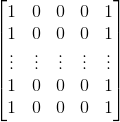
What is the inverse of the following nxn matrix
Tap to see back →
Note the first and the last columns are equal.
Therefore, when we try to find the determinant using the following formula we get the determinant equaling 0:
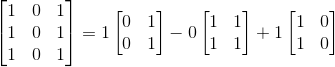



This means simply, that the matrix does not have an inverse.
Note the first and the last columns are equal.
Therefore, when we try to find the determinant using the following formula we get the determinant equaling 0:
This means simply, that the matrix does not have an inverse.
Find the inverse of the matrix
 .
.
Find the inverse of the matrix
Tap to see back →
For a 2x2 matrix

the inverse can be found by
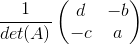
Because the determinant is equal to zero in this problem, or
 ,
,
the inverse does not exist.
For a 2x2 matrix
the inverse can be found by
Because the determinant is equal to zero in this problem, or
the inverse does not exist.
Find the inverse of the matrix
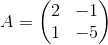
Find the inverse of the matrix
Tap to see back →
There are a couple of ways to do this. I will use the determinant method.
First we need to find the determinant of this matrix, which is

for a matrix in the form:
 .
.
Substituting in our values we find the determinant to be:

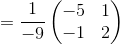
Now one formula for finding the inverse of the matrix is

 .
.
There are a couple of ways to do this. I will use the determinant method.
First we need to find the determinant of this matrix, which is
for a matrix in the form:
Substituting in our values we find the determinant to be:
Now one formula for finding the inverse of the matrix is
Find the inverse of the matrix.

Find the inverse of the matrix.
Tap to see back →
We use the inverse of a 2x2 matrix formula to determine the answer. Given a matrix
 it's inverse is given by the formula:
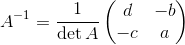
First we define the determinant of our matrix:

Then,
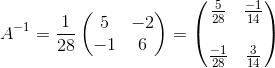
We use the inverse of a 2x2 matrix formula to determine the answer. Given a matrix
First we define the determinant of our matrix:
Then,
Find the inverse of the following matrix.

Find the inverse of the following matrix.
Tap to see back →
This matrix has no inverse because the columns are not linearly independent. This means if you row reduce to try to compute the inverse, one of the rows will have only zeros, which means there is no inverse.
This matrix has no inverse because the columns are not linearly independent. This means if you row reduce to try to compute the inverse, one of the rows will have only zeros, which means there is no inverse.
Find the multiplicative inverse of the following matrix:

Find the multiplicative inverse of the following matrix:
Tap to see back →
By writing the augmented matrix  , and reducing the left side to the identity matrix, we can implement the same operations onto the right side, and we arrive at
 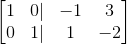 , with the right side representing the inverse of the original matrix.
By writing the augmented matrix
What is the inverse of the following nxn matrix
What is the inverse of the following nxn matrix
Tap to see back →
Note the first and the last columns are equal.
Therefore, when we try to find the determinant using the following formula we get the determinant equaling 0:
This means simply, that the matrix does not have an inverse.
Note the first and the last columns are equal.
Therefore, when we try to find the determinant using the following formula we get the determinant equaling 0:
This means simply, that the matrix does not have an inverse.
Find the inverse of the matrix
.
Find the inverse of the matrix
Tap to see back →
For a 2x2 matrix
the inverse can be found by
Because the determinant is equal to zero in this problem, or
,
the inverse does not exist.
For a 2x2 matrix
the inverse can be found by
Because the determinant is equal to zero in this problem, or
the inverse does not exist.
Find the inverse of the matrix
Find the inverse of the matrix
Tap to see back →
There are a couple of ways to do this. I will use the determinant method.
First we need to find the determinant of this matrix, which is
for a matrix in the form:
.
Substituting in our values we find the determinant to be:
Now one formula for finding the inverse of the matrix is
.
There are a couple of ways to do this. I will use the determinant method.
First we need to find the determinant of this matrix, which is
for a matrix in the form:
Substituting in our values we find the determinant to be:
Now one formula for finding the inverse of the matrix is
Find the inverse of the matrix.
Find the inverse of the matrix.
Tap to see back →
We use the inverse of a 2x2 matrix formula to determine the answer. Given a matrix
it's inverse is given by the formula:
First we define the determinant of our matrix:
Then,
We use the inverse of a 2x2 matrix formula to determine the answer. Given a matrix
First we define the determinant of our matrix:
Then,
Find the inverse of the following matrix.
Find the inverse of the following matrix.
Tap to see back →
This matrix has no inverse because the columns are not linearly independent. This means if you row reduce to try to compute the inverse, one of the rows will have only zeros, which means there is no inverse.
This matrix has no inverse because the columns are not linearly independent. This means if you row reduce to try to compute the inverse, one of the rows will have only zeros, which means there is no inverse.
Find the multiplicative inverse of the following matrix:
Find the multiplicative inverse of the following matrix:
Tap to see back →
By writing the augmented matrix , and reducing the left side to the identity matrix, we can implement the same operations onto the right side, and we arrive at , with the right side representing the inverse of the original matrix.
By writing the augmented matrix
What is the inverse of the following nxn matrix
What is the inverse of the following nxn matrix
Tap to see back →
Note the first and the last columns are equal.
Therefore, when we try to find the determinant using the following formula we get the determinant equaling 0:
This means simply, that the matrix does not have an inverse.
Note the first and the last columns are equal.
Therefore, when we try to find the determinant using the following formula we get the determinant equaling 0:
This means simply, that the matrix does not have an inverse.
Find the inverse of the matrix
.
Find the inverse of the matrix
Tap to see back →
For a 2x2 matrix
the inverse can be found by
Because the determinant is equal to zero in this problem, or
,
the inverse does not exist.
For a 2x2 matrix
the inverse can be found by
Because the determinant is equal to zero in this problem, or
the inverse does not exist.
Find the inverse of the matrix
Find the inverse of the matrix
Tap to see back →
There are a couple of ways to do this. I will use the determinant method.
First we need to find the determinant of this matrix, which is
for a matrix in the form:
.
Substituting in our values we find the determinant to be:
Now one formula for finding the inverse of the matrix is
.
There are a couple of ways to do this. I will use the determinant method.
First we need to find the determinant of this matrix, which is
for a matrix in the form:
Substituting in our values we find the determinant to be:
Now one formula for finding the inverse of the matrix is
Find the inverse of the matrix.
Find the inverse of the matrix.
Tap to see back →
We use the inverse of a 2x2 matrix formula to determine the answer. Given a matrix
it's inverse is given by the formula:
First we define the determinant of our matrix:
Then,
We use the inverse of a 2x2 matrix formula to determine the answer. Given a matrix
First we define the determinant of our matrix:
Then,
Find the inverse of the following matrix.
Find the inverse of the following matrix.
Tap to see back →
This matrix has no inverse because the columns are not linearly independent. This means if you row reduce to try to compute the inverse, one of the rows will have only zeros, which means there is no inverse.
This matrix has no inverse because the columns are not linearly independent. This means if you row reduce to try to compute the inverse, one of the rows will have only zeros, which means there is no inverse.
Find the multiplicative inverse of the following matrix:
Find the multiplicative inverse of the following matrix:
Tap to see back →
By writing the augmented matrix , and reducing the left side to the identity matrix, we can implement the same operations onto the right side, and we arrive at , with the right side representing the inverse of the original matrix.
By writing the augmented matrix
What is the inverse of the following nxn matrix
What is the inverse of the following nxn matrix
Tap to see back →
Note the first and the last columns are equal.
Therefore, when we try to find the determinant using the following formula we get the determinant equaling 0:
This means simply, that the matrix does not have an inverse.
Note the first and the last columns are equal.
Therefore, when we try to find the determinant using the following formula we get the determinant equaling 0:
This means simply, that the matrix does not have an inverse.
Find the inverse of the matrix
.
Find the inverse of the matrix
Tap to see back →
For a 2x2 matrix
the inverse can be found by
Because the determinant is equal to zero in this problem, or
,
the inverse does not exist.
For a 2x2 matrix
the inverse can be found by
Because the determinant is equal to zero in this problem, or
the inverse does not exist.