Terms in a Series - Pre-Calculus
Card 0 of 24
Consider the sequence: 
What is the fifteenth term in the sequence?
Consider the sequence:
What is the fifteenth term in the sequence?
Tap to see back →
The sequence can be described by the equation  , where
  is the term in the sequence.
For the 15th term,  .
.



The sequence can be described by the equation
For the 15th term,
What is the sum of the first  terms of an arithmetic series if the first term is
  , and the last term is
  ?
?
What is the sum of the first
Tap to see back →
Write the formula to find the arithmetic sum of a series where  is the number of terms,
  is the first term, and
  is the last term.
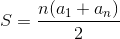
Substitute the given values and solve for the sum.

Write the formula to find the arithmetic sum of a series where
Substitute the given values and solve for the sum.
What is the fifth term of the series 
What is the fifth term of the series
Tap to see back →
Let's try to see if this series is a geometric series.
We can divide adjacent terms to try and discover a multiplicative factor.
Doing this it seems the series proceeds with a common multiple of  between each term.
Rewriting the series we get,
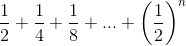 .
.
When
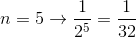 .
.
Let's try to see if this series is a geometric series.
We can divide adjacent terms to try and discover a multiplicative factor.
Doing this it seems the series proceeds with a common multiple of
Rewriting the series we get,
When
Given the terms of the sequence  , what are the next two terms after
  ?
?
Given the terms of the sequence
Tap to see back →
The next two terms are  and
and  . This is the Fibonacci sequence where you start off with the terms
  and
and  , and the next term is the sum of two previous terms. So then







and so on.
The next two terms are
and so on.
What is the 9th term of the series that begins 2, 4, 8, 16...
What is the 9th term of the series that begins 2, 4, 8, 16...
Tap to see back →
In this geometric series, each number is created by multiplying the previous number by 2. You may also see that, because the first number is 2, it also becomes a list of powers of 2. The list is 2, 4, 8, 16, 32, 64, 128, 256, 512, where you can see that the 9th term is 512.
In this geometric series, each number is created by multiplying the previous number by 2. You may also see that, because the first number is 2, it also becomes a list of powers of 2. The list is 2, 4, 8, 16, 32, 64, 128, 256, 512, where you can see that the 9th term is 512.
What is the 10th term in the series:
1, 5, 9, 13, 17....
What is the 10th term in the series:
1, 5, 9, 13, 17....
Tap to see back →
The pattern in this arithmetic series is that each term is created by adding 4 to the previous one. You can then continue the series by continuing to add 4s until you've gotten to the tenth term:
1, 5, 9, 13, 17, 21, 25, 29, 33, 37
The correct answer, then, is 37.
The pattern in this arithmetic series is that each term is created by adding 4 to the previous one. You can then continue the series by continuing to add 4s until you've gotten to the tenth term:
1, 5, 9, 13, 17, 21, 25, 29, 33, 37
The correct answer, then, is 37.
Consider the sequence:
What is the fifteenth term in the sequence?
Consider the sequence:
What is the fifteenth term in the sequence?
Tap to see back →
The sequence can be described by the equation , where is the term in the sequence.
For the 15th term, .
The sequence can be described by the equation
For the 15th term,
What is the sum of the first terms of an arithmetic series if the first term is , and the last term is ?
What is the sum of the first
Tap to see back →
Write the formula to find the arithmetic sum of a series where is the number of terms, is the first term, and is the last term.
Substitute the given values and solve for the sum.
Write the formula to find the arithmetic sum of a series where
Substitute the given values and solve for the sum.
What is the fifth term of the series
What is the fifth term of the series
Tap to see back →
Let's try to see if this series is a geometric series.
We can divide adjacent terms to try and discover a multiplicative factor.
Doing this it seems the series proceeds with a common multiple of between each term.
Rewriting the series we get,
.
When
.
Let's try to see if this series is a geometric series.
We can divide adjacent terms to try and discover a multiplicative factor.
Doing this it seems the series proceeds with a common multiple of
Rewriting the series we get,
When
Given the terms of the sequence , what are the next two terms after ?
Given the terms of the sequence
Tap to see back →
The next two terms are and . This is the Fibonacci sequence where you start off with the terms and , and the next term is the sum of two previous terms. So then
and so on.
The next two terms are
and so on.
What is the 9th term of the series that begins 2, 4, 8, 16...
What is the 9th term of the series that begins 2, 4, 8, 16...
Tap to see back →
In this geometric series, each number is created by multiplying the previous number by 2. You may also see that, because the first number is 2, it also becomes a list of powers of 2. The list is 2, 4, 8, 16, 32, 64, 128, 256, 512, where you can see that the 9th term is 512.
In this geometric series, each number is created by multiplying the previous number by 2. You may also see that, because the first number is 2, it also becomes a list of powers of 2. The list is 2, 4, 8, 16, 32, 64, 128, 256, 512, where you can see that the 9th term is 512.
What is the 10th term in the series:
1, 5, 9, 13, 17....
What is the 10th term in the series:
1, 5, 9, 13, 17....
Tap to see back →
The pattern in this arithmetic series is that each term is created by adding 4 to the previous one. You can then continue the series by continuing to add 4s until you've gotten to the tenth term:
1, 5, 9, 13, 17, 21, 25, 29, 33, 37
The correct answer, then, is 37.
The pattern in this arithmetic series is that each term is created by adding 4 to the previous one. You can then continue the series by continuing to add 4s until you've gotten to the tenth term:
1, 5, 9, 13, 17, 21, 25, 29, 33, 37
The correct answer, then, is 37.
Consider the sequence:
What is the fifteenth term in the sequence?
Consider the sequence:
What is the fifteenth term in the sequence?
Tap to see back →
The sequence can be described by the equation , where is the term in the sequence.
For the 15th term, .
The sequence can be described by the equation
For the 15th term,
What is the sum of the first terms of an arithmetic series if the first term is , and the last term is ?
What is the sum of the first
Tap to see back →
Write the formula to find the arithmetic sum of a series where is the number of terms, is the first term, and is the last term.
Substitute the given values and solve for the sum.
Write the formula to find the arithmetic sum of a series where
Substitute the given values and solve for the sum.
What is the fifth term of the series
What is the fifth term of the series
Tap to see back →
Let's try to see if this series is a geometric series.
We can divide adjacent terms to try and discover a multiplicative factor.
Doing this it seems the series proceeds with a common multiple of between each term.
Rewriting the series we get,
.
When
.
Let's try to see if this series is a geometric series.
We can divide adjacent terms to try and discover a multiplicative factor.
Doing this it seems the series proceeds with a common multiple of
Rewriting the series we get,
When
Given the terms of the sequence , what are the next two terms after ?
Given the terms of the sequence
Tap to see back →
The next two terms are and . This is the Fibonacci sequence where you start off with the terms and , and the next term is the sum of two previous terms. So then
and so on.
The next two terms are
and so on.
What is the 9th term of the series that begins 2, 4, 8, 16...
What is the 9th term of the series that begins 2, 4, 8, 16...
Tap to see back →
In this geometric series, each number is created by multiplying the previous number by 2. You may also see that, because the first number is 2, it also becomes a list of powers of 2. The list is 2, 4, 8, 16, 32, 64, 128, 256, 512, where you can see that the 9th term is 512.
In this geometric series, each number is created by multiplying the previous number by 2. You may also see that, because the first number is 2, it also becomes a list of powers of 2. The list is 2, 4, 8, 16, 32, 64, 128, 256, 512, where you can see that the 9th term is 512.
What is the 10th term in the series:
1, 5, 9, 13, 17....
What is the 10th term in the series:
1, 5, 9, 13, 17....
Tap to see back →
The pattern in this arithmetic series is that each term is created by adding 4 to the previous one. You can then continue the series by continuing to add 4s until you've gotten to the tenth term:
1, 5, 9, 13, 17, 21, 25, 29, 33, 37
The correct answer, then, is 37.
The pattern in this arithmetic series is that each term is created by adding 4 to the previous one. You can then continue the series by continuing to add 4s until you've gotten to the tenth term:
1, 5, 9, 13, 17, 21, 25, 29, 33, 37
The correct answer, then, is 37.
Consider the sequence:
What is the fifteenth term in the sequence?
Consider the sequence:
What is the fifteenth term in the sequence?
Tap to see back →
The sequence can be described by the equation , where is the term in the sequence.
For the 15th term, .
The sequence can be described by the equation
For the 15th term,
What is the sum of the first terms of an arithmetic series if the first term is , and the last term is ?
What is the sum of the first
Tap to see back →
Write the formula to find the arithmetic sum of a series where is the number of terms, is the first term, and is the last term.
Substitute the given values and solve for the sum.
Write the formula to find the arithmetic sum of a series where
Substitute the given values and solve for the sum.