How to find a parallelogram on a coordinate plane - SSAT Middle Level Quantitative
Card 0 of 16
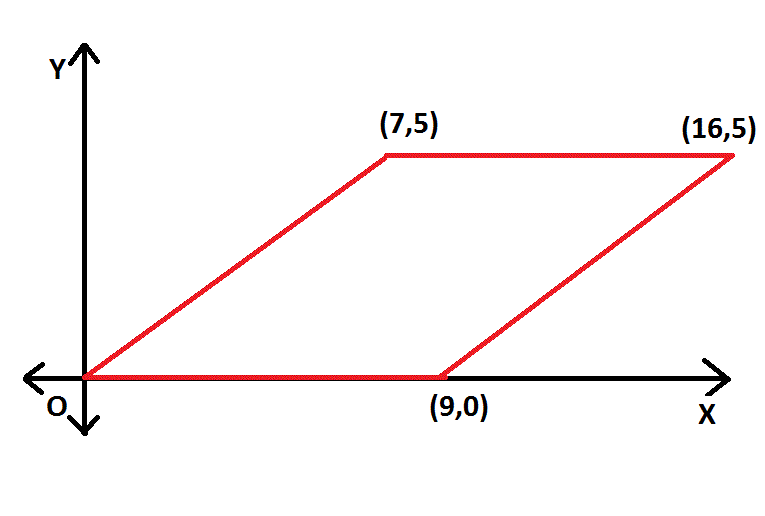
NOTE: Figure NOT drawn to scale.
What is the area of the parallelogram represented by the above figure?
NOTE: Figure NOT drawn to scale.
What is the area of the parallelogram represented by the above figure?
Tap to see back →
The area of a parallelogram is its base multiplied by its height. The diagram below shows both in green:
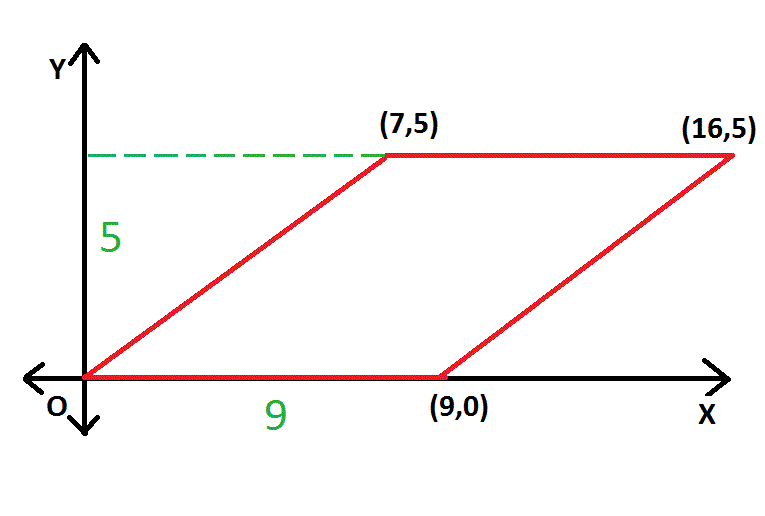

The area of a parallelogram is its base multiplied by its height. The diagram below shows both in green:
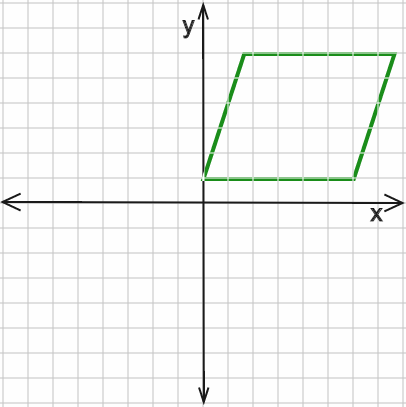
Find the area of the above parallelogram given a height of 5 units, as shown to scale.
Find the area of the above parallelogram given a height of 5 units, as shown to scale.
Tap to see back →
Since the diagram is drawn to scale, the base of the parallelogram must be 6 units in length. Using the area formula for a parallelogram:

Since the diagram is drawn to scale, the base of the parallelogram must be 6 units in length. Using the area formula for a parallelogram:
Given a base of 12 units and an area of 120 square units, find the height of the paralellogram shown above.
Given a base of 12 units and an area of 120 square units, find the height of the paralellogram shown above.
Tap to see back →
The area formula for a parallelogram is:

Thus, to find the height, rearrange:

The area formula for a parallelogram is:
Thus, to find the height, rearrange:
The above parallelogram has an area of 30 square units. Which of the following could be the lengths of the base and height of this figure? (Image not drawn to scale.)
The above parallelogram has an area of 30 square units. Which of the following could be the lengths of the base and height of this figure? (Image not drawn to scale.)
Tap to see back →
The formula for the area of a parallelogram is:

Thus, the base and height must equal 30 square units when multiplied together.
3 and 10 are the only combination of base and height which, when multiplied, equal the area of 30 square units.
The formula for the area of a parallelogram is:
Thus, the base and height must equal 30 square units when multiplied together.
3 and 10 are the only combination of base and height which, when multiplied, equal the area of 30 square units.
NOTE: Figure NOT drawn to scale.
What is the area of the parallelogram represented by the above figure?
NOTE: Figure NOT drawn to scale.
What is the area of the parallelogram represented by the above figure?
Tap to see back →
The area of a parallelogram is its base multiplied by its height. The diagram below shows both in green:
The area of a parallelogram is its base multiplied by its height. The diagram below shows both in green:
Find the area of the above parallelogram given a height of 5 units, as shown to scale.
Find the area of the above parallelogram given a height of 5 units, as shown to scale.
Tap to see back →
Since the diagram is drawn to scale, the base of the parallelogram must be 6 units in length. Using the area formula for a parallelogram:
Since the diagram is drawn to scale, the base of the parallelogram must be 6 units in length. Using the area formula for a parallelogram:
Given a base of 12 units and an area of 120 square units, find the height of the paralellogram shown above.
Given a base of 12 units and an area of 120 square units, find the height of the paralellogram shown above.
Tap to see back →
The area formula for a parallelogram is:
Thus, to find the height, rearrange:
The area formula for a parallelogram is:
Thus, to find the height, rearrange:
The above parallelogram has an area of 30 square units. Which of the following could be the lengths of the base and height of this figure? (Image not drawn to scale.)
The above parallelogram has an area of 30 square units. Which of the following could be the lengths of the base and height of this figure? (Image not drawn to scale.)
Tap to see back →
The formula for the area of a parallelogram is:
Thus, the base and height must equal 30 square units when multiplied together.
3 and 10 are the only combination of base and height which, when multiplied, equal the area of 30 square units.
The formula for the area of a parallelogram is:
Thus, the base and height must equal 30 square units when multiplied together.
3 and 10 are the only combination of base and height which, when multiplied, equal the area of 30 square units.
NOTE: Figure NOT drawn to scale.
What is the area of the parallelogram represented by the above figure?
NOTE: Figure NOT drawn to scale.
What is the area of the parallelogram represented by the above figure?
Tap to see back →
The area of a parallelogram is its base multiplied by its height. The diagram below shows both in green:
The area of a parallelogram is its base multiplied by its height. The diagram below shows both in green:
Find the area of the above parallelogram given a height of 5 units, as shown to scale.
Find the area of the above parallelogram given a height of 5 units, as shown to scale.
Tap to see back →
Since the diagram is drawn to scale, the base of the parallelogram must be 6 units in length. Using the area formula for a parallelogram:
Since the diagram is drawn to scale, the base of the parallelogram must be 6 units in length. Using the area formula for a parallelogram:
Given a base of 12 units and an area of 120 square units, find the height of the paralellogram shown above.
Given a base of 12 units and an area of 120 square units, find the height of the paralellogram shown above.
Tap to see back →
The area formula for a parallelogram is:
Thus, to find the height, rearrange:
The area formula for a parallelogram is:
Thus, to find the height, rearrange:
The above parallelogram has an area of 30 square units. Which of the following could be the lengths of the base and height of this figure? (Image not drawn to scale.)
The above parallelogram has an area of 30 square units. Which of the following could be the lengths of the base and height of this figure? (Image not drawn to scale.)
Tap to see back →
The formula for the area of a parallelogram is:
Thus, the base and height must equal 30 square units when multiplied together.
3 and 10 are the only combination of base and height which, when multiplied, equal the area of 30 square units.
The formula for the area of a parallelogram is:
Thus, the base and height must equal 30 square units when multiplied together.
3 and 10 are the only combination of base and height which, when multiplied, equal the area of 30 square units.
NOTE: Figure NOT drawn to scale.
What is the area of the parallelogram represented by the above figure?
NOTE: Figure NOT drawn to scale.
What is the area of the parallelogram represented by the above figure?
Tap to see back →
The area of a parallelogram is its base multiplied by its height. The diagram below shows both in green:
The area of a parallelogram is its base multiplied by its height. The diagram below shows both in green:
Find the area of the above parallelogram given a height of 5 units, as shown to scale.
Find the area of the above parallelogram given a height of 5 units, as shown to scale.
Tap to see back →
Since the diagram is drawn to scale, the base of the parallelogram must be 6 units in length. Using the area formula for a parallelogram:
Since the diagram is drawn to scale, the base of the parallelogram must be 6 units in length. Using the area formula for a parallelogram:
Given a base of 12 units and an area of 120 square units, find the height of the paralellogram shown above.
Given a base of 12 units and an area of 120 square units, find the height of the paralellogram shown above.
Tap to see back →
The area formula for a parallelogram is:
Thus, to find the height, rearrange:
The area formula for a parallelogram is:
Thus, to find the height, rearrange:
The above parallelogram has an area of 30 square units. Which of the following could be the lengths of the base and height of this figure? (Image not drawn to scale.)
The above parallelogram has an area of 30 square units. Which of the following could be the lengths of the base and height of this figure? (Image not drawn to scale.)
Tap to see back →
The formula for the area of a parallelogram is:
Thus, the base and height must equal 30 square units when multiplied together.
3 and 10 are the only combination of base and height which, when multiplied, equal the area of 30 square units.
The formula for the area of a parallelogram is:
Thus, the base and height must equal 30 square units when multiplied together.
3 and 10 are the only combination of base and height which, when multiplied, equal the area of 30 square units.