How to find a triangle on a coordinate plane - SSAT Middle Level Quantitative
Card 0 of 36
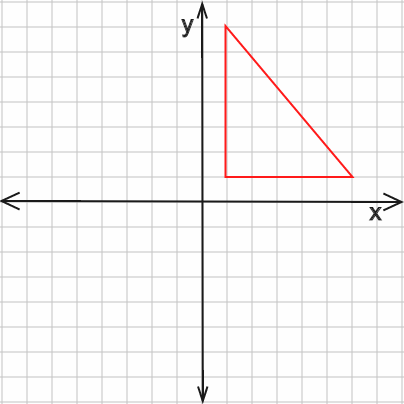
Find the area of the above triangle, given that it has a height of 12 and a base of 10.
Find the area of the above triangle, given that it has a height of 12 and a base of 10.
Tap to see back →
Because this is a right triangle, the area formula is simply:
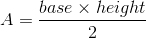
Thus, the solution is:

Because this is a right triangle, the area formula is simply:
Thus, the solution is:
Given the above triangle has a base of 5 and height of 6, what is the perimeter of the triangle?
Given the above triangle has a base of 5 and height of 6, what is the perimeter of the triangle?
Tap to see back →
First, use the Pythagorean Theorem to find the length of the hypotenuse:
 where
where  and
and  are 5 and 6, respectively, and
  is the hypotenuse.
Thus, 
Finally, the perimeter is the sum of the sides of the triangle or:

First, use the Pythagorean Theorem to find the length of the hypotenuse:
Thus,
Finally, the perimeter is the sum of the sides of the triangle or:
Given the above triangle has a base of  and hypotenuse of
  , find the height of the triangle.
Given the above triangle has a base of
Tap to see back →
Use the Pythagorean Theorem,

where  is the hypotenuse,
  is the base, and
  is the height.
Rearranging to solve for the height,  , yields:


Use the Pythagorean Theorem,
where
Rearranging to solve for the height,
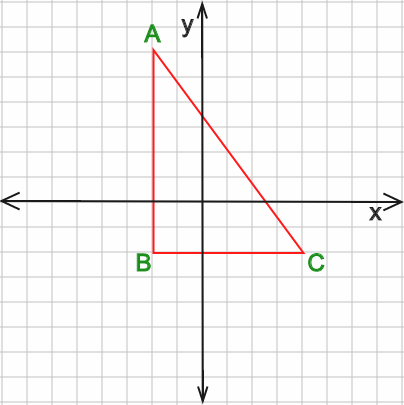
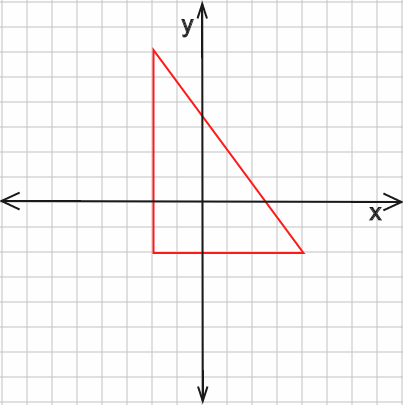
Given triangle  , where
  is at point
  and
and  is at point
  , find the area.
Given triangle
Tap to see back →
To find the area of this triangle, we first need to determine the length of sides AB and BC. First, point B shares the same x-coordinate as point A and the same y-coordinate as point C. Thus, B must be located at point (-2,-2).
The length of side AB must then be:

and the length of side BC:

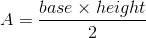
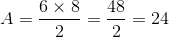
Using the area formula,
we can find the area using the base (side BC) and height (side AB):
To find the area of this triangle, we first need to determine the length of sides AB and BC. First, point B shares the same x-coordinate as point A and the same y-coordinate as point C. Thus, B must be located at point (-2,-2).
The length of side AB must then be:
and the length of side BC:
Using the area formula,
we can find the area using the base (side BC) and height (side AB):
Given triangle  , where side
  and side
  , find the perimeter.
Given triangle
Tap to see back →
Use the Pythagorean Theorem to find the length of side AC:


Then, the perimeter is simply the sum of all three sides:

Use the Pythagorean Theorem to find the length of side AC:
Then, the perimeter is simply the sum of all three sides:
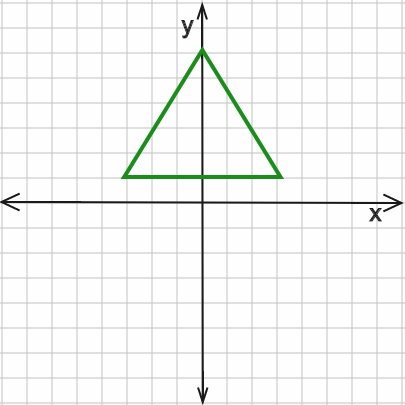
Given the above triangle is an equilateral triangle, find the perimeter in units as drawn in the coordinate system.
Given the above triangle is an equilateral triangle, find the perimeter in units as drawn in the coordinate system.
Tap to see back →
Using the coordinate system, one can see the base of the triangle is 6 units in length. Since it is an equilateral triangle, the other two sides must also be 6 units each in length. Therefore the perimeter is:

Using the coordinate system, one can see the base of the triangle is 6 units in length. Since it is an equilateral triangle, the other two sides must also be 6 units each in length. Therefore the perimeter is:
Given a height of  units and base of
  units, find the area of the triangle shown above.
Given a height of
Tap to see back →
The area of any triangle is calculated by the formula:
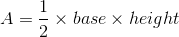
Thus, the area of this triangle is:

The area of any triangle is calculated by the formula:
Thus, the area of this triangle is:
The isosceles triangle shown above has a perimeter of 22 and base of 6. Find the lengths of the left and right sides, respectively. Assume no other side has a length of 6.
The isosceles triangle shown above has a perimeter of 22 and base of 6. Find the lengths of the left and right sides, respectively. Assume no other side has a length of 6.
Tap to see back →
With a perimeter of 22 and base of 6, this means the other two sides must add up to:

Because an isosceles triangle must have two sides equal in length and we know from the problem that no other side equals 6, the two remaining sides must be equal to each other.
Thus, to be equal to each other and also add up to 16, each side must be 8 units in length.
With a perimeter of 22 and base of 6, this means the other two sides must add up to:
Because an isosceles triangle must have two sides equal in length and we know from the problem that no other side equals 6, the two remaining sides must be equal to each other.
Thus, to be equal to each other and also add up to 16, each side must be 8 units in length.
The above triangle has base 6 and height 4. Find the perimeter.
The above triangle has base 6 and height 4. Find the perimeter.
Tap to see back →
Because the y-axis bisects the base, we can divide the triangle into two, equal right triangles. The base of the right triangle is thus half that of the larger triangle, or 3. The height is still 4. To find the hypotenuse, use the Pythagorean Theorem:


Thus, we now know the base as given in the problem and each of the other two sides (which are also the hypotenuses of the right triangles).
Therefore, the perimeter is:

Because the y-axis bisects the base, we can divide the triangle into two, equal right triangles. The base of the right triangle is thus half that of the larger triangle, or 3. The height is still 4. To find the hypotenuse, use the Pythagorean Theorem:
Thus, we now know the base as given in the problem and each of the other two sides (which are also the hypotenuses of the right triangles).
Therefore, the perimeter is:
Find the area of the above triangle, given that it has a height of 12 and a base of 10.
Find the area of the above triangle, given that it has a height of 12 and a base of 10.
Tap to see back →
Because this is a right triangle, the area formula is simply:
Thus, the solution is:
Because this is a right triangle, the area formula is simply:
Thus, the solution is:
Given the above triangle has a base of 5 and height of 6, what is the perimeter of the triangle?
Given the above triangle has a base of 5 and height of 6, what is the perimeter of the triangle?
Tap to see back →
First, use the Pythagorean Theorem to find the length of the hypotenuse:
where and are 5 and 6, respectively, and is the hypotenuse.
Thus,
Finally, the perimeter is the sum of the sides of the triangle or:
First, use the Pythagorean Theorem to find the length of the hypotenuse:
Thus,
Finally, the perimeter is the sum of the sides of the triangle or:
Given the above triangle has a base of and hypotenuse of , find the height of the triangle.
Given the above triangle has a base of
Tap to see back →
Use the Pythagorean Theorem,
where is the hypotenuse, is the base, and is the height.
Rearranging to solve for the height, , yields:
Use the Pythagorean Theorem,
where
Rearranging to solve for the height,
Given triangle , where is at point and is at point , find the area.
Given triangle
Tap to see back →
To find the area of this triangle, we first need to determine the length of sides AB and BC. First, point B shares the same x-coordinate as point A and the same y-coordinate as point C. Thus, B must be located at point (-2,-2).
The length of side AB must then be:
and the length of side BC:
Using the area formula,
we can find the area using the base (side BC) and height (side AB):
To find the area of this triangle, we first need to determine the length of sides AB and BC. First, point B shares the same x-coordinate as point A and the same y-coordinate as point C. Thus, B must be located at point (-2,-2).
The length of side AB must then be:
and the length of side BC:
Using the area formula,
we can find the area using the base (side BC) and height (side AB):
Given triangle , where side and side , find the perimeter.
Given triangle
Tap to see back →
Use the Pythagorean Theorem to find the length of side AC:
Then, the perimeter is simply the sum of all three sides:
Use the Pythagorean Theorem to find the length of side AC:
Then, the perimeter is simply the sum of all three sides:
Given the above triangle is an equilateral triangle, find the perimeter in units as drawn in the coordinate system.
Given the above triangle is an equilateral triangle, find the perimeter in units as drawn in the coordinate system.
Tap to see back →
Using the coordinate system, one can see the base of the triangle is 6 units in length. Since it is an equilateral triangle, the other two sides must also be 6 units each in length. Therefore the perimeter is:
Using the coordinate system, one can see the base of the triangle is 6 units in length. Since it is an equilateral triangle, the other two sides must also be 6 units each in length. Therefore the perimeter is:
Given a height of units and base of units, find the area of the triangle shown above.
Given a height of
Tap to see back →
The area of any triangle is calculated by the formula:
Thus, the area of this triangle is:
The area of any triangle is calculated by the formula:
Thus, the area of this triangle is:
The isosceles triangle shown above has a perimeter of 22 and base of 6. Find the lengths of the left and right sides, respectively. Assume no other side has a length of 6.
The isosceles triangle shown above has a perimeter of 22 and base of 6. Find the lengths of the left and right sides, respectively. Assume no other side has a length of 6.
Tap to see back →
With a perimeter of 22 and base of 6, this means the other two sides must add up to:
Because an isosceles triangle must have two sides equal in length and we know from the problem that no other side equals 6, the two remaining sides must be equal to each other.
Thus, to be equal to each other and also add up to 16, each side must be 8 units in length.
With a perimeter of 22 and base of 6, this means the other two sides must add up to:
Because an isosceles triangle must have two sides equal in length and we know from the problem that no other side equals 6, the two remaining sides must be equal to each other.
Thus, to be equal to each other and also add up to 16, each side must be 8 units in length.
The above triangle has base 6 and height 4. Find the perimeter.
The above triangle has base 6 and height 4. Find the perimeter.
Tap to see back →
Because the y-axis bisects the base, we can divide the triangle into two, equal right triangles. The base of the right triangle is thus half that of the larger triangle, or 3. The height is still 4. To find the hypotenuse, use the Pythagorean Theorem:
Thus, we now know the base as given in the problem and each of the other two sides (which are also the hypotenuses of the right triangles).
Therefore, the perimeter is:
Because the y-axis bisects the base, we can divide the triangle into two, equal right triangles. The base of the right triangle is thus half that of the larger triangle, or 3. The height is still 4. To find the hypotenuse, use the Pythagorean Theorem:
Thus, we now know the base as given in the problem and each of the other two sides (which are also the hypotenuses of the right triangles).
Therefore, the perimeter is:
Find the area of the above triangle, given that it has a height of 12 and a base of 10.
Find the area of the above triangle, given that it has a height of 12 and a base of 10.
Tap to see back →
Because this is a right triangle, the area formula is simply:
Thus, the solution is:
Because this is a right triangle, the area formula is simply:
Thus, the solution is:
Given the above triangle has a base of 5 and height of 6, what is the perimeter of the triangle?
Given the above triangle has a base of 5 and height of 6, what is the perimeter of the triangle?
Tap to see back →
First, use the Pythagorean Theorem to find the length of the hypotenuse:
where and are 5 and 6, respectively, and is the hypotenuse.
Thus,
Finally, the perimeter is the sum of the sides of the triangle or:
First, use the Pythagorean Theorem to find the length of the hypotenuse:
Thus,
Finally, the perimeter is the sum of the sides of the triangle or: