Award-Winning Calculus Tutors
serving Los Angeles, CA
Calculus
Tutors in Los Angeles
Private 1-on-1 tutoring, weekly live classes for academic support, test prep & enrichment, practice tests and diagnostics, and more to elevate grades and test scores.
Based on 3.4M Learner Ratings
UniversitiesSchools & Universities
DeliveredHours Delivered
ProficiencyGrowth in Proficiency
Who needs tutoring?
No obligation. Takes ~1 minute.

Five years of math tutoring — from basic arithmetic through pre-calculus — means Ema has walked students through every conceptual building block that leads to calculus, with algebra as her particular sweet spot. That algebraic fluency pays off in calculus, where factoring, function manipulation, and equation-solving aren't just prerequisites but daily tools for working through limits, derivatives, and integration techniques. Her 1540 SAT and 5.0 tutoring rating back up the quantitative chops her English degree might not immediately suggest.
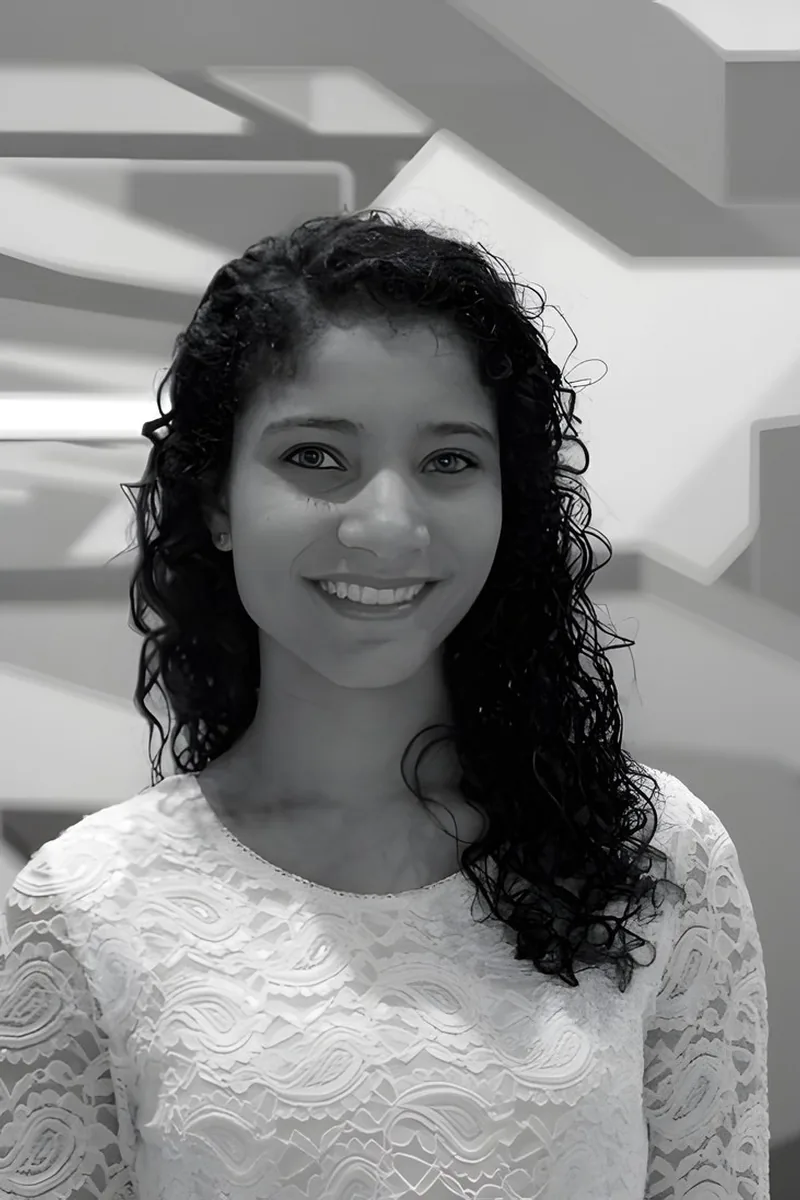
Honestly, calculus is a long way from Film and Media Studies and Sociology at Yale — but Katrina's 1490 SAT shows she can handle quantitative reasoning, and her tutoring spans math subjects from algebra through calculus. She takes the same close-analytical approach she'd use dissecting a film's structure and applies it to unpacking how a derivative captures change, making sure each step in the logic is airtight before moving forward.
Screenwriting at USC isn't a math degree, so Kiersten is straightforward that calculus sits at the edge of her tutoring range rather than the center. That said, her 1550 SAT demonstrates strong quantitative reasoning, and her experience breaking complex narratives into precise, logical sequences translates surprisingly well to walking through the step-by-step logic of limits and early derivative problems.
An English and French literature background doesn't scream calculus, but Carla's analytical instincts — the same close-reading precision she applies to poetry — carry over to unpacking what a limit or derivative is actually saying beneath the notation. She treats each new concept like a passage to decode, slowing down at the exact points where symbolic language tends to lose students. Rated 5.0 by her students.
Limits, derivatives, and integrals each introduce a new way of seeing change, and students who try to muscle through with memorized rules often stall at applications like related rates or optimization. John unpacks the reasoning behind each technique so the calculus feels like a connected story rather than a stack of unrelated formulas.
Dental school at UCLA means Raquel has worked through the quantitative side of biological sciences — modeling rates of drug absorption, understanding decay curves, and applying the kind of derivative-based reasoning that underpins pharmacology coursework. Her 34 ACT composite backs up that quantitative fluency, and she teaches calculus concepts by connecting them to the real-world rate problems she's encountered in her clinical training.
Pre-med coursework and a public health minor at UCLA meant Nicole spent serious time with the quantitative side of biology — growth models, rate-of-change problems in epidemiology, and the calculus that underpins how diseases spread through populations. That background, combined with her cum laude graduation and Phi Beta Kappa nomination, gives her a science-grounded way to unpack derivatives and integrals so the math connects to something tangible rather than floating in abstraction.
Earth sciences at USC meant Krista spent her undergrad applying calculus to real physical systems — modeling erosion rates, thermal gradients in rock layers, and the differential equations behind groundwater flow. Her graduate work in GIS added spatial analysis and continuous surface modeling, giving her a practical vocabulary for explaining derivatives and integrals through problems where the math describes something you can actually see in the landscape.
Tom's 1560 SAT confirms he can handle serious quantitative work, and his Visual and Environmental Studies program at Harvard involves more math than people expect — spatial reasoning, computational design, and the geometric thinking that underpins calculus concepts like optimization and related rates. He teaches those topics by connecting them to visual, tangible problems where a derivative describes something you can actually see changing.
Psychology and linguistics aren't typical calculus backgrounds, but Naama's 1570 SAT demonstrates she can handle serious quantitative reasoning, and her linguistics training — parsing formal rule systems, mapping abstract structures — mirrors the kind of thinking that makes limits and derivative rules intelligible rather than just mechanical. She teaches early calculus concepts by anchoring each new definition to the logical pattern behind it, so students see the architecture instead of a pile of disconnected formulas.
An English major at UCLA, Zoe doesn't claim calculus as her strongest subject — but her journalism and editing background trained her to be precise and methodical, skills that translate surprisingly well to walking through the logic of limits and early derivative problems. She breaks down dense notation the way she'd break down a complicated sentence: piece by piece, until the structure makes sense.
Theatre may not scream calculus, but Nina's BFA training at SMU involved the kind of precise analytical sequencing — blocking scenes beat by beat, building a performance arc — that maps surprisingly well onto walking through limit definitions and derivative rules step by step. She's upfront that this isn't her deepest subject, but her 33 ACT shows real quantitative ability, and her instinct is to make abstract notation feel less intimidating by connecting each concept to something concrete and logical.
Studying neuroscience at Pomona College meant Whitney couldn't avoid calculus — modeling action potentials, analyzing receptor binding curves, and quantifying how signals propagate all depend on derivatives and integrals behaving in predictable ways. That firsthand experience translates into teaching calculus through the kind of applied problems where the math actually does something, from rates of change in biological systems to area-under-the-curve interpretations that show up constantly in lab work.
A physics degree means Gerardo didn't just take calculus — he used it daily to model motion, analyze forces, and solve differential equations with real physical meaning. That applied perspective makes him especially effective at unpacking the chain rule, integration techniques, and the connection between derivatives and the behavior of a function. He teaches the intuition behind each concept so that problem-solving feels like reasoning, not recipe-following.
Pharmacology at the master's level is essentially applied calculus — drug half-life curves, dosage accumulation models, and the rate equations governing how compounds move through the body all depend on derivatives and integrals. Helen's Tulane pharmacology training means she can anchor abstract calculus rules in those concrete biological scenarios, making the math feel purposeful rather than arbitrary. Rated 5.0 by students.
Honestly, math was the subject Zach had to fight for — he's said so himself — and that struggle gave him a sharp eye for where confusion actually starts when students hit new notation or abstract reasoning. His Theatre and English degrees from Northwestern aren't calculus credentials, but his experience breaking down complex texts translates surprisingly well to unpacking what a limit expression is really asking or why a derivative rule follows logically from the definition. He's strongest with students in that early conceptual stage where the language of calculus feels more like the barrier than the math itself.
Every week in his Occidental chemistry courses, Chandler applies derivatives and integrals to real problems — reaction rates, area under concentration curves, optimization of yields. That constant practice means he teaches calculus concepts like the chain rule, related rates, and integration techniques with an intuitive sense for what the math actually describes.
Improv training at NYU's Atlantic Acting School might seem unrelated to calculus, but it drilled one skill that transfers directly: reading a situation in real time and adapting — exactly what students need when deciding whether a problem calls for the chain rule, u-substitution, or integration by parts. Michael's 35 ACT confirms he has the quantitative horsepower to back it up, and his teaching style leans on building intuition for how derivatives and integrals behave before locking in the mechanics.
Ari's degrees are in English and Environmental Studies, not math, so he's straightforward that calculus isn't his deepest subject — but a 1590 SAT demonstrates serious quantitative chops, and his teaching roster includes AP Calculus BC. That combination means he can walk through derivatives, integrals, and series with genuine fluency while bringing the clear, structured communication skills of someone trained to write and argue precisely.
Music and math share more DNA than most people realize — reading complex scores trains the same pattern-recognition and spatial reasoning that calculus demands. Claire leverages her SAT math chops (1530 composite) and teaching credential to unpack topics like related rates and optimization, building each problem from a clear visual or real-world setup so the logic stays front and center.
Studying both physics and mathematics at Occidental means Drew uses calculus every day — computing derivatives for velocity problems, setting up integrals for area and volume, applying the fundamental theorem in lab work. He unpacks each technique by showing what it actually means graphically and physically, not just algebraically.
Accounting graduate work at USC's Leventhal School means Jacob regularly uses calculus concepts in disguise — marginal cost analysis, revenue optimization, and the continuous compounding formulas that underpin financial modeling all rely on derivatives and integrals. That daily exposure to quantitative reasoning in business contexts gives him a practical vocabulary for explaining what a rate of change actually represents and why optimization problems work the way they do.
Comparative literature trains you to untangle dense, layered texts — and Emily applies that same close-reading instinct to calculus notation, breaking apart expressions piece by piece until the underlying logic is clear. Her SAT score of 1370 confirms solid quantitative reasoning, and her experience as a university writing tutor taught her how to meet a tough concept patiently, walking through each step until it holds together on its own terms.
Travis teaches across a wide math sequence from arithmetic through calculus, which means he's seen exactly where students' algebra gaps cause chain-reaction confusion once derivatives and integration rules enter the picture. He's particularly effective at diagnosing those upstream weaknesses — shaky function notation, weak factoring instincts — and fixing them in context so that calculus techniques like the chain rule or u-substitution stop feeling arbitrary. His 1530 SAT confirms the quantitative fluency behind that approach.
Honestly, calculus is a stretch from Gregory's Radio and Television background — this isn't his deepest subject area. That said, he tutors math broadly and brings a knack for translating abstract processes into plain, step-by-step language, which is exactly what early calculus concepts like limits and basic differentiation demand when the notation starts to feel like a foreign alphabet.
Foreign language study trains you to decode unfamiliar symbol systems and internalize structural rules — skills that map surprisingly well onto reading calculus notation for the first time. Enrico's linguistics background from the University of Verona gives him a knack for unpacking the grammar of mathematical expressions, walking through what limit notation or derivative symbols actually say before jumping to computation.
Sarah's three English degrees don't scream calculus, and she's honest about that — this isn't her deepest subject. What she does bring is a tutor who's spent years teaching algebra and middle school math, building the kind of patient, step-by-step explanations that make early calculus concepts like limits and slope-of-a-tangent-line problems less intimidating for students still finding their footing.
Limits, derivatives, and integrals each demand a different kind of thinking, and most calculus struggles come from not recognizing which tool a problem is actually asking for. Sean unpacks that decision-making process explicitly, so students learn to read a problem before jumping into computation. His relaxed, improvisational teaching style — sharpened at Second City — keeps even chain-rule marathons from feeling like a grind.
A dual degree in physics and mathematics means Sarah didn't just take calculus — she relied on it daily, from modeling projectile motion to solving the integrals behind electromagnetic field theory. That physics intuition lets her explain what a derivative or integral physically represents, not just how to compute one. She's particularly strong on the chain rule and related rates, where translating a word problem into mathematical language is half the battle.
An American Studies major at Occidental College, Alanna is honest that calculus falls well outside her academic focus — her strengths live in writing, literature, and verbal reasoning. That said, her experience tutoring math at multiple levels means she can support students navigating the early conceptual hurdles like understanding what a limit is actually describing or interpreting slope as a rate of change, breaking down the language of calculus so it feels less foreign.
Limits, derivatives, and integrals all click faster when a student sees the underlying logic instead of just memorizing formulas. Brian studied math and economics at Caltech, where calculus wasn't just a course but the daily language of nearly every discipline — so he teaches it with an emphasis on why the chain rule or integration by parts works, not just when to apply it.
Having completed AP Calculus BC and Multivariable Calculus with a 5 on the AP exam, Jackie knows the full arc from limits through series convergence and vector calculus. She's particularly sharp at unpacking the conceptual leap between derivatives as formulas and derivatives as rates of change — the place where most students first lose the thread. Her approach ties each new technique back to the graphical and physical intuition behind it.
Sean's math tutoring background covers through Algebra 2 and SAT Math, so he's straightforward that calculus is at the edge of his range rather than deep in his wheelhouse. His 1480 SAT score shows solid quantitative chops, and his pre-law analytical training — pulling apart arguments piece by piece — gives him a useful framework for walking through the logic of limits and early derivative concepts where careful, sequential reasoning matters most.
Computer science coursework doesn't just brush up against calculus — it lives in it, from analyzing algorithm efficiency with Big-O notation to computing gradients in machine learning. Christina's CS degree means she can teach derivatives, integrals, and series convergence as tools she's actually used in code, not just textbook exercises. Her 34 ACT composite confirms the quantitative chops to back it up.
Derivatives and integrals click faster when a student can describe the underlying logic, not just replicate a formula. Aaron applies that principle in every calculus session — he'll work through chain rule applications or related rates problems alongside the student, then ask them to teach the concept back as a final check. His UCSB science coursework means he regularly uses calculus in his own studies.
Scoring 5s on both AP Calculus AB and BC, Chris has a deep command of everything from limit definitions and derivative rules through integration techniques and series convergence. He tackles the concepts that derail most students — related rates, optimization, and improper integrals — by anchoring each one in a visual or physical interpretation. As a UCLA biomedical engineering major, he applies calculus constantly and teaches it as something that means something, not just symbol manipulation.
Timothy's science-heavy background — AP coursework in biology, chemistry, and physics, now followed by medical school — means he's used calculus as a tool in real contexts like modeling drug absorption rates and reaction kinetics. He teaches limits, derivatives, and integrals by grounding each concept in what it actually represents, which makes the notation far less intimidating.
Law school and LSAT prep at the 99th percentile train a very specific skill: dismantling complex, multi-step logic problems under pressure. Keith applies that same sequential reasoning to early calculus — walking through why a limit behaves a certain way or how a derivative rule follows from the definition, treating each concept as an argument to be built rather than a formula to be accepted. His political science and legal background won't cover advanced integration techniques, but for the foundational material where logical structure matters most, the approach translates well.
Studying neurobiology at the undergraduate level and now pursuing an MD, Daniel has spent years applying derivatives and integrals to real biological systems — reaction rates, pharmacokinetics, population models. He brings that context into calculus sessions, making concepts like the chain rule or integration by parts feel purposeful. His approach emphasizes building intuition for why a technique works before drilling the mechanics.
Psychobiology at UCLA isn't just memorizing brain regions — Shant's coursework required applying calculus to model biological processes like hormone concentration curves and neural signal rates, giving him firsthand experience with derivatives and integrals in scientific contexts. That background means he can ground abstract calculus rules in tangible examples of how systems change over time, which tends to make the material stick. Rated 5.0 by students.
Testimonials
Because the right Calculus tutor makes all the difference.
Average Session Rating – Based on 3.4M Learner Ratings
Nearby Calculus Tutors
Other Los Angeles Tutors
Related Math Tutors in Los Angeles
Frequently Asked Questions
Calculus courses can vary significantly depending on your school's approach—whether it emphasizes AB, BC, or AP Calculus standards. Tutors connect with students in Los Angeles are experienced across these different frameworks and can tailor instruction to match your specific curriculum, ensuring you're mastering the exact content and problem-solving approaches your class requires.
Calculus requires understanding *why* derivatives and integrals work, not just how to compute them. Personalized 1-on-1 instruction helps you see the connections between limits, rates of change, and area—building the conceptual foundation that makes harder topics like related rates and optimization problems click into place.
Word problems require translating real-world scenarios into mathematical equations, which is a skill separate from computation. Expert tutors help you develop a systematic approach: identify variables, set up the relationship (derivative or integral), solve, and interpret your answer. This strategy works across related rates, optimization, and area problems.
Limits (understanding how they work at discontinuities), derivatives (applying the chain rule and product rule), and integrals (recognizing which techniques to use) are frequent challenge areas. Many students also struggle with proof-based problems and connecting graphical, numerical, and algebraic representations—all areas where focused tutoring makes a real difference.
Math anxiety often stems from gaps in foundational knowledge or rushing through problem steps. Working 1-on-1 with a tutor creates space to slow down, ask questions without pressure, and build confidence by mastering one concept at a time. Many students find their anxiety decreases significantly once they understand the logic behind the material.
Calculus teachers grade on process, not just the final answer—partial credit depends on clear, logical steps. A tutor helps you develop the habit of writing out each stage of your work, explaining your reasoning, and organizing multi-step problems so your teacher can follow your thinking and identify exactly where you might need adjustment.
Varsity Tutors matches you with an expert tutor who understands your specific Calculus course and learning style. After a quick assessment of your needs, you'll be connected with someone experienced in helping students master the exact topics you're working on, whether that's limits, derivatives, integrals, or exam prep.
Let’s find your perfect tutor
Answer a few quick questions. We’ll recommend the right plan and match you with a top 5% tutor.