Award-Winning Middle School Math Tutors
serving Miami, FL
Middle School Math
Tutors in Miami
Private 1-on-1 tutoring, weekly live classes for academic support, test prep & enrichment, practice tests and diagnostics, and more to elevate grades and test scores.
Based on 3.4M Learner Ratings
UniversitiesSchools & Universities
DeliveredHours Delivered
ProficiencyGrowth in Proficiency
Who needs tutoring?
No obligation. Takes ~1 minute.

Whether it's ratios, proportions, or early equation-solving, Nicolas connects each middle school math concept to something tangible — like how scaling works in rocket design or why unit conversion matters in his Princeton engineering coursework. That real-world anchor turns "when will I ever use this?" into genuine curiosity.
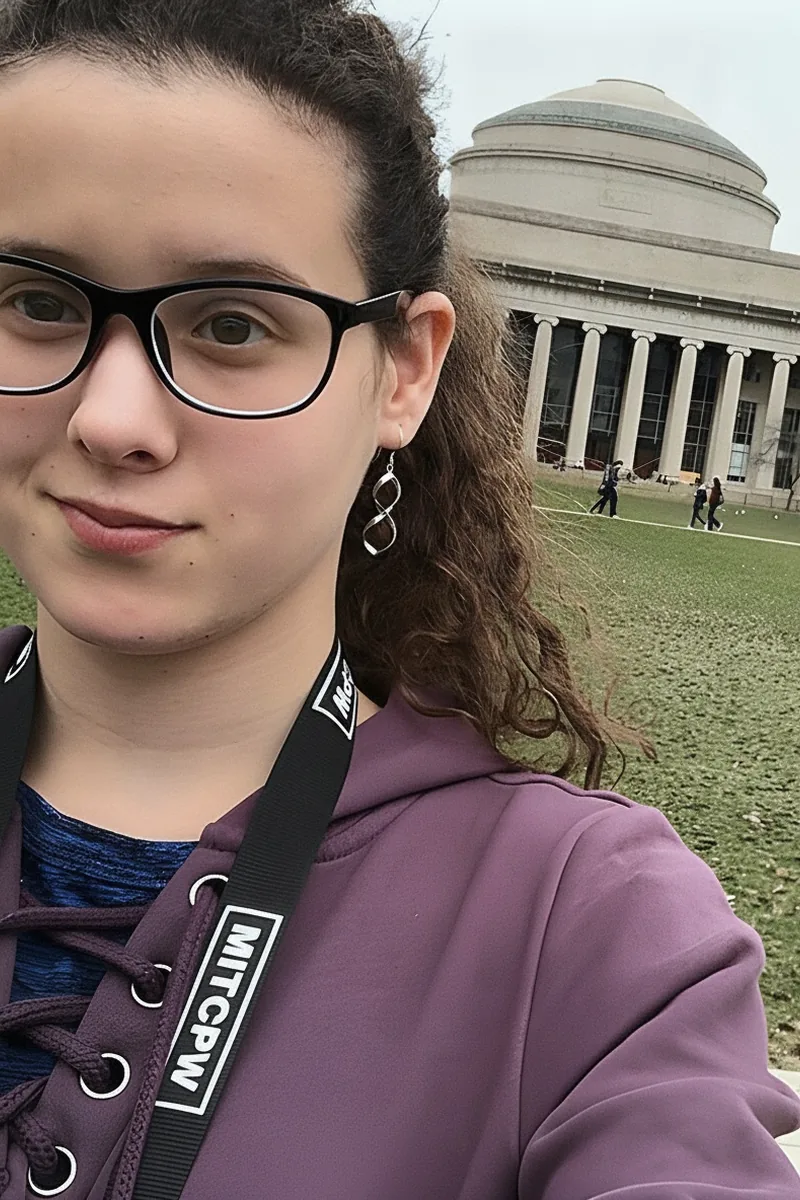
At the middle school level, math shifts from arithmetic to reasoning — students start working with variables, negative numbers, and proportional relationships for the first time. Dalila makes that transition less intimidating by tying each new idea to something concrete, whether it's using ratios to scale a recipe or graphing a real pattern. Her full math background means she's always building toward the algebra and geometry skills students will need next.
Fractions, ratios, and proportional reasoning are the concepts middle schoolers use most in every math class going forward, yet they're often taught too quickly. Apoorva has tutored students at this level since she was in high school herself and knows how to slow down on the sticking points — like setting up equivalent fractions or translating word problems into expressions — without making students feel behind.
The jump from arithmetic to algebraic thinking — variables, proportional reasoning, interpreting word problems — is one of the biggest conceptual leaps in middle school. Andrew approaches it by translating each problem into everyday language before introducing any notation, making sure the logic lands before the symbols do. His writing background gives him a knack for finding the explanation that fits each student's way of thinking.
The jump from arithmetic to proportional reasoning, basic geometry, and introductory equations trips up a lot of middle schoolers who were previously confident in math. Adriana zeroes in on where a student's understanding starts to wobble — whether it's translating word problems into expressions or working with negative numbers — and rebuilds clarity from that exact point. Her 5.0 rating speaks to how well that targeted approach works with younger learners.
Earning her associate's degree in accounting and finance while still in high school means Marissa has been doing real math — budgets, percentages, financial modeling — at a college level since she was her students' age. That gives her a practical fluency with decimals, ratios, and equation-solving that she can explain in straightforward terms middle schoolers actually relate to. Rated 4.8 by students.
Fractions, ratios, and proportional reasoning trip up a lot of middle schoolers because the concepts feel disconnected from anything real. Marina ties these ideas to practical scenarios — cooking measurements, map scales, sports statistics — so the logic clicks before the formulas get memorized. As a state-certified teacher, she knows how to pace lessons for this age group.
St. John's College runs on seminar discussion and primary-source analysis, which means Kelsey has spent years learning to slow down, ask precise questions, and build understanding from scratch — habits that translate directly to teaching middle schoolers how to think through multi-step problems and early algebraic concepts. Her volunteer tutoring with middle school students in math gives her firsthand experience with the specific stumbling blocks this age group hits, from negative numbers to setting up equations. A 34 ACT composite confirms the quantitative chops behind that patient, inquiry-driven approach.
Working at Mathnasium with students ranging from elementary through high school gave Veronica a clear map of where middle schoolers tend to stumble — especially the jump from straightforward arithmetic into negative numbers and basic variable work. Her computer engineering coursework at the University of Florida means she uses algebra and problem-solving daily, so she can show a sixth or seventh grader exactly how today's fraction or equation practice feeds into the math that's coming next.
At the middle school level, math shifts from arithmetic into proportional reasoning, basic equations, and early graphing — and that transition trips up a lot of students. Juan keeps sessions structured around small, achievable goals so that solving a two-step equation or plotting coordinates on a coordinate plane feels like a win, building genuine confidence for algebra ahead.
Fractions, ratios, and pre-algebra concepts click faster when a student sees how they connect — not just how to follow the steps. Veena spent time as an assistant science teacher at a middle school, so she knows exactly where sixth through eighth graders tend to get stuck and how to reframe a problem so it makes sense. Rated 5.0 by students.
Brown University's biology program meant Camille spent years converting lab data into equations and working with ratios, concentrations, and unit conversions — the same quantitative muscles middle schoolers are building when they tackle fractions, percentages, and early algebraic expressions. Her dual master's degrees required heavy statistical analysis, so she can trace a concept like proportional reasoning from a homework worksheet all the way to how scientists actually use it. Rated 5.0 by students.
Certified in Florida for Math 5-12, Valerie covers the full spread of middle school math — from ratios and rates to introductory equation solving and coordinate graphing. Her MBA background means she often ties problems to real-world scenarios like budgeting or data analysis, giving students a reason to care about the math they're learning.
Fractions, ratios, and proportional reasoning can feel abstract until someone shows you how they connect — Sofia breaks these concepts into concrete steps that make the jump from arithmetic to pre-algebra feel natural. Her science background means she's comfortable pulling in real-world examples, like unit conversions or data from experiments, to give math problems more meaning. Rated 5.0 by students.
I am certified in the state of Florida to teach Middle Grades Mathematics 5-9. I have a bachelors degree in Finance and Masters degree in Sustainable Real Estate Development from Tulane University. I previously worked in real estate for two years prior to moving to Miami and was involved as a mentor with Big Brothers Big Sisters for much of that time.
I am a student of the University of Central Florida currently working on a PhD in Digital Media. As a tutor for Varsity Tutors, I have the unique ability to be able to combine two of my greatest passions--writing, and helping others. This is a combination of interests that I've been working with for a while now whether in High School tutoring children from my old elementary school, mentoring middles schoolers and high schoolers as part of Write Away, and tutoring college students on essay writing with Tutor.com. When it comes to tutoring, I specialize in reading and writing, though find my preference to be mostly in writing as it is a subject I am both strong in as well as take a personal interest in as an aspiring writer. Outside of writing stories, however, interests of mine including consuming media of all types such as books, movies, television shows, or video games, enjoying all so long as they have good stories to back them up.
Neuroscience training means Stephanie spent her degree program thinking in graphs, functions, and data — so when a sixth or seventh grader hits a wall with coordinate plotting or interpreting charts, she can pull from real examples instead of textbook abstractions. Her 32 ACT and 1490 SAT back up broad quantitative fluency, and her 5.0 rating suggests she knows how to translate that fluency into explanations that actually land for younger learners.
Years of hands-on homework help with middle schoolers gave Mary a clear picture of where students get stuck — whether it's fractions, ratios, or the leap into negative numbers. She breaks problems into smaller reasoning steps so students can see the logic instead of just following a memorized procedure. Rated 4.7 by families she's worked with.
Having served as a mentor and tutor at a middle school through City Year, Jessica knows exactly where sixth through eighth graders tend to get stuck — whether it's fractions, proportional reasoning, or the jump into negative numbers. She connects each new concept back to what students already understand so the logic clicks rather than feeling arbitrary. Her 5.0 rating speaks to how well that approach lands.
The jump from arithmetic to algebraic thinking is one of the biggest shifts in a student's math life, and it happens right in middle school — variables, proportional reasoning, and basic geometry proofs all show up for the first time. Christine doubles as a psychology and education minor at the University of Miami, which means she pays close attention to how a younger student actually processes new concepts. She ties problems to real-world scenarios a student cares about, making ratios and equations feel less abstract.
The jump from arithmetic to algebraic thinking is where middle school math gets interesting — and where a lot of students start feeling lost. Jairo breaks down concepts like proportional relationships, integer operations, and basic equation-solving by connecting them to concrete situations students already understand, building confidence before the material gets more abstract.
Between a biology degree and a 1510 SAT, Michelle has spent years doing math in context — calculating dilution ratios, interpreting data sets, converting units — which gives her a practical fluency with the exact skills middle schoolers are formalizing in class. She's particularly effective at demystifying fractions and decimals by tying them to tangible scenarios rather than letting them stay as abstract rules on a page. Rated 4.9 by families.
Pre-med coursework at Miami meant Alec was constantly converting between units, interpreting graphs, and setting up proportions — the same quantitative skills middle schoolers are developing when they tackle ratios, percentages, and basic equations. His psychology training also gives him a read on how kids build (or lose) confidence with math, so he's quick to adjust his explanations before frustration takes over. Rated 5.0 by students.
Fractions, ratios, and proportions click faster when students see how the numbers connect to real scenarios — something Susie picked up teaching science concepts that rely heavily on middle school math foundations. She breaks down word problems step by step so students build confidence with multi-step reasoning before high school. Rated 4.8 by her students.
I am a law student, but I took an unusual route to get there. I used to attend medical school but had a change of heart in my career path. Part of this was due to my political science major (double major with biology) in college as well as a number of Spanish and other courses that I took. Tutoring is something, I feel, that has come naturally to me, even back to my high school days. My goal is to help you learn as much as you can and reach your true potential. I will work hard to make sure that this happens, as long as you put in the work, too! We will work together to tailor your learning experience to your needs.
The jump from basic arithmetic to proportional reasoning, negative numbers, and early algebraic thinking is one of the biggest leaps in a student's math education. Michael treats middle school math as genuine preparation for higher-level thinking, not just a set of procedures to memorize before high school. His experience tutoring across the full math spectrum — from pre-algebra through calculus — means he knows exactly which skills matter most right now.
Getting comfortable with fractions, ratios, and basic equation-solving in middle school sets the trajectory for every math class that follows. Tyler makes these topics stick by tying them to tangible scenarios — calculating percentages in real situations or using proportional reasoning to solve puzzles — rather than drilling worksheets. His engineering background gives him a knack for making abstract ideas feel concrete.
At the middle school level, math shifts from arithmetic to algebraic thinking, and that transition trips up a lot of students who were previously strong. Payal breaks down concepts like ratios, proportional reasoning, and introductory equations in ways that build genuine number sense rather than reliance on memorized steps.
Ratios, proportional reasoning, and introductory equation-solving are the concepts that determine whether a student feels confident or lost heading into high school math. Jiwen has tutored students as young as seven through the Tufts Literacy Corps, building the kind of number sense that makes those later algebra courses feel manageable. She's currently pursuing an Ed.M. at Harvard, where she studies how young learners develop mathematical thinking.
The jump from elementary math to middle school math catches a lot of students off guard — suddenly there are negative numbers, coordinate planes, and ratios everywhere. Alec tackles each of these topics by tying them to real-world scenarios, making the transition feel less like a wall and more like a bridge.
The jump from arithmetic to proportional reasoning, basic geometry, and introductory equations is where many students either build momentum or start to disengage. Kaylah's approach leans on making each concept visual and concrete — turning ratios into real comparisons, graphing relationships on a coordinate plane — before introducing abstract notation. Her statistics and math minors from the University of Florida give her deep fluency with the fundamentals.
Fractions, ratios, and proportional reasoning are the concepts that quietly determine whether a student feels confident or lost for the rest of their math career. Joshitha uses visual models and real-world scenarios — scaling recipes, comparing speeds — to make these ideas click before introducing formal procedures. Her 5.0 rating speaks to how well that approach lands with younger learners.
Ratios, proportional reasoning, and early equation-solving are the skills that either launch a student toward confidence in high school math or leave them playing catch-up for years. Gabriel began taking enrichment math courses in middle school and went on to found his high school's math honor society, so he knows exactly which middle school concepts matter most down the road. He turns each topic into a stepping stone students can feel solid on before moving forward.
Working at Mathnasium gave Anabel a front-row seat to the exact spots where middle schoolers get tripped up — negative number operations, fraction division, and the first real taste of variables — and she learned to reteach those concepts multiple ways until one clicks. Her neuroscience studies at Vanderbilt reinforce that adaptability: understanding how the brain processes new information shapes how she sequences problems and builds on what a student already knows. She scored a 33 on the ACT, but it's the daily math-teaching reps that matter most at this level.
Twenty-plus years of teaching at every level — from undergraduate tutoring at Duke to university courses in Colombia — means Miriam has seen the specific places where middle schoolers get stuck: fractions turning into decimals, ratios scaling into proportions, or the leap from numerical patterns to algebraic thinking. She connects these building blocks to real-world problems, including examples from space science, so the math feels purposeful rather than abstract.
Having taught at M.S. 216 in Queens for years, James knows the middle school math curriculum inside and out — from operations with fractions and decimals to introductory algebraic thinking and data analysis. He's worked with students across every skill level and cultural background in that building, which means he's quick to spot where a student's understanding breaks down and adjust his explanations on the fly. Rated 4.9 by students.
I am graduated from Penn State University in Industrial Engineering in 2017. I've tutored ever since I was in high school, and I love helping people! I like to help my students understand math (and other topics) instead of just doing it blindly. My goal is to help my students improve their math (and other topics) and build skills that will help them find learning easier in the future! Fun fact, I used to work for Disney and I like to salsa dance!
Having taught 6th through 8th grade math in the classroom, Jacob knows the specific moments where middle schoolers get tripped up — integer operations, proportional reasoning, and the leap into early algebraic thinking. He uses scaffolded practice and mathematical discourse to make sure students can explain their thinking, not just arrive at a correct answer.
Fractions, ratios, and integer operations trip up more middle schoolers than almost any other topics — and after a decade teaching in public schools, Paulkey has seen every version of where the confusion starts. He breaks multi-step problems into smaller pieces so students can track exactly where their reasoning went off course. His dual background in math and education means he knows how to make pre-algebra concepts click before high school arrives.
The jump from fifth-grade math to middle school topics like negative numbers, coordinate planes, and basic equation-solving trips up a lot of students who were previously confident. Shellee tackles each of these transitions with hands-on approaches — turning abstract rules into concrete problems students can visualize. Rated 5.0 by her students, she brings a chemical engineer's precision to breaking down multi-step problems.
Testimonials
Because the right Middle School Math tutor makes all the difference.
Average Session Rating – Based on 3.4M Learner Ratings
Nearby Middle School Math Tutors
Other Miami Tutors
Related Math Tutors in Miami
Frequently Asked Questions
Middle school math marks a shift from learning math procedures (like 'how to divide') to understanding the 'why' behind them. Students start dealing with abstract concepts like variables, negative numbers, and proportional reasoning—skills that require deeper conceptual understanding rather than just memorization.
Tutoring helps bridge this transition by breaking down abstract concepts into concrete, visual examples. Expert tutors work with students to build connections between procedures and underlying mathematical principles, making the 'why' clear before focusing on the 'how.' This foundation prevents gaps that can make algebra and geometry much harder later on.
Word problems require students to translate real-world situations into mathematical language—a skill that doesn't come naturally to many middle schoolers. The challenge often isn't the math itself, but knowing where to start.
Varsity Tutors connects students with tutors who teach proven problem-solving strategies: identifying what you know, what you're looking for, choosing the right operation or equation, and checking if the answer makes sense. Through guided practice with multiple problem types, students learn to recognize patterns and develop confidence tackling unfamiliar scenarios.
Showing work does more than just prove you got the right answer—it reveals your mathematical thinking. Teachers use it to understand where misconceptions happen and to give meaningful feedback. It also helps students catch their own mistakes and learn from them.
Tutors emphasize showing work as a learning tool, not busywork. By organizing their steps clearly, students strengthen their understanding of the process, prepare for more complex math where 'just getting the answer' isn't enough, and build communication skills that matter in any field using math.
Graphing requires understanding how coordinates work, how to plot points accurately, and how to interpret what a graph shows—three separate skills that need to click together. Many students struggle because they haven't developed a strong visual-spatial sense for how equations translate to lines and curves.
Expert tutors use visual approaches—starting with concrete plotting practice, then connecting it to equations like y = mx + b. Students learn to recognize patterns (how slope affects steepness, what y-intercept means) rather than just following steps. With this understanding, graphing becomes a tool for seeing mathematical relationships instead of a confusing procedure.
Math anxiety often stems from past negative experiences or feeling lost—students convince themselves they 'aren't math people.' This emotional barrier actually prevents the brain from learning effectively, creating a cycle that's hard to break alone.
One-on-one tutoring creates a low-pressure space where students can ask questions without judgment and work at their own pace. As tutors help students understand concepts deeply (rather than memorizing), confidence naturally grows. Tutors also teach test-taking strategies and help students practice under realistic conditions, building the calm and familiarity that reduces anxiety when it counts.
Miami-Dade County, Broward, and Palm Beach County schools sometimes use different textbooks and teaching approaches. What matters most is that your student understands the underlying concepts, whether their school uses traditional, problem-based, or blended instruction.
Varsity Tutors connects students with tutors who understand various curricula and can adapt their teaching to match how concepts are presented in your student's classroom. Whether your school emphasizes procedural fluency, conceptual understanding, or both, tutors work with what students are actually learning to reinforce and clarify those specific approaches.
Middle school math feels fragmented to many students—fractions, decimals, integers, and algebra seem like separate topics. But they're all connected. Understanding these patterns and connections is what separates students who memorize procedures from those who truly understand math.
Expert tutors deliberately highlight how concepts relate—showing how operations with fractions apply to solving equations, or how proportional reasoning appears in scaling, slope, and probability. Through varied examples and guided exploration, students start seeing math as an interconnected system rather than isolated topics, which deepens understanding and makes learning new concepts easier.
Let’s find your perfect tutor
Answer a few quick questions. We’ll recommend the right plan and match you with a top 5% tutor.