Award-Winning SAT Tutors
serving Palm Bay, FL
SAT
Tutors in Palm Bay
Private 1-on-1 tutoring, weekly live classes for academic support, test prep & enrichment, practice tests and diagnostics, and more to elevate grades and test scores.
Based on 3.4M Learner Ratings
UniversitiesSchools & Universities
DeliveredHours Delivered
ProficiencyGrowth in Proficiency
Who will be getting tutoring?
No obligation. Takes ~1 minute.
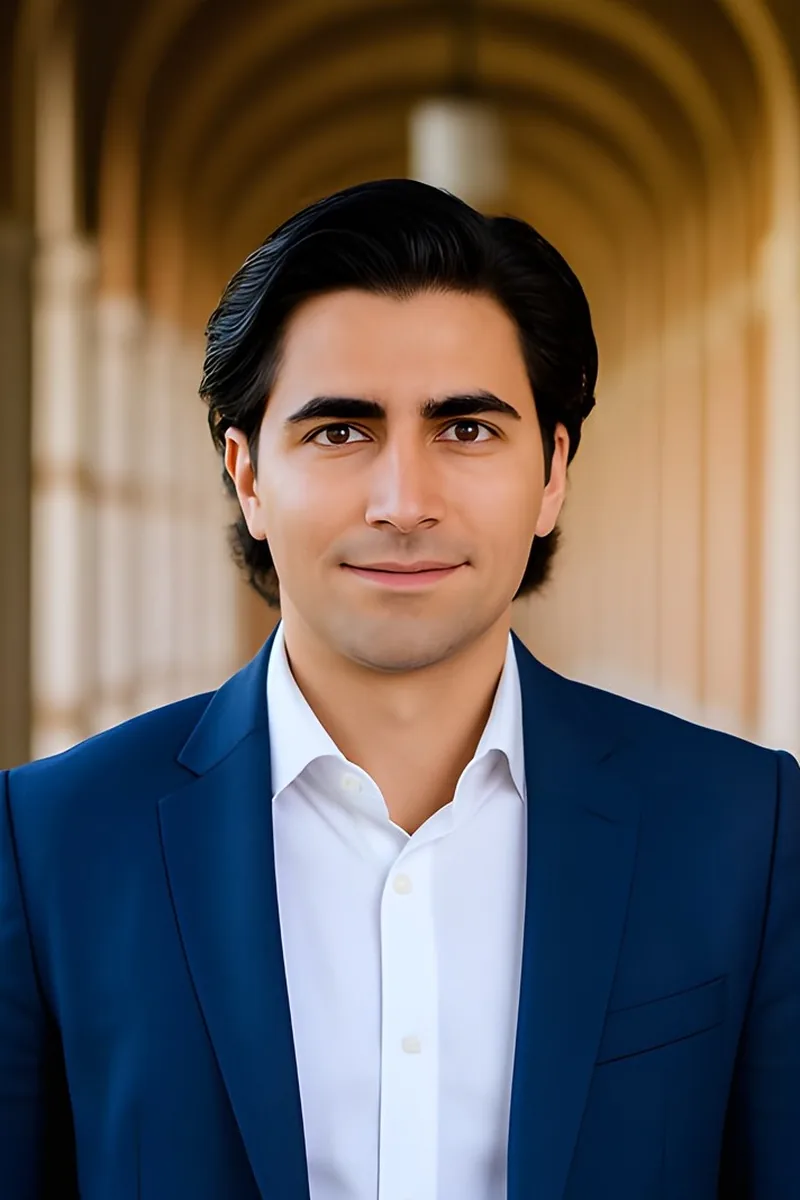
Perry's dual science degrees from Rice University built the exact quantitative reasoning and data interpretation skills that dominate the SAT Math section, while his medical humanities minor sharpened the close-reading habits needed for Evidence-Based Reading and Writing. He scored a 1570 on the SAT and knows which algebra shortcuts and passage-analysis techniques make the biggest difference under time pressure. Rated 5.0 by students.

Scoring a 1520 on the SAT takes more than content knowledge — it requires knowing when to slow down on tricky evidence-based reading questions and when to trust your instincts on the math no-calculator section. Vansh pairs that firsthand experience with an aerospace engineering background at Georgia Tech, which means the quantitative reasoning and data analysis portions are second nature to him. Rated 5.0 by students, he breaks each section into repeatable strategies that make test day feel predictable.
I recently graduated from the University of Chicago with a B.S. in Mathematics and Computer Science, earning honors (cum laude) with a 3.88 GPA. This fall, I will begin a Ph.D. in Mathematics at Georgia Tech. I scored a 1550 on the SAT (790 Math, 760 Reading and Writing) and have a strong mathematical background spanning everything from foundational subjects to advanced university-level coursework. I have experience tutoring middle and high school students in topics ranging from algebra and geometry to calculus, as well as SAT and ACT math. My goal is to help students develop a genuine understanding of mathematics while building confidence and problem-solving skills. Whether you're preparing for the SAT or working to improve your performance in class, I'm committed to helping you succeed.
Six years of SAT prep at the Boys and Girls Club means Viraj has seen nearly every way a student can lose points — and built targeted strategies for each section to prevent it. His own 1560 composite came from the same systematic approach he teaches: breaking down Reading passages by argument structure, tackling Writing questions with grammar pattern recognition, and using back-solving techniques in Math to save time. He's currently a second-year medical student at the University of Miami, but standardized test strategy remains one of his longest-running specialties.
Standardized tests and AP classes can feel like a mountain of stress, but I'm here to help you navigate them without burning out. I've been through the gauntlet myself, scoring a 1570 on the SAT, a 1510 on the PSAT, and earning 4s and 5s on my AP exams. My goal is to hand you the exact playbook, strategies, and pacing tricks I used to succeed, broken down in a way that actually makes sense to you.
What sets Michael apart for SAT prep is genuine fluency across both halves of the exam — his Fine Arts and Global Studies background built the close-reading and analytical writing skills that drive the verbal sections, while a 1590 SAT score confirms he's equally sharp on the math side. He teaches students to spot the recurring grammar traps in Writing & Language and to translate word problems into clean algebraic setups, connecting both skills into a unified test-day strategy.
What separates a 1400 from a 1530 on the SAT often comes down to avoiding the traps you don't realize you're falling into — and Lance, who scored a 1530 himself, knows exactly where those traps sit in both the math and verbal sections. His triple-major background in mathematics, computer science, and chemistry means the quantitative reasoning side is automatic, freeing him to spend most of his prep time on the reading and writing strategies that push scores from good to great. Years of leading classes independently as a TA also trained him to explain concepts multiple ways until the right one clicks.
A 1550 SAT scorer, Ari breaks the exam into learnable systems — from identifying trap answers in Evidence-Based Reading to recognizing the handful of grammar rules that account for most Writing section questions. His dual background in philosophy and economics at Columbia means he's equally sharp on the logical reasoning behind reading passages and the quantitative problem-solving the Math section demands. He also spent the past year tutoring English and math near campus, so he knows how to translate test strategy into language that actually sticks.
Chemical engineering coursework at Johns Hopkins means Joshitha lives in the kind of quantitative problem-solving the SAT Math section demands — from algebraic modeling to data interpretation under time pressure. But her 1580 composite also signals serious verbal chops: she teaches students to spot the structural logic behind evidence-based reading questions and grammar traps on the Writing section, not just guess by feel. Rated 5.0 by students.
The Burnett Medical Scholars Program at UCF demands the same kind of disciplined, high-stakes test performance that Priya now teaches for the SAT — she scored a 1500 and knows how to turn content knowledge into points under time pressure. Her science-heavy coursework in biotechnology gives her a natural advantage on the math and data-interpretation questions, while her breadth across literature and essay editing means the Reading and Writing sections get equal attention. Rated 4.8 by students.
Harvard's CS and Applied Math curriculum trains exactly the kind of structured problem-solving that the SAT rewards — and Derek applies that mindset across both sections, from algebraic modeling and data analysis on the Math side to logical elimination on Evidence-Based Reading questions. He scored a 1550 and knows where high-scorers still leave points on the table, particularly on no-calculator algebra traps and command-of-evidence pairs. Rated 4.9 by students.
Studying computer science and studio art simultaneously means Parker's brain toggles between logical precision and creative problem-solving — exactly the mental flexibility the SAT demands when shifting from algebraic reasoning to evidence-based reading within the same sitting. He scored a perfect 1600 and uses that experience to teach students how to spot the structural patterns behind both math and verbal questions, turning unfamiliar prompts into recognizable frameworks. Rated 5.0 by students.
Most SAT points are lost not to hard questions but to predictable traps — and Max teaches students to spot those traps by drilling the specific patterns that repeat across both the Math and Reading sections. His 1550 SAT score came from treating the test as a strategy game, and his history teaching background means he's especially sharp at coaching students through the evidence-based reading questions where argument structure matters more than speed. Rated 4.7 by students.
Scoring a 1550 on the SAT takes more than content knowledge — it takes knowing which wrong-answer traps the College Board loves to set and how to manage pacing across reading, writing, and math sections. Veena's science background sharpens her approach to the evidence-based reading questions, where she teaches students to treat passages like data and eliminate answers that aren't directly supported. Rated 5.0 by students, she brings the same precision to math strategy, especially on the no-calculator section where algebraic fluency matters most.
Most SAT prep treats math and verbal as two separate worlds, but Anthony's dual master's in math education and his philosophy training let him teach the whole exam as one connected reasoning exercise — algebraic problem-solving and evidence-based reading both come down to eliminating what doesn't follow logically. He scored a 1430 on the SAT himself and builds each session around the specific question types a student keeps missing, whether that's passport-to-advanced-math problems or command-of-evidence pairs. His state teaching certification means he knows how to structure a study plan that actually holds up under test-day pressure.
Penn's Critical Writing Department certified Jessica as a writing tutor before she'd finished freshman year — an unusual distinction that reflects how naturally she dissects argument structure, a skill that maps directly onto the SAT's Evidence-Based Reading and Writing sections. Her 1540 SAT score and medical school training add rigorous data interpretation chops for the math side, where she teaches students to translate word problems into solvable setups quickly. Rated 4.8 by students.
A 1590 SAT scorer, Siri knows the difference between understanding the test and understanding the content — and teaches both. She breaks down the reading section's evidence-pair questions and the math section's word-problem traps with repeatable strategies that turn guessing into confident elimination. Her biology-trained eye for detail carries over to catching the subtle grammar distinctions that separate a 700 from a 780 on the verbal side.
Princeton's engineering curriculum demands the same kind of precise, efficient problem-solving that separates a good SAT score from a great one — Nicolas scored a 1580 and knows exactly where those last points hide, particularly in the math section's multi-step word problems and data analysis questions. He also coaches the verbal side by teaching students to trace argument structure through dense passages, a skill his literature and essay work keeps sharp. Rated 5.0 by students.
My tutoring sessions are interactive, patient, and highly personalized. I don't believe in a one-size-fits-all methodeach student learns differently, so I adapt my approach to match their individual pace, goals, and learning style. I focus on helping students truly understand the why behind each concept, not just memorize formulas or shortcuts. Together, we work step-by-step through problems, discussing reasoning, strategy, and underlying principles until everything clicks. My goal is to build lasting confidence and clarity. Whether a student is catching up, aiming to excel, or just trying to feel more comfortable with the material, I create a supportive environment where they can ask questions freely, think critically, and stay engaged. I also believe in strong communicationkeeping parents informed and helping students take ownership of their learning. Above all, I want my students to leave each session feeling capable, confident, and genuinely connected to what they're learning.
Medical school entrance exams demand the same core skills the SAT tests — fast, accurate reading under pressure and clean algebraic problem-solving — and Kaitlyn has been building both since scoring a 1500 on the SAT herself. Her biology background makes her especially sharp on the data interpretation and science-adjacent passages that appear in the Reading section, while her math fluency covers everything from heart-of-algebra questions to passport-to-advanced-math traps. Rated 4.8 by students.
Scoring a 1470 on the SAT while coming from a social science background means Lia had to master both the verbal reasoning and the math sections independently — and she knows what it takes to grind out points in each. She breaks down the Reading section by question type (evidence pairs, vocabulary in context, data interpretation) and drills the Math section's most common traps around systems of equations and quadratic modeling. Rated 4.8 by students, she brings a certified math teacher's precision to the quantitative side and a sociology graduate's analytical eye to the evidence-based reading passages.
Michelle's neuroscience studies at Duke trained her to read dense, argument-heavy passages quickly and extract key claims — exactly the skill that separates a good SAT Reading score from a great one. She scored a 1510 and knows the verbal side of the exam inside out, from evidence-based question pairs to the grammar and rhetoric traps in the Writing section. Her extensive work with college essays and IB Extended Essays also means she can teach the kind of precise, structured reading that transfers across every passage type on test day.
Most SAT points are lost not on hard questions but on misread ones — and Olivia's American Studies training, which required pulling arguments from dense historical and cultural texts, built exactly the close-reading instincts the Evidence-Based Reading section rewards. She scored a 1560 on the SAT and uses that experience to teach students how to spot rhetorical traps in the Writing and Language section and translate word problems into solvable setups on the Math side.
Hi! I'm Lakshmi, an Environmental Engineering student at the University of Florida who loves helping students feel more confident in math, science, and writing. I focus on making challenging topics simple and easy to understand while creating a supportive and encouraging learning environment. My goal is to help students improve both academically and in their confidence as learners!
During my Bachelor's studies at the University of Michigan-Dearborn, I was a mathematics and statistics tutor for a year, which I greatly enjoyed. I am currently a fourth-year Ph.D. student studying mathematics at the University of Florida. During my Ph.D. at the University of Florida, I was a teaching assistant for Calculus I, Calculus II, and Precalculus, and I was an instructor for a section of Calculus I. These experiences helped me develop my tutoring skills. Many students see math as a set of formulas that they can apply to the problems on their exams and homework. However, I feel that this way of thinking not only stifles true understanding, but also makes students' lives harder. My teaching philosophy is that if a strong conceptual understanding is built, then students will be well-equipped to answer any question that they can be asked. When I tutor, I make sure that students develop this foundation first and foremost.
Most SAT prep treats math and verbal as two separate worlds, but Dalila's math degree and her experience teaching Spanish, literature, and essay writing mean she coaches both sides of the exam with equal depth — from algebraic problem-solving and data analysis to passage structure and grammar rules. She scored a 1520 on the SAT herself and uses that familiarity to pinpoint the specific question patterns where students consistently leave points on the table.
Scoring a 1540 on the SAT means Anushree knows exactly where points hide — in the evidence-based reading passages that trip up strong readers and in the no-calculator math questions that reward algebraic fluency over brute-force computation. Her dual background in biology and economics at the University of Florida sharpened both the quantitative reasoning and close-reading skills the SAT tests across every section. She breaks down each question type with specific strategies so students stop second-guessing themselves and start finishing sections with time to spare.
Studying human biology at Harvard sharpened the kind of dual-skill thinking the SAT demands — precise quantitative reasoning on the Math section and careful evidence-based reading on the verbal side. Destiny scored a 1480 on the SAT and uses that experience to teach students how to spot the structural patterns behind both grammar questions and multi-step algebra problems. Rated 5.0 by students.
What sets Karl apart in SAT prep is his dual comfort with both the verbal and math sides of the exam — his music education training sharpens the analytical reading and pattern recognition that drive the Evidence-Based Reading and Writing sections, while his math coursework covers the algebra and data analysis the test demands. He scored a 1550, so he knows firsthand how pacing and strategy decisions in each section add up to a strong composite. His approach emphasizes teaching students to spot the recurring question structures the SAT relies on rather than grinding through problems without a framework.
Biology majors don't always seem like natural SAT tutors, but Michelle's science training built exactly the kind of precise reading and data interpretation skills that the SAT rewards — parsing dense passages, pulling meaning from graphs, and working through multi-step math without shortcuts. She scored a 1510 and knows how to translate that analytical rigor into repeatable strategies for both the Reading and Math sections. Rated 4.9 by students.
Computer engineering coursework at the University of Florida keeps Veronica sharp on the algebra, data analysis, and problem-solving that dominate the SAT Math section, and her 1500 SAT score shows she can execute under test-day pressure. On the verbal side, she draws on her strengths in literature and grammar to teach students how to spot rhetorical patterns and eliminate wrong answers efficiently across the Reading and Writing modules.
I have always had a passion for learning new things, and tutoring gives me the chance to share that passion with others. I find it fascinating how someone can begin with little understanding of a topic and, with the right explanation and support, truly learn it. I want to help students experience that moment when something finally clicks. My goal is to make learning interesting, approachable, and rewarding while helping each student become more confident in their abilities.
Biomedical engineering coursework builds exactly the kind of data interpretation and algebraic reasoning the SAT Math section demands, and Aditi pairs that quantitative strength with a 1500 SAT score of her own. She teaches students to spot the recurring problem structures across Heart of Algebra and Passport to Advanced Math questions so they can work faster under time pressure. Rated 4.8 by students, she also covers the Reading and Writing sections with a systematic, evidence-first approach to eliminating wrong answers.
Nanotechnology research and honors-level coursework across biology, chemistry, and physics gave Harrison the kind of analytical reading habits that pay off on SAT passages heavy with scientific data and paired evidence questions. He scored a 1570 on the SAT and uses that experience to teach specific pacing and elimination strategies for both the math and verbal sections. Rated 4.9 by students.
Civil engineering coursework at UF means Cavan lives in the kind of algebra, data analysis, and problem-solving that dominates SAT Math — he teaches students to translate word problems into equations quickly and avoid the calculation traps the College Board builds into no-calculator questions. His IB diploma background also sharpened the close-reading and evidence-evaluation skills that carry over to the Reading and Writing sections. Holds a 1500 SAT score and a 5.0 tutoring rating.
Studying both neuroscience and computer science at Duke trained Ankit to toggle between dense analytical reading and quantitative problem-solving — exactly the mental shift the SAT demands between its verbal and math sections. He scored a 1580 on the exam and uses that experience to teach students specific pacing tactics and pattern recognition for the question types that eat up the most time. Rated 4.8 by students.
I am a National Merit awardee, and a recent USF Graduate with a Dual B.A. with Honors in Philosophy and History, both of which I enjoy thoroughly. My job is to make the material as easy to understand for you as it is for me. I have done this by mastering conversational Socratic ask-and-answer methodology to ensure my students attain the capacity to come to the right answers on their own. Additionally, I have invented multiple general tactics and even detailed strategies pertinent to specific question types, with the ability to translate the above to all learning styles including neurodivergent ones -particularly ADHD and anxiety which I myself have- to radically and adaptably simplify the exam for students as per their personal learning aptitudes.
Comparative literature trained Caroline to read closely across genres and rhetorical styles — exactly the skill that separates strong SAT Reading scores from average ones, especially on paired-passage and evidence-based questions. Her 1520 SAT score backs up the approach, and her background teaching German, ESL, and English grammar means she can unpack the Writing and Language section's trickiest syntax and usage rules from multiple angles.
Ten years of test prep tutoring alongside daily work as a middle school math teacher means Sabrina knows exactly where students stumble on SAT Math — from translating word problems into algebraic setups to pacing through the no-calculator questions without second-guessing. Her elementary education degree with a math minor also gives her a knack for rebuilding shaky fundamentals quickly, so gaps from years ago don't keep dragging scores down. She scored a 1450 on the SAT herself and holds a 5.0 tutoring rating.
Psychology training at Brandeis and a child development master's from University College London gave Amanda a sharp read on how students actually process timed exams — where attention drifts, which question types trigger second-guessing, and how to build stamina across sections. She applies that understanding to SAT prep by diagnosing the specific reading and math patterns each student struggles with, then drilling those gaps with targeted practice rather than full-length test after full-length test. Her own 1470 SAT score means she knows the exam's structure from the inside.
Testimonials
Because the right SAT tutor makes all the difference.
Average Session Rating – Based on 3.4M Learner Ratings
Practice SAT
Free practice tests, flashcards, and AI tutoring for SAT
Nearby SAT Tutors
Other Palm Bay Tutors
Related Test Prep Tutors in Palm Bay
Frequently Asked Questions
University of Florida is highly competitive, with admitted students typically scoring between 1330-1470. Florida State averages 1230-1370. For students in Palm Bay aiming at these flagship universities, a score of 1300+ puts you in a competitive range, while 1350+ significantly strengthens your application. Keep in mind that test scores are just one part of admissions—GPA, essays, and extracurriculars matter too, but strong scores open more doors for merit scholarships and honors programs.
Bright Futures scholarships have specific SAT score thresholds that determine your eligibility level and funding amount. For the most competitive scholarship tiers, you'll want a score of 1300 or higher. Since Bright Futures can significantly reduce college costs, it's worth understanding these benchmarks early—many Palm Bay students use this as a concrete goal for their SAT prep rather than just aiming for a generic "good score."
Most students see 100-200 point improvements with focused, personalized prep—though the amount depends on your starting score and how much you engage with the material. Students starting around 1000 often reach 1200+, while those already at 1300 may gain 50-100 points by targeting specific weak areas. The key is identifying exactly where you're losing points (reading speed, math concepts, grammar rules) and building targeted strategies rather than generic test prep.
Most students benefit from starting prep in the spring of junior year, giving you time to take the SAT in the fall of senior year and retake if needed. If you're already a senior, starting immediately still allows for meaningful improvement before college application deadlines. The earlier you start, the more time you have to identify weak areas—whether that's reading comprehension speed, specific math topics, or grammar rules—and build real mastery rather than cramming.
The Reading section is notoriously time-tight at 65 minutes for 52 questions. Effective strategies include reading the questions first to know what to look for, using active annotation to track main ideas, and not getting stuck on any single question. Many students benefit from practicing with a timer repeatedly—this builds the pacing muscle. Working with a tutor on your specific reading patterns (whether you're a slow reader, get distracted, or struggle with inference questions) helps you develop a personalized approach rather than using generic tips that don't fit your style.
Data analysis, graph interpretation, and multi-step word problems consistently challenge students—especially questions that require you to set up equations rather than just solve them. The Math section is split between no-calculator (25 min, 20 questions) and calculator-allowed (55 min, 38 questions), and many students lose points by not strategically choosing when to use their calculator. Targeted tutoring on these specific concepts, combined with timed practice, typically yields the fastest score gains since math skills are very learnable with focused effort.
Both tests are widely accepted at Florida universities, though the SAT has become increasingly popular nationally and in Florida. The choice depends on your strengths: the SAT rewards reading speed and analytical thinking, while the ACT moves faster but requires quick recall. Many Palm Bay students take a practice test in each format to see which plays to their strengths. Since most Florida colleges accept both equally, the real question is which test format matches how your brain works best.
Most students benefit from taking the SAT twice—once to learn the format and identify weak areas, then again after targeted prep to improve. Taking it more than twice shows diminishing returns unless you're making significant changes to your study approach. Colleges see all your scores, but most use your highest score, so a retake is worthwhile if you know exactly what went wrong the first time and have a plan to fix it. Starting prep early gives you the flexibility to retake without rushing.
Let’s find your perfect tutor
Answer a few quick questions. We’ll recommend the right plan and match you with a top 5% tutor.