Award-Winning ACT Reading Tutors
serving Mesa, AZ
ACT Reading
Tutors in Mesa
Private 1-on-1 tutoring, weekly live classes for academic support, test prep & enrichment, practice tests and diagnostics, and more to elevate grades and test scores.
Based on 3.4M Learner Ratings
UniversitiesSchools & Universities
DeliveredHours Delivered
ProficiencyGrowth in Proficiency
Who needs tutoring?
No obligation. Takes ~1 minute.
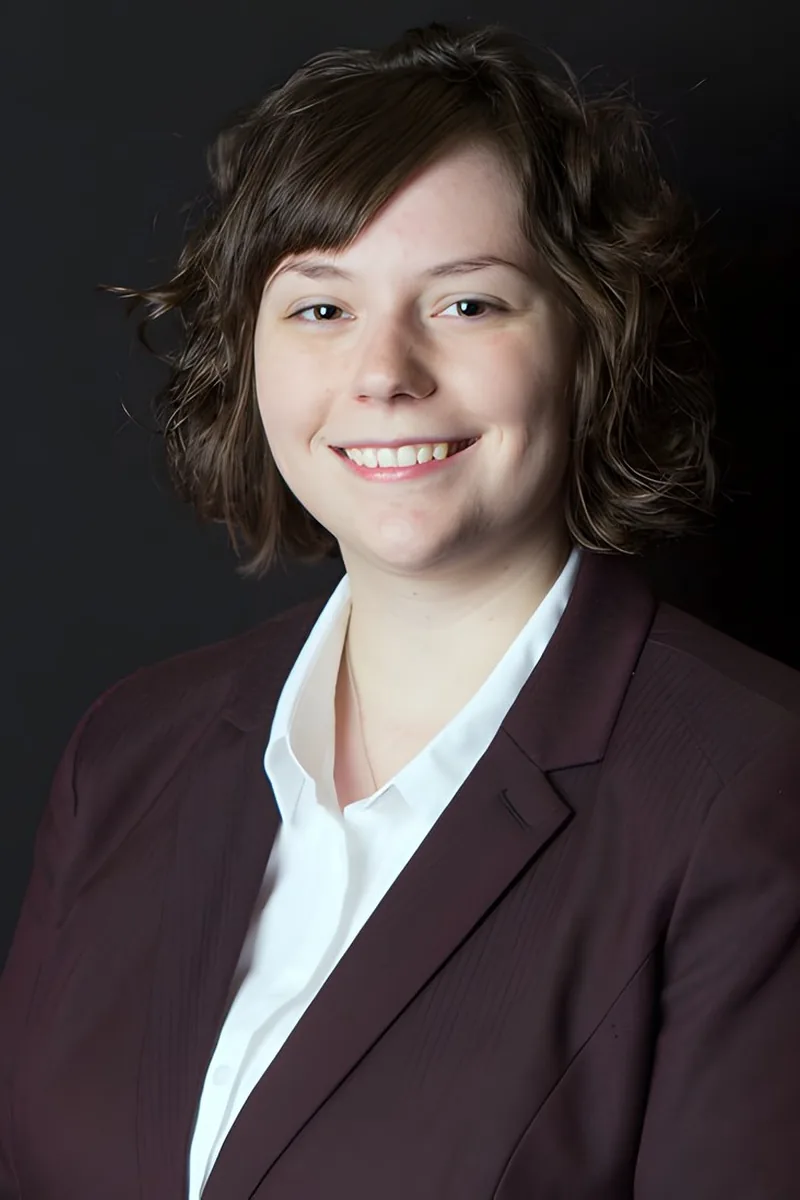
Lindsay's double grounding in biology and mathematics means she's comfortable with both the natural science passages that demand data-literate reading and the humanities passages that require tracking an author's shifting tone — two skills that rarely live in the same tutor. With a 35 ACT composite and a 4.9 student rating, she teaches students to anticipate what each passage type will ask before they finish reading, so they spend less time re-scanning and more time eliminating wrong answers. Her approach zeroes in on how the ACT disguises correct answers through subtle rewording, training students to match claims back to specific lines rather than relying on general impressions.
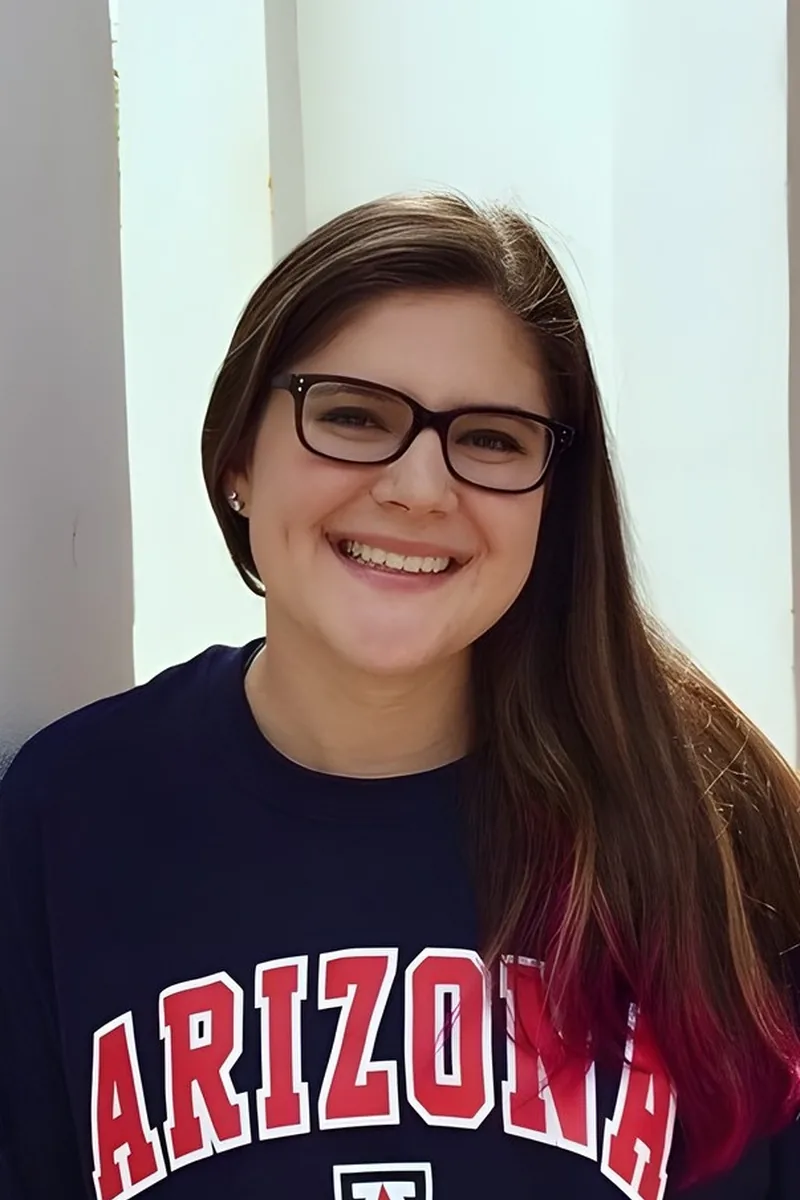
Medical school at the University of Arizona means Alex reads hundreds of pages of dense, unfamiliar material every week — the same core skill the ACT Reading section tests under a 35-minute clock. With a perfect 36 ACT composite, he teaches students to attack the paired viewpoints and natural science passages by isolating each author's claim before looking at answer choices, which eliminates the subtle scope-shift traps that cost most test-takers points. Rated 4.8 by students.
The ACT Reading section isn't about being a strong reader — it's about answering 40 questions in 35 minutes, which means learning to extract evidence from passages at speed. Jacob's 35 ACT composite and his psychology and theater training give him a sharp eye for how arguments are structured and how authors use tone to convey meaning. He teaches a passage-mapping technique that cuts down on re-reading and keeps students moving.
I'm a performer at heart so I love to sing and dance; however, there's nothing better than a night on the town with a few friends!
Reading comprehension on the ACT is a speed game: four passages, ten questions each, thirty-five minutes total. Alice, who scored a 36 composite, teaches a deliberate strategy for each passage type — prose fiction, social science, humanities, natural science — because each one rewards a slightly different reading approach. Her English and biology background at Yale means she's equally comfortable unpacking a literary narrative or a dense scientific excerpt.
I'm a graduate of Arizona State University with Barrett, the Honors College. I received my BSE in biomedical engineering in 2022 and I'll finish my education with an MS in 2023. I've tutored math (K-12) since 2016 with an emphasis on algebra and high school test prep concepts. It's never too early or too late to build foundational math skills. I believe a student at any age or level can benefit from practicing core skills while introducing logical and efficient solutions into their math repertoire!
I am not studying or performing research, I enjoy playing video games, card games, or role-playing games with my friends. I also am an amateur engineer, participating in the online community of laser enthusiasts. Together, we construct circuitry, design housings, and align lenses to create not laser pens for pets, but high-powered, scientific lab lasers.
Teach for America gave Gordon years of practice adapting reading strategies across grade levels — from elementary phonics to college-level scientific literature — which means he understands how different students get stuck on the ACT Reading section's four passage types for very different reasons. He zeroes in on pacing and passage-order strategy, teaching students to identify which passages play to their strengths and which ones to save for last so they stop running out of time on the questions they'd actually get right.
Every ACT Reading passage is a short argument or narrative that has to be decoded in roughly nine minutes, which is less a reading test than a reasoning test. That distinction matters to Galen, whose philosophy degree was essentially four years of timed close reading under pressure. He teaches students to map each passage's structure before touching the questions, turning even unfamiliar topics into something they can navigate confidently.
Hello! I'm Varun Krishnamurthi, a college student studying Aerospace Engineering, and I'm currently available to help students in grades K-12 with any academic troubles they may have. I'm a National Merit Scholar with a 35 ACT score, and I have years of experience tutoring in math. I can cover a variety of subjects ranging from elementary math, to pre-Algebra, all the way up to Calculus. I also specialize in test prep, especially relating to the ACT and SAT. Furthermore, I have multiple 5 star reviews from previous students, so you can guarantee that you'll be in good hands!
I'm a rising sophomore at Georgia Institute of Technology. I love teaching and got a lot of practice from tutoring my brother. Physics is probably my favorite subject to teach.
The best part of tutoring is promoting students' long-term success through mastery of reading, writing, math, study skills, organization, and critical thinking. In particular, I enjoy helping students build test-taking strategies and core skills for the ACT, SAT, and other admissions tests. I also support pre-K and K-12 students learning math and ELA. Before joining Varsity, I tutored in a Reading and Writing Lab for university students with learning disabilities where I earned a College Reading and Learning Association (CRLA) certification. Since joining Varsity, I have completed continuing education through the Lastinger Center for Learning. I graduated from the University of Arizona in 2021 with a BA in Cultural Anthropology. In addition to tutoring, I have worked as an instructional aide for an art program, an applied anthropology researcher, and a nonprofit program coordinator. Out of all these experiences, I enjoy tutoring the most. I look forward to working with you!
I'm a 24-year old teacher/tutor. I am a very personable, outgoing person and I enjoy making connections with others- especially when I can make people feel comfortable no matter what the setting- and I find that those who have less to say usually have the most important things to say! Tutoring provides me with a platform in which I am able to help others gain confidence in their work and watch them discover abilities they may not have known that they have. Above all, this is what I most love about tutoring and teaching.
I am music educator passionate about providing you the individualized assistance you require. I believe in providing engaging, real-life applications of concepts to maximize student interest and growth in subject areas.
I'm a college student at ASU studying Finance but I used to be an engineer so I have completed all math classes up to Calculus 3 including differential equations and linear algebra. I just have a passion for mathematics and I love to help others. Hopefully I can get them to not only understand math but also help them find a liking for mathematics.
The ACT Reading section isn't about being a strong reader — it's about extracting specific evidence from four passages in 35 minutes. Madeleine teaches a passage-mapping technique that cuts down on re-reading: skim for structure first, mark where the author's argument shifts, then attack the questions that point to specific lines before tackling inference questions. Students who adopt this system consistently finish with time to spare.
Finishing four passages in 35 minutes is the real challenge of ACT Reading, and Taylor tackles pacing head-on by teaching students how to skim for structure before diving into questions. As an English major and avid nonfiction reader, she's especially sharp on the social science and humanities passages that many students find dense. Her 32 ACT score reflects consistent performance across every section.
I am one of a rare breed of native Arizonans born and raised in Tucson, Arizona. I graduated from the University of Arizona with a bachelor's degree in Astrophysics and a Master's degree in Teaching and Teacher Education. Before getting the master's degree in education I worked for NASA as an entry-level scientist/analyst, which essentially means I did A LOT of computer programming. I worked on the following projects: Galileo, Cassini, IRAF, UBV White-Dwarf Sky Survey, and NICMOS on the HST. However, while working on those projects I quickly discovered that my lifelong dream of being an astronaut was not really what I wanted to do. I had always had a passion for music, and was a good trumpet player, and with a little nudging from my College Band Director, well, the road definitely took a right turn.
Speed is what separates a good ACT Reading score from a great one — four passages, 40 questions, and only 35 minutes to get through them all. Alexis teaches a deliberate passage-mapping technique that trains students to locate evidence quickly instead of re-reading entire paragraphs. Her 32 ACT composite and coaching-style approach turn timed practice into measurable gains.
I'm excited to share my love of science and learning through tutoring! I tutor Biology, Ecology, and standardized test prep. From high school to Stanford, I have learned that lectures are often difficult for students to follow. They can lose confidence in subjects because the information is not presented in a way that is effective for their learning. My job is to work with students to figure out the best way to learn challenging material. This may involve breaking down complicated ideas into consumable parts, discussing concepts back and forth, or working through practice problems together. Ultimately, I believe that students should never feel unintelligent because they don't immediately grasp a concept. I am committed to empowering students to approach challenging subjects with confidence.
Theater training builds a specific habit that pays off on the ACT Reading section: reading for subtext — figuring out what a character or author actually means beneath the surface-level words. Tucker applies that instinct to inference and tone questions, where the difference between a right and wrong answer often comes down to catching an emotional shift or an unstated implication in a single paragraph. His 33 ACT composite and 5.0 student rating back up the approach.
Reading dense scientific papers as a biology researcher at ASU trained Courtney to extract arguments and key details quickly from unfamiliar material — the exact skill the ACT Reading section demands across its four passages. She teaches students a passage-mapping technique that cuts down on re-reading and keeps them under the tight 35-minute time limit.
I am a Math and Science expert, and I would love to help you or your student reach their potential. I offer flexible hours, I am easy to get along with, and I have effective methods. I take pride in helping others learn. I have a BS in mechanical engineering so there isn't a high school or college math class I haven't taken. I'm a Physics dork as well! Outside of tutoring, I love the outdoors, sports (especially the Cardinals and Suns!), and science-fiction. I look forward to working with you!
I am a rising senior at Emory University majoring in Biology, B.S. on a pre-med track in the Biology Honors Program. In my sophomore year, I was a math and literacy tutor at Emory Reads where I worked with students at Ivy Prep Academy, Atlanta GA. Now, I lead review sessions for my fellow classmates in organic chemistry and biology to prepare for upcoming exams. In my past tutoring experiences and review sessions, I always used different colors and incorporated diagrams to improve conceptual understanding because I firmly believe every problem can be solved; if we have a solid foundation and truly understand a concept, we can apply it to any given scenario and figure out the solution. In order to make sure of this, I always encourage students to ask questions until all doubts have been cleared before moving on to decrease gaps in understanding. I can help with math, english, biology, chemistry, and physics although I think my favorite subjects to tutor would have to be Organic Chemistry and Human Physiology! I sincerely enjoy teaching these subjects and hope to show the students just how fascinating they can really be.
Reading four dense passages in 35 minutes means students can't afford to read every line the same way. Claire teaches a triage method — skimming for structure, identifying the author's argument, then attacking questions that point back to specific lines before tackling inference questions. Her 32 ACT composite and psychology background give her a sharp eye for how passages are designed to mislead.
I am a recent graduate of Trinity University in San Antonio, Texas with a B.S. in Neuroscience cum laude. I am living in Austin until I begin medical school in July. Tutoring has always been a hobby of mine, and I continued my passion for teaching during college by being the Peer Tutor for a Statistics course and a Biology course at Trinity. Additionally, I tutored middle and high school students in the San Antonio community while working for a company similar to Varsity Tutoring. My favorite part of being a tutor is seeing the light-bulb moment happen for my students when they finally grasp a concept they???ve been struggling with. Usually with my students and as a student myself, I find that explaining concepts in a different way with language that is more understandable or connecting it to real-world experiences goes a long way. As a competitive swimmer for the past 15 years and the captain of my college team, I understand the desire students have for excelling in both the classroom and in their extracurricular activities and the struggle that can occur between balancing them. Besides tutoring, I enjoy traveling, spending time with my family and my dog, and cooking!
Reading dense passages under time pressure is a skill lawyers use every day, and Andrew brings that same discipline to ACT Reading prep. He teaches students to identify the passage's argument structure before diving into questions — a technique that cuts down on re-reading and keeps pacing tight across all four passage types. His 32 ACT composite and dual degrees in History and Economics mean he's equally comfortable with humanities and social science passages.
I am now a rising sophomore at Barrett, the Honors College at Arizona State University, on track for concurrent majors in Asian Studies and Global Studies. In high school, I was Valedictorian as well as President of the National Honors Society; in college, I have made Dean's List both semesters, have two simultaneous Research Assistant positions, and have been nominated as an Honors Teaching Assistant in the Fall semester! Someday, I want to work in academia, both out of my love for learning new things and teaching rising students. I tutor all kinds of history, English, essay writing, ACT/SAT prep, pre-algebra and algebra, biology, and, believe it or not, classical and medieval Latin. I also have experience tutoring students with learning difference like ADHD!
I'm Kelly and I love everything about language. I became an avid reader at a young age, and it's stuck with me my entire life. My favorite stories are those that engage both intellect and emotions. And I love the infinite possibilities that come with constructing a good story. I'm honored to serve as a teacher and mentor to all my students!
The ACT Reading section gives students just 8 minutes and 45 seconds per passage, which means reading every word carefully is actually a losing strategy. Kyle teaches a targeted approach: skim for structure, identify what each paragraph does, then attack the questions — a method that turns the time crunch from an obstacle into a manageable routine.
The ACT Reading section gives students 35 minutes to process four dense passages — it's less about comprehension and more about efficient, strategic reading. Isabel teaches a passage-mapping technique that cuts re-reading time and sharpens the ability to distinguish between what the text says, what it implies, and what the question is actually asking.
I am an undergraduate studying at Arizona State and have experience working in my school's writing center as a tutor. I find that the best approach to interacting with students is to be friendly, open, and patient. We have all struggled in a subject at some point in our lives, and I hate to see students get flustered or embarrassed when they don't understand a concept. I'm upbeat and enjoy sharing my enthusiasm for what I have learned with the people that I meet. When I'm not working or in school, I enjoy reading, listening to music, or eating copious amounts of food.
I am attending Arizona State, and to follow my passion for helping others out. Recently, I have volunteered in hospitals, as well as partaken in many formal tutoring programs, such as a class in my high school in which the subject material was the best way to encourage and motivate students for long term success.
Most ACT Reading mistakes happen not because students can't comprehend the passage but because they spend too long on it and rush the questions. Jiatian teaches a triage method: skim for structure first, then go back to the text with specific question stems in mind. It's the same prioritize-and-filter approach she uses in medical training, applied to literary narratives and social science passages instead of clinical data.
Ryne earned a perfect 36 ACT composite, which means he knows firsthand how to handle the Reading section's brutal pacing — 40 questions in 35 minutes with no room for second-guessing. His political science training built a habit of quickly dissecting competing claims in dense texts, and he applies that to teaching students how dual passages and paired questions try to blur the line between an author's actual position and a tempting distortion. Rated 4.9 by students.
I'm referring to math, of course, but I didn't always like the subject. Until about age 16, I thought of math as a boring, mind-numbing process of blindly memorizing formulas and then forgetting them after the test, but a series of wonderful teachers showed me the truth. I had thought that everything in math was invented arbitrarily just to torture students, but actually it all made sense in a deep way. When I caught a glimpse of what math really was, I found it irresistible and I ended up majoring in math in college at UChicago. I'm currently a Master's student in Computer Science at NYU.
Most ACT Reading mistakes come from spending too long on one passage or second-guessing answers that felt right the first time. Edward teaches a timing strategy that allocates minutes by passage type — prose fiction, social science, humanities, natural science — and shows students how to locate textual evidence quickly instead of re-reading entire paragraphs. His 36 composite reflects command of every section, not just the math side.
Testimonials
Because the right ACT Reading tutor makes all the difference.
Average Session Rating – Based on 3.4M Learner Ratings
Practice ACT Reading
Free practice tests, flashcards, and AI tutoring for ACT Reading
Other Mesa Tutors
Related Test Prep Tutors in Mesa
Frequently Asked Questions
ACT Reading tests your ability to comprehend passages quickly and answer questions accurately under time pressure. The biggest challenges students encounter are managing the 35-minute time limit (roughly 8-9 minutes per passage), distinguishing between similar answer choices, and understanding what questions are really asking. Many students also struggle with specific passage types—particularly dense humanities and natural science passages—where vocabulary and complex sentence structures slow them down.
Effective pacing starts with a strategy: many students benefit from skimming the passage first, then reading questions before diving into detailed comprehension. Others prefer reading the full passage carefully to avoid re-reading. The key is finding your rhythm through practice tests. Personalized tutoring can help you identify which approach works best for your reading speed and comprehension style, then drill that strategy until it becomes automatic under timed conditions.
Score improvement depends on your starting point and effort level, but most students see meaningful gains with focused, consistent practice. Students who work with a tutor typically improve by 2-4 points on the ACT composite, with reading-specific improvements ranging from 1-5 points depending on baseline skills and the areas needing work. The most significant improvements come from identifying your specific weaknesses—whether that's inference questions, vocabulary in context, or time management—and targeting those systematically.
Your first session focuses on assessment and strategy. A tutor will review your practice test results, identify which question types and passage genres give you the most trouble, and discuss your current pacing and comprehension approach. From there, you'll develop a personalized study plan that targets your specific weaknesses, whether that's improving inference skills, managing time better, or building confidence with challenging passages. This foundation ensures every session after that builds directly on what you need most.
Most students benefit from taking 4-6 full-length practice tests under timed conditions, spaced throughout their study period. Early tests help identify weak areas; later tests let you measure improvement and refine your strategy. Between full tests, targeted practice on specific question types and passages is equally important. A tutor can help you create a realistic study schedule that balances full practice tests with focused skill-building, ensuring you're making the most of your prep time without burning out.
Test anxiety often stems from feeling unprepared or unsure of your approach. Building confidence through repeated practice with a clear, proven strategy is the most effective antidote. Tutors help by teaching breathing and mental reset techniques, simulating test conditions during practice sessions, and reinforcing that you've prepared thoroughly. Knowing exactly how you'll approach each passage and question type—rather than improvising on test day—significantly reduces anxiety and helps you perform closer to your practice test level.
Look for tutors with strong ACT Reading scores themselves, proven experience helping students improve their scores, and familiarity with current test formats and question types. They should be able to diagnose your specific weaknesses quickly and teach you strategies tailored to your learning style—not just generic test tips. Varsity Tutors connects you with expert tutors in Mesa who specialize in ACT Reading and have a track record of helping students achieve their target scores.
Review your practice test results by question type: inference, detail, vocabulary in context, main idea, and author's tone. Note which passage genres (prose, humanities, social science, natural science) slow you down or trip you up most. A tutor can help you dig deeper—analyzing whether you're missing questions due to comprehension gaps, misunderstanding what the question asks, or running out of time. This targeted analysis reveals whether you need to improve reading speed, critical thinking skills, or test-taking strategy.
Let’s find your perfect tutor
Answer a few quick questions. We’ll recommend the right plan and match you with a top 5% tutor.