Award-Winning SAT Tutors
serving Sacramento, CA
SAT
Tutors in Sacramento
Private 1-on-1 tutoring, weekly live classes for academic support, test prep & enrichment, practice tests and diagnostics, and more to elevate grades and test scores.
Based on 3.4M Learner Ratings
UniversitiesSchools & Universities
DeliveredHours Delivered
ProficiencyGrowth in Proficiency
Who will be getting tutoring?
No obligation. Takes ~1 minute.
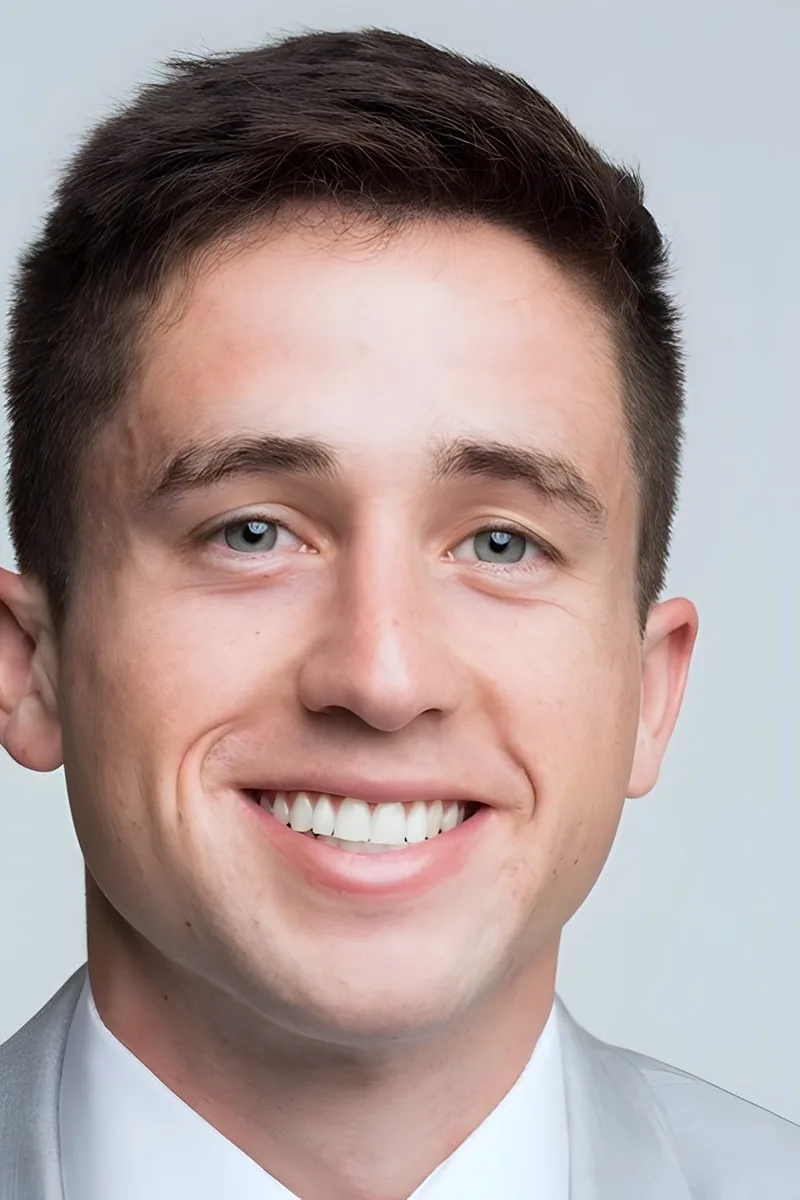
Having scored a 1410 on the SAT while carrying a full Division 1 soccer schedule at Loyola Marymount, John knows how to build an efficient prep plan when study time is limited. His biology background gives him a natural edge on evidence-based reading passages and data interpretation questions, and he zeroes in on the math strategies — plugging in answers, back-solving, and strategic elimination — that move scores up fastest.
What sets Michael apart for SAT prep is his communications and language background — he treats the Reading and Writing sections as exercises in argument structure and word choice, teaching students to spot how passages are built before they even look at the answer options. His own 1429 SAT score grounds that approach in firsthand test experience, and his comfort with both math and verbal subjects means he can coach the full exam without losing depth on either side.
Scoring a 1550 on the SAT herself, Kiersten spent two semesters as a CollegeSpring Mentor preparing charter school juniors for test day — breaking down everything from evidence-based reading passages to no-calculator math strategies. Her screenwriting background at USC gives her a unique edge on the Reading and Writing sections, where she teaches students to dissect argument structure and pinpoint rhetorical choices under time pressure.
Zhenrui's Columbia engineering and premed coursework means he's constantly switching between quantitative problem-solving and dense analytical reading — exactly the cognitive gear-shifting the SAT demands. He scored a 1570 on the exam and uses that experience to teach students how to spot the algebraic shortcuts buried in the Math section's trickiest word problems and how to navigate the evidence-based reading pairs efficiently under time pressure.
Caltech's economics and CS curriculum forced Brian to toggle constantly between quantitative problem-solving and analytical writing — exactly the mental shift the SAT demands between its Math and Evidence-Based Reading sections. He scored a 1580 and built his own prep approach around teaching students to recognize the exam's underlying logic, from algebraic modeling in word problems to identifying how authors structure arguments in paired passages. His broad academic range means he coaches the full test as one coherent strategy rather than treating each section in isolation.
Creative writing might seem unrelated to standardized testing, but Ari's English thesis work at Wesleyan built exactly the kind of close-reading and structural analysis skills that the SAT's Evidence-Based Reading section rewards — picking apart how authors construct arguments, use evidence, and deploy tone shifts across dense passages. That literary precision, paired with a 1590 SAT score, means he knows both the content and the test-taking mechanics cold. Rated 4.9 by students.
UVA's political science program demanded the kind of dense, argument-driven reading that mirrors exactly what students face in SAT Evidence-Based Reading passages — and Gray graduated with Highest Distinction. He pairs that verbal strength with a 1580 SAT score and a structured approach to the Writing and Math sections, teaching students to spot grammar patterns and translate word problems into solvable equations quickly. Rated 4.9 by students.
Linguistics training at NYU gave Naama a structural understanding of English that most SAT tutors don't have — she teaches the Writing and Language section by unpacking the grammar rules behind each question type rather than relying on what "sounds right." Her 1570 SAT score and background spanning psychology, multiple languages, and analytical reading means she can walk students through evidence-based passage questions and math problem translation with equal fluency.
Most SAT prep treats the verbal and math sections as two separate worlds, but Michael's training as a drama student at NYU's Tisch School — where close reading, argument analysis, and improvisation were daily exercises — taught him to think flexibly across both. He scored a 1500 on the SAT and uses his performance background to teach pacing and composure under pressure, particularly on the Evidence-Based Reading passages where students tend to second-guess themselves. Rated 4.8 by students.
Scoring a 1590 on the SAT means Jack lost almost nothing across both sections — and that near-perfect performance came from the same analytical rigor he applies daily as a UC Berkeley integrative biology and anthropology double major. He teaches students to read SAT passages the way a scientist reads a research paper: identify the claim, find the evidence, ignore the noise. On the math side, his comfort with data interpretation and multi-step reasoning keeps students from second-guessing themselves under time pressure.
Dual degrees in mathematics and violin from La Sierra — plus a 1570 SAT score — mean Alexander covers both halves of the exam with genuine depth, not just test-taking tricks. He teaches the math sections by connecting algebra and data analysis to the underlying concepts rather than relying on shortcuts, and applies the same careful, structural reading he uses in academic music research to break down evidence-based passage questions.
A 1530 SAT scorer with a biology degree, Jerome breaks the test into learnable systems — from identifying trap answers in Evidence-Based Reading to structuring the no-calculator math section around number properties and strategic estimation. He also coaches students on pacing and mental stamina, skills he picked up as someone who once sat on the other side of the tutoring table.
What sets Sarah apart for SAT prep is that she's lived on both sides of the test — her 1600 composite means she's mastered every section, while her journalism studies at NYU keep her immersed in the close-reading and argumentative writing skills the Evidence-Based Reading and Writing sections demand. She teaches students to spot the SAT's grammar patterns quickly and decode how passages build their central claims, then applies that same structured thinking to the math section's word-problem translations. Rated 4.9 by students.
A 1580 scorer who treats the SAT like a collection of puzzles rather than an endurance test, John teaches students to decode the exam's predictable patterns — from the way wrong answer choices are constructed to the specific grammar rules that appear on nearly every test. His background as a literary manager and editor for the Los Angeles Review of Books gives him an unusual edge on the Evidence-Based Reading and Writing sections, where identifying argument structure and tone is everything. Rated 5.0 by students.
Philosophy grad students read arguments for a living, and Ben applies that same structural thinking to the SAT — picking apart how Reading passages build claims and why certain evidence pairings are traps. His 1530 SAT score backs up the approach, and his English background means the Writing and Language section's grammar and rhetoric questions play to his strongest instincts.
Most SAT prep splits neatly into a 'math person' or a 'verbal person' — Ema is both, with a Harvard English degree and five years of math tutoring under her belt. She scored a 1540 and knows the exam from both sides, teaching students to spot algebraic shortcuts on the Math section and dismantle evidence-based reading traps on the verbal side. Rated 5.0 by students.
Scoring a 1520 on the SAT means Neunika knows what it takes to perform at the top across both the math and evidence-based reading sections. Her computer science background gives her a particularly systematic approach to the math portion — breaking word problems into logical steps and identifying trap answers before they cause mistakes. She also draws on her writing and literature experience to tackle the reading passages and grammar questions with equal precision.
A 1500 SAT scorer with a science-heavy background, Kevin brings particular strength to the math and evidence-based reading sections, where interpreting data tables and experimental passages trips up even strong students. He teaches a pacing strategy for each section so students know exactly when to push through a tough question and when to move on and bank easier points. His UCSB honors training in both biological and physical sciences means the science-oriented passages that intimidate many test-takers are familiar territory.
Will's 1590 SAT came from treating the entire exam as a reading test — even the math section rewards students who can parse precisely what's being asked before touching any algebra. His background in international studies and literature means the evidence-based reading passages are his home turf, and he teaches students to trace argument structure rather than reread paragraphs hunting for answers. Rated 5.0 by students.
Policy analysis at the doctoral level requires exactly the kind of evidence-based reasoning the SAT rewards — evaluating arguments, interpreting data, and writing with precision under pressure. Anna scored a 1520 on the SAT and draws on her Near Eastern Studies and policy training to teach students how to break down dense reading passages and translate word problems into solvable equations. Her fluency in Spanish and Arabic also gives her an unusual feel for the grammar and syntax patterns that repeat across the Writing and Language section.
An 800 on SAT Math and a 1530 composite give Chris a concrete edge when breaking down both sections of the exam — from evidence-based reading strategies to the algebra and data analysis questions that trip up most test-takers. As a biomedical engineering student at UCLA, he applies that same analytical precision to pacing, elimination techniques, and the specific question patterns the SAT recycles. Rated 4.8 by students.
Neuroscience training at Michigan built Megan's ability to process dense, data-heavy passages quickly — exactly the skill that separates strong SAT readers from students who run out of time on evidence-based questions. She scored a 1500 on the SAT and uses that experience to teach specific pacing strategies across both the Reading and Math sections, focusing on when to slow down for multi-step algebra and when to trust pattern recognition on passage analysis. Rated 4.9 by students.
Judy's math competition background and 1520 SAT score give her a particularly sharp handle on the quantitative side of the exam — she knows which algebra, data analysis, and problem-solving patterns repeat and teaches students to spot them quickly under time pressure. Her psychology degree from Rice also trained her in close analytical reading, which she applies to breaking down evidence-based passage questions and grammar traps on the verbal sections.
Kellie teaches all three sections of the SAT — not just her strongest — which means students get a single tutor who can connect the algebra and data analysis on the Math side with the grammar logic and passage reasoning on the verbal side. Her 1520 composite score came from treating the test as a set of learnable patterns, and she applies that same systematic approach when walking students through evidence-based reading questions or no-calculator math traps.
Before diving into law school, Sean spent years on both sides of standardized testing — earning a 1480 on the SAT himself and then coaching students through the exam's trickiest sections in both classroom and one-on-one settings. His communication studies background sharpens his approach to the Writing and Language section, where he teaches students to spot rhetoric and grammar patterns quickly, while his math fluency through Algebra 2 keeps the quantitative side covered without needing a second tutor.
National Merit Scholar and National AP Scholar credentials aside, what makes Steven effective for SAT prep is his PhD-level analytical reading — he teaches students to break down evidence-based Reading passages the way a sociologist dissects an argument, identifying claims, assumptions, and supporting data before ever looking at the answer choices. His 1520 SAT score confirms he knows the test's patterns firsthand, and his Spanish and writing background gives him unusually strong command of the grammar and rhetoric rules tested in the Writing and Language section.
Travis teaches the SAT as two connected skill sets — the verbal sections reward spotting argument structure and grammar patterns, while the math sections come down to translating word problems into clean algebra. His own 1530 composite means he's personally navigated every section under real test-day pressure, and his broad teaching background across English, math, and essay writing lets him coach the full exam without compartmentalizing it.
Ten years of classroom teaching across elementary grades gave Claire an instinct for spotting exactly where a student's understanding breaks down — a skill she applies to SAT prep by diagnosing which question types are costing the most points and drilling those patterns specifically. Her 1530 SAT score and dual strength in both verbal and quantitative subjects mean she covers the full exam without switching between specialists. Her music training at Pomona College also built the kind of disciplined, repetitive practice habits that translate surprisingly well to test-day performance.
Ashley's linguistics training — both her bachelor's and master's degrees — gives her a structural understanding of English that turns the SAT's Writing and Language section into a series of identifiable grammar and rhetoric patterns rather than judgment calls. She also applies that same analytical lens to the Reading section, teaching students to trace how authors build arguments across paired passages and use evidence questions as anchors. Her 1480 SAT score confirms she knows the test from the inside.
Neuroscience at Pomona College meant Whitney spent four years reading dense research papers and interpreting data sets — exactly the skills the SAT's evidence-based reading passages and data-analysis math questions demand. She scored a 1480 on the SAT herself and uses that recent test experience to teach students how to manage pacing across sections and spot the grammar traps that show up repeatedly in Writing and Language.
Students who love reading but freeze on timed standardized tests get a useful ally in Gabriel — his lifelong obsession with books built the rapid comprehension and vocabulary instincts the SAT's Reading section rewards, and he pairs that with strong math and science chops for the quantitative side. He scored a 1500 on the SAT and holds a 5.0 tutoring rating, covering both sections without needing to hand off to a specialist.
Dorothy scored a 1440 on the SAT and breaks the exam into manageable patterns — from evidence-based reading questions that hinge on a single word choice to the algebra and data analysis problems that repeat in predictable formats. Her English background gives her a particular edge on the Reading and Writing sections, where she teaches students to eliminate trap answers by identifying what the passage actually states versus what it implies.
Double-majoring in Computer Science and English meant Milan spent college toggling between logical problem-solving and close textual analysis — exactly the split the SAT demands. He scored a 1540 and uses that cross-disciplinary fluency to teach the math sections through systematic pattern recognition while unpacking the Reading and Writing sections with the precision of someone trained in literary argument and grammar structure.
Valerie's physics-engineering coursework at Ithaca College means she lives in the algebra, data analysis, and problem-solving skills that dominate the SAT Math section — she teaches students to spot which formula a word problem is actually asking for before they start calculating. Her 1500 SAT score also reflects strong verbal chops, and she applies the same structured, step-by-step reasoning to the Reading and Writing sections, breaking grammar and evidence questions into clear decision points.
A 1490 SAT scorer and Yale graduate, Katrina is especially strong on the Evidence-Based Reading and Writing sections, where her double major in Film and Media Studies and Sociology trained her to dissect complex passages and craft precise arguments under pressure. She breaks down each question type — command of evidence, words in context, expression of ideas — so students learn to spot what the SAT is actually testing rather than second-guessing themselves.
Scoring a 1490 on the SAT herself, Julia knows the specific strategies that close the gap between a good score and a great one — from pacing traps in the math no-calculator section to eliminating answer choices on evidence-based reading pairs. Her biology coursework at UC Santa Barbara keeps her sharp on the data interpretation and science-passage questions that trip up many test-takers. She breaks each section into repeatable techniques so students walk in on test day with a clear game plan, not just crossed fingers.
A 1560 SAT scorer with a Harvard degree, Tom breaks the exam into repeatable strategies — particularly for the Evidence-Based Reading section, where pairing passage structure with answer elimination can recover 50+ points that most students leave on the table. He also zeroes in on the grammar rules that appear most frequently in the Writing section, turning what feels like subjective guessing into a systematic process.
What separates a good SAT score from a great one is often the math section's trickiest territory — heart-of-algebra problems disguised as word problems and passport-to-advanced-math questions that reward conceptual thinking over memorization. Nathan, a current mathematics major who scored a 1540, teaches students to spot these patterns quickly and convert verbal setups into clean equations. His math-heavy background also means he can reinforce the data analysis and problem-solving skills that bleed into the Reading section's graph-based questions.
Second City's professional program taught Sean to read an audience and adapt on the fly — skills that translate surprisingly well to SAT prep, where helping a student recognize why they keep falling for the same trap answer requires real-time diagnosis, not a script. He scored a 1410 on the SAT himself and covers both the math and verbal sides, with particular strength in translating word problems into solvable equations. His marketing background also sharpens his approach to the Reading section, where understanding how authors construct persuasive arguments is half the battle.
Competition math experience and a 1540 SAT score give Tracy a particularly strong command of the Math section's trickiest problems — the ones that layer multiple concepts like systems of equations inside word problems or require nonstandard approaches under time pressure. She also brings native Mandarin fluency and an economics-trained reading style to the Evidence-Based Reading section, where she teaches students to trace an author's argument before touching the answer choices. Rated 4.9 by students.
Testimonials
Because the right SAT tutor makes all the difference.
Average Session Rating – Based on 3.4M Learner Ratings
Practice SAT
Free practice tests, flashcards, and AI tutoring for SAT
Nearby SAT Tutors
Other Sacramento Tutors
Related Test Prep Tutors in Sacramento
Frequently Asked Questions
UC schools in California are test-optional through 2025, but submitting a strong score significantly helps with admissions and scholarships. For UC Berkeley and UCLA, students typically submit scores in the 1360-1530 range. For less selective UCs like UC Davis or UC Riverside, scores around 1100-1250 are more typical. Since Sacramento students have access to multiple UC campuses with varying competitiveness, a score of 1200+ puts you in a solid position for mid-tier UCs, while 1350+ opens doors to more selective options and merit aid opportunities.
Most students see score improvements of 100-200 points with focused preparation, though gains depend on your starting point and effort level. Students starting around 1000 often reach 1150-1250 with consistent tutoring, while those already at 1200+ may improve 50-150 points by targeting specific weaknesses. The key is identifying which sections need work—whether that's reading comprehension speed, grammar patterns, or multi-step math problems—and building targeted strategies rather than general studying.
Most juniors benefit from starting SAT prep in the fall or early spring, giving 4-6 months before their first test attempt in May or June. This timeline allows for diagnostic testing to identify weak areas, skill-building in specific sections, and multiple practice tests before test day. If you're targeting fall senior year testing or need significant score improvement, starting in the spring of junior year is ideal. Starting earlier (winter of junior year) gives you flexibility to retake if needed and still meet college application deadlines.
The Reading section's 65 minutes for 52 questions challenges many students—you need roughly 75 seconds per question including reading time. Effective strategies include reading the passage first (rather than questions), annotating key claims and evidence, and skipping difficult questions to return to later rather than getting stuck. Many Sacramento students improve significantly by practicing with timed passages and learning to identify question types quickly, so you're not re-reading unnecessarily. Working with a tutor on your specific reading patterns can reveal whether you're struggling with vocabulary, inference questions, or simply pacing.
SAT Math tests both calculator and non-calculator skills across algebra, advanced math, problem-solving, and data analysis. Many students lose points on graph interpretation and multi-step problems where they rush through setup. Focus on understanding what the question is actually asking before calculating, practice reading graphs carefully for scale and units, and work through similar problems repeatedly to build pattern recognition. The calculator section rewards strategic thinking—knowing when to use your calculator versus solving algebraically can save crucial time.
In California, the SAT is more widely taken and recognized, making it the default choice for most students. However, some students perform better on the ACT's different format—it emphasizes speed and straightforward questions rather than the SAT's evidence-based reasoning. Since UC schools accept both equally, choose based on your strengths: if you prefer faster-paced tests with direct questions, try an ACT practice test. Most Sacramento students stick with SAT since it aligns with their school's testing culture, but taking a diagnostic of both can reveal which plays to your strengths.
Most students benefit from taking the SAT 1-2 times. Your first attempt gives you real test experience and identifies specific weaknesses; a second attempt 2-3 months later, after targeted prep, often yields meaningful improvement. Colleges see all your scores but typically focus on your highest, so retaking doesn't hurt you—it shows initiative. If you score 1200+ on your first try, a second attempt makes sense only if you're targeting highly selective schools or merit scholarships. Sacramento students should plan their timeline so a second test (if needed) happens by November senior year to meet early application deadlines.
The Writing & Language section tests grammar, punctuation, word choice, and rhetorical skills across 44 questions in 35 minutes. Many students improve by learning the most-tested grammar rules (subject-verb agreement, pronoun reference, comma usage) rather than trying to memorize everything. Practice identifying errors quickly by reading for specific issues, and focus on understanding why an answer is correct, not just eliminating wrong ones. Since this section rewards pattern recognition, working through similar question types repeatedly helps you spot errors faster and builds confidence under time pressure.
Let’s find your perfect tutor
Answer a few quick questions. We’ll recommend the right plan and match you with a top 5% tutor.