Award-Winning MCAT Chemical and Physical Foundations of Biological Systems Tutors
serving San Francisco, CA
Who needs tutoring?
FEATURED BY


TUTORS FROM
- YaleUniversity
- PrincetonUniversity
- StanfordUniversity
- CornellUniversity
Award-Winning MCAT Chemical and Physical Foundations of Biological Systems Tutors serving San Francisco, CA
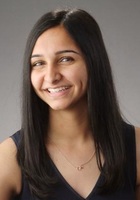
Certified Tutor
6+ years
Rhea
The MCAT's Chemical and Physical Foundations section blends general chemistry, organic chemistry, physics, and biochemistry into passage-based problems that reward fast, integrated thinking. As a pre-med biology major at the University of Chicago, Rhea has recently worked through this exact content ...
University of Chicago
Bachelor of Science, Biology, General
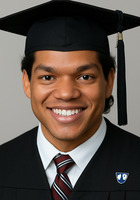
Certified Tutor
Tony
Tackling the Chemical and Physical Foundations section requires connecting general chemistry and physics concepts to biological systems — something Tony did routinely as a biology major at Yale preparing for medical school. He breaks down high-yield topics like enzyme kinetics, fluid dynamics, and e...
Yale University
Bachelor of Science in Biology
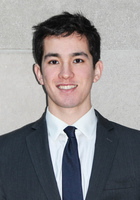
Certified Tutor
10+ years
Zachary
The Chem/Phys section of the MCAT demands more than knowing general chemistry and physics — it requires applying those principles to biological systems under time pressure, from enzyme kinetics and thermodynamics to fluid dynamics in the circulatory system. Zachary's biochemistry and biophysics degr...
Yale University
Bachelors, Biochemistry and Biophysics
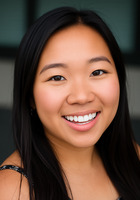
Certified Tutor
10+ years
Samantha
The Chem/Phys section of the MCAT demands more than content recall — it requires applying general chemistry, organic chemistry, and physics concepts within passage-based experimental scenarios. Samantha, currently in medical school, unpacks how to read data tables mid-passage, connect them to underl...
Duke University
Bachelors in Global Health Determinants, Behaviors, and Interventions
Harvard Medical School
Current Grad Student, MD
Certified Tutor
6+ years
David
Covering everything from Newtonian mechanics to amino acid chemistry, the Chem/Phys section demands fluency across disciplines that most students studied years apart. David's neuroscience background at Yale included heavy coursework in general chemistry, organic chemistry, and physics, so he connect...
Yale University
Bachelor of Science in Neuroscience
Harvard University
Current Grad Student, Bioethics and Medical Ethics
Certified Tutor
9+ years
Benjamin
Preparing for the MCAT's Chemical and Physical Foundations section requires connecting general chemistry, organic chemistry, and physics to biological systems — exactly the kind of cross-disciplinary thinking Benjamin's Vanderbilt neuroscience degree demanded. He breaks down passage-based questions ...
Vanderbilt University
Bachelor's degree in neuroscience and Russian
Certified Tutor
Laura
The Chem/Phys section of the MCAT throws biochemistry, general chemistry, organic chemistry, and physics at students in passage-based formats that demand fast analytical reading as much as content knowledge. Laura breaks down complex passages — enzyme kinetics graphs, electrochemistry calculations, ...
Massachusetts Institute of Technology
Bachelors, Economics
Certified Tutor
6+ years
The Chem/Phys section of the MCAT demands rapid passage interpretation layered on top of general chemistry, organic chemistry, and physics — and Sanjay has been through it himself with a biochemistry degree and medical school under his belt. He breaks down passage-based reasoning strategies for topi...
Rice University
Bachelor in Arts
Certified Tutor
8+ years
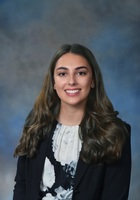
Amanda
The Chemical and Physical Foundations section throws organic chemistry, physics, and general chemistry at students in passage-based formats that reward fast, accurate reasoning under pressure. Amanda tackled the MCAT herself on the path to her MD and knows which high-yield topics — enzyme kinetics, ...
The University of Alabama
Bachelor of Science, Biology, General
Baylor College of Medicine
Doctor of Medicine, Public Health
Certified Tutor
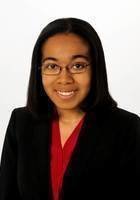
Jean
Having taken the MCAT and earned admission to Harvard Medical School, Jean knows firsthand how the Chemical and Physical Foundations section blends general chemistry, organic chemistry, and physics into passage-based reasoning problems. She teaches students to decode experimental setups quickly and ...
Harvard College
Bachelor in Arts, Sociology
Harvard Medical School
Doctor of Medicine, Medicine
Nearby MCAT Chemical and Physical Foundations of Biological Systems Tutors
Other San Francisco Tutors
Related Graduate Test Prep Tutors in San Francisco
Frequently Asked Questions
The Chemical and Physical Foundations of Biological Systems section (often called Biochemistry) covers general chemistry, organic chemistry, and biochemistry as they apply to biological systems. Key topics include atomic structure, bonding, thermodynamics, acid-base chemistry, enzyme kinetics, protein structure, carbohydrate metabolism, lipid biochemistry, and nucleic acids.
This section represents about 25% of the MCAT and requires strong foundational chemistry knowledge applied to biological contexts. Many students find the integration of chemistry concepts with biological relevance to be challenging, which is why targeted practice with a tutor familiar with MCAT-style questions can be particularly helpful.
Most students preparing for the MCAT dedicate 3-4 months of dedicated study time, with the Chemical and Physical Foundations section typically requiring 40-60 hours of focused preparation. However, this varies based on your chemistry background—students with weaker foundational chemistry may need additional time to build core concepts before tackling MCAT-level material.
An effective study schedule involves dividing time between content review (30-40% of effort), practice problems (40-50%), and full-length practice tests (10-20%). For students in San Francisco balancing medical school prerequisites with other commitments, a personalized tutoring schedule can help you maximize efficiency and identify areas needing the most attention.
The biggest challenge is applying chemistry concepts to unfamiliar biological scenarios under time pressure. Students often struggle with enzyme kinetics (Michaelis-Menten), reaction mechanisms, and distinguishing between similar biochemical pathways. Time management is another major issue—this section requires both conceptual understanding and quick problem-solving, and many students spend too long on complex calculations.
Reading and interpreting passage-based questions also trips up many students, as the MCAT tests reasoning skills alongside content knowledge. Working with a tutor experienced in MCAT preparation helps you develop strategic approaches to different question types and build confidence in your pacing and problem-solving process.
Start by identifying your specific weak areas through practice tests and problem sets—whether it's foundational chemistry gaps, specific biochemical pathways, or simply pacing issues. Many students benefit from targeted review of general chemistry fundamentals before diving deeper into biochemistry applications. Then, focus on understanding why answers are correct, not just memorizing content.
Practice with real MCAT passages and questions is essential, as this section heavily rewards strategic reading and application skills. Varsity Tutors connects you with expert tutors who can help you develop a personalized study plan, teach you MCAT-specific strategies for different question types, and provide realistic feedback on your progress through practice tests.
Understanding concepts is far more important than memorization on the MCAT. While you do need to know some key structures (amino acids, nucleotides) and pathways (glycolysis, citric acid cycle), the test primarily evaluates your ability to apply chemical and biochemical principles to new, unfamiliar scenarios. Memorization alone will not help you reason through complex passages or solve novel problems.
Effective MCAT preparation focuses on building deep conceptual understanding—knowing not just what happens, but why it happens and how to predict outcomes in different conditions. A tutor can help you move beyond surface-level memorization by teaching you to think like a chemist and biologist, strengthening both your content knowledge and your problem-solving skills.
Most successful test-takers take one full-length MCAT practice test every 1-2 weeks during their active preparation period, with the frequency increasing closer to test day. Early on (weeks 1-6 of studying), practice tests help you understand the format and identify content gaps. As you progress (weeks 7-10), more frequent tests help you refine timing, strategy, and stamina.
Taking practice tests without proper analysis limits their value—it's crucial to review every question you missed and understand the reasoning behind correct answers. A tutor can help you analyze practice test results strategically, identifying patterns in your errors and adjusting your study plan accordingly. This targeted approach helps you improve efficiency and build confidence in your abilities.
Yes, students often see meaningful score improvements with focused tutoring, particularly when working with tutors experienced in MCAT preparation. The amount of improvement depends on your starting point and baseline chemistry knowledge, but many students improve by 3-5 points on this section with 4-8 weeks of consistent tutoring combined with independent study. Some students see even greater gains if they're addressing significant foundational chemistry gaps.
The timeline matters—students who start tutoring early and maintain consistent effort see better results than those who wait until closer to test day. Varsity Tutors connects you with expert tutors who understand both the content and the unique challenges of MCAT testing, helping you build a personalized study strategy and the confidence to perform at your best on test day.
Connect with MCAT Chemical and Physical Foundations of Biological Systems Tutors in San Francisco
Get matched with local expert tutors