Award-Winning AP Calculus AB Tutors
serving Denver, CO
AP Calculus AB
Tutors in Denver
Private 1-on-1 tutoring, weekly live classes for academic support, test prep & enrichment, practice tests and diagnostics, and more to elevate grades and test scores.
Based on 3.4M Learner Ratings
UniversitiesSchools & Universities
DeliveredHours Delivered
ProficiencyGrowth in Proficiency
Who needs tutoring?
No obligation. Takes ~1 minute.

Colton's biomedical engineering coursework at UVA required fluency in calculus well beyond the AP level, which means he can explain limits, derivatives, and integrals with the kind of depth that makes free-response questions feel manageable. He breaks down the chain rule, related rates, and Riemann sums using gradual build-up rather than formula memorization, so the reasoning behind each step clicks.
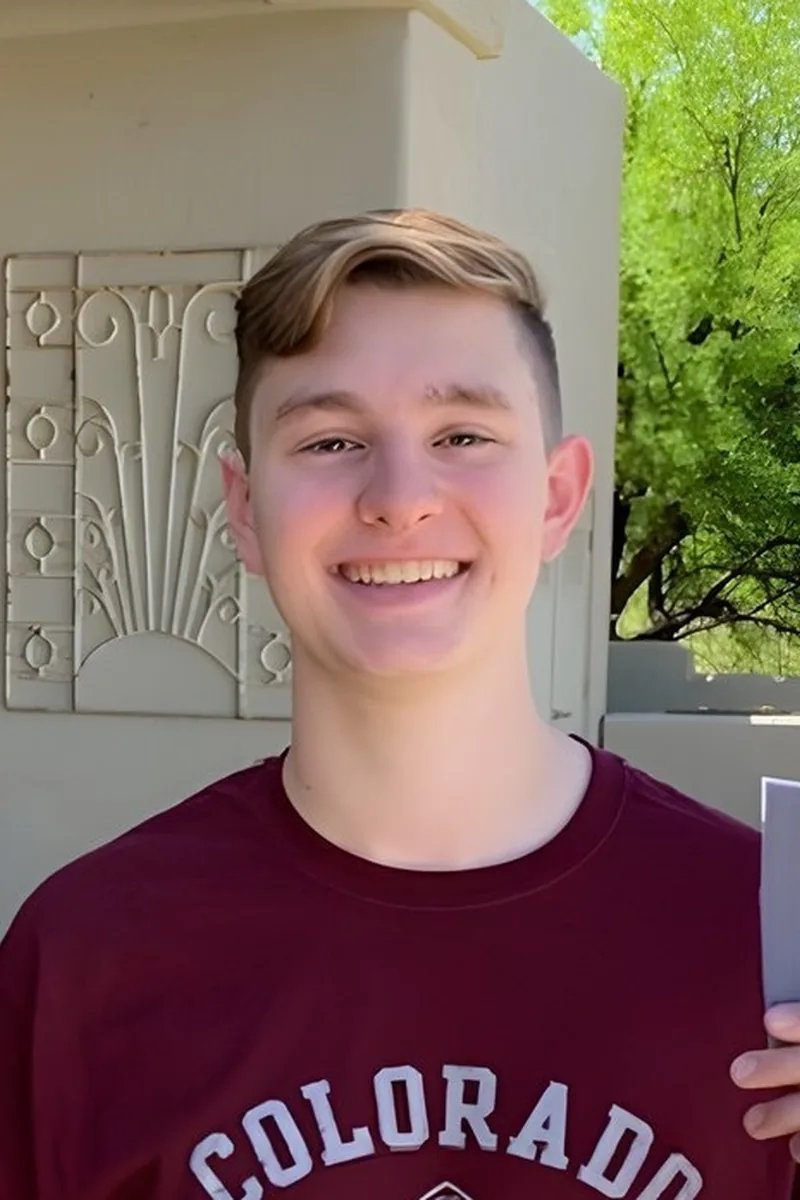
The jump from Pre-Calc to AP Calculus AB is where a lot of students lose confidence, especially around limits, the chain rule, and related rates problems. Jude tackles these by asking targeted questions that push students to discover the logic themselves, making the ideas stick far longer than passive note-taking would. His dual focus on applied math and engineering physics at Colorado School of Mines keeps him fluent in every AB topic.
I am a student at the Georgia Institute of Technology studying Chemical Engineering. For the past several years, I have worked with students extensively. Through hosting events for younger kids to learn about STEM and for older teens to practice empathetic design, I know the importance of teaching students in ways that engage them rather than frustrate them, which I apply to my teaching. I have tutored high school students in a drop-in resource center in various subjects including math of all levels, chemistry, and English, making me adequately equipped in a variety of topics. I have also tutored several students long-term. Establishing relationships with students and exploring their unique learning styles is my favorite part of tutoring. I prioritize helping students discover HOW to learn in a manner that is the most effective for them, so they can begin to use those skills on their own throughout their education. Learning is a lifelong skill that requires practice for improvement; I strive to help my students gain confidence in their ability to learn.
Astrophysics at CU Boulder means Graham uses calculus daily — from modeling orbital mechanics to analyzing rate-of-change problems that mirror real AP exam questions. He breaks down limits, derivatives, and integrals by connecting each concept to the physical intuition behind it, making the Fundamental Theorem of Calculus click rather than just seem like another formula. Rated 5.0 by students.
Computer science at KU's Honors Program means Austin writes code that depends on calculus concepts daily — recursive functions mirror limits, algorithm efficiency ties back to rates of change — so he teaches the AB curriculum with an eye toward what these ideas actually do beyond the exam. He's particularly strong at walking students through the setup of free-response problems, where translating a scenario into the right derivative or integral expression is the real challenge. Rated 5.0 by students.
Limits, derivatives, and integrals each build on the last, so a shaky grasp of one concept can quietly undermine everything that follows. Evan breaks AP Calculus AB into those building blocks, connecting each new rule — chain rule, u-substitution, related rates — back to the graphical and physical intuition that makes it click. His physics background gives him a deep well of real-world examples to draw from.
The jump from memorizing derivative rules to actually applying them — related rates, optimization, the Fundamental Theorem — is where most AB students start to struggle. William teaches these connections by building intuition for what a derivative or integral actually means, not just how to compute one. He's studying mathematics at Rice and has continued through multivariable calculus and beyond, giving him a clear view of where AB concepts are headed.
Studying Applied and Computational Mathematics at Caltech, Samuel lives in the world of calculus daily — limits, derivatives, integrals, and the Fundamental Theorem aren't abstract ideas to him but tools he actively uses. He breaks down AP Calculus AB concepts like related rates and Riemann sums by connecting them to the intuition behind why each technique works, not just the mechanical steps.
Limits, derivatives, and integrals become far more intuitive when a student sees why they matter, not just how to compute them. Dennis's physics background means he can ground every AB Calculus concept — from the chain rule to Riemann sums — in tangible problems involving motion, area, and rates of change.
Mechanical engineering at Harvard means Christopher builds with calculus daily — every force balance is a derivative, every energy calculation an integral — so the AB curriculum maps directly onto problems he's already solving in his coursework. He's especially sharp at teaching students how to navigate optimization and area-between-curves setups, where translating the scenario into the right expression is the real challenge. His 35 ACT and 4.8 rating back up an approach grounded in engineering intuition rather than formula memorization.
Materials science engineers live in calculus — Jennifer's coursework meant using derivatives to characterize how material properties change under stress and integrals to calculate energy absorption across deformation curves, so she teaches AB concepts with that built-in sense of what the math physically describes. Her 1550 SAT and 33 ACT back up the quantitative precision she brings to tricky topics like implicit differentiation and area-between-curves problems. Rated 5.0 by students.
Limits, derivatives, and integrals each build on the last, so a shaky grasp of one topic can quietly undermine everything that follows. Brooke tackles AP Calculus AB by connecting each concept back to its graphical and physical meaning — something her engineering training at Duke reinforces every day. She scored a 1550 on the SAT and carries that same precision into calculus.
Princeton's aerospace engineering program throws you into differential equations and multivariable calculus early, which means Fred had to master the AB fundamentals — limits, derivatives, integration techniques — so thoroughly that they became second nature before the harder material piled on. That depth shows when he teaches topics like the chain rule or area between curves, where he can explain not just the procedure but the reasoning that makes it transferable to unfamiliar exam questions. His 1550 SAT speaks to the same precision he brings to breaking down free-response setups.
Chemical engineering at the undergraduate level and then medical school means Siva has been setting up and solving calculus problems in high-stakes contexts for years — from modeling heat transfer and reaction kinetics to quantifying physiological rates of change. That depth shows when he teaches limits, continuity, and the mechanics of integration, because he can explain not just the procedure but the reasoning that makes free-response setups feel logical instead of mysterious. Rated 5.0 by students, with a 1560 SAT backing up the quantitative precision behind his approach.
The jump from memorizing derivative rules to actually understanding limits, the chain rule, and the Fundamental Theorem is where most AB students struggle. Anthony approaches calculus the way he learned it as a Yale physics and math major: every rule has a reason, and once students see that reason, problem-solving becomes intuitive rather than mechanical. He holds a 5.0 client rating.
Cognitive science at Penn might not scream calculus, but Samantha's coursework required enough mathematical modeling — derivatives for rate-of-change problems, integrals for cumulative distributions — that she teaches AP Calculus AB with real fluency. She's especially effective at walking through optimization and curve-sketching problems, where translating a word problem into the right function is half the battle. Her 1460 SAT reflects the quantitative precision she brings to exam prep.
Limits, derivatives, and integrals each build on the last, so a shaky understanding of one concept compounds quickly in AP Calc AB. Ben unpacks each topic by tying it to its geometric meaning — the slope of a tangent line, the area under a curve — so that formulas feel intuitive rather than arbitrary. His 5.0 client rating speaks to how well that approach lands with students.
Having tutored college students through calculus at Harvard while majoring in chemistry, James knows exactly where AB students hit friction — limits that seem pointless, the conceptual jump to integration, and free-response problems that demand more than mechanical differentiation. His approach leans on building the reasoning behind each technique, so when the exam asks students to justify a answer using the Mean Value Theorem or interpret a definite integral in context, the logic is already there. A 1570 SAT and 4.9 rating back up the precision he brings to every session.
Testimonials
Because the right AP Calculus AB tutor makes all the difference.
Average Session Rating – Based on 3.4M Learner Ratings
Practice AP Calculus AB
Free practice tests, flashcards, and AI tutoring for AP Calculus AB
Nearby AP Calculus AB Tutors
Other Denver Tutors
Related Math Tutors in Denver
Frequently Asked Questions
AP Calculus AB focuses on limits, continuity, derivatives, and integrals—the foundational concepts of single-variable calculus. The exam tests your ability to understand these concepts both graphically and algebraically, apply them to real-world problems, and communicate mathematical reasoning clearly. Most students spend the school year building from basic limit concepts through applications of derivatives and integrals, with significant time devoted to practice problems and exam-style questions.
Many students struggle with the transition from algebra to calculus thinking—especially understanding what a derivative truly represents beyond the formula. Pacing is another challenge; the course moves quickly, and falling behind on one concept makes the next unit harder to grasp. Time management on the exam itself is critical, as students often get stuck on difficult free-response questions and run out of time for easier ones. Personalized tutoring helps identify exactly where your understanding breaks down and rebuilds those foundations before moving forward.
Score improvement depends on where you're starting and how consistently you engage with tutoring. Students who work with a tutor to target specific weak areas—like derivative applications or integration techniques—typically see meaningful gains. The AP Calculus AB exam rewards deep understanding over memorization, so focused practice on problem types you find challenging, combined with test-taking strategy work, can significantly boost your confidence and performance on exam day.
Success on the AP exam requires knowing which problems to tackle first and which to skip strategically. Many students benefit from practicing full-length exams under timed conditions to build stamina and identify their pacing patterns. Tutors can help you develop a personalized approach—whether that's doing multiple-choice first to build confidence, or tackling free-response questions strategically. Understanding the exam format and practicing with real AP problems is far more effective than last-minute cramming.
Look for tutors with strong calculus backgrounds and experience preparing students for the AP exam specifically. Ideally, they understand both the mathematical concepts deeply and the AP exam's expectations—knowing which topics are heavily tested and what the graders are looking for in free-response answers. Varsity Tutors connects you with expert tutors who have proven success helping students master AP Calculus AB content and exam strategy.
Your first session is about understanding where you stand and what you need most. A tutor will typically assess your comfort with foundational concepts, identify specific topics causing confusion, and learn about your goals—whether you're aiming for a 3 or pushing for a 5. From there, you'll develop a personalized plan that targets your weak areas while reinforcing strengths, so your tutoring time is spent as efficiently as possible.
Practice tests are essential for AP Calculus AB success. They help you understand the exam format, identify weak areas, and build test-taking stamina. The College Board releases official practice materials and past exams, which are invaluable because they match the real exam's difficulty and style exactly. A tutor can guide you through practice tests strategically—reviewing what you got wrong, teaching you to recognize question patterns, and refining your approach based on your performance.
Denver's 9 school districts offer AP Calculus AB through various high schools, and while each school's curriculum follows the same AP standards, tutoring tailored to your specific class can be especially helpful. A tutor familiar with AP Calculus AB can align with your teacher's pacing and emphasis, help you understand concepts your class covered quickly, and provide the extra practice you need. Varsity Tutors connects you with tutors for students in Denver who understand the AP exam requirements and can support your success.
Let’s find your perfect tutor
Answer a few quick questions. We’ll recommend the right plan and match you with a top 5% tutor.