Award-Winning AP Calculus AB Tutors
serving Colorado Springs, CO
AP Calculus AB
Tutors in Colorado Springs
Private 1-on-1 tutoring, weekly live classes for academic support, test prep & enrichment, practice tests and diagnostics, and more to elevate grades and test scores.
Based on 3.4M Learner Ratings
UniversitiesSchools & Universities
DeliveredHours Delivered
ProficiencyGrowth in Proficiency
Who needs tutoring?
No obligation. Takes ~1 minute.

Colton's biomedical engineering coursework at UVA required fluency in calculus well beyond the AP level, which means he can explain limits, derivatives, and integrals with the kind of depth that makes free-response questions feel manageable. He breaks down the chain rule, related rates, and Riemann sums using gradual build-up rather than formula memorization, so the reasoning behind each step clicks.
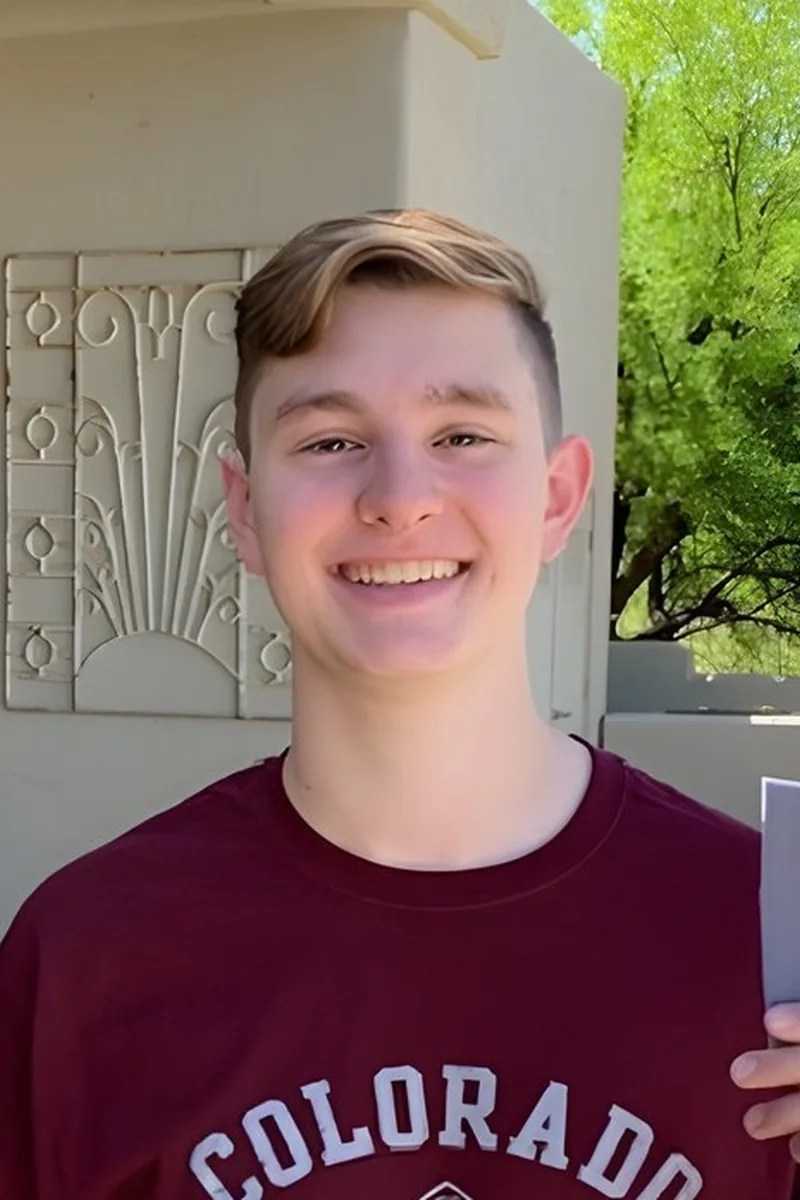
The jump from Pre-Calc to AP Calculus AB is where a lot of students lose confidence, especially around limits, the chain rule, and related rates problems. Jude tackles these by asking targeted questions that push students to discover the logic themselves, making the ideas stick far longer than passive note-taking would. His dual focus on applied math and engineering physics at Colorado School of Mines keeps him fluent in every AB topic.
Astrophysics at CU Boulder means Graham uses calculus daily — from modeling orbital mechanics to analyzing rate-of-change problems that mirror real AP exam questions. He breaks down limits, derivatives, and integrals by connecting each concept to the physical intuition behind it, making the Fundamental Theorem of Calculus click rather than just seem like another formula. Rated 5.0 by students.
I am a student at the Georgia Institute of Technology studying Chemical Engineering. For the past several years, I have worked with students extensively. Through hosting events for younger kids to learn about STEM and for older teens to practice empathetic design, I know the importance of teaching students in ways that engage them rather than frustrate them, which I apply to my teaching. I have tutored high school students in a drop-in resource center in various subjects including math of all levels, chemistry, and English, making me adequately equipped in a variety of topics. I have also tutored several students long-term. Establishing relationships with students and exploring their unique learning styles is my favorite part of tutoring. I prioritize helping students discover HOW to learn in a manner that is the most effective for them, so they can begin to use those skills on their own throughout their education. Learning is a lifelong skill that requires practice for improvement; I strive to help my students gain confidence in their ability to learn.
Computer science at KU's Honors Program means Austin writes code that depends on calculus concepts daily — recursive functions mirror limits, algorithm efficiency ties back to rates of change — so he teaches the AB curriculum with an eye toward what these ideas actually do beyond the exam. He's particularly strong at walking students through the setup of free-response problems, where translating a scenario into the right derivative or integral expression is the real challenge. Rated 5.0 by students.
Limits, derivatives, and integrals each build on the last, so a shaky grasp of one concept can quietly undermine everything that follows. Evan breaks AP Calculus AB into those building blocks, connecting each new rule — chain rule, u-substitution, related rates — back to the graphical and physical intuition that makes it click. His physics background gives him a deep well of real-world examples to draw from.
Most AB students can differentiate a polynomial just fine — it's the moment a free-response question asks them to interpret the meaning of a derivative or set up an integral from a word problem that things fall apart. Zac tackles those conceptual gaps head-on, breaking application problems into smaller reasoning steps before any computation starts. His 34 ACT and 4.9 rating point to the kind of structured, clear thinking that makes tough calculus concepts land.
Limits, derivatives, and integrals click faster when a student sees how each concept builds on the last — and Tim's computational science training at MIT means he can show exactly how those connections work, from the epsilon-delta definition through the Fundamental Theorem. He's tutored every level of high school math up through AP Calculus BC, so he knows precisely where AB students tend to stumble on topics like related rates and accumulation functions.
Having taught introductory calculus as a course assistant at Harvard, Richard has seen firsthand which AP Calculus AB concepts — limits, the chain rule, related rates, accumulation functions — trip students up most often. He builds intuition around why derivatives and integrals work the way they do, which makes the problem-solving on exam day feel less like guesswork.
Cognitive science at Penn might not scream calculus, but Samantha's coursework required enough mathematical modeling — derivatives for rate-of-change problems, integrals for cumulative distributions — that she teaches AP Calculus AB with real fluency. She's especially effective at walking through optimization and curve-sketching problems, where translating a word problem into the right function is half the battle. Her 1460 SAT reflects the quantitative precision she brings to exam prep.
The jump from memorizing derivative rules to actually understanding limits, the chain rule, and the Fundamental Theorem is where most AB students struggle. Anthony approaches calculus the way he learned it as a Yale physics and math major: every rule has a reason, and once students see that reason, problem-solving becomes intuitive rather than mechanical. He holds a 5.0 client rating.
A PhD in statistics built on a biomedical engineering foundation means Sam has spent years where calculus isn't a course — it's the machinery underneath everything, from deriving probability distributions to modeling biological systems. That depth shows when teaching limits and the Fundamental Theorem, where he can trace each concept forward into the math students will actually use in college. Rated 4.9 by students.
The jump from memorizing derivative rules to applying them on AP free-response questions is where most Calc AB students lose points. Adam breaks down each problem type — related rates, accumulation functions, slope fields — by teaching the reasoning behind setups so students can handle unfamiliar prompts on exam day.
Pre-med biology and chemistry at Northwestern means Kade is constantly using calculus to make sense of other disciplines — enzyme kinetics, population growth models, dose-response curves — which keeps the AB material grounded in something tangible. He's especially good at walking through limit definitions and continuity arguments, the early-course concepts that quietly determine whether the rest of the year clicks or collapses. His 1550 SAT reflects the kind of precise, methodical thinking that pays off on AP free-response questions.
A graphical, intuitive understanding of limits, derivatives, and integrals makes the entire AP Calculus AB curriculum click faster than memorizing rules ever could. Dylan approaches each concept by showing what it actually looks like on a graph — why a derivative is a slope, why an integral is accumulated area — before touching any formulas. His physics background at Vanderbilt keeps the math grounded in real meaning.
IB Diploma graduates know what it's like to hit calculus from multiple directions at once — Dalton's experience completing that program means he learned early how to manage the conceptual load of limits, derivatives, and integrals alongside heavy coursework in other subjects. He's especially good at teaching students how to pace themselves through the AB curriculum and build the kind of problem-setup instincts that free-response graders reward. His 35 ACT and 4.9 rating back up an approach built on disciplined preparation rather than shortcuts.
Scoring a 1570 SAT and 35 ACT takes the kind of disciplined problem-solving that translates directly into teaching limits, derivatives, and integration techniques at the AB level. Amber zeroes in on the moment students go from mechanically applying the power rule to actually understanding why the Fundamental Theorem ties differentiation and integration together — a shift that unlocks the entire second half of the course. Rated 5.0 by students.
Caleb's statistics degree at Duke means he doesn't just teach AP Calculus AB procedures — he understands where concepts like limits, derivatives, and the Fundamental Theorem of Calculus lead in higher math. That perspective lets him explain *why* the chain rule or related rates problems work the way they do, giving students a conceptual grip that pays off on the AP exam.
Testimonials
Because the right AP Calculus AB tutor makes all the difference.
Average Session Rating – Based on 3.4M Learner Ratings
Practice AP Calculus AB
Free practice tests, flashcards, and AI tutoring for AP Calculus AB
Nearby AP Calculus AB Tutors
Other Colorado Springs Tutors
Related Math Tutors in Colorado Springs
Frequently Asked Questions
AP Calculus AB covers limits, continuity, derivatives, applications of derivatives, and integrals. The course focuses on understanding rates of change and accumulation, with emphasis on both conceptual understanding and problem-solving skills. Most students spend the year building from foundational limit concepts through integration techniques, preparing for the May AP exam.
Score improvement depends on your starting point and consistency with tutoring. Students who work with tutors on targeted practice typically see gains of 1-2 score points on the 1-5 scale, especially when addressing specific weak areas like derivative applications or integration methods. The key is identifying gaps early and practicing consistently throughout the year—waiting until right before the exam limits potential gains.
Many students struggle with the conceptual jump from algebra to calculus, particularly understanding what derivatives and integrals represent beyond just the mechanics. Pacing is another challenge—the course moves quickly, and falling behind on limits or derivatives makes later topics harder to grasp. Time management on the exam is also critical, as students need to balance multiple-choice and free-response sections while showing clear work.
Your first session focuses on understanding where you stand. A tutor will assess your comfort with prerequisite algebra and precalculus skills, discuss your current progress in the course, and identify specific topics causing confusion—whether that's limits, derivatives, or integrals. From there, you'll develop a personalized study plan that targets your weak areas while reinforcing strengths.
Practice tests are essential—they help you understand the exam format, identify pacing issues, and reveal which topics need more review. Taking full-length practice tests under timed conditions mimics the actual exam experience and builds confidence. Most students benefit from starting practice tests 2-3 months before the May exam, then reviewing mistakes thoroughly with a tutor to avoid repeating errors.
Look for tutors with strong calculus backgrounds—ideally those who've taught or tutored AP Calculus AB specifically and understand both the curriculum and exam format. Experience with Colorado Springs schools is helpful since different districts may emphasize different topics. Most importantly, find someone who can explain concepts clearly and help you understand the 'why' behind calculus, not just the mechanics.
Building confidence through consistent practice and understanding is the best anxiety reducer. Working with a tutor on problem-solving strategies, time management techniques, and reviewing past mistakes helps you feel prepared. Practice tests under timed conditions also reduce anxiety by familiarizing you with the exam experience, so test day feels less like a surprise and more like a familiar challenge.
Starting tutoring early in the school year—ideally by October or November—gives you time to build a strong foundation and address gaps before they compound. If you're struggling with specific topics mid-year, getting help immediately prevents falling further behind. Even students doing well benefit from tutoring in the final 2-3 months to refine exam strategy and practice problem-solving under pressure.
Let’s find your perfect tutor
Answer a few quick questions. We’ll recommend the right plan and match you with a top 5% tutor.