Award-Winning MCAT Verbal Reasoning Tutors
serving Denver, CO
Who needs tutoring?
FEATURED BY


TUTORS FROM
- YaleUniversity
- PrincetonUniversity
- StanfordUniversity
- CornellUniversity
Award-Winning MCAT Verbal Reasoning Tutors serving Denver, CO
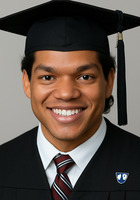
Certified Tutor
Tony
The MCAT's verbal reasoning passages are deliberately unfamiliar — philosophy, social science, humanities — and the trick is extracting an author's argument without getting lost in the content. Tony's Yale education immersed him in exactly this kind of dense, cross-disciplinary reading, and he compl...
Yale University
Bachelor of Science in Biology
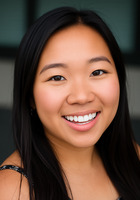
Certified Tutor
10+ years
Samantha
MCAT CARS passages are deliberately dense and unfamiliar — philosophy, ethics, art criticism — and the section rewards the ability to track an author's argument without getting lost in the weeds. As a current medical student who earned a perfect SAT verbal score, Samantha teaches specific strategies...
Duke University
Bachelors in Global Health Determinants, Behaviors, and Interventions
Harvard Medical School
Current Grad Student, MD
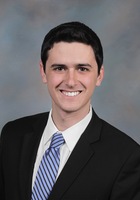
Certified Tutor
6+ years
David
The MCAT's CARS section isn't really about reading speed — it's about recognizing argument structure in passages on topics you've never seen before. David treats each passage as a logic puzzle, teaching students to identify the author's central claim and map how evidence supports it before even look...
Yale University
Bachelor of Science in Neuroscience
Harvard University
Current Grad Student, Bioethics and Medical Ethics
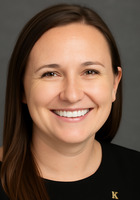
Certified Tutor
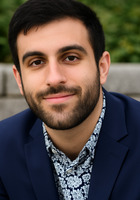
Laura
The MCAT's Critical Analysis and Reasoning Skills section throws dense humanities and social science passages at students who've spent months buried in biochemistry. Laura's 1510 SAT demonstrates her reading comprehension chops, and her economics background means she's comfortable dissecting complex...
Massachusetts Institute of Technology
Bachelors, Economics
Certified Tutor
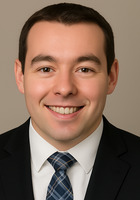
Shayan
Penn's pre-health track is heavy on science, but Shayan's biology and literature background means he's equally comfortable pulling apart a dense ethics passage as he is with a biochemistry textbook — and CARS demands exactly that cross-disciplinary comfort. He teaches students to read for the author...
University at Buffalo
Bachelors, Biology, General
University of Pennsylvania
Current Grad Student, Pre-Health
Certified Tutor
Timothy
The MCAT's CARS section isn't a science test — it's an exercise in dissecting dense, unfamiliar arguments under pressure. As a current medical student who also studied political science, Timothy developed sharp close-reading skills across both humanities and sciences, and he teaches specific strateg...
Drexel University College of Medicine
Current Grad Student, M.D.
University of California Los Angeles
Bachelors, Political Science and Government
Certified Tutor
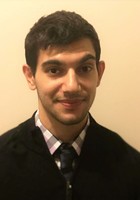
Vinay
MCAT CARS passages are deliberately dense and drawn from unfamiliar disciplines, which is exactly why Vinay's interdisciplinary background — biology, economics, public policy, and now medicine — gives him a natural edge in teaching the section. He breaks down how to identify an author's central thes...
Columbia University in the City of New York
Master in Public Health Administration, MPA in Developmental Practice
University of California Los Angeles
B.S. in Molecular, Cell, & Developmental Biology
Certified Tutor
Mosab
The CARS section rewards a specific kind of reading — extracting an author's argument from dense, unfamiliar passages under extreme time pressure. Mosab's dual background in international relations and health sciences means he's spent years doing exactly that across humanities and science texts, and...
Tufts University
Bachelors, International Relations and Arabic
Harvard University
Current Grad Student, Health Sciences

Certified Tutor
6+ years
Samantha
The MCAT's CARS section rewards a very specific kind of reading — extracting an author's argument structure, identifying assumptions, and evaluating evidence across dense humanities and social science passages. Samantha's neuroscience training at Penn, combined with her own love of reading and writi...
University of Pennsylvania
Bachelor in Arts, Neuroscience

Certified Tutor
Rebecca
The MCAT's verbal reasoning section isn't really about what you know — it's about how quickly you can dissect an unfamiliar argument, identify its assumptions, and evaluate its logic under time pressure. Rebecca breaks passages into their structural bones: main claim, supporting evidence, counterarg...
University of Pennsylvania
Bachelor in Arts, Biology, General
Nearby MCAT Verbal Reasoning Tutors
Other Denver Tutors
Related Graduate Test Prep Tutors in Denver
Frequently Asked Questions
Score improvement depends on your baseline and consistency, but students typically see meaningful gains within 4-8 weeks of focused preparation. Many students improve by 3-5 points on the Verbal Reasoning section when working with a tutor who identifies specific weak areas—whether that's reading comprehension speed, question type recognition, or strategic elimination.
The key is targeted practice on your exact problem areas. A tutor can help you move from passive reading to active annotation, refine your approach to different question types, and build test-day confidence. Consistent practice combined with personalized feedback tends to yield the strongest results.
The MCAT Verbal Reasoning section gives you roughly 8-9 minutes per passage, which requires both speed and accuracy. Most students struggle because they try to read every word carefully—a habit that backfires under time pressure.
Effective strategies include active annotation (underlining key claims and transitions), practicing rapid passage mapping, and learning which question types to tackle first. A tutor can help you identify whether your timing issue is slow reading, overthinking answer choices, or inefficient passage review. By practicing timed passages consistently and adjusting your approach based on what actually works, you can develop a rhythm that feels sustainable on test day.
The MCAT tests several distinct question types: main idea/primary purpose, detail-based questions, inference questions, and tone/author attitude questions. Each requires a slightly different approach.
Main idea questions reward big-picture understanding, while detail questions require careful reference back to the passage. Inference questions ask what the author implies (not explicitly states), and tone questions test your ability to catch nuance and authorial perspective. A tutor can teach you to recognize each type instantly, adjust your reading strategy accordingly, and avoid common traps like choosing answers that are true but don't answer the specific question asked. Practicing question-type-specific drills helps you develop pattern recognition that speeds up your test performance.
Most students assume they need to read faster, but the real culprit is often something else: misidentifying question types, overthinking answer choices, or missing the author's main argument amid complex details. The only way to know is through diagnostic analysis of your practice tests.
Review not just what you missed, but why you missed it. Did you misread the question? Choose an answer that was true but didn't answer the right thing? Miss a transition that signaled the author's stance? Varsity Tutors connects you with expert tutors who analyze your patterns across multiple practice passages and pinpoint whether your challenge is comprehension, strategy, or confidence. This targeted diagnosis replaces guessing with a concrete improvement plan.
Both matter, but in different phases. Early in preparation, untimed practice lets you focus on understanding passages and mastering question logic without panic. Once you've built solid fundamentals, timed practice becomes essential—it trains your brain to work efficiently under pressure and reveals where you're spending too much time.
A strategic approach uses untimed drills to learn question types and passage annotation, then transitions to timed full passages and full-section practice as test day approaches. A tutor can guide you on pacing and help you spot-check your technique during timed passages so you're not just moving faster—you're building sustainable speed based on smart strategy, not rushing.
Test anxiety on Verbal Reasoning often stems from unpredictability—not knowing what a passage will ask or whether you'll understand it in time. Confidence builds through familiarity and mastery. When you've practiced dozens of passages, seen every question type, and developed a reliable strategy, the test feels much less threatening.
A tutor helps you build this confidence by creating safe practice spaces where mistakes become learning moments, not disasters. You'll work through challenging passages with immediate feedback, celebrate incremental improvements, and develop a mental playbook you can trust on test day. Many students find that having a tutor as a thinking partner—not just a test prep coach—transforms test anxiety into focused determination.
Look for someone with strong MCAT Verbal Reasoning credentials—ideally someone who has scored well on the section themselves and understands the specific demands of medical school admissions. They should be able to teach strategy (not just drills), diagnose your specific weak points, and explain the logic behind both correct and incorrect answers.
Varsity Tutors connects you with expert tutors who specialize in MCAT prep and understand the nuances of Verbal Reasoning. They'll personalize their approach based on whether you need help with reading stamina, question type recognition, or confidence—and they'll track your progress across multiple practice tests to ensure you're actually improving. During your first session, a good tutor should listen to your specific concerns and outline a realistic path to your target score.
Connect with MCAT Verbal Reasoning Tutors in Denver
Get matched with local expert tutors