Award-Winning SAT Math Tutors
serving Fort Collins, CO
SAT Math
Tutors in Fort Collins
Private 1-on-1 tutoring, weekly live classes for academic support, test prep & enrichment, practice tests and diagnostics, and more to elevate grades and test scores.
Based on 3.4M Learner Ratings
UniversitiesSchools & Universities
DeliveredHours Delivered
ProficiencyGrowth in Proficiency
Who will be getting tutoring?
No obligation. Takes ~1 minute.

Scoring a 1570 on the SAT means Paul knows the test's math section inside and out — including the specific traps the College Board sets around quadratic word problems, data interpretation, and passport-to-advanced-math questions. He teaches students to recognize question types quickly and deploy the fastest solution path, whether that's back-solving, plugging in values, or setting up equations from scratch. That strategic layer is what separates a good math student from a high SAT Math scorer.
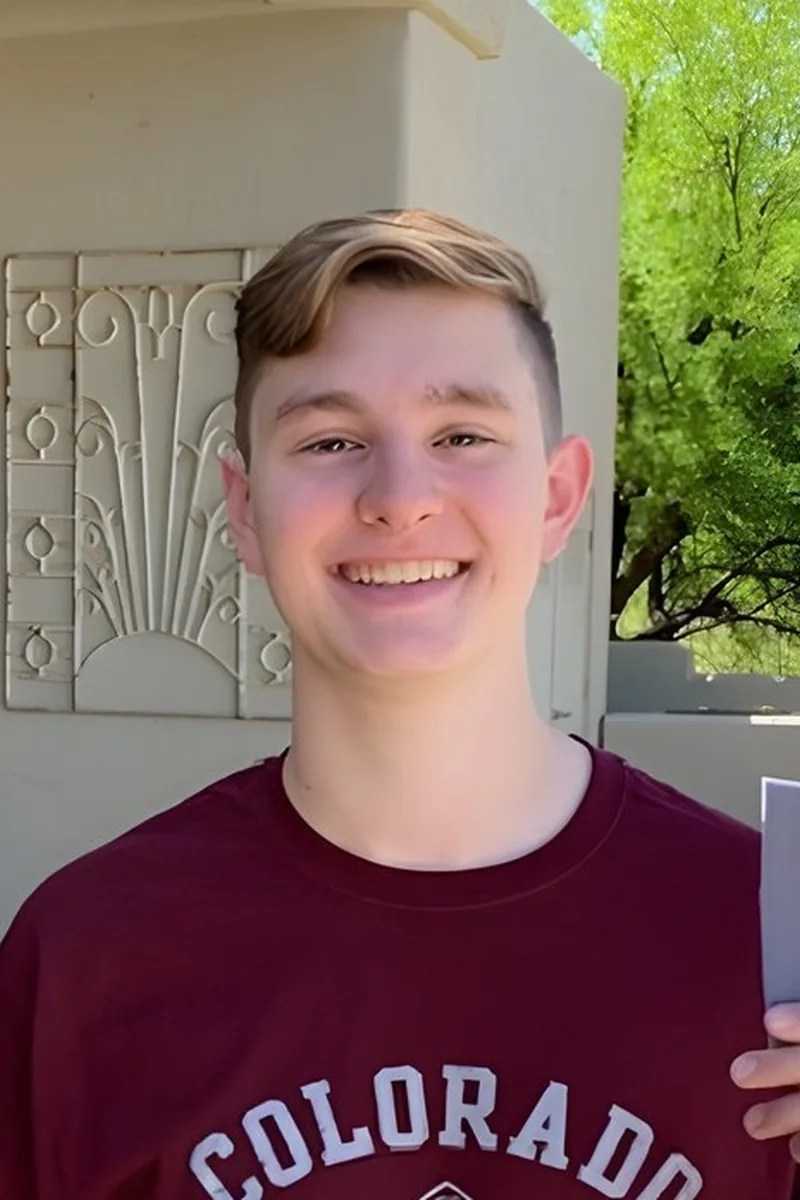
Jude's 1590 SAT came from an applied-math mindset: every problem has a structure, and finding it is faster than brute-force calculation. He digs into the higher-difficulty questions — passport-to-advanced-math items involving polynomial division, complex equation manipulation, and data interpretation — where most students lose the points that separate a good score from a great one.
Scoring a 1550 on the SAT while majoring in mathematics at Brown means Zofia knows this material from both sides — the test-taking strategy and the deep mathematical reasoning behind it. She zeroes in on the areas where students lose points most often, like interpreting nonlinear models in context or navigating multi-step word problems under time pressure. Her approach turns careless mistakes into reliable points.
I'm a hiker, a reader, a giant nerd, and full of terrible jokes that will (shockingly) make tutoring fun.
I am a student at the Georgia Institute of Technology studying Chemical Engineering. For the past several years, I have worked with students extensively. Through hosting events for younger kids to learn about STEM and for older teens to practice empathetic design, I know the importance of teaching students in ways that engage them rather than frustrate them, which I apply to my teaching. I have tutored high school students in a drop-in resource center in various subjects including math of all levels, chemistry, and English, making me adequately equipped in a variety of topics. I have also tutored several students long-term. Establishing relationships with students and exploring their unique learning styles is my favorite part of tutoring. I prioritize helping students discover HOW to learn in a manner that is the most effective for them, so they can begin to use those skills on their own throughout their education. Learning is a lifelong skill that requires practice for improvement; I strive to help my students gain confidence in their ability to learn.
I am not tutoring, I am studying to be an EMT. I also love backpacking and adventuring.
I am a graduate of the University of Colorado at Boulder. I received my Bachelor of Arts in Biochemistry as well as MCD (Molecular, Cellular, and Developmental) Biology while minoring in Chemistry in 2015. I love exploring all of the cool things that this world has to offer. By dabbling in a little of everything I can set my sights on what really holds my attention. My primary interests lie in the sciences, where learning what makes our world turn drives my passion for knowledge.
Rohith scored a 1480 on the SAT and brings particular strength to the math section's trickiest territory — quadratics, systems of inequalities, and the data-analysis questions that trip up students who rely on calculator shortcuts. He breaks each problem type into a decision tree so students know which approach to reach for before they even pick up a pencil.
I am a recent graduate of the University of Kentucky with a Master of Science in Animal Nutrition. I received my Bachelor of Science in Animal Sciences from Cornell University. While I tutor various subjects, I am most passionate about tutoring math and feel that our school systems often fail students when it comes to math. I do not believe that some people simply "can't do math." I believe that some may need extra time and help, but everyone can do math. With patience and hard work, any student can learn. I also enjoy tutoring Spanish, which I have studied since I was in elementary. During undergrad, I even studied abroad in Barcelona and lived with a host family. In my spare time, I enjoy reading, dancing, TV/movies, and knitting.
Computer science at KU means Austin solves problems algorithmically — break the task into steps, check each one, optimize for speed — which is exactly the mindset that pays off on SAT Math's multi-step algebra and geometry questions. He scored a 1410 on the SAT and uses that recent experience to teach students which problem types reward careful setup versus which ones have fast backdoor solutions like plugging in answer choices. Rated 5.0 by students.
I am currently a Masters student in Indo-Tibetan Buddhism at Naropa University in Boulder, CO. Previously, I had attended the Colorado School of Mines earning a bachelor's degree in Engineering Physics. I aspire to become a professor of Buddhist philosophy integrating contemplative studies with rigorous scientific and formal logics. Apart from scholastic endeavors, I spend much of my time wandering the Colorado mountains, practicing the piano, and studying the world around me.
Scoring 1430 on the SAT herself, Melissa knows firsthand how the math section tests familiar concepts in unfamiliar ways — a quadratic that looks like a word problem, or a data table hiding a linear relationship. She walks students through the specific algebra, function, and data-analysis skills that appear most often, building speed alongside accuracy.
Annie scored a 1410 on the SAT while still in college, so the test's algebra-heavy question style and time pressure are fresh in her memory — she knows which problem types reward careful setup and which ones reward speed. Her dual focus on math and Spanish education at CU Boulder means she's trained to actually teach concepts like systems of equations and quadratic modeling, not just solve them herself. Rated 5.0 by students.
I'm a hardworking, compassionate, and patient individual who has been tutoring since high school and helping my little sister with her homework long before. I'll work with every new student individually to recognize his or her strengths and weaknesses to make sure that material is actually being learned, not just memorized.
I am a first year medical student at the Sidney Kimmel Medical College at Thomas Jefferson University. I have been a private tutor in the past in subjects such as math, biology, chemistry, and the SATs and every single one of my more than twenty students have shown significant improvement. Most importantly, I have a passion for teaching, and your needs and preferences as the learner will always be paramount. I hope to help every one of my students reach every bit of their potential, and along the way, to utterly shatter any self-induced limitations that have been placed upon what they can accomplish.
Getting past 700 on SAT Math usually comes down to a handful of concept areas: advanced function behavior, systems of equations with no solution, and data analysis questions that blend statistics with algebra. Rhea earned a 1550 SAT and pinpoints exactly which of these areas are costing a student points, then drills those gaps with real College Board problems rather than generic practice sets. Her biology and pre-med coursework at UChicago keeps her math skills sharp through daily quantitative work.
Scoring a 1590 SAT means Anna has already dissected every question type the Math section throws at students — from no-calculator algebra and systems of equations to data analysis and passport-to-advanced-math problems involving polynomials and exponentials. She teaches efficient strategies for avoiding trap answers and managing pacing across both calculator and no-calculator modules.
Two semesters of SAT prep mentoring through CollegeSpring gave Kiersten a clear picture of where students lose points on SAT Math: usually in translating word problems into equations and managing time on the no-calculator section. She scored a 1550 on the SAT herself and teaches specific techniques for setting up algebraic models quickly and checking answers without second-guessing.
I am currently a resident physician at Northwestern Hospital.
Miranda earned a 1560 SAT composite, which means she tackled the Math section's trickiest territory — passport-to-advanced-math problems involving quadratics, systems, and nonlinear modeling. She teaches students to recognize what each question is actually asking beneath its wording, a skill that turns intimidating multi-step problems into familiar patterns.
I am passionate about helping students with math, science, test prep, and more! As sophomore undergraduate at Brown University studying Mathematics and Biophysics, I am well experienced with many topics. I received a perfect 36 on my ACT, so I am very confident with test taking.
Scoring an 800 on SAT Math means knowing when to use algebra and when a strategic shortcut is faster. Katie earned a perfect 1600 composite and unpacks each problem type — from polynomial functions to coordinate geometry — with an emphasis on the decision-making that saves time under pressure. Her 5.0 rating speaks to how well that approach lands with students.
Finance and statistics coursework at NYU means Dennis spends his days building models around the same quantitative reasoning the SAT Math section tests — probability, linear relationships, and interpreting data from tables and graphs. His 1550 SAT score came partly from treating the no-calculator questions as logic puzzles rather than computation drills, an approach he now teaches by walking students through how to eliminate answer choices using number properties before ever picking up a pencil.
Scoring a 1570 on the SAT, Joey knows the Math section inside and out — from the no-calculator questions that test algebraic fluency to the data-analysis problems that reward careful reading. He teaches students to recognize question patterns and avoid common traps, turning timed practice into a strategic exercise rather than a frantic race.
Scoring well on SAT Math often comes down to recognizing which tool a problem is really testing — is it a systems question disguised as a word problem, or a quadratic hidden in a table? Astoria's 1530 SAT composite and science-heavy coursework at WashU give her sharp instincts for the algebraic and data-analysis concepts that dominate this section. She teaches students to read problems strategically so they spend less time second-guessing their approach.
Testimonials
Because the right SAT Math tutor makes all the difference.
Average Session Rating – Based on 3.4M Learner Ratings
Practice SAT Math
Free practice tests, flashcards, and AI tutoring for SAT Math
Nearby SAT Math Tutors
Other Fort Collins Tutors
Related Test Prep Tutors in Fort Collins
Frequently Asked Questions
Varsity Tutors matches Fort Collins students with expert SAT Math tutors for 1-on-1 instruction. We pair each student with a tutor based on their specific needs, learning style, and goals.
Whether you need homework help, exam prep, or want to get ahead, our SAT Math tutors are ready to help.
Common challenges include gaps from earlier material, difficulty with specific concepts, and trouble applying learning to new problems. These issues can snowball quickly in SAT Math.
A tutor identifies where you're stuck, fills in gaps, and provides targeted practice. The 1-on-1 format means you get help exactly where you need it.
Tutors work with your student's actual coursework—homework assignments, class notes, and upcoming tests. This keeps tutoring directly relevant to what's happening in the classroom.
When you share information about your student's school and curriculum, we can match you with a tutor who has relevant experience.
All tutors complete background checks, credential verification, and teaching evaluation. Many of our SAT Math tutors hold advanced degrees or have years of teaching experience.
You can review tutor profiles to find someone with the right background for your student's level and needs.
Many students see improved grades within a few weeks, along with better understanding of SAT Math concepts and more confidence tackling challenging material.
Tutors track progress and adjust their approach to ensure continued improvement.
Most students benefit from 1-2 sessions per week. More frequent sessions help if your student is significantly behind or has an important exam coming up.
Your tutor can recommend a schedule based on your student's specific situation and goals.
Tutoring is purchased in packages of hours, with rates varying by tutor experience. Varsity Tutors offers several options to fit different budgets and needs.
You can discuss pricing during your consultation to find what works best.
Your tutor will assess where your student is, discuss goals, and start working on priority areas. Most students bring current homework or upcoming test material to focus on.
By the end, you'll have a clear sense of how the tutor can help and a plan for moving forward.
Let’s find your perfect tutor
Answer a few quick questions. We’ll recommend the right plan and match you with a top 5% tutor.