Award-Winning Pre-Calculus Tutors
serving Bridgeport, CT
Pre-Calculus
Tutors in Bridgeport
Private 1-on-1 tutoring, weekly live classes for academic support, test prep & enrichment, practice tests and diagnostics, and more to elevate grades and test scores.
Based on 3.4M Learner Ratings
UniversitiesSchools & Universities
DeliveredHours Delivered
ProficiencyGrowth in Proficiency
Who needs tutoring?
No obligation. Takes ~1 minute.
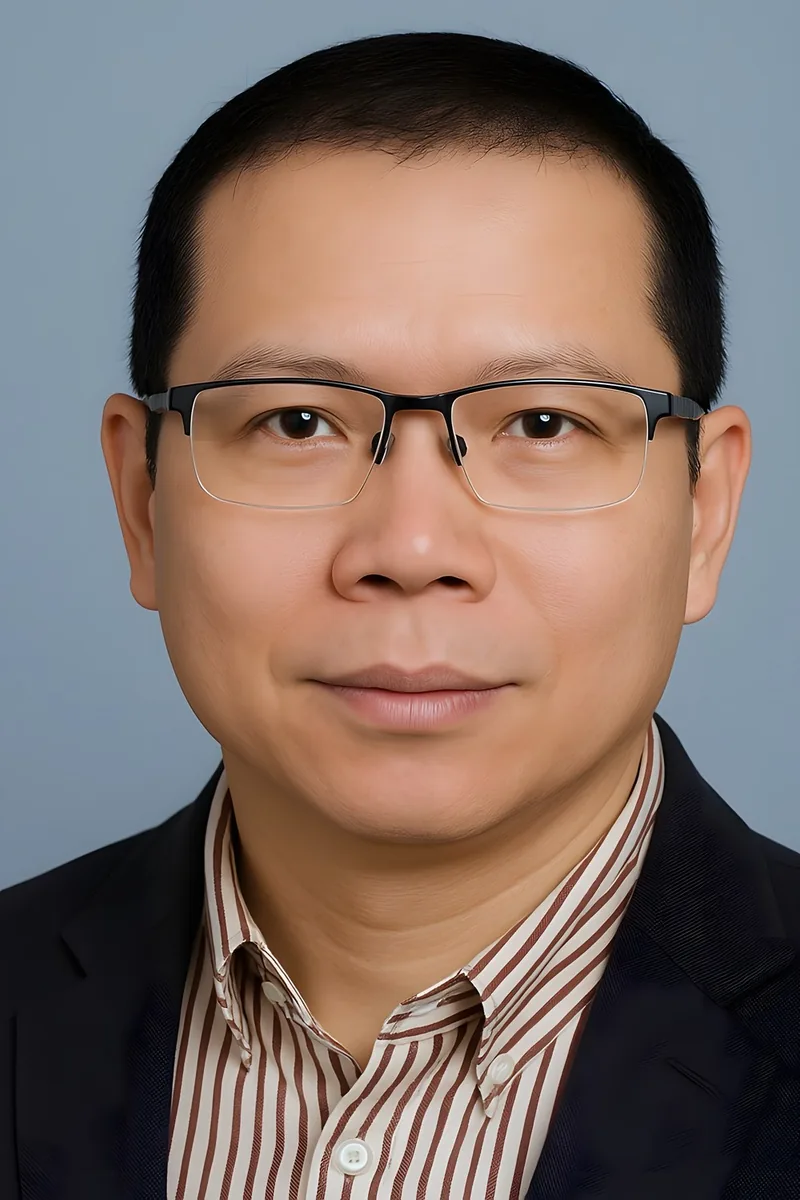
Twenty-plus years of teaching high school math — from foundational algebra through trigonometry — means Francis has watched hundreds of students hit the same pre-calculus stumbling blocks: the shift from manipulating equations to reasoning about function behavior, the leap into trigonometric identities, the sudden abstraction of limits and sequences. His master's in mathematics gives him the depth to explain why those concepts connect, not just how to survive the homework. Rated 4.8 by students.
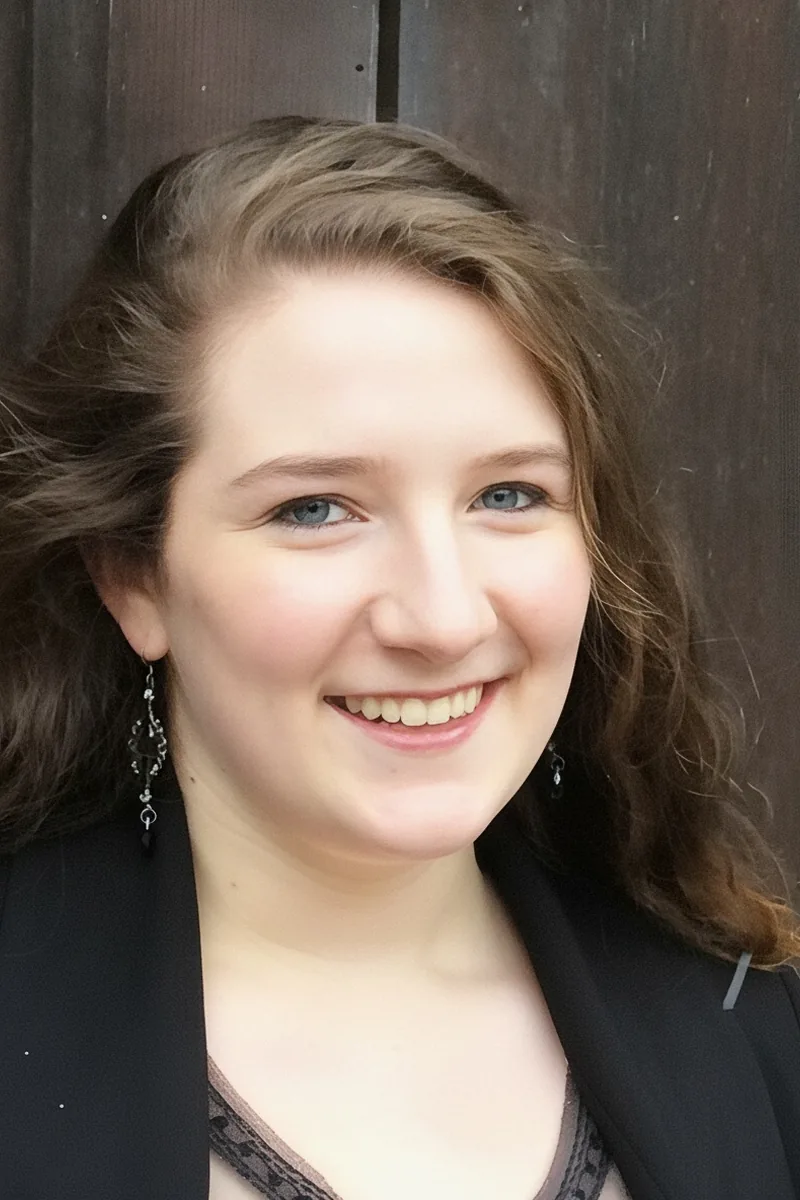
The University of Chicago's core curriculum put Valerie through rigorous math coursework alongside her Classics and Theatre studies, giving her a working command of the function families, transformations, and trigonometric reasoning that define pre-calculus. She's particularly sharp at demystifying sequences and series — breaking the pattern logic down step by step until the formulas feel inevitable rather than arbitrary. Her 1540 SAT confirms the quantitative skill behind her approach.
A dual BS in physics and math plus a PhD in economics at Yale means Anthony has moved through pre-calculus material from every possible direction — trigonometric reasoning in mechanics, function composition in mathematical proofs, exponential and logarithmic models in econometric analysis. He teaches the course as someone who knows exactly which skills carry forward and which shortcuts collapse under pressure in later coursework. Holds a 5.0 rating and a 1560 SAT.
Studying molecular biology at Yale means Maxwell constantly encounters the mathematical scaffolding that pre-calculus builds — exponential models for gene expression kinetics, logarithmic scales for concentration data, and trigonometric functions underlying structural biology. He zeros in on how these function families actually behave and transform, connecting the symbolic manipulation back to intuition so students aren't just memorizing identities in isolation. His 33 ACT and 5.0 rating back that up.
Most pre-calculus courses throw the unit circle, polynomial end behavior, and rational function analysis at students in rapid succession without showing the thread connecting them — Tessa slows down at exactly those junctures to make the underlying logic visible. Her math major at Yale means she's actively working several levels above this material, so she can trace each concept forward into calculus and backward into the algebra students already own. A 36 ACT and 4.9 rating confirm that precision carries over into her teaching.
Environmental science trained Ethan to think in models — logistic growth curves for populations, sinusoidal cycles for climate data, logarithmic scales for pH and decibel measurements — all functions that pre-calculus students are learning to manipulate for the first time. He teaches the course by connecting each function family to the real-world behavior it describes, which makes transformations and asymptotic reasoning feel intuitive instead of arbitrary. His 36 ACT and 5.0 rating back up the approach.
The jump into pre-calculus — limits, trigonometric identities, polar coordinates — demands comfort with abstraction that many students haven't needed before. Zach's intensive science degree at Yale required fluency in exactly these tools, and he teaches them by connecting each concept to the calculus ideas they're setting up. That forward-looking approach keeps the material from feeling like disconnected formulas.
Kenneth's applied mathematics degree means he didn't just pass through pre-calculus — he built an entire career's worth of coursework on top of it, so he knows exactly which concepts in trigonometry, function analysis, and polynomial behavior need to be airtight before calculus starts. He zeroes in on the spots where algebra intuition breaks down, like interpreting composite functions or reasoning through end behavior, and rebuilds that understanding from scratch when needed. His 1570 SAT and 4.7 rating reflect the precision he brings to each session.
The jump from Algebra 2 to Pre-Calculus often stalls at trigonometric functions, rational expressions, or the unit circle. Joshua tackles these by connecting each new idea to what a student already understands, layering complexity gradually so that limits and function behavior make sense before calculus even starts.
Competition math sharpens a particular skill that pays off enormously in pre-calculus: the ability to see multiple paths through a problem and pick the elegant one. James brings that competition background alongside a master's in mathematics, which means he can teach topics like rational functions or trigonometric identities by revealing the structural patterns that make them simple rather than presenting them as isolated procedures to memorize. His 1510 SAT and 34 ACT reflect the same quantitative fluency he brings to every session.
Christina's MBA work at Yale demands the kind of quantitative modeling — optimization, rate analysis, forecasting — that traces directly back to pre-calculus concepts like logarithmic and exponential functions. She teaches these topics by showing how they actually get used in business and science contexts, which makes the abstract manipulation click. Rated 4.8 by students.
A math degree with an education background means AJ didn't just learn pre-calculus concepts like polynomial end behavior and rational function asymptotes — he learned how to teach them, studying how students actually internalize the jump from algebraic manipulation to functional reasoning. He walks through each topic by connecting it to the algebra students already have down, building toward calculus readiness one concept at a time. His 1430 SAT confirms the quantitative skill behind his classroom-tested approach.
I believe every person has potential, which must be drawn out of them. With over 4 years of leading workshops, being a Teaching Assistant and creating curriculum, and nearly two years of private tutoring, I know how to help students and people of all ages easily understand concepts in Science, Technology, Engineering, and Mathematics. Having graduated from Vanderbilt University with a Bachelors degree in Engineering Science, I know how to move from not understanding a subject to understanding it well. The subjects I tutor include: - Math (Algebra 1, Geometry, Algebra 2, Pre-Calculus**, Calculus 1**, Calculus 2** and Statistics**) - Computer Science (AP CSP / AP Comp SciA, Python, ReactJS/JavaScript, HTML/CSS, Powershell/Bash Scripting) - Science (Physics**) ** - tutor subject at high school/AP/college level My teaching style includes completely modeling a problem on the board. Then, I would guide a student through solving a problem before having them solve it independently.
Mathematical physics at UConn means Alice doesn't just remember pre-calculus — she's still actively building on it, using trigonometric structures and function behavior as the scaffolding for advanced coursework in wave mechanics and differential equations. Her experience as both a tutor and an instructional assistant shows in how she bridges the gap between algebraic manipulation and the more abstract reasoning pre-calc demands, especially around composite functions and rational expressions. Holds a 5.0 rating and a 34 ACT.
Hello, my name is Yosef and I would be happy to serve as a math tutor. I place strong emphasis on a good balance between knowledge of mathematical content and proficiency in problem-solving, reasoning, and conveying mathematical ideas in writing. There are times when a student needs to be informed of a solution, times when he or she also needs to hear the explanation of why the solution works, and times when he or she should be guided to finding the solution on his or her own. It is important for the tutor to recognize which approach is appropriate. Frequently, when students struggle, it is because they do not understand the notation or terminology in use. In such cases, it is important to reassure the student, reminding him or her that he or she is only struggling with understanding a single word, not the entire mathematical concept. As a rule, people perform better and are better motivated when they have self-confidence, not when the task ahead seems frighteningly daunting. It is also important to recognize that different students learn best through different means. As an example, some students are visual learners and can understand the material best through pictures and gestures. Other students learn best through hearing the procedures vocalized, while still others learn best through writing out the steps of the solution procedure. I know to adapt my teaching style to the individual student. with these considerations in mind, I promise to provide the best assistance that I can, taking your individual needs into consideration.
The jump into limits, trigonometric identities, and composite functions can feel overwhelming without someone who knows how to sequence the ideas clearly. Pinelopi has tutored math from pre-algebra through calculus, which means she can pinpoint exactly which earlier concept a student is missing when pre-calc material stops making sense. Rated 5.0 by students.
A PhD in statistics and a biomedical engineering degree mean Sam has spent years where pre-calculus isn't a course — it's the scaffolding holding together regression models, signal processing, and experimental design. He digs into the transition points that trip students up most, like moving from polynomial arithmetic to analyzing rational function behavior or connecting trig identities to their geometric origins. Rated 4.9 by students.
The leap from trig identities to limits and series in pre-calculus trips up students who never built real intuition for how functions behave. Ethan's neuroscience coursework at WashU demands heavy quantitative analysis, so he teaches pre-calc concepts like composite functions, polar coordinates, and asymptotic behavior with the fluency of someone who uses them daily.
Pre-calc is where math pivots from computation to conceptual thinking — suddenly students need to analyze function behavior, understand transformations, and reason about limits informally. Zofia's approach zeroes in on building that analytical shift, especially around trigonometric functions and their graphs, so that calculus feels like a natural continuation rather than a cliff.
Everything in Pre-Calculus — trigonometric identities, rational functions, limits intuition — exists to set students up for calculus, but most courses don't make that connection explicit. Annie does, because she's already on the other side of it: her engineering program at Cornell showed her exactly which Pre-Calc skills matter most and where gaps tend to cause trouble later.
Everything in Pre-Calculus — trigonometric identities, rational functions, sequences and series — exists to set up calculus, but most students don't see those connections until it's too late. Brooke's perspective as a Duke engineering major who's already through Calculus 3 lets her teach each topic with a clear picture of where it's heading and why it matters.
The jump to pre-calculus is where many students first encounter trigonometric identities, polar coordinates, and limits — concepts that feel disconnected from anything they've done before. Eileen bridges that gap by tying each new idea back to familiar algebra and geometry, giving students a clear roadmap into calculus.
Mechanical and aerospace engineering at Princeton means Matthew is constantly applying the trigonometric relationships, parametric equations, and function transformations that pre-calculus introduces — they're the building blocks of orbital mechanics and fluid dynamics problems he tackles in coursework. His teaching style is deliberately hands-on: he walks through a concept step by step, then puts students in the driver's seat with progressively harder problems, catching misunderstandings in real time. A 34 ACT confirms the quantitative instincts behind that approach.
Differential equations, calculus, and physics all live on Bidyut's teaching roster — which means he knows exactly which pre-calculus skills (and which specific weak spots) will matter most once students move forward. His biomedical engineering training at Johns Hopkins keeps him fluent in the trigonometric, exponential, and composite function reasoning that pre-calc demands, and he teaches those topics by connecting them to the applied problems where sloppy understanding actually costs you. A 36 ACT and 5.0 rating back up the depth he brings.
Mechanical engineering at the undergraduate level means Andrea spent semesters grinding through the exact transition pre-calculus prepares students for — mastering polar coordinates, parametric equations, and trigonometric identities before they became essential tools in dynamics and thermodynamics courses. She teaches that material as someone who knows precisely where each concept resurfaces, breaking down topics like composite functions and rational expressions by connecting them to the engineering problems they eventually power. Her 32 ACT and 4.8 rating reflect consistent results across a wide range of students.
A Cornell chemical engineering degree means Rahul spent years working with exponential decay, logarithmic scales, and trigonometric models before most students even encounter them in a textbook. He teaches pre-calculus by emphasizing the conceptual reasoning behind each topic — why a logarithm undoes an exponential, how the unit circle generates every trig value — so the mechanics actually make sense. Rated 4.9 by students, with a 36 ACT to back up the quantitative chops.
The jump to pre-calculus trips up a lot of students because it's the first time they need to think about functions as objects — transforming them, composing them, analyzing their behavior. Christine's engineering coursework at Johns Hopkins required fluency with trigonometric identities, polar coordinates, and limits, so she teaches these topics with the confidence of someone who uses them daily.
Testimonials
Because the right Pre-Calculus tutor makes all the difference.
Average Session Rating – Based on 3.4M Learner Ratings
Practice Pre-Calculus
Free practice tests, flashcards, and AI tutoring for Pre-Calculus
Nearby Pre-Calculus Tutors
Other Bridgeport Tutors
Related Math Tutors in Bridgeport
Frequently Asked Questions
Pre-Calculus shifts from purely procedural problem-solving to understanding the deeper concepts behind functions, transformations, and rates of change. Students need to move beyond "plug in and solve" to asking "why does this function behave this way?" and "how do these concepts connect?" Personalized tutoring helps bridge this gap by building conceptual understanding alongside procedural fluency, which is essential for success in Calculus.
Students often struggle with trigonometric identities, graphing complex functions, and understanding function transformations. Word problems that require translating real-world scenarios into equations are another common pain point, as are multi-step problems involving logarithms and exponential functions. A tutor can break down these topics into manageable pieces, help you see the patterns, and show you how each concept connects to the bigger picture of Pre-Calculus.
In Pre-Calculus, showing work isn't just about getting the right answer—it demonstrates your understanding of the process and helps teachers identify where your thinking might have gone off track. This becomes critical because Calculus builds directly on these problem-solving strategies. Tutors emphasize clear, organized work so you develop habits that make harder topics manageable and help you catch your own mistakes.
Math anxiety is common, especially when material feels abstract or moves quickly. One-on-one tutoring creates a low-pressure environment where you can ask questions without judgment, work at your own pace, and build confidence through small wins. When you understand the "why" behind concepts rather than just memorizing procedures, Pre-Calculus becomes less intimidating and more logical.
Yes. Bridgeport's 6 school districts may use different textbooks and approaches, and tutors connected through Varsity Tutors are experienced with multiple Pre-Calculus curricula and standards. Whether your school uses a traditional sequence or a different approach to topics like trigonometry or exponential functions, tutors can align instruction with your specific coursework and teaching style.
Graphing is one of Pre-Calculus's most visual topics, and personalized instruction lets tutors use multiple representations—equations, graphs, tables, and real-world examples—to help you see how transformations actually work. Rather than memorizing rules, you'll learn to predict how changing a parameter shifts or stretches a graph, which builds the intuition you need for Calculus.
Your first session is about assessment and goal-setting. A tutor will review your current Pre-Calculus coursework, identify specific topics where you need support, and understand your learning style. This helps create a personalized plan focused on your priorities—whether that's catching up on foundational concepts, mastering a particular unit, or preparing for an exam.
Varsity Tutors connects you with tutors who have expertise in Pre-Calculus and understand the local Bridgeport curriculum. You'll provide information about your goals and scheduling preferences, and we'll match you with someone who fits your needs. From there, you can start personalized instruction tailored to your learning pace and style.
Let’s find your perfect tutor
Answer a few quick questions. We’ll recommend the right plan and match you with a top 5% tutor.