Award-Winning SAT Math Tutors
serving Hartford, CT
SAT Math
Tutors in Hartford
Private 1-on-1 tutoring, weekly live classes for academic support, test prep & enrichment, practice tests and diagnostics, and more to elevate grades and test scores.
Based on 3.4M Learner Ratings
UniversitiesSchools & Universities
DeliveredHours Delivered
ProficiencyGrowth in Proficiency
Who will be getting tutoring?
No obligation. Takes ~1 minute.

James scored 1510 on the SAT and brings a mathematician's eye to the specific traps the SAT Math section sets — especially on quadratic and exponential word problems where misreading the setup costs more points than weak algebra ever does. He teaches students to decode what each question is actually asking before touching their calculator, a habit that cuts careless errors dramatically.
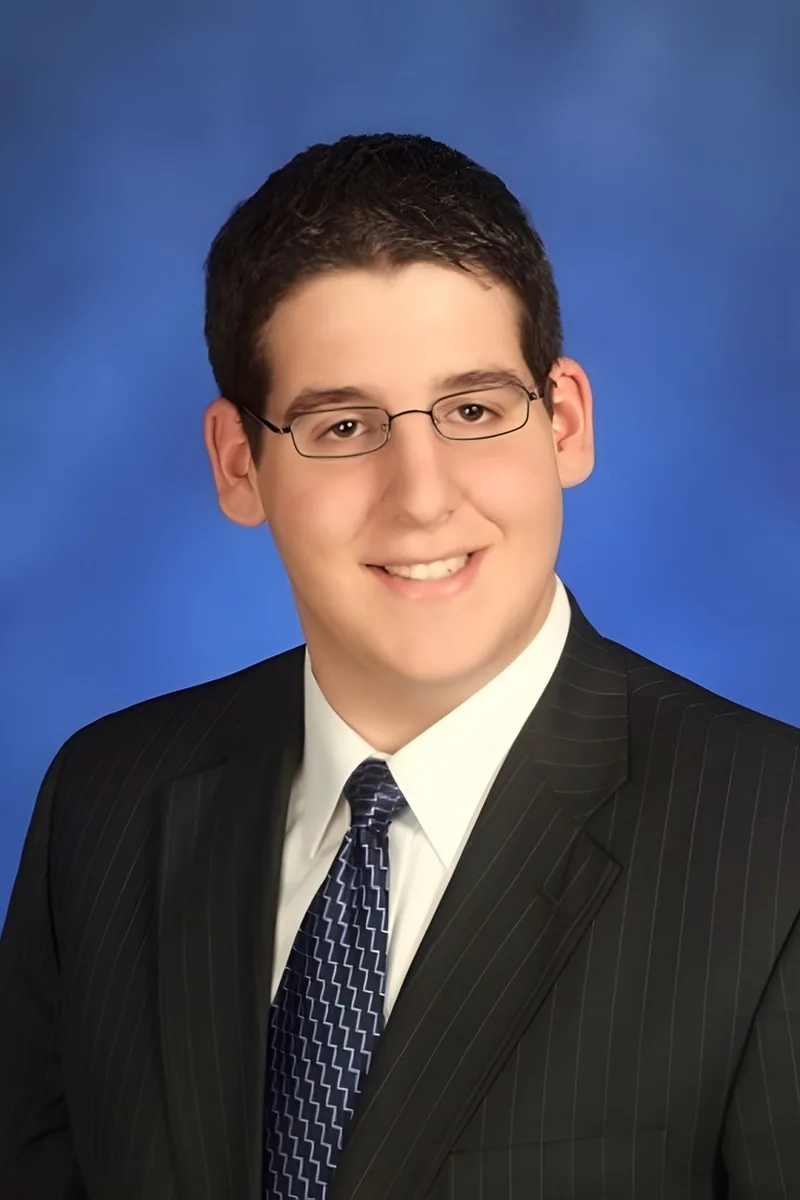
Ethan's 1510 SAT means he knows the specific algebra, geometry, and data analysis concepts the College Board actually tests — and more importantly, which ones show up in the no-calculator section versus the calculator-permitted one. He teaches students to recognize problem structures quickly so they spend less time figuring out what's being asked and more time solving. His 5.0 rating speaks to how well that approach clicks.
Scoring a 1560 on the SAT, Anthony knows exactly where the math section tries to trip students up — especially on coordinate geometry, quadratic behavior, and data-analysis questions that test reading as much as computation. He walks through each problem type with an eye toward recognizing patterns fast, so students spend their time solving rather than figuring out what's being asked.
I am looking to get some more experience tutoring and teaching with the idea of pursuing further academic work in the future.
I'm an undergraduate student at Yale University, with a prospective double major in Mathematics and History. I strive to bring students toward their lightbulb moments not by repeating facts until they're drilled in, but by helping my students understand precisely why the laws of science, the rules of grammar, and the events of history are the way they are, and by lifting the curtain on the intricacies of the subject matter. I believe that learning is, and ought to be, for its own sake.
Scoring high on SAT Math means knowing when a problem wants algebra and when it wants a shortcut — plugging in values, back-solving, or sketching a quick graph. Christina earned a 1550 SAT and tutors math across every level from pre-algebra to calculus, so she can pinpoint exactly which foundational gaps are costing a student points on test day.
I am a senior at the University of New Haven working on a B.S. in Forensic Science-Biology with a Pre-Medical designation who hopes to go to medical school in the future. I am most passionate about biology and chemistry but have a strong personal interest in history, especially topics overlooked in the past study of history. To me, learning is a life long process and leads to the development of a well-rounded individual. Seeing understanding of a difficult topic and creating enthusiasm for learning is what draws me to tutoring.
I am a freshman at Yale University, hailing originally from Seattle in the beautiful Pacific Northwest. I believe that education is one of the most fundamental aspects of a society's wellbeing, and that it is the duty of those of us who have been graced with the advantages of a good education to give back in some way; one of my motivations for tutoring is to do my part in that way.
Scoring above 750 on SAT Math usually comes down to a handful of tricky questions involving advanced algebra, passport-to-advanced-math concepts, or data analysis under time pressure. Max earned a 1580 composite and knows exactly where the test tries to create confusion — like nested function problems or systems with no solution. He teaches the underlying logic so students recognize these traps before they fall into them.
I am an undergraduate student at the University of Chicago majoring in Classics and Theatre. However, my college uses the core curriculum and as a result, I've had a well-rounded, eclectic education covering everything from math to fine arts. I've won awards in community service, dance, and film, but most notably, 20 writing prizes before I reached eighteen. I was a National Merit Semi-Finalist in high school and I've had a passion for education and the art of learning since I was a child. I hope to instill in my students the love of amassing knowledge, excelling in your studies, and walking out of a test feeling like you rocked it. I especially had a passion for the Critical Reading and the Writing portions of the SAT's and the SAT 2 in Literature. I have teaching experience with everything from stand-up comedy to Emergency Medical Services to tap dancing, and I've been told that I am unmatched in my enthusiasm. In my free time, I like to perform sketch and improv comedy, dance, play the banjo, and volunteer in my local hospital.
Scoring 1590 on the SAT means Zach knows the math section inside out — not just the content, but the way the College Board frames questions to create traps around quadratic modeling, systems of equations, and percent-change problems. He teaches students to recognize these patterns so they can work efficiently on the no-calculator section instead of grinding through algebra. Rated 4.9 by students.
I am a rising senior at Wesleyan University pursuing a Bachelor of Arts degree in Government and Latin American Studies. I have extensive experience with Spanish-language coursework and tutoring: I spent a semester one-on-one tutoring a high school student in beginning Spanish, have taken countless university-level Spanish classes, have taken both the Language and Literature AP Spanish tests, and have traveled and lived abroad in Spanish-speaking countries.
I am a junior at Southern Connecticut State University where I recently transferred to study Exercise Science after completing my first two years at Yale University. I have extensive experience tutoring the SAT/ACT, but my favorite subject to tutor is math. Though it can be a daunting subject for many students, I strive to make math accessible and even enjoyable. In my spare time I enjoy weight training and spoken word poetry.
I am an undergraduate business student at Babson College. For years, I have tutored a variety of subjects from writing to accounting. In high school, I participated in volunteer tutoring through the National Honors Society. Even other involvements, such as coaching the debate team, taught me how to convey information and reach understanding with others. As a college student, I am paid to tutor Accounting and teach entrepreneurship and often find myself running study groups among peers.
I am a PHD student studying environmental science. While my research focus is on microbial ecology, I have broad tutoring experience, ranging from teaching reading and math skills to elementary school students, tutoring middle school students in English and writing, and teaching biology to college students as a course assistant. I tutor in two main areas, literacy skills and biology, and teach from a middle school to GRE level both subject areas. One passionate teacher, who valued hard work over talent, inspired me to become a scientist and I hope that I can be that teacher for another student.
I am a Columbia University graduate who majored in Political Science, Classics and History. I have also spent the last year as an English teacher in Connecticut.
I am a Yale University graduate with professional teaching experience at the college level. I know the SAT Writing and Reading sections like the back of my hand, and I know English, writing, and history as subjects just the same, but what I know most is how stressful and daunting the college admissions process can be. I am most passionate about helping you succeed in your school and test prep endeavors and to do that, I will teach you the test taking methods, study habits and study tricks that work best for you individually. No cookie-cutters tactics, no frustration. I am here to instruct, support, build confidence, encourage, and most of all, to be a patient guide in getting you where you want to be.
I am always happy to talk about music, composing, Seinfeld, and ice cream.
I am a published novelist and a graduate of one of the most prestigious law schools in California. I have been a staff member on a presidential campaign, and I have been around the world. I am enthusiastic about learning, and about communicating my knowledge. I get along with almost everyone and I have outstanding morals, ethics and values.
Applied math majors tend to see SAT problems differently — Kenneth instinctively spots which questions can be solved by back-substituting from the answer choices and which ones demand a clean algebraic setup, saving critical minutes on the timed section. His 1570 SAT means he's already proven he can execute under pressure, and he's especially sharp on the geometry and trigonometry questions that many students under-practice relative to their weight on the test. Rated 4.7 by students.
I'm a teacher living in New Haven, Connecticut. I grew up in CT before going to Smith College where I studied European history and education. I spent my junior year abroad in Paris, France and fell in love with the city and its history so much that I moved there after college to get my master's degree from the Sorbonne in early modern French history. While I was there, I tutored students of all ages in English and I taught English conversation to French high school students. Then I joined Teach for America and moved back to the states, where I've taught ancient history to 5th graders for the last two years. I'm fluent in French and scored a C2 (highest level) on the Test de Connaissance du franais. I love tutoring test prep, history and French. In my free time, I like to hike, cook and ski.
Every SAT Math question, from linear equations to passport-to-advanced-math problems, can be solved faster once a student recognizes which concept is being tested beneath the wording. Stephen earned a 1500 SAT and teaches students to decode question stems quickly, choose between algebraic and strategic approaches, and avoid the traps the College Board builds into answer choices.
Scoring a 1430 on the SAT himself, AJ knows exactly where the math section tries to trip students up — especially on passport-to-advanced-math questions involving polynomial manipulation and nonlinear functions. He walks through each problem type with a focus on identifying what the question is actually asking before doing any calculation. That habit alone tends to eliminate the careless errors that cost students the most points.
I love participating in learning with other people. This is why I have been a high school teacher for 20 years and why I am a tutor now. One of my major skills as a tutor is breaking down skills and concepts into small parts to identify exactly where someone is struggling. I can do this with organization and learning needs, too, not just math and English content. I am also versatile and flexible; I can work on all sorts of content and handle unknown problems. I can teach you how to do that, too. I also have a great deal of experience working with students with special needs. I have been trained in some workshops, but I have only experience, not a license, in this area.
Engineering coursework at Washington and Lee gave Alex daily practice with the exact math the SAT tests at its hardest level: systems of equations, quadratic modeling, and interpreting complex data tables. He scored a 1590 composite and now teaches students to distinguish between problems that reward algebraic manipulation and those better solved by plugging in values or back-solving. That strategic flexibility is often what separates a 700 from a 780.
Three semesters teaching ESL gave Danielle an unusually sharp instinct for breaking down dense, wordy problems — a skill that pays off on SAT Math, where half the battle is translating a convoluted setup into a clean equation before any calculating begins. Her 1550 SAT and biology-to-med-school math background mean she's fluent in the geometry, statistics, and algebraic reasoning the test actually emphasizes. Rated 5.0 by students.
I am in the process of selecting a masters program in education that will begin this summer. I have 2 years experience doing 1 on 1 tutoring and it is very effective compared to classroom teaching because there is only one student to focus on. I look forward to working with you and helping you or your child get better. Always remember, even the best of us need help and support from others to be successful.
David scored a 1570 SAT and brings a computer scientist's precision to the Math section, particularly the no-calculator portion where algebraic fluency and number sense matter most. He emphasizes understanding why a technique works — whether it's completing the square or setting up a system of equations — so students can recognize which tool fits each problem without second-guessing.
Engineering coursework gave Conor a comfort with math that most SAT tutors simply don't have — he sees the underlying concept a question is testing before he finishes reading it. With a 1560 SAT composite, he knows exactly where the test writers hide difficulty, especially in the no-calculator section's algebra and data analysis problems. He drills students on recognizing problem types quickly so they spend time solving, not deciphering.
I am available to tutor in a broad range of subjects, though I am most passionate about Economics, History, and Civics. Please feel free to contact me and I would be happy to arrange a session.
I am a first year medical student at the Sidney Kimmel Medical College at Thomas Jefferson University. I have been a private tutor in the past in subjects such as math, biology, chemistry, and the SATs and every single one of my more than twenty students have shown significant improvement. Most importantly, I have a passion for teaching, and your needs and preferences as the learner will always be paramount. I hope to help every one of my students reach every bit of their potential, and along the way, to utterly shatter any self-induced limitations that have been placed upon what they can accomplish.
Comparative literature might seem unrelated to SAT Math, but Cassandra's 1600 SAT speaks for itself — and her lit-trained habit of close reading turns out to be a real advantage on the section's deliberately tricky word problems, where misreading the setup costs more points than any algebra mistake. She teaches students to slow down on problem translation, locking in what's actually being asked before touching any arithmetic, especially on the ratio and percent questions that bury key details mid-sentence.
A PhD in computational mathematics means Justin doesn't just know SAT Math content — he understands the underlying structure connecting algebra, functions, and geometric reasoning well enough to show students the fastest route through each problem type. His 1560 SAT score came from the same systematic thinking he now teaches: identifying what a question actually requires before committing to a calculation, which is especially effective on the no-calculator section's trickier polynomial and quadratic setups. Rated 5.0 by students.
I am currently studying molecular biology and I hope to work at a pediatric hospital after graduating from medical school. As an undergraduate, I am involved in volunteering organizations, photography, dance companies, and Asian-American political organizations.
A chemistry degree means Won spent years converting word problems into equations — balancing reactions, calculating concentrations, working through stoichiometry — which is exactly the skill the SAT Math section's algebra and problem-solving questions demand under time pressure. His 1560 SAT confirms he knows how to execute that skill quickly on test day, and he zeroes in on the geometry and passport-to-advanced-math questions where students most often second-guess themselves.
Scoring a 1590 SAT means Anna has already dissected every question type the Math section throws at students — from no-calculator algebra and systems of equations to data analysis and passport-to-advanced-math problems involving polynomials and exponentials. She teaches efficient strategies for avoiding trap answers and managing pacing across both calculator and no-calculator modules.
Testimonials
Because the right SAT Math tutor makes all the difference.
Average Session Rating – Based on 3.4M Learner Ratings
Practice SAT Math
Free practice tests, flashcards, and AI tutoring for SAT Math
Nearby SAT Math Tutors
Other Hartford Tutors
Related Test Prep Tutors in Hartford
Frequently Asked Questions
Score improvement depends on your starting point and commitment level, but students typically see gains of 50-100+ points with focused preparation. Many students struggle with pacing and question formats initially—personalized tutoring helps you identify which math concepts need work and develop strategies to tackle harder problems efficiently. Most students benefit from 8-12 weeks of consistent practice combined with expert guidance on test-specific techniques.
Your first session focuses on understanding your strengths, weaknesses, and goals. A tutor will likely review your practice test results, discuss which math topics feel challenging (algebra, geometry, data analysis, etc.), and assess your pacing and test-taking strategies. This diagnostic helps create a personalized study plan tailored to your needs rather than a one-size-fits-all approach.
The three most common struggles are pacing (running out of time), misunderstanding question formats (especially word problems and grid-ins), and gaps in foundational algebra and geometry skills. Many students also experience test anxiety that impacts their performance, even when they know the material. Personalized tutoring addresses each of these by building confidence through targeted practice, teaching time-management strategies, and filling knowledge gaps before they derail test day.
Practice tests are essential—they're the best way to identify weak areas, get comfortable with the test format, and build stamina for the full exam. Taking full-length practice tests under timed conditions helps you develop realistic pacing and reveals which question types trip you up most. A tutor can review your practice test results with you, pinpoint patterns in your mistakes, and adjust your study plan accordingly.
Effective strategies include tackling easier questions first to build confidence and secure points, then returning to harder problems with remaining time. Many students benefit from the "two-pass" approach: answer all questions you're confident about in the first pass, then review and attempt harder problems. A tutor can help you practice these strategies on real SAT questions and find the pacing rhythm that works best for you.
Look for tutors with strong math backgrounds, proven SAT prep experience, and familiarity with current test formats. Ideally, they've helped multiple students improve their scores and can explain not just the "what" but the "why" behind math concepts. Varsity Tutors connects you with expert tutors in Hartford who specialize in SAT Math and understand the specific challenges students face on test day.
Most students benefit from 3-4 months of preparation, with 3-5 hours of study per week—though this varies based on your starting score and goals. Consistency matters more than intensity; regular, focused practice beats cramming. A tutor can help you build a realistic study schedule, assign targeted practice between sessions, and adjust the pace based on your progress and test date.
Test anxiety often stems from feeling unprepared or unfamiliar with question formats—both things tutoring directly addresses. Building confidence through repeated practice with real SAT questions, learning time-management strategies, and understanding the material deeply all reduce anxiety. Many tutors also teach breathing techniques and mental strategies to stay calm during the test, helping you perform closer to your actual ability level.
Let’s find your perfect tutor
Answer a few quick questions. We’ll recommend the right plan and match you with a top 5% tutor.