Award-Winning SAT Math Tutors
serving New Haven, CT
SAT Math
Tutors in New Haven
Private 1-on-1 tutoring, weekly live classes for academic support, test prep & enrichment, practice tests and diagnostics, and more to elevate grades and test scores.
Based on 3.4M Learner Ratings
UniversitiesSchools & Universities
DeliveredHours Delivered
ProficiencyGrowth in Proficiency
Who will be getting tutoring?
No obligation. Takes ~1 minute.
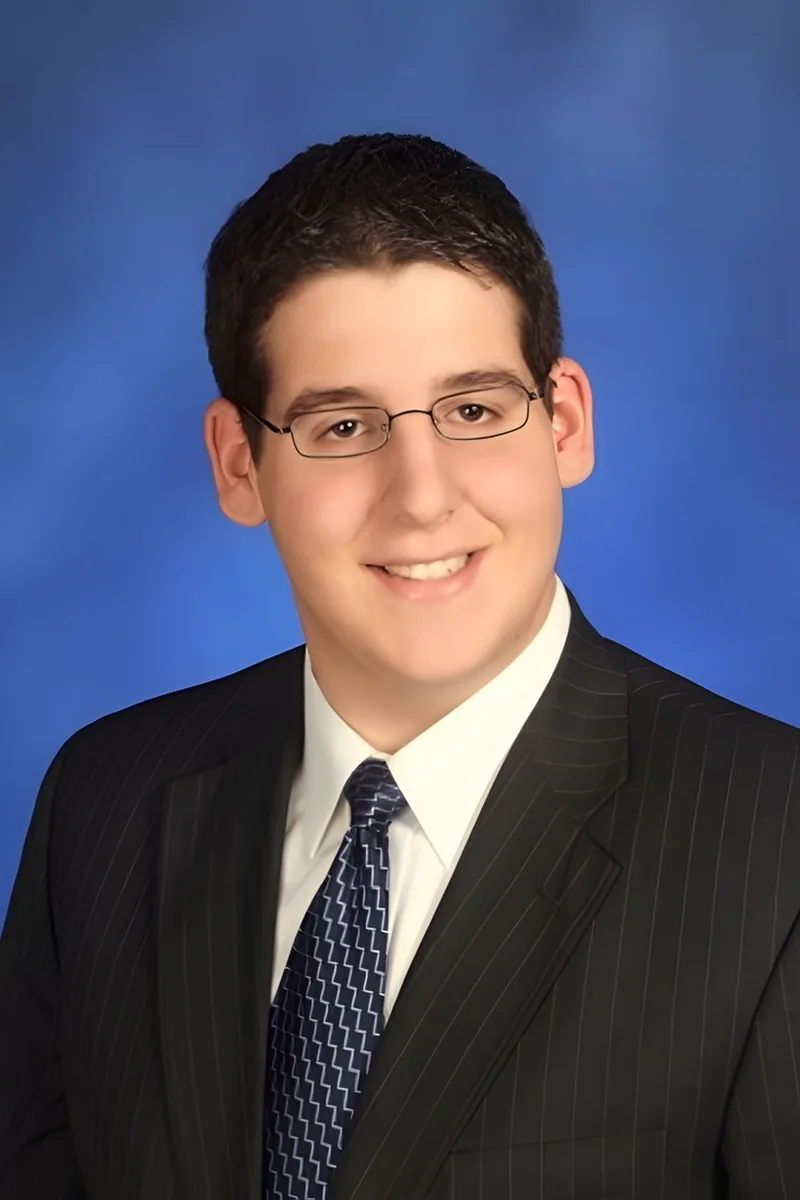
Ethan's 1510 SAT means he knows the specific algebra, geometry, and data analysis concepts the College Board actually tests — and more importantly, which ones show up in the no-calculator section versus the calculator-permitted one. He teaches students to recognize problem structures quickly so they spend less time figuring out what's being asked and more time solving. His 5.0 rating speaks to how well that approach clicks.
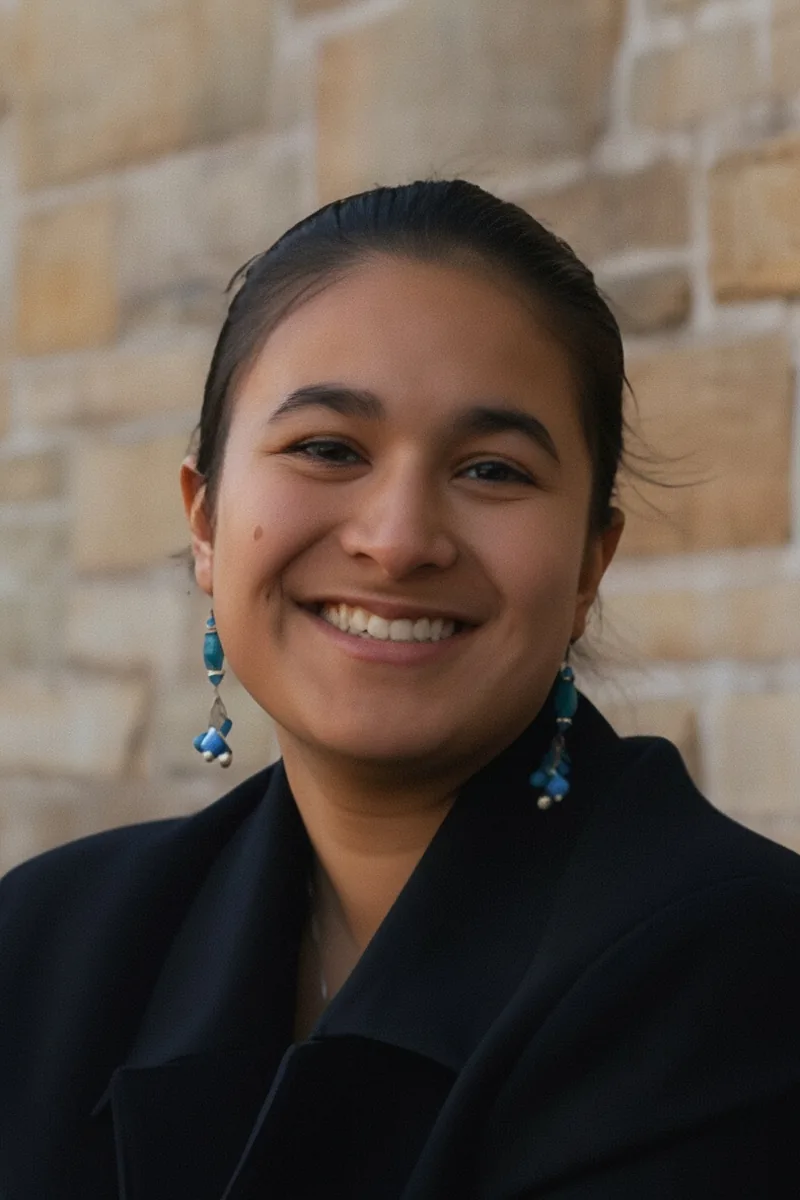
I'm an undergraduate student at Yale University, with a prospective double major in Mathematics and History. I strive to bring students toward their lightbulb moments not by repeating facts until they're drilled in, but by helping my students understand precisely why the laws of science, the rules of grammar, and the events of history are the way they are, and by lifting the curtain on the intricacies of the subject matter. I believe that learning is, and ought to be, for its own sake.
Scoring a 1560 on the SAT, Anthony knows exactly where the math section tries to trip students up — especially on coordinate geometry, quadratic behavior, and data-analysis questions that test reading as much as computation. He walks through each problem type with an eye toward recognizing patterns fast, so students spend their time solving rather than figuring out what's being asked.
Scoring high on SAT Math means knowing when a problem wants algebra and when it wants a shortcut — plugging in values, back-solving, or sketching a quick graph. Christina earned a 1550 SAT and tutors math across every level from pre-algebra to calculus, so she can pinpoint exactly which foundational gaps are costing a student points on test day.
Scoring above 750 on SAT Math usually comes down to a handful of tricky questions involving advanced algebra, passport-to-advanced-math concepts, or data analysis under time pressure. Max earned a 1580 composite and knows exactly where the test tries to create confusion — like nested function problems or systems with no solution. He teaches the underlying logic so students recognize these traps before they fall into them.
I am a freshman at Yale University, hailing originally from Seattle in the beautiful Pacific Northwest. I believe that education is one of the most fundamental aspects of a society's wellbeing, and that it is the duty of those of us who have been graced with the advantages of a good education to give back in some way; one of my motivations for tutoring is to do my part in that way.
I am a junior at Southern Connecticut State University where I recently transferred to study Exercise Science after completing my first two years at Yale University. I have extensive experience tutoring the SAT/ACT, but my favorite subject to tutor is math. Though it can be a daunting subject for many students, I strive to make math accessible and even enjoyable. In my spare time I enjoy weight training and spoken word poetry.
Scoring 1590 on the SAT means Zach knows the math section inside out — not just the content, but the way the College Board frames questions to create traps around quadratic modeling, systems of equations, and percent-change problems. He teaches students to recognize these patterns so they can work efficiently on the no-calculator section instead of grinding through algebra. Rated 4.9 by students.
I am a Yale University graduate with professional teaching experience at the college level. I know the SAT Writing and Reading sections like the back of my hand, and I know English, writing, and history as subjects just the same, but what I know most is how stressful and daunting the college admissions process can be. I am most passionate about helping you succeed in your school and test prep endeavors and to do that, I will teach you the test taking methods, study habits and study tricks that work best for you individually. No cookie-cutters tactics, no frustration. I am here to instruct, support, build confidence, encourage, and most of all, to be a patient guide in getting you where you want to be.
I'm a teacher living in New Haven, Connecticut. I grew up in CT before going to Smith College where I studied European history and education. I spent my junior year abroad in Paris, France and fell in love with the city and its history so much that I moved there after college to get my master's degree from the Sorbonne in early modern French history. While I was there, I tutored students of all ages in English and I taught English conversation to French high school students. Then I joined Teach for America and moved back to the states, where I've taught ancient history to 5th graders for the last two years. I'm fluent in French and scored a C2 (highest level) on the Test de Connaissance du franais. I love tutoring test prep, history and French. In my free time, I like to hike, cook and ski.
Every SAT Math question, from linear equations to passport-to-advanced-math problems, can be solved faster once a student recognizes which concept is being tested beneath the wording. Stephen earned a 1500 SAT and teaches students to decode question stems quickly, choose between algebraic and strategic approaches, and avoid the traps the College Board builds into answer choices.
I am a senior at the University of New Haven working on a B.S. in Forensic Science-Biology with a Pre-Medical designation who hopes to go to medical school in the future. I am most passionate about biology and chemistry but have a strong personal interest in history, especially topics overlooked in the past study of history. To me, learning is a life long process and leads to the development of a well-rounded individual. Seeing understanding of a difficult topic and creating enthusiasm for learning is what draws me to tutoring.
I am looking to get some more experience tutoring and teaching with the idea of pursuing further academic work in the future.
I am a rising senior at Wesleyan University pursuing a Bachelor of Arts degree in Government and Latin American Studies. I have extensive experience with Spanish-language coursework and tutoring: I spent a semester one-on-one tutoring a high school student in beginning Spanish, have taken countless university-level Spanish classes, have taken both the Language and Literature AP Spanish tests, and have traveled and lived abroad in Spanish-speaking countries.
I am an undergraduate student at the University of Chicago majoring in Classics and Theatre. However, my college uses the core curriculum and as a result, I've had a well-rounded, eclectic education covering everything from math to fine arts. I've won awards in community service, dance, and film, but most notably, 20 writing prizes before I reached eighteen. I was a National Merit Semi-Finalist in high school and I've had a passion for education and the art of learning since I was a child. I hope to instill in my students the love of amassing knowledge, excelling in your studies, and walking out of a test feeling like you rocked it. I especially had a passion for the Critical Reading and the Writing portions of the SAT's and the SAT 2 in Literature. I have teaching experience with everything from stand-up comedy to Emergency Medical Services to tap dancing, and I've been told that I am unmatched in my enthusiasm. In my free time, I like to perform sketch and improv comedy, dance, play the banjo, and volunteer in my local hospital.
I am an undergraduate business student at Babson College. For years, I have tutored a variety of subjects from writing to accounting. In high school, I participated in volunteer tutoring through the National Honors Society. Even other involvements, such as coaching the debate team, taught me how to convey information and reach understanding with others. As a college student, I am paid to tutor Accounting and teach entrepreneurship and often find myself running study groups among peers.
I am a PHD student studying environmental science. While my research focus is on microbial ecology, I have broad tutoring experience, ranging from teaching reading and math skills to elementary school students, tutoring middle school students in English and writing, and teaching biology to college students as a course assistant. I tutor in two main areas, literacy skills and biology, and teach from a middle school to GRE level both subject areas. One passionate teacher, who valued hard work over talent, inspired me to become a scientist and I hope that I can be that teacher for another student.
I am a published novelist and a graduate of one of the most prestigious law schools in California. I have been a staff member on a presidential campaign, and I have been around the world. I am enthusiastic about learning, and about communicating my knowledge. I get along with almost everyone and I have outstanding morals, ethics and values.
James scored 1510 on the SAT and brings a mathematician's eye to the specific traps the SAT Math section sets — especially on quadratic and exponential word problems where misreading the setup costs more points than weak algebra ever does. He teaches students to decode what each question is actually asking before touching their calculator, a habit that cuts careless errors dramatically.
I am a Columbia University graduate who majored in Political Science, Classics and History. I have also spent the last year as an English teacher in Connecticut.
Applied math majors tend to see SAT problems differently — Kenneth instinctively spots which questions can be solved by back-substituting from the answer choices and which ones demand a clean algebraic setup, saving critical minutes on the timed section. His 1570 SAT means he's already proven he can execute under pressure, and he's especially sharp on the geometry and trigonometry questions that many students under-practice relative to their weight on the test. Rated 4.7 by students.
I am always happy to talk about music, composing, Seinfeld, and ice cream.
Scoring a 1430 on the SAT himself, AJ knows exactly where the math section tries to trip students up — especially on passport-to-advanced-math questions involving polynomial manipulation and nonlinear functions. He walks through each problem type with a focus on identifying what the question is actually asking before doing any calculation. That habit alone tends to eliminate the careless errors that cost students the most points.
I love participating in learning with other people. This is why I have been a high school teacher for 20 years and why I am a tutor now. One of my major skills as a tutor is breaking down skills and concepts into small parts to identify exactly where someone is struggling. I can do this with organization and learning needs, too, not just math and English content. I am also versatile and flexible; I can work on all sorts of content and handle unknown problems. I can teach you how to do that, too. I also have a great deal of experience working with students with special needs. I have been trained in some workshops, but I have only experience, not a license, in this area.
Heart-of-algebra questions, passport-to-advanced-math problems, and data analysis — the SAT Math section tests a specific slice of math, and Chloe knows exactly which slice. She scored 1540 on the SAT and teaches students to recognize the handful of recurring problem structures the College Board relies on, turning unfamiliar-looking questions into ones they've already practiced.
Creative writing might seem unrelated to SAT Math, but Sydney's 1600 SAT score speaks for itself — and her approach to the math section mirrors how she tackles a draft: strip every problem down to what it's actually asking, then build the solution step by step. She's especially sharp on the algebra-heavy word problems where students who can do the math still lose points because they misread the setup, a reading-comprehension trap her writing background makes her uniquely good at catching. Rated 4.9 by students.
Finance and statistics coursework at NYU means Dennis spends his days building models around the same quantitative reasoning the SAT Math section tests — probability, linear relationships, and interpreting data from tables and graphs. His 1550 SAT score came partly from treating the no-calculator questions as logic puzzles rather than computation drills, an approach he now teaches by walking students through how to eliminate answer choices using number properties before ever picking up a pencil.
Scoring 1570 on the SAT means Eric knows exactly where the test tries to trip students up — especially on the math side, where questions about quadratics, systems of equations, and data interpretation are designed to punish rushing. He breaks each problem type into a decision tree so students recognize what's being asked before they start calculating. That pattern-recognition skill is what separates a good math score from a great one.
Richard scored a 1600 on the SAT and spent a year as a calculus course assistant at Harvard, so the math on this test — from quadratic modeling to data analysis and passport-to-advanced-math questions — sits well within his comfort zone. He breaks down each problem type by identifying what concept the College Board is actually testing beneath the word-problem packaging. That pattern recognition is what turns a 700 into a 780 or higher.
I am especially passionate about reading, writing, and foreign languages. I hope to share my passion for knowledge with those around me.
Violet's 1550 SAT and her math degree from Brown mean she can diagnose exactly where a student's algebra or data analysis gaps are costing them points on SAT Math. She teaches the handful of non-obvious techniques — backsolving, strategic plugging-in, unit analysis on word problems — that turn 650-range scores into 750+ scores. Her style leans heavily on shortcuts that make the no-calculator section feel less like a time crunch.
I am an interdisciplinary educator with an Ed.M. from the Harvard Graduate School of Education and a B.A. from Dartmouth College. My background is primarily in integrated arts learning and museum education and I specialize in visual arts, history and art history, and object-based learning. In all subjects, I take a creative, inquiry-based and learner-centered approach, designing opportunities for each unique individual to meet their learning goals.
A PhD in computational mathematics means Justin doesn't just know SAT Math content — he understands the underlying structure connecting algebra, functions, and geometric reasoning well enough to show students the fastest route through each problem type. His 1560 SAT score came from the same systematic thinking he now teaches: identifying what a question actually requires before committing to a calculation, which is especially effective on the no-calculator section's trickier polynomial and quadratic setups. Rated 5.0 by students.
Classics and philosophy trained Austin to think in precise logical structures — the same skill that untangles the SAT Math section's deliberately tricky word problems, where understanding what's being asked matters as much as knowing the math. His 1570 SAT means he's already cracked the test at a near-perfect level, and he teaches students to convert convoluted phrasing into straightforward algebraic setups before solving anything.
Three semesters teaching ESL gave Danielle an unusually sharp instinct for breaking down dense, wordy problems — a skill that pays off on SAT Math, where half the battle is translating a convoluted setup into a clean equation before any calculating begins. Her 1550 SAT and biology-to-med-school math background mean she's fluent in the geometry, statistics, and algebraic reasoning the test actually emphasizes. Rated 5.0 by students.
A perfect 1600 SAT means Lisa didn't just survive the math section — she cleared it without dropping a single point, including the ratio, percentage, and systems-of-equations problems that most students lose easy points on. Her sociology background actually sharpens her SAT Math teaching: she's trained to read data tables and interpret statistical claims critically, which maps directly onto the section's problem-solving and data-analysis questions. She breaks down each problem type into a repeatable decision process so students stop second-guessing themselves under time pressure.
Testimonials
Because the right SAT Math tutor makes all the difference.
Average Session Rating – Based on 3.4M Learner Ratings
Practice SAT Math
Free practice tests, flashcards, and AI tutoring for SAT Math
Nearby SAT Math Tutors
Other New Haven Tutors
Related Test Prep Tutors in New Haven
Frequently Asked Questions
Score improvement varies based on your starting point and effort, but students typically see meaningful gains within 8-12 weeks of consistent tutoring. Many students improve by 50-100+ points when they work with a tutor to identify weak areas, master test-specific strategies, and practice with real SAT problems. The key is focusing on your personal trouble spots rather than reviewing material you already know.
Timing is one of the biggest challenges on SAT Math—you have about 1.4 minutes per question, which isn't much. Expert tutors help you develop strategies like identifying which problems to tackle first, knowing when to skip and return to a question, and recognizing question patterns that let you solve faster. With practice and personalized guidance, you'll learn to manage the clock while maintaining accuracy.
The best way is to take a full practice test under timed conditions, then review your results by topic—algebra, advanced math, problem-solving, geometry, trigonometry, and data analysis. Varsity Tutors connects you with tutors who analyze your practice test results to pinpoint exactly where you're losing points, then build a targeted study plan around those specific gaps rather than wasting time on topics you've mastered.
Confidence comes from knowing the material and having a game plan, and that's exactly what tutoring builds. When you work through SAT-style problems repeatedly with expert guidance, you become familiar with question formats and know what to expect. Tutors also teach you practical strategies for staying calm under pressure and managing stress during the actual test, which significantly reduces anxiety on test day.
Most students benefit from taking 3-5 full, timed practice tests during their preparation. The first one helps identify weak areas, the middle ones let you practice strategies and build stamina, and the final ones simulate test-day conditions. Varsity Tutors connects you with tutors who use official College Board practice tests and help you review each one thoroughly to turn mistakes into learning opportunities.
Your first session focuses on understanding where you're starting from and what you want to achieve. If you haven't taken a practice test yet, your tutor may have you take one to identify your baseline and specific weak areas. Together, you'll discuss your goals, timeline, and create a personalized study plan that targets your biggest opportunities for improvement.
Most students benefit from 8-12 weeks of focused preparation, though this depends on your starting score and target. If you're aiming for a significant improvement or starting from a lower baseline, longer preparation gives you time to master concepts and build test-taking skills. Varsity Tutors helps you create a realistic timeline based on your specific goals and current level.
Varsity Tutors connects you with expert tutors who have deep knowledge of SAT Math content, test strategy, and how to teach it effectively. They understand the specific question formats, common traps, and time-management techniques that make a difference on test day. Each tutor brings real experience helping students improve their scores and build confidence in math.
Let’s find your perfect tutor
Answer a few quick questions. We’ll recommend the right plan and match you with a top 5% tutor.