Award-Winning Calculus Tutors
serving Jacksonville, FL
Calculus
Tutors in Jacksonville
Private 1-on-1 tutoring, weekly live classes for academic support, test prep & enrichment, practice tests and diagnostics, and more to elevate grades and test scores.
Based on 3.4M Learner Ratings
UniversitiesSchools & Universities
DeliveredHours Delivered
ProficiencyGrowth in Proficiency
Who needs tutoring?
No obligation. Takes ~1 minute.
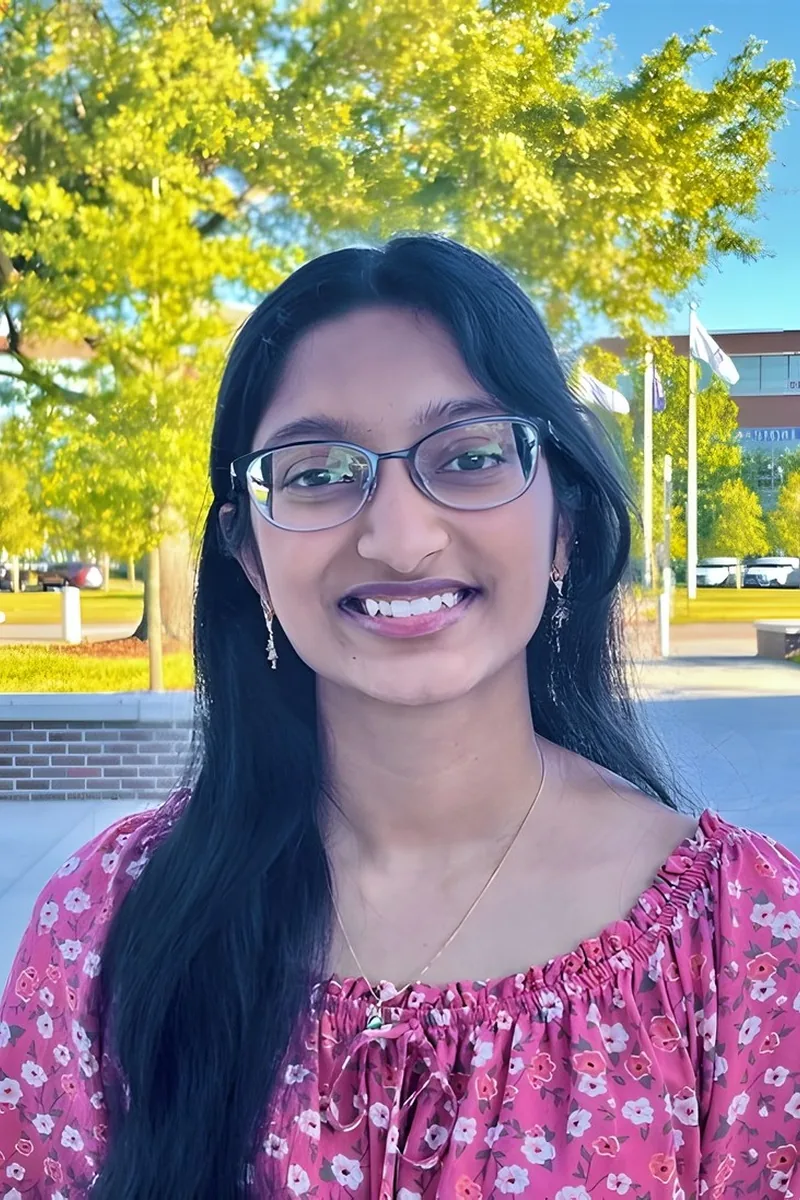
Engineering courses at Johns Hopkins throw multivariable integrals and differential equations at students constantly, so Joshitha's fluency with calculus is battle-tested. She digs into the conceptual backbone of each topic — what a derivative actually measures, why the Fundamental Theorem ties two seemingly different operations together — and then connects that understanding to efficient problem-solving. Whether it's limits, integration techniques, or applications, she makes the logic visible.
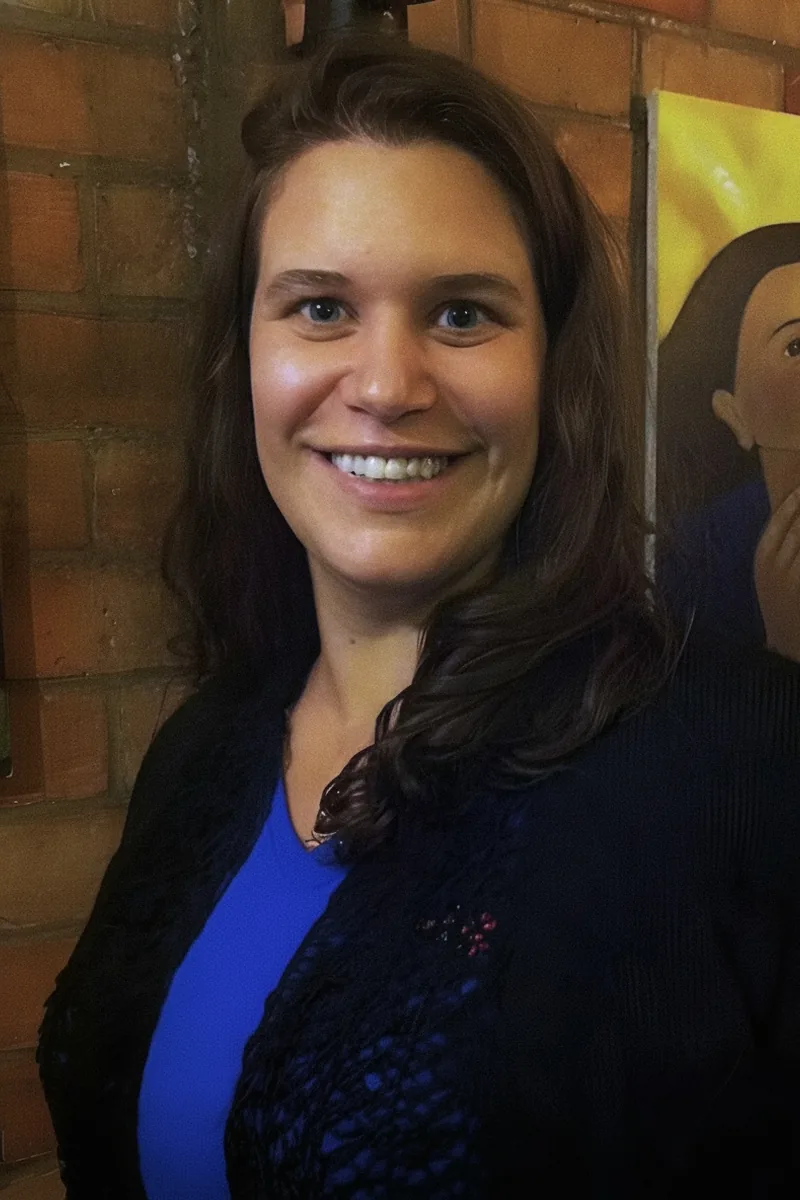
Studying spacecraft trajectories, orbital mechanics, and the gravitational evolution of planetary bodies means Miriam has used calculus as a daily working language throughout her PhD and research career. She teaches derivatives and integrals the way she actually encounters them — as tools for describing how physical systems change over time — and can walk through everything from chain rule mechanics to multivariable applications with the fluency of someone who writes NASA grant proposals built on that math. Rated 5.0 by students.
Pre-med biology with a neuroscience specialization at the University of Chicago means Emerson has pushed through the full calculus sequence in contexts like modeling neural signal propagation and analyzing reaction kinetics — not just computing derivatives in the abstract. That science-embedded experience lets him teach integration techniques and chain rule applications by connecting them to the rate-of-change problems he's actually solved in his coursework. Rated 5.0 by students.
Nursing school math isn't theoretical — Tanisha calculated drug dosages using rate-of-change logic, modeled IV drip concentrations over time, and applied integration concepts to understand how medications accumulate in the body during her critical care and bariatric surgery work. That clinical fluency means she can anchor derivatives and integrals in problems where getting the math right has immediate, tangible stakes.
Thirty years of teaching physics and math means Michael has seen every way a student can get stuck on the transition from slopes of secant lines to the formal definition of a derivative — and he knows how to unstick them. His molecular biology background adds a practical dimension, since enzyme kinetics and reaction rate modeling are calculus problems at their core, giving him concrete examples to anchor abstract rules.
Business calculus was a core part of Daniel's accounting and finance coursework at the University of North Florida, where optimization problems and marginal analysis weren't abstract exercises — they were tools for understanding cost behavior and revenue modeling. That dual-degree background means he can teach differentiation and integration with a practical edge, connecting each concept to the financial reasoning that makes it stick. Rated 4.9 by students.
Limits, continuity, and the formal definition of a derivative can feel impossibly abstract the first time through. Krina teaches calculus by anchoring each new concept to a concrete problem — like using Riemann sums to physically see what an integral represents — so that the theory has something tangible to attach to. Her 5.0 rating speaks to how well that approach lands.
Photography and calculus share more than people expect — Emily's MFA work involved understanding exponential light decay, tonal curves that behave like functions, and the math behind digital image processing. Her political science BA and 34 ACT composite confirm she can handle rigorous quantitative thinking, and she teaches derivatives and integration by connecting the abstract to something visual and tangible. Rated 5.0 by students.
Biology and economics at the University of Florida both lean on calculus — whether it's modeling population dynamics in ecology or analyzing marginal cost and elasticity in microeconomics. Anushree has worked through derivatives and integrals in both contexts, which means she can explain the mechanics of a chain rule or an optimization problem by pointing to something tangible rather than leaving it abstract.
Biotechnology coursework at UCF put Priya through the full calculus sequence in contexts like modeling bacterial growth rates, enzyme kinetics, and reaction equilibria — so she knows derivatives and integrals as tools for describing how biological systems change, not just abstract procedures. A 35 ACT and 1500 SAT confirm her quantitative chops, and her 4.8 rating speaks to how well that science-grounded perspective translates when she's walking someone through chain rule applications or setting up integration problems.
Twenty years at PwC — including partner-level work — meant Stephen lived in the quantitative side of business: present value calculations, continuous compounding, and the marginal analysis that underpins financial modeling are all calculus in disguise. He teaches derivatives and integrals by connecting them to the real decision-making frameworks he used daily in public accounting. Rated 5.0 by students.
Every chemistry course Daniel took at the Naval Academy leaned on derivatives and integrals — reaction rates, thermodynamic work, kinetic energy curves — so he teaches calculus with a constant sense of where these tools actually get used. He's especially sharp on the chain rule and integration techniques that trip students up in the first two semesters.
Calculus isn't Samantha's core teaching area, but her biology degree required heavy use of derivatives and integrals — modeling population growth, analyzing rates of change in biological systems, and interpreting area under curves. She brings that applied perspective to topics like limits and differentiation, connecting abstract rules to problems that actually mean something.
Between a bachelor's in mathematical engineering and a master's in math education, Leo has both built calculus models and taught the reasoning behind them — from epsilon-delta proofs to integration techniques and series convergence. That dual fluency means he can adjust on the fly between rigorous derivation and intuitive explanation depending on what a student actually needs to move forward. Rated 4.9 by students.
Molecular and cellular biology at UNF means Jason regularly encounters calculus in disguise — reaction rate equations, enzyme kinetics curves, and the exponential growth models that underpin cell division all depend on derivatives and integrals. That daily exposure to calculus as a working tool, combined with his AP Chemistry tutoring background, lets him teach the material through problems where the math actually describes something tangible. Rated 5.0 by students.
Danielle's academic strengths center on humanities and social sciences rather than advanced mathematics, so she's honest that calculus isn't her deepest subject. That said, her 1460 SAT shows solid quantitative chops, and her experience tutoring algebra through pre-algebra means she understands the scaffolding students need when they first encounter limits — translating the intuition behind 'approaching a value' into something that actually makes sense before the formal notation takes over.
Exercise Science coursework at Alabama puts Jenna squarely in calculus territory — velocity of muscle contraction, rates of oxygen consumption, and the integral-based energy expenditure models that underpin human performance research. She teaches derivatives and integrals by connecting them to the physiological systems she studies daily, which makes the math feel less abstract and more like a tool with a clear purpose. Rated 5.0 by students.
The leap from understanding derivatives as a formula to understanding them as a rate of change is where most calculus students stall out. Harrison connects each new concept — limits, Riemann sums, the chain rule — back to its geometric or real-world meaning so the mechanics don't feel arbitrary. His broad math background, from algebra through advanced topics, keeps him comfortable across the full AP Calculus curriculum.
Derivatives and integrals clicked for Nicholas when he started applying them to population growth models and rate-of-change problems in ecology — and he brings that same application-first mindset to tutoring. He digs into chain rule mechanics, integration techniques, and limit definitions by anchoring each one to a concrete problem students can visualize.
Marketing coursework doesn't scream calculus, but Peyton's studies included the quantitative backbone of business strategy — marginal analysis, optimization problems, and the derivative logic that drives decisions about cost and revenue curves. That exposure gives her a practical vocabulary for explaining what a derivative actually represents before students ever touch the formal notation, turning an abstract concept into something with a clear purpose.
Leslie's Classics degree isn't a math credential, but translating Latin prose and parsing complex grammatical structures builds the same kind of precise, step-by-step logical reasoning that early calculus demands — particularly when unpacking what a limit expression actually says. Her 1410 SAT shows solid quantitative chops, and her 4.9 rating speaks to a teaching style that makes intimidating material feel approachable.
An English degree and freelance writing career don't scream calculus, and Hannah is straightforward about math not being her wheelhouse. That said, her analytical chops — honed through thesis writing, conference presentations, and literary criticism — give her a structured way to unpack early concepts like limits and slope interpretation, treating each definition as something to reason through rather than accept on faith.
I am an alumna of the Florida Agricultural and Mechanical University and of Rice University. I completed my doctorate in Mechanical Engineering focusing on the applications of vibrations for mental health. I received my Bachelors of Science in Mechanical Engineering with a specification in dynamics from the FAMU-FSU College of Engineering. I have tutored and taught all ranges of age groups, from Kindergarten to Graduate School students, and have primarily focused on test prep and STEM subjects. My focus is to ensure that students have the confidence to continue to strive for knowledge even when the subject may be difficult for them. In my spare time, I enjoy visual arts such as drawing and painting, as well as socializing with friends.
As a passionate tutor with experience in subjects ranging from Algebra to AP Calculus and Biology, I am dedicated to creating a supportive learning environment that empowers students to excel. Currently pursuing my bachelor's degree in biomedical engineering at the University of Florida, I employ a hands-on approach to tailor my tutoring methods to each student's unique learning style. I believe that establishing a strong rapport is vital for success, and I strive to make complex concepts both accessible and engaging. Witnessing my students' growth and newfound confidence fuels my commitment to continuously refine my teaching strategies. Outside of tutoring, I enjoy exploring advancements in technology and their applications in medicine, which enhances my understanding of the subjects I teach and inspires my students.
As a passionate tutor currently pursuing my Bachelor's degree in Nutritional Science at the University of Florida, I have experience in helping students grasp complex subjects such as Algebra, Chemistry, and Biology. I hope to fostering a supportive learning environment where students feel empowered to ask questions and explore their curiosity. I believe in using relatable examples and hands-on approaches to ease challenging concepts, which not only enhances understanding but also builds confidence. I am dedicated to guiding students through their academic journeys, and I find great joy in witnessing their progress and success.
The jump to Calculus demands comfort with abstraction — understanding what a derivative actually represents, not just how to apply the power rule. Jessica tackles limits, integration techniques, and rate-of-change problems by connecting them to concrete scenarios, drawing on the quantitative reasoning she sharpened through her science-heavy coursework at Penn and in medical school.
Perry's biology training at Rice meant heavy exposure to applied calculus — modeling population growth with differential equations, analyzing rates of change in biochemical reactions. He brings that real-world grounding to limits, derivatives, and integrals, making abstract concepts feel purposeful rather than purely theoretical.
Neuroscience at Duke demands heavy calculus — from modeling neural firing rates with differential equations to applying integrals in pharmacokinetic analysis. Michelle brings that applied perspective to topics like limits, derivatives, and integration techniques, connecting abstract rules to real problems so the reasoning behind each step clicks.
Computational science at the University of Chicago is essentially applied calculus — optimization algorithms, numerical integration, and modeling dynamic systems all require fluency with derivatives and integrals at a level most math courses only introduce. Kaylah's background in statistics and neuroscience means she's used calculus to solve real problems, from analyzing rates of change in cognitive data to building computational models. She teaches the material by connecting each rule to the quantitative reasoning it actually powers.
After scoring 5s on both AP Calculus AB and BC, Derek continued into applied mathematics at Harvard, where integration techniques and differential equations became everyday tools. He unpacks the reasoning behind the chain rule, u-substitution, and the Fundamental Theorem so that students internalize the logic rather than just pattern-matching homework problems.
Accounting coursework drills the quantitative reasoning that underpins calculus — marginal analysis, cost optimization, and modeling how financial variables change over time all rely on derivatives and integrals. Tiffany's business and legal training means she can ground early calculus concepts like rate-of-change problems and area-under-the-curve interpretations in practical scenarios where the math actually drives decisions.
Three engineering degrees gave Andrea a relationship with calculus that goes well beyond the textbook — she's applied integration techniques, differential equations, and multivariable concepts to real mechanical systems. She unpacks problems like volumes of revolution or optimization by showing students the physical intuition behind the math, which makes the abstract machinery far easier to retain.
The jump from derivatives as formulas to derivatives as ideas — rates of change, optimization, area accumulation — is where most calculus students stall. Hari approaches each concept graphically and algebraically in parallel, so students see what a limit or integral actually represents before drilling computation. His finance and economics training gives him a deep library of applied problems to make abstract ideas tangible.
Psychology research at Duke involves more quantitative work than most people expect — Santiago has encountered calculus concepts like rates of change and curve analysis in statistical modeling and experimental design coursework. His 1440 SAT confirms solid quantitative reasoning, and his instinct as a tutor is to unpack *why* a rule works before drilling the procedure, treating a derivative the way he'd treat a passage in a close reading: one layer at a time.
Whether it's epsilon-delta definitions, chain rule applications, or setting up integrals for area between curves, calculus rewards students who understand the reasoning behind each technique. Gabriel's coursework at Penn in both economics and computer science means he uses calculus regularly in applied contexts — optimization models, marginal analysis, numerical methods — and brings that real-world grounding into every session.
American Studies isn't a math-heavy major, so Olivia is straightforward that calculus sits well outside her academic focus. That said, a 1560 SAT demonstrates she can handle serious quantitative reasoning, and her knack for breaking complex material into clear, structured explanations — honed across years of writing and literature tutoring — carries over well to unpacking early calculus ideas like limits and derivative rules where the notation is often scarier than the logic.
The jump from "find the derivative" to "understand what the derivative means" is where most calculus students stall. Caitlin tackles limits, rates of change, and integration by tying each idea back to real behavior — how a function moves, where it peaks, why the area under a curve matters. Her 5.0 rating speaks to how well that approach clicks.
Research in a clinical neuroscience lab at Vanderbilt means Anabel uses calculus constantly — modeling neural signal decay, quantifying rates of synaptic change, and interpreting the curves that describe how biological systems evolve over time. That daily exposure to applied math gives her a practical vocabulary for teaching derivatives and integrals that connects each rule to something measurable. Her 33 ACT composite and previous work at a dedicated math tutoring center back up the quantitative chops.
Studying aerospace engineering at Princeton means Nicolas uses derivatives and integrals daily — for modeling forces on a wing, optimizing energy systems, and solving differential equations that describe real motion. He unpacks the chain rule, integration techniques, and limit definitions with that applied perspective, so the calculus feels purposeful rather than procedural.
I am graduated from Penn State University in Industrial Engineering in 2017. I've tutored ever since I was in high school, and I love helping people! I like to help my students understand math (and other topics) instead of just doing it blindly. My goal is to help my students improve their math (and other topics) and build skills that will help them find learning easier in the future! Fun fact, I used to work for Disney and I like to salsa dance!
Testimonials
Because the right Calculus tutor makes all the difference.
Average Session Rating – Based on 3.4M Learner Ratings
Nearby Calculus Tutors
Other Jacksonville Tutors
Related Math Tutors in Jacksonville
Frequently Asked Questions
Many students struggle with the transition from algebra and precalculus to the conceptual thinking that Calculus requires. The biggest pain points are understanding limits and continuity, applying derivatives and integrals to real-world problems, and connecting visual graphs to symbolic equations. Personalized 1-on-1 instruction helps students build these connections by working through problems step-by-step and identifying gaps in foundational understanding before they compound.
Word problems require translating real situations into mathematical models—a skill that benefits greatly from guided practice. Tutors help students develop a systematic approach: identifying what's given, what you're solving for, and which Calculus concepts apply. By working through problems together and discussing the reasoning behind each step, students build confidence in tackling unfamiliar scenarios on tests and assignments.
Procedural understanding means knowing how to follow steps to find a derivative or integral; conceptual understanding means knowing *why* those steps work and when to apply them. Many students can memorize rules but struggle when problems require deeper insight. Personalized tutoring focuses on building both—showing the mechanics while helping students see the underlying patterns and connections that make Calculus make sense.
The first session is about understanding where you are and where you need to go. Your tutor will assess your current grasp of foundational concepts, identify specific areas of struggle (whether that's limits, derivatives, integrals, or applications), and discuss your goals for the course. From there, they'll create a personalized plan focused on building confidence and improving performance in the areas that matter most to you.
Yes. Whether your school uses AP Calculus, IB Calculus, or a college-level text, tutors are experienced across different approaches and pacing. They can align instruction with your specific curriculum and help you master the concepts your course emphasizes, whether that's AP Calculus AB/BC, Calculus I/II, or honors-level material.
Math anxiety often stems from feeling lost or unsupported when concepts don't click. One-on-one tutoring removes the pressure of a classroom setting and allows you to ask questions without judgment, work at your own pace, and build confidence through small wins. As you understand more deeply and see improvement on assignments and tests, anxiety naturally decreases.
Showing work isn't just about getting points—it reveals your thinking process and helps identify exactly where misunderstandings happen. A tutor can teach you how to organize your work clearly, explain your reasoning at each step, and catch errors before they become habits. This skill is especially valuable on exams and in college courses where partial credit depends on demonstrating your method.
Graphing and proofs require visualizing abstract concepts and communicating mathematical reasoning—both skills that improve with guided practice. Tutors help you connect equations to their visual representations, understand why certain properties hold, and structure rigorous arguments. Breaking these skills into manageable steps makes them far less intimidating and builds the precision needed for success.
Let’s find your perfect tutor
Answer a few quick questions. We’ll recommend the right plan and match you with a top 5% tutor.