Award-Winning ACT Science Tutors
serving Miami, FL
ACT Science
Tutors in Miami
Private 1-on-1 tutoring, weekly live classes for academic support, test prep & enrichment, practice tests and diagnostics, and more to elevate grades and test scores.
Based on 3.4M Learner Ratings
UniversitiesSchools & Universities
DeliveredHours Delivered
ProficiencyGrowth in Proficiency
Who needs tutoring?
No obligation. Takes ~1 minute.
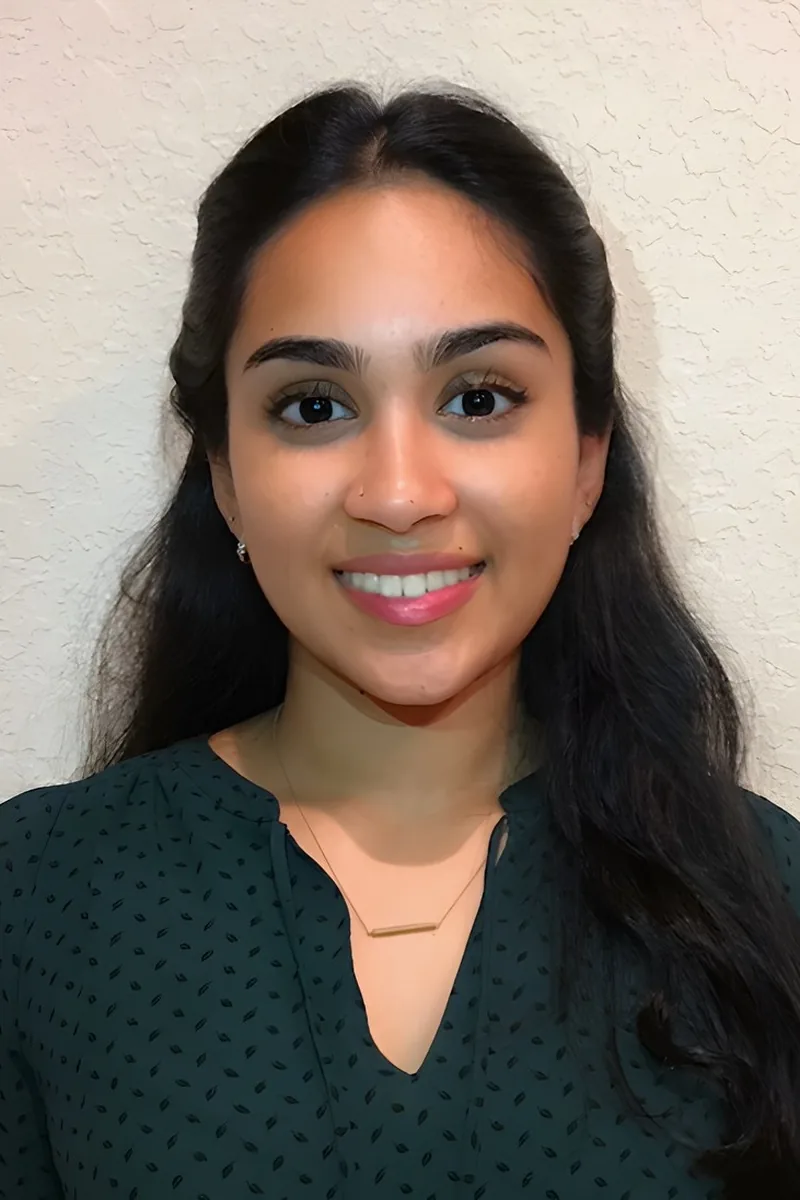
I'm Veena and I recently graduated from the University of Miami with a B.S. in Microbiology and Immunology with Chemistry and English Literature as my minors. I've tutored at a Math and Reading learning center in high school and became an employee of the Academic Resource Center at UM where I tutored my peers in STEM subjects. I was an assistant science teacher at a middle school for a year, and a workshop leader for chemistry classes at UM.

I am a rising senior majoring in civil engineering at the University of Florida (UF). I graduated from Coral Gables Senior High School, with an International Baccalaureate (IB) diploma, where I had many teachers that I admired and looked up to. The wonderful experiences I had with my teachers in high school is why I am so passionate about tutoring and empowering students to meet their full potential. I have experience tutoring students in both middle and high school to succeed in classes in which they were having academic difficulty. My favorite subjects to tutor are math and science because I am able to share my expertise to give my students the confidence and knowledge to thrive.
The ACT Science section barely tests science knowledge — it's really about interpreting graphs, comparing experimental setups, and drawing conclusions from conflicting data sets under tight time pressure. Apoorva's biomedical engineering background means she reads data tables and figures the way most people read sentences, and she teaches students to do the same. Rated 4.6 by students.
I am currently studying at St. John’s College for my Bachelor of Arts in the Liberal Arts. St. John’s curriculum follows the Great Books Program which relies on primary sources instead of textbooks. During my time at St. John’s, I have volunteered as a tutor working with middle school students, focusing on Reading, Writing, and Mathematics. I have also tutored students in US history, Government, and World Religions. I have enjoyed tutoring English and Literature the most as I find it very rewarding to help students find material that they not only enjoy, but connect to and use to understand their own lives. In this age, technology has made information freely available to everyone. I think that it is extremely important to teach students how to find, processes and critically reflect on this wealth of resources. I find that it is equally important to nurture a student’s curiosity by demonstrating how lessons taught in the classroom can be applied to their unique passion. My own passions include writing, reading anything from philosophy to comic books, and playing video games.
I am Pre-Med but majored in Romance Languages and Literatures. I was born in Colombia and speak Spanish at home. I studied abroad in France junior year of high school and in Chile junior year of college, and my experience abroad really strengthened my passion for languages and other cultures.
I am working towards a Bachelor of Arts in Pure and Applied Mathematics as well as a Bachelor of Arts in Astronomy and Physics. I have enjoyed studying math and science since I was in elementary school. I would always help my friends out by answering their questions about the material. For about the last five years, I have had my own tutoring business where I have tutored a wide variety of math courses from elementary school math to pre-calculus and calculus. I like to make sure my students have a complete understanding of the core concepts before going into practice questions. I have also had experience helping my peers with physics and computer science courses.
Most of ACT Science isn't really about science knowledge — it's about reading graphs, interpreting conflicting experimental designs, and extracting data under pressure. Payal's physics background means she's spent years pulling meaning from complex data sets, and she teaches students the same skill: ignore the jargon, find the variables, and trace the trend. Her 33 ACT composite reflects how well that data-first strategy works across all seven passages.
I like helping students. I am very patient. I have experience teaching Calculus classes at the University of Miami. I have done private tutoring for all levels of math up to Calculus, as well as Statistics, Business Math, and Math Finance. I have worked in the actuarial field. I have an undergraduate degree in mathematics from Michigan State University and a Master's degree in mathematics from the University of Miami. I worked for The Princeton Review as a tutor for the SAT. I did very well on both the SAT and ACT, and like teaching students how to do better on those. I like history, too, and always find it fun to tutor history.
The ACT Science section barely tests science knowledge — it's really about reading graphs, interpreting experimental setups, and comparing competing hypotheses under time pressure. Noah treats it as a data-literacy exercise, teaching students to pull trends from figures and tables fast without getting bogged down in unfamiliar terminology about geology or biochemistry.
The ACT Science section is really a data-interpretation exam disguised as science — students who try to rely on biology or chemistry knowledge alone often run out of time. Andrew's Environmental Biology background lets him read graphs, tables, and experimental designs quickly, and he teaches students to do the same by focusing on variables and trends rather than scientific jargon. Rated 33 on the ACT himself, he knows exactly where the section tries to trip people up.
Treating the ACT Science section as a data-interpretation exam rather than a test of science knowledge changes everything about how students approach it. Caitlin, who scored a 32 composite and studies pre-med at Duke, teaches students to read graphs, compare experimental setups, and identify conflicting viewpoints without getting bogged down in unfamiliar terminology. She's rated 5.0 by her students.
The ACT Science section isn't really a science test — it's a data interpretation test disguised as one. Christine scored a 32 ACT composite and teaches students to quickly parse conflicting viewpoints passages, read graphs without getting lost in irrelevant variables, and eliminate answer choices based on what the data actually shows rather than outside knowledge.
The ACT Science section is really a data interpretation exam dressed up in lab coats. Vansh — who earned a 36 composite — teaches students to read graphs, compare experimental setups, and identify conflicting hypotheses quickly, spending minimal time on the passage text itself. His engineering training at Georgia Tech reinforces the analytical reading skills this section actually rewards.
I am a sophomore at the Georgia Institute of Technology and am working towards a major in Computer Engineering. I have been tutoring students of all ages and backgrounds in various math topics ranging from elementary school math to AP Calculus throughout high school. I love teaching math and always find it amazing to watch my students grow and improve in their mathematical abilities. While helping students with standardized testing, we go through several tricks and tactics that have helped my students succeed and have fun in the process. I am also well versed in Physics and have spent 3 years taking the highest levels of physics courses. I love playing all sports (especially soccer) and enjoy playing the guitar in my free time as well.
Treat the ACT Science section like a data literacy exam, not a science test — that's the shift Michael teaches. Most questions hinge on reading graphs, comparing experimental setups, and identifying conflicting hypotheses, skills that don't require memorizing the periodic table. His 36 composite came partly from nailing this section's unusual format, and he walks students through the exact triage strategy he used.
The ACT Science section is really a data interpretation exam disguised as science — and Priya treats it that way. With a 35 ACT composite and a biotechnology background at UCF, she teaches students to read graphs, parse experimental designs, and identify conflicting viewpoints quickly without getting bogged down in content they don't need.
Treat the ACT Science section like a data-interpretation exam, not a science test — that's the core insight Parker drills into every session. With a 36 composite and coursework in biology, chemistry, and physics, he teaches students to read graphs and conflicting viewpoints quickly without getting distracted by unfamiliar terminology. Rated 5.0 by students.
I am no longer by their side. I seldom have students rely on "tricks"; instead, students will learn the underlying reasoning so that they can extend their solving methods to new related problem types. I look forward to applying my years of tutoring and teaching experience to help many motivated students.
I'm passionate about guiding high schoolers through the college application process. The admissions process is probably one of the most confusing, anxiety-inducing experiences you'll have in high school, but I'm full of ideas for making the entire process as successful and stress-free as possible. I've successfully guided many students through every stage of admissions -- from figuring out where to apply and then staying organized and on-track, to "packaging" themselves and producing a perfect personal statement -- and I love witnessing them achieve their admissions dreams.
I am currently a Master's student at the Rochester Institute of Technology, finishing up a Computer Science degree. I am interested specifically in the field of artificial intelligence and machine learning and have two years professional experience in the industry. I have been employed at companies in California, Pennsylvania, and Florida.
I've spent 6 years tutoring K-College-level students in a variety of subjects, from ACT and MCAT to neuroscience and basic reading. My job is to find where the confusion actually started and make a plan. We work through it out loud until you can explain it back to me. Students leave my sessions not just with the homework done, but knowing how to attack the next problem on their own. I graduated from Ohio State with a 3.96 GPA, 34 ACT and a 517 MCAT score.
The ACT Science section is really a data-interpretation exam disguised with biology and chemistry vocabulary — and Kaitlyn, as a biology major and current medical student, speaks that vocabulary fluently. She teaches students to ignore the jargon, go straight to the graphs and tables, and extract exactly what each question asks for. That combination of scientific literacy and test strategy is why she's rated 4.8 by her students.
I am currently pursuing a mechanical engineering degree at Florida International University and my personal tutoring style is supportive and tailored to each student.
I am graduated from Penn State University in Industrial Engineering in 2017. I've tutored ever since I was in high school, and I love helping people! I like to help my students understand math (and other topics) instead of just doing it blindly. My goal is to help my students improve their math (and other topics) and build skills that will help them find learning easier in the future! Fun fact, I used to work for Disney and I like to salsa dance!
The ACT Science section is really a data interpretation exam wearing a lab coat. Gabriel teaches students to ignore the intimidating jargon and zero in on graph trends, table relationships, and conflicting viewpoints — the three skills that account for nearly every question. A Penn student studying both business and computer science, he's comfortable translating dense technical information into clear takeaways.
Harrison's actual science background — spanning biochemistry, genetics, and organic chemistry — gives him an edge on the handful of ACT Science questions that do require outside knowledge, the ones most tutors tell students to just guess on. For the other 90%, he teaches a passage-triage system: classify each passage type, go straight to the figures, and match answer choices to specific data points. His 35 ACT composite and 4.9 rating show the method holds up under real test conditions.
I am a certified Math 5-9 Teacher in FL. I taught middle and high school for two years. I am a graduate of Florida State University. I received my Bachelor of Science in Social Science with a focus in Public Administration and Sociology. After graduation, I took a gap year before graduate school to serve in AmeriCorps. I highly recommend it! I currently do photography and work at a startup. While I tutor a broad range of subjects, I am most passionate about Math. I have worked with students in grades K-12. I cater to each student's individual learning style. In my experience, it is always rewarding seeing my students have that "aha moment" when they understand a concept or when their confidence and attitude towards a subject has changed from when we started. This in turn is reflected in their improved test scores and grades in the class. I am a firm believer in fully investing in my students to help them reach their highest potential.
Most students panic when they see the ACT Science section's cluttered graphs and unfamiliar experiments, but the section barely tests science knowledge — it tests data interpretation speed. Destiny's human biology background at Harvard gives her a natural fluency with experimental design and graph reading, and her 35 ACT composite shows she's mastered the shortcuts that make this section manageable.
Scoring a 36 ACT composite means Ankit knows the Science section inside out — particularly the trick that it's really about interpreting graphs, tables, and conflicting viewpoints rather than recalling science facts. His dual background in neuroscience and computer science gives him sharp data-reading instincts that he breaks down into repeatable strategies for parsing experimental passages quickly and accurately.
I am working toward my B.S. in Education at the University of Miami, which I will complete this coming May. My degree specializes in a few areas, all within the social sciences: Human and Social Development, Geography, Urban studies, and Sociology. I love working with students one on one, and have even traveled to South Africa to work in after school programs helping middle school students better grasp concepts in English and Math. I tutor a wide variety of subjects in the social sciences, as well as test preparation for high school students who are trying to improve their SAT and ACT scores. These tests are my favorite subjects to help students with because it is satisfying to see measurable improvement in scores that will ultimately help students get into their dream colleges. My philosophy is that all students can succeed if they are motivated to do well and willing to put in the time and effort that it will take to reach the level they want. My job is to give students the basic tools that they need before they can help themselves. Outside of school and work, I love to be outdoors! I enjoy bicycling, yoga, running, and going to the beach on the weekends. I also love traveling, discovering new places and people, and getting to know them.
I'm Nikhil from Orlando, FL. I'm currently a freshman attending the University of Miami. I wanna be a tutor mostly to make learning isn't a pain for anyone. By making the experience more engaging and possibly fun, then we start to make the most out of it. Hopefully we'll see each other soon!!
I am currently a Sophomore at the University of Florida where I study accounting in their honors program. I have past experience in tutoring SAT and ACT for my high school as well as in reviewing student's college admissions essays. I am very passionate about tutoring, mostly the major standardized tests, because I know how hard and important they are to students. As someone who was also in that difficult position, grinding and stressing about my test scores, I really take pride in ensuring that students are able to maximize their potential and achieve a score that they are proud of. I am most passionate about teaching SAT and ACT reading, as I find that many students find it to be one of the harder subjects, however it can quickly become one of the easiest subjects and significantly boost student scores with just a little understanding of how the test is designed! When it comes to my teaching philosophy, I try to put a major emphasis on blending learning with online media that students frequent to make learning feel like less of a chore while encouraging students to become more engaged with content online. My tutoring style is focused on simplifying concepts as much as possible while placing a great emphasis on underlying ideas behind how questions are designed, especially when it comes to standardized tests. Outside of tutoring, I really love to travel and plan on studying abroad in South Korea this Summer!
The ACT Science section is really a data interpretation exam disguised in lab coats — graphs, tables, and conflicting viewpoints that require careful reading, not memorized biology facts. Emily teaches students to isolate variables and read figures before touching the passage text, a technique that dramatically speeds up response time. Her 34 ACT composite reflects how well this approach works in practice.
Most of ACT Science is really about reading graphs, interpreting data tables, and spotting trends under time pressure — not recalling biology or chemistry facts. Jacob breaks down conflicting viewpoints passages and experimental design questions into repeatable steps that remove the guesswork. His own 34 composite and background teaching middle school science make the content side second nature.
I am a senior at Vanderbilt University, with a double major in Neuroscience and Medicine, Health, and Society (MHS). I've been tutoring students since my freshman year of high school, and I love it! In college, I'm a Research Assistant in a clinical neuroscience lab, and I'm also a Lab Assistant in another chemistry lab. I used to work at Mathnasium, which is a math tutoring company, but I love tutoring all subjects!
Most students panic when they see the ACT Science section's dense graphs and conflicting experiments, but Andrea treats it as a data interpretation exercise. Her mechanical engineering background means she's spent years reading complex figures and extracting the one number that matters — and she teaches students to do the same in under a minute per question.
The ACT Science section is really a data interpretation test disguised in lab coats — most questions can be answered by reading graphs and tables without any outside science knowledge. That said, having genuine science fluency speeds things up, and Rick brings both: a 33 ACT composite and a Health Sciences degree that makes passages on biology, chemistry, and experimental design feel familiar rather than intimidating. He teaches students to identify what each question is actually asking before hunting through the data.
I am now attending the University of Illinois at Urbana Champaign to study Computer and Information Sciences, focusing on big data. As most of my life revolves around math, I feel as if I am most strongly suited to tutor math, and I believe I am the best at it. My teaching style is uniquely crafted based on each student's needs, but I help students learn methods to solve problems that help them find the solution substantially faster than any other method.
Testimonials
Because the right ACT Science tutor makes all the difference.
Average Session Rating – Based on 3.4M Learner Ratings
Practice ACT Science
Free practice tests, flashcards, and AI tutoring for ACT Science
Nearby ACT Science Tutors
Other Miami Tutors
Related Test Prep Tutors in Miami
Frequently Asked Questions
Most students see meaningful improvement with focused preparation—typically 2-4 points on the 36-point scale within 8-12 weeks of consistent study. The amount of improvement depends on your starting score and how much time you dedicate to practice. Students who struggle with pacing often see the biggest gains because ACT Science rewards strategy as much as content knowledge. The key is identifying which question types trip you up (data interpretation, experimental design, or conflicting viewpoints) and drilling those specifically rather than studying everything equally.
The ACT Science section gives you 5 minutes and 40 seconds per passage (7 passages total, 52 minutes), which is tight. Most students benefit from a "skim first, questions second" approach: quickly preview the passage and diagrams to understand what you're looking at, then read each question carefully before hunting for the answer in the data. Avoid re-reading the entire passage for each question—learn to locate relevant information fast. Many students also find it helpful to tackle the conflicting viewpoints passage last since it requires more reading, and to start with data representation passages where answers come straight from tables and graphs.
Not really—ACT Science is more about reading data and understanding experimental setup than memorizing formulas or concepts. You need basic science vocabulary and general knowledge (like understanding what variables are or what photosynthesis is), but the test teaches you what you need to know through the passages themselves. That said, familiarity with biology, chemistry, and physics concepts helps you work faster because you're not learning the science while also answering questions. For students in Miami preparing for this test, a tutor can help you identify any knowledge gaps and build confidence with the specific ways ACT presents scientific information.
The best way is to take a full practice test under timed conditions and review every single question you missed or guessed on. Look for patterns—did you struggle more with graph interpretation, reading the conflicting viewpoints section, or understanding experimental design? ACT Science questions fall into three categories: data representation (charts/graphs), research summaries (experimental passages), and conflicting viewpoints (paired arguments). Most students find one or two categories harder than others. Once you identify your weak spots, you can spend 60-70% of your practice time on those specific types instead of spreading your effort equally. This targeted approach typically produces faster score gains than general test prep.
ACT Science anxiety usually stems from two things: feeling rushed by the time limit, and uncertainty about whether you're understanding the questions correctly. You can address both through practice. Doing multiple timed practice tests trains your brain to work faster and builds confidence—by test day, you've done it dozens of times before. It also helps to have a specific plan going into the section (like which passages to tackle first or when to skip a hard question and come back). Deep breathing before you start and positive self-talk during the test work too. If anxiety is significantly affecting your performance, connecting with a tutor who specializes in test prep can help you build a personalized strategy and practice with someone who can give you real-time feedback and encouragement.
Most students benefit from 8-12 weeks of consistent preparation, spending 3-5 hours per week specifically on ACT Science practice. This timeline assumes you're not starting from zero and you have baseline familiarity with the test format. If you're starting fresh, 12-16 weeks gives you more time to learn the question types, build speed, and do plenty of practice tests. The key is consistency—studying 1 hour every day is more effective than cramming 7 hours on one weekend. A good schedule includes practice problems several times a week, a full practice test every 2-3 weeks to track progress, and focused drilling on your weak areas in between.
Most students benefit from taking 4-6 full practice tests (all sections, timed) spread throughout their preparation period. This gives you enough data to spot patterns in your performance, build stamina for the full 3-hour test, and track whether your score is improving. After each test, spend time reviewing every question you missed—not just the ones you know you got wrong, but also the ones you guessed on or rushed through. The review is where real learning happens. Between full tests, do smaller practice sets (1-2 passages at a time) focusing on your weak areas. The official ACT practice tests are the most accurate predictor of your actual test performance, so prioritize those over unofficial versions.
Let’s find your perfect tutor
Answer a few quick questions. We’ll recommend the right plan and match you with a top 5% tutor.