Award-Winning MCAT Chemical and Physical Foundations of Biological Systems Tutors
serving Orlando, FL
Who needs tutoring?
FEATURED BY


TUTORS FROM
- YaleUniversity
- PrincetonUniversity
- StanfordUniversity
- CornellUniversity
Award-Winning MCAT Chemical and Physical Foundations of Biological Systems Tutors serving Orlando, FL
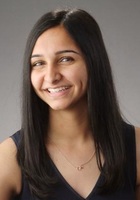
Certified Tutor
6+ years
Rhea
The MCAT's Chemical and Physical Foundations section blends general chemistry, organic chemistry, physics, and biochemistry into passage-based problems that reward fast, integrated thinking. As a pre-med biology major at the University of Chicago, Rhea has recently worked through this exact content ...
University of Chicago
Bachelor of Science, Biology, General
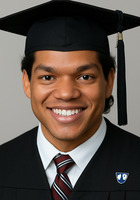
Certified Tutor
Tony
Tackling the Chemical and Physical Foundations section requires connecting general chemistry and physics concepts to biological systems — something Tony did routinely as a biology major at Yale preparing for medical school. He breaks down high-yield topics like enzyme kinetics, fluid dynamics, and e...
Yale University
Bachelor of Science in Biology
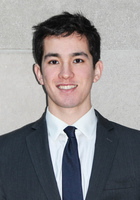
Certified Tutor
10+ years
Zachary
The Chem/Phys section of the MCAT demands more than knowing general chemistry and physics — it requires applying those principles to biological systems under time pressure, from enzyme kinetics and thermodynamics to fluid dynamics in the circulatory system. Zachary's biochemistry and biophysics degr...
Yale University
Bachelors, Biochemistry and Biophysics
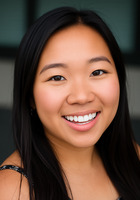
Certified Tutor
10+ years
Samantha
The Chem/Phys section of the MCAT demands more than content recall — it requires applying general chemistry, organic chemistry, and physics concepts within passage-based experimental scenarios. Samantha, currently in medical school, unpacks how to read data tables mid-passage, connect them to underl...
Duke University
Bachelors in Global Health Determinants, Behaviors, and Interventions
Harvard Medical School
Current Grad Student, MD
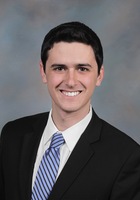
Certified Tutor
6+ years
David
Covering everything from Newtonian mechanics to amino acid chemistry, the Chem/Phys section demands fluency across disciplines that most students studied years apart. David's neuroscience background at Yale included heavy coursework in general chemistry, organic chemistry, and physics, so he connect...
Yale University
Bachelor of Science in Neuroscience
Harvard University
Current Grad Student, Bioethics and Medical Ethics
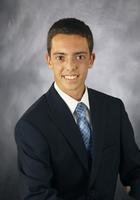
Certified Tutor
9+ years
Benjamin
Preparing for the MCAT's Chemical and Physical Foundations section requires connecting general chemistry, organic chemistry, and physics to biological systems — exactly the kind of cross-disciplinary thinking Benjamin's Vanderbilt neuroscience degree demanded. He breaks down passage-based questions ...
Vanderbilt University
Bachelor's degree in neuroscience and Russian
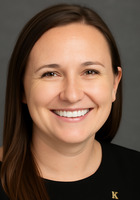
Certified Tutor
Laura
The Chem/Phys section of the MCAT throws biochemistry, general chemistry, organic chemistry, and physics at students in passage-based formats that demand fast analytical reading as much as content knowledge. Laura breaks down complex passages — enzyme kinetics graphs, electrochemistry calculations, ...
Massachusetts Institute of Technology
Bachelors, Economics
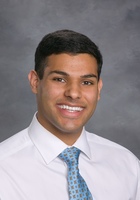
Certified Tutor
6+ years
The Chem/Phys section of the MCAT demands rapid passage interpretation layered on top of general chemistry, organic chemistry, and physics — and Sanjay has been through it himself with a biochemistry degree and medical school under his belt. He breaks down passage-based reasoning strategies for topi...
Rice University
Bachelor in Arts
Certified Tutor
8+ years
Amanda
The Chemical and Physical Foundations section throws organic chemistry, physics, and general chemistry at students in passage-based formats that reward fast, accurate reasoning under pressure. Amanda tackled the MCAT herself on the path to her MD and knows which high-yield topics — enzyme kinetics, ...
The University of Alabama
Bachelor of Science, Biology, General
Baylor College of Medicine
Doctor of Medicine, Public Health
Certified Tutor
Jean
Having taken the MCAT and earned admission to Harvard Medical School, Jean knows firsthand how the Chemical and Physical Foundations section blends general chemistry, organic chemistry, and physics into passage-based reasoning problems. She teaches students to decode experimental setups quickly and ...
Harvard College
Bachelor in Arts, Sociology
Harvard Medical School
Doctor of Medicine, Medicine
Nearby MCAT Chemical and Physical Foundations of Biological Systems Tutors
Other Orlando Tutors
Related Graduate Test Prep Tutors in Orlando
Frequently Asked Questions
This section tests your understanding of chemistry and physics concepts as they apply to biological systems. You'll encounter general chemistry (atomic structure, bonding, thermodynamics), organic chemistry (reaction mechanisms, synthesis), biochemistry (protein structure, metabolism), and physics (forces, energy, fluids). For students in Orlando preparing for the MCAT, mastering these interconnected topics is essential since questions often blend multiple disciplines to mirror real medical scenarios.
This section demands both conceptual understanding and rapid problem-solving under time pressure—you have roughly 95 minutes to complete 230 minutes of testing across the full exam. Many students struggle because questions require integrating knowledge across chemistry, physics, and biology rather than testing isolated facts. Additionally, the section includes discrete questions and passage-based problems with varying difficulty, so weak areas in one topic (like thermodynamics or organic mechanisms) can significantly impact your overall score.
Score improvement depends on your starting point and effort level, but most students see meaningful gains—typically 2-4 points on the MCAT scale—within 8-12 weeks of focused preparation. Students who identify specific weak areas (like equilibrium or organic synthesis) and practice targeted strategies often improve faster. Working with a tutor for students in Orlando helps you pinpoint exactly which concepts are holding you back and develop a personalized study plan rather than reviewing material broadly.
Aim to spend about 1.5-2 minutes per discrete question and 8-10 minutes per passage (including 3-4 questions per passage). The key is recognizing when to skip a difficult question and return to it later rather than getting stuck. Many students benefit from practicing with full-length tests to build pacing intuition, then reviewing which question types consistently slow them down. A tutor can help you develop a personalized timing strategy based on whether you struggle more with conceptual understanding or test-taking speed.
Students often struggle with organic chemistry mechanisms and reaction pathways, thermodynamics and equilibrium concepts, and translating complex passages into solvable problems. Many also underestimate how much physics appears on the MCAT—topics like forces, pressure, and energy are woven throughout. Time management is another major hurdle; students may understand the material but rush through calculations or misread questions. Identifying your specific weak spot is the first step, and tutors can help you address it with targeted practice and conceptual review.
Most students benefit from taking 4-8 full-length practice tests over their preparation period, spacing them out to allow time for review and targeted studying between attempts. The official AAMC practice tests are the gold standard since they mirror the real exam's format and difficulty. Rather than just taking tests passively, use each one as a diagnostic tool—review every question you missed or guessed on to identify patterns in your weak areas. A tutor can help you interpret practice test results and create a study plan that addresses your specific gaps before test day.
Building confidence through consistent practice and understanding your material deeply is the most effective anxiety reducer. Familiarizing yourself with the test format, practicing under timed conditions, and developing a pre-test routine all help calm nerves on exam day. When you encounter a difficult question during the actual test, remember that the MCAT is designed to challenge everyone—skipping it and moving forward is a strength, not a weakness. Many students find that working through practice tests with a tutor and discussing test-day strategies helps them feel more prepared and less anxious.
Seek a tutor with strong credentials in chemistry and physics, ideally someone who has scored well on the MCAT themselves and understands the specific challenges of this section. They should be able to explain complex concepts clearly, help you develop efficient problem-solving strategies, and provide personalized feedback on your practice tests. Varsity Tutors connects you with expert tutors who specialize in MCAT prep and can tailor their approach to your learning style and timeline, whether you're starting months in advance or preparing for a test date weeks away.
Connect with MCAT Chemical and Physical Foundations of Biological Systems Tutors in Orlando
Get matched with local expert tutors