Award-Winning AP Chemistry Tutors
serving Port St. Lucie, FL
AP Chemistry
Tutors in Port St. Lucie
Private 1-on-1 tutoring, weekly live classes for academic support, test prep & enrichment, practice tests and diagnostics, and more to elevate grades and test scores.
Based on 3.4M Learner Ratings
UniversitiesSchools & Universities
DeliveredHours Delivered
ProficiencyGrowth in Proficiency
Who needs tutoring?
No obligation. Takes ~1 minute.
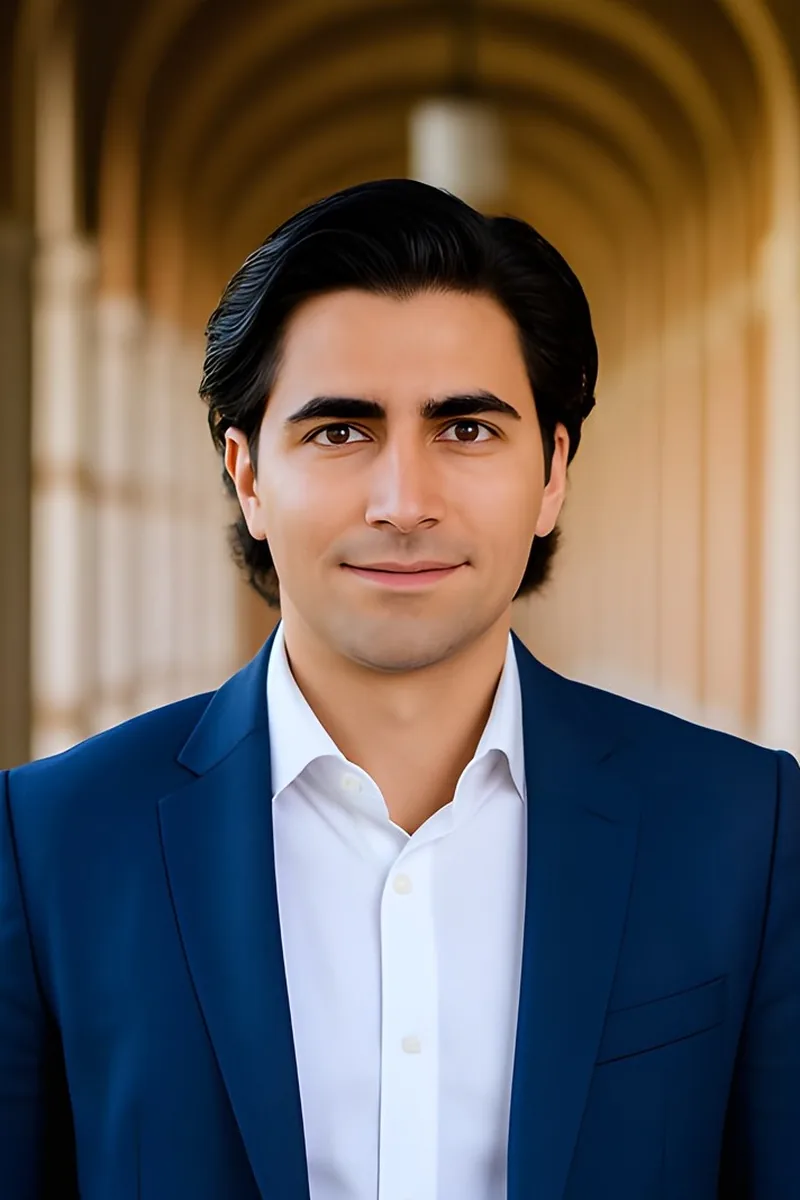
Rice University's biology curriculum gave Perry a college chemistry foundation built around real applications — understanding how Le Chatelier's principle governs physiological buffering, or why Gibbs free energy determines whether a metabolic pathway runs forward. He brings that applied lens to AP Chemistry's free-response questions, teaching students to reason through problems rather than pattern-match from practice sets. Rated 5.0 by students.

Neuroscience at Duke required Ankit to master chemistry at the molecular level — understanding how ions cross membranes, how neurotransmitters bind receptors, and how electrochemical gradients drive cellular processes. That gives him a concrete, biology-rooted way to teach AP Chemistry topics like oxidation-reduction reactions and intermolecular forces, where seeing the real-world consequences makes the theory click. His 1580 SAT and 4.8 rating back up the depth he brings to exam preparation.
Pre-med coursework at the University of Chicago means Emerson didn't just take chemistry — he built on it through biology and neuroscience classes where understanding electron behavior, molecular interactions, and reaction energetics was essential to grasping how drugs bind receptors or how enzymes catalyze reactions. That real-world chemical intuition translates directly to AP Chemistry's toughest conceptual questions, from VSEPR theory to thermodynamic spontaneity. Holds a 5.0 rating and a 1560 SAT.
I grew up in the Boston area and now live in Citrus County, Florida. I graduated from MIT in chemical engineering and worked for many years as a chemical process engineer, so I have a strong background in math and science, especially chemistry and thermodynamics. I've also been granted six U.S. patents. When the pandemic hit us, I moved to Florida and did part-time work as a chess tutor, then became a substitute teacher in the middle and high schools in our district. I enjoyed working with the students, many of whom had difficulty learning in big classes with many disruptions. I found that I could best help these students by using real-world examples to teach difficult concepts in a new way. Often, then, the student would come away with a new perspective and a much better understanding of the concept. I was happy to be able to help. These days as a VT tutor, I continue to use, whenever possible, real-world examples in my own material in chemistry and thermodynamics.
Priya's biotechnology major means she's neck-deep in the college-level chemistry that AP students are gearing up for — particularly the interplay between chemical kinetics and biological systems, where understanding rate laws and activation energy isn't optional. She unpacks AP Chemistry's most calculation-heavy topics, like equilibrium expressions and electrochemistry, by connecting the math to the molecular behavior driving it. Rated 4.8 by students, with a 35 ACT.
Scoring a 5 on the AP Chemistry exam while on the pre-med track at Case Western Reserve, Melodi knows which topics — like equilibrium, thermodynamics, and electrochemistry — carry the most weight on test day and where students tend to lose points on free-response questions. She builds each session around the specific unit a student is struggling with, connecting the math to the underlying molecular behavior so the reasoning sticks beyond the exam.
AP Chemistry's free-response questions demand more than memorized reactions — they require students to connect equilibrium, thermodynamics, and kinetics within a single multi-part problem. Daniel earned his B.S. in Chemistry from the Naval Academy and has tutored the subject since 2017, so he knows exactly how the College Board frames those tricky particulate-diagram and lab-design questions. Rated 4.8 by students.
I am working towards a Bachelor of Arts in Pure and Applied Mathematics as well as a Bachelor of Arts in Astronomy and Physics. I have enjoyed studying math and science since I was in elementary school. I would always help my friends out by answering their questions about the material. For about the last five years, I have had my own tutoring business where I have tutored a wide variety of math courses from elementary school math to pre-calculus and calculus. I like to make sure my students have a complete understanding of the core concepts before going into practice questions. I have also had experience helping my peers with physics and computer science courses.
I am very interested in a career in the medical field, so I am apart of some pre-medical organizations. I really enjoy playing all different sports, from soccer to volleyball to tennis.
Organic chemistry study groups in his biomedical sciences program at USF turned Nicholas into someone who could break down reaction mechanisms, electron configurations, and equilibrium concepts for peers who were struggling. AP Chemistry covers much of the same foundational material — thermodynamics, stoichiometry, kinetics — and he approaches it by building intuition for why reactions behave the way they do. His 5.0 rating speaks to how well that translates for students.
Jason's molecular and cellular biology major at the University of North Florida means he's neck-deep in the college-level chemistry that AP students are working toward — particularly the interplay between molecular structure and chemical reactivity that shows up in free-response questions. His hands-on experience tutoring AP Chemistry students gives him a clear sense of where the common stumbling blocks are, whether it's setting up equilibrium expressions or connecting Lewis structures to real molecular behavior. Rated 5.0 by students.
AP Chemistry's jump from stoichiometry to thermodynamics to equilibrium can feel like learning three separate subjects at once. Susie connects these threads through the lens of her biology and biochemistry background, where chemical principles show up in enzyme kinetics, buffer systems, and molecular interactions that give abstract formulas a concrete purpose.
As a chemistry major at UCF, Qiwei is working through the same material AP Chemistry covers — but at the college level, where topics like electrochemistry, solution equilibria, and thermodynamic laws get tested with far less hand-holding. That firsthand experience means she knows which conceptual leaps cause the most trouble on the AP exam and can walk through them using the deeper understanding her coursework demands.
Two things that have always been embedded in my soul has been my desire to learn and my desire to share that knowledge with those around me. Throughout my undergraduate, I squeezed in as many extra curriculum classes and worked in several research labs alongside working as a lead STEM tutor at my university's learning center while obtaining my Biomedical Engineering degree. Despite being done with school, I continue my pursuit of knowledge working in different labs and spending free time continuing to read, and I know it'll be a continual lifelong pleasure to help others connect with their own intrinsic knowledge as well! Looking forward to helping you succeed in your academic endeavors!
I am a dedicated tutor with over 3 years of experience serving as an undergraduate teaching assistant in general chemistry, organic chemistry, and physical chemistry. I graduated with a B.S. from UF and I am an incoming D1 at Columbia CDM. My focus on subjects like mathematics, general chemistry, and organic chemistry, specifically those on the DAT, allows me to share my passion for science with students. I enjoy helping them grasp complex concepts through relatable examples and practical applications. I believe in creating a supportive learning environment where each student feels valued and motivated to succeed. My tutoring approach also emphasizes active engagement and personalized strategies that cater to individual learning styles. I am committed to fostering academic growth and instilling confidence in my students, guiding them toward their educational goals. In my spare time, I enjoy reading about scientific discoveries, playing tennis and soccer, and relaxing by playing guitar.
AP Chemistry's free-response questions demand more than memorized formulas — they require students to explain why equilibrium shifts or how intermolecular forces drive phase behavior. Roy earned his degree in Microbiology and Cell Science at UF, where rigorous chemistry coursework gave him deep fluency with thermodynamics, kinetics, and electrochemistry at the level the AP exam expects.
Stoichiometry, equilibrium, and thermodynamics each demand a different kind of thinking, and AP Chemistry throws all of them at students in one year. Nova's strong science background at Brown — spanning both biology and chemistry — means she can unpack reaction mechanisms and dimensional analysis with the precision this exam requires.
As an Academic Fellow at Rice, Maddie tutors college-level chemistry and biochemistry, so she's deeply familiar with the rigor AP Chemistry demands — from equilibrium calculations to thermodynamics and electrochemistry. She tackles the toughest free-response questions by teaching students to connect conceptual reasoning with precise mathematical setups, the combination the exam rewards most.
A mechanical engineering degree from WashU (Magna Cum Laude) and refinery work at ExxonMobil mean Caroline has applied thermodynamics, kinetics, and gas behavior in industrial settings where precision isn't optional — that real-world fluency translates directly to AP Chemistry's most calculation-heavy units. She teaches concepts like enthalpy changes and reaction spontaneity by connecting them to the energy systems she actually engineered, giving students a concrete anchor for abstract ideas. Rated 5.0 by students.
Studying cellular and molecular biology at Yale on the pre-med track, Shreya has gone deep into the chemistry that underpins life at the molecular level — making topics like intermolecular forces, Lewis structures, and VSEPR geometry feel less like abstract rules and more like tools for understanding how molecules actually behave. She teaches AP Chemistry's conceptual questions by grounding them in the molecular reasoning she uses daily in her own coursework. Rated 5.0 by students with a 36 ACT.
Cornell's biology curriculum required Viraj to work through college-level chemistry — from reaction energetics to molecular interactions — in courses where chemical reasoning underpins everything from cellular metabolism to pharmacology. He applies that cross-disciplinary perspective to AP Chemistry topics like intermolecular forces and solution chemistry, teaching students to predict behavior at the molecular level instead of memorizing isolated rules. Rated 5.0 by students.
AP Chemistry's free-response questions demand more than memorizing reactions — they require students to connect equilibrium, thermodynamics, and kinetics into coherent explanations under time pressure. Vishank's data analytics background at Ohio State sharpens how he breaks down multi-step problems, teaching students to identify what the question is really testing before diving into calculations. Rated 4.9 by students.
AP Chemistry's toughest stretch for most students is the leap from stoichiometry into equilibrium, thermodynamics, and electrochemistry, where conceptual reasoning matters as much as calculation. Jhonatan's extensive lab science background in biological sciences means he thinks about chemical principles in applied contexts — reaction kinetics, buffer systems, Gibbs free energy — and explains them with that same concreteness.
Computational biology at Cornell means Emily lives at the intersection of quantitative reasoning and molecular science — she's worked through the same college-level chemistry that AP students are preparing for, but with the added demand of modeling chemical systems computationally. She teaches topics like equilibrium and reaction energetics by emphasizing the mathematical structure underneath, so students learn to read what equations are actually telling them about molecular behavior. Rated 4.9 by students.
Cornell's chemical engineering program put Rahul through physical chemistry, thermodynamics, and reaction engineering courses where AP Chemistry concepts like enthalpy, equilibrium, and kinetics were just the starting point — so he can teach those topics with the depth that makes free-response questions feel manageable. He's especially sharp on thermochemistry, his self-described favorite, and connects energy diagrams and Hess's law to the industrial-scale processes he studied as an engineer. Rated 4.9 by students.
Enric earned his PhD in Chemistry, which means AP Chem topics like equilibrium, thermodynamics, and kinetics aren't just exam material — they're the foundation of his professional expertise. He knows which free-response question styles the College Board favors and teaches students to connect particulate-level reasoning to macroscopic observations, the skill that separates 4s from 5s. Rated 5.0.
Running an immunology lab at Columbia University Medical Center means Matthew deals with chemical assays, buffer systems, and reaction protocols daily — the kind of hands-on chemistry that makes AP topics like acid-base equilibria and reaction energetics feel concrete rather than abstract. His physics degree also sharpens how he teaches the thermodynamics and kinetics portions of the exam, where understanding energy relationships mathematically is just as important as knowing the chemistry. A 35 ACT and 1540 SAT reflect the analytical precision he brings to exam preparation.
AP Chemistry's toughest questions — equilibrium calculations, electrochemistry, thermodynamic spontaneity — demand both math fluency and chemical intuition. Rithi's neuroscience and biotechnology training means she's applied these principles in real research contexts, not just on paper. Her 4.9 rating speaks to how clearly she breaks down even the most abstract reaction dynamics.
Testimonials
Because the right AP Chemistry tutor makes all the difference.
Average Session Rating – Based on 3.4M Learner Ratings
Practice AP Chemistry
Free practice tests, flashcards, and AI tutoring for AP Chemistry
Nearby AP Chemistry Tutors
Other Port St. Lucie Tutors
Related Science Tutors in Port St. Lucie
Frequently Asked Questions
Score improvement depends on your starting point and commitment level, but most students see meaningful gains within 8-12 weeks of consistent tutoring. A tutor can help you identify which topics (like equilibrium, thermodynamics, or redox reactions) are holding you back, then target those areas with focused practice. Many students jump from a 2 or 3 to a 4 or 5 by mastering test-taking strategies and building confidence in problem-solving—especially on the free-response section where partial credit is available.
AP Chemistry combines conceptual understanding with calculation skills, and many students struggle with the transition from general chemistry. The most common pain points are stoichiometry and limiting reactants, acid-base equilibrium, and kinetics—topics that require both memorization and deep conceptual reasoning. Time management on the exam is another major issue; the free-response section requires clear, organized work, and students often rush through calculations or skip important steps that earn partial credit.
Look for a tutor with strong chemistry credentials—ideally someone who has taught AP Chemistry or scored well on the exam themselves. They should be able to explain both the 'why' behind concepts and the 'how' for problem-solving, since AP Chemistry rewards deep understanding over memorization. For students in Port St. Lucie, Varsity Tutors connects you with expert tutors who understand the AP curriculum and can tailor their approach to your learning style and goals.
Practice tests are essential—they help you get comfortable with the exam format, identify weak topics, and build pacing skills under timed conditions. The AP Chemistry exam has a specific structure (multiple-choice and free-response sections), and practicing full-length tests several times before test day significantly reduces anxiety. A tutor can review your practice test results with you, pinpoint errors, and help you develop strategies for tackling similar questions on test day.
Ideally, start tutoring at least 3-4 months before the exam (early February for the May test) to give yourself time to cover all units and complete multiple practice tests. If you're starting closer to test day, intensive tutoring sessions focused on your weakest areas can still make a real difference. Even 6-8 weeks of consistent, targeted tutoring can boost your score if you're willing to put in the work between sessions.
Your first session is about assessment and planning. A tutor will likely review your current understanding of key topics, discuss your target score, and identify which areas need the most work. They'll also learn your learning style and preferences, then create a personalized study plan that fits your timeline. This foundation helps ensure every future session is focused and productive toward your goals.
The free-response section rewards clear reasoning and organized work—even if your final answer isn't perfect, you can earn significant partial credit. A tutor can teach you how to structure your responses, show all your work, and explain your reasoning in a way that earns maximum points. They'll also help you practice writing responses under timed conditions, so you build confidence and avoid common mistakes like skipping units or missing significant figures.
Absolutely. Much of test anxiety comes from feeling unprepared or unsure about your approach to problems. Working with a tutor builds genuine confidence through mastery—when you've practiced problems repeatedly and understand the concepts deeply, anxiety naturally decreases. A tutor can also teach you test-taking strategies like time management techniques and how to approach unfamiliar questions, which gives you concrete tools to stay calm on exam day.
Let’s find your perfect tutor
Answer a few quick questions. We’ll recommend the right plan and match you with a top 5% tutor.