Award-Winning Geometry Tutors
serving Atlanta, GA
Geometry
Tutors in Atlanta
Private 1-on-1 tutoring, weekly live classes for academic support, test prep & enrichment, practice tests and diagnostics, and more to elevate grades and test scores.
Based on 3.4M Learner Ratings
UniversitiesSchools & Universities
DeliveredHours Delivered
ProficiencyGrowth in Proficiency
Who needs tutoring?
No obligation. Takes ~1 minute.
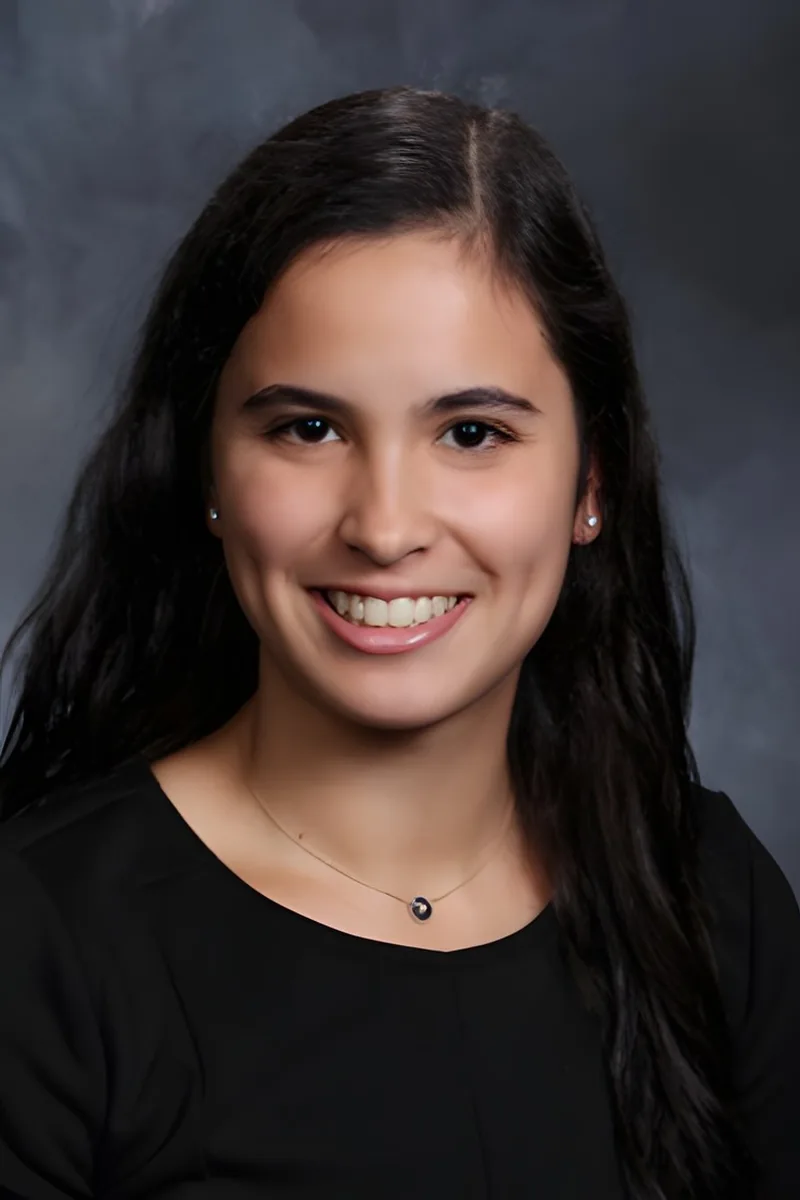
Proofs are usually where geometry students panic — the jump from calculating angles to constructing logical arguments feels like a different subject entirely. Isabella's MIT math training means formal reasoning is second nature to her, and she walks students through how to build a proof step by step, connecting geometric intuition to the structured logic on the page. She also covers coordinate geometry and triangle congruence with the same emphasis on understanding over memorization.
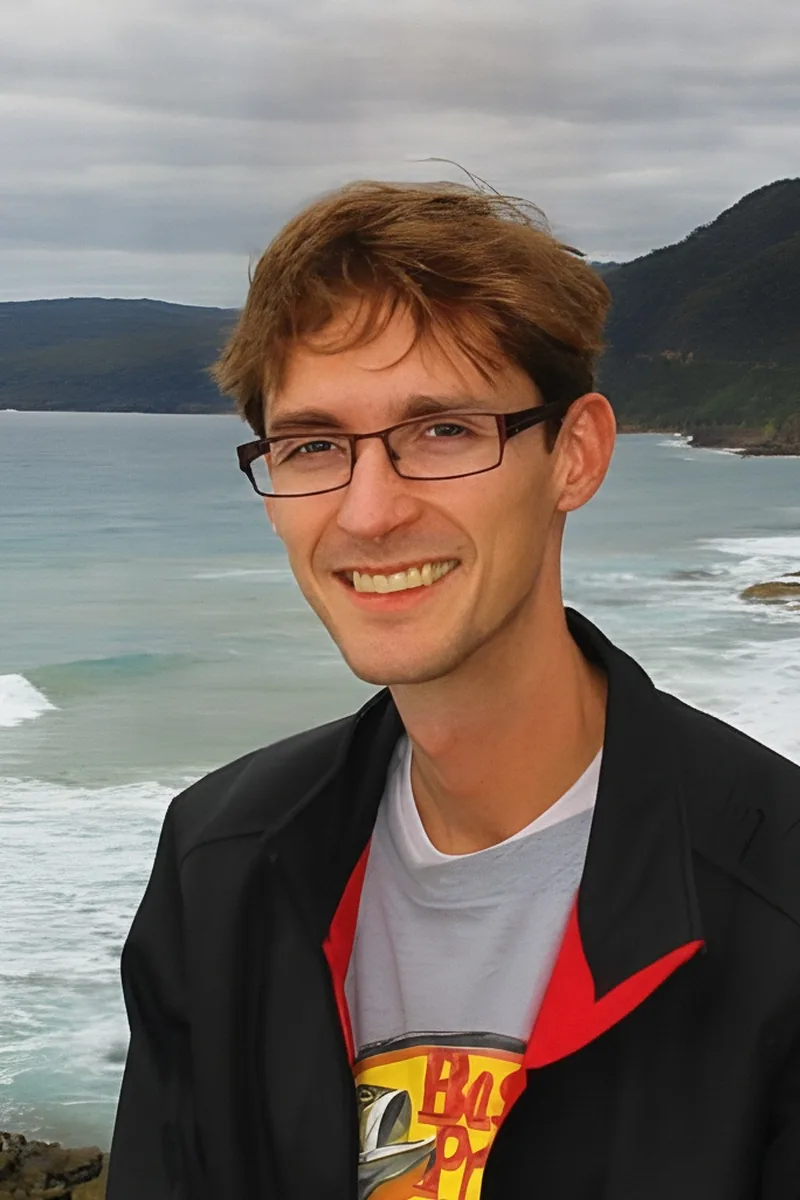
Years of actuarial work gave David a habit of thinking precisely about shapes, areas, and spatial relationships — skills that translate directly to geometry topics like circle theorems, polygon properties, and volume calculations. His Vanderbilt math degree means he can unpack the reasoning behind each theorem rather than just handing students formulas to memorize. Rated 5.0 by students.
Proofs are where most geometry students lose confidence, because the logic feels completely different from the arithmetic they're used to. Christopher approaches them as structured arguments — a skill he sharpened through years of scientific reasoning in his biochemistry and medical training at Rice and Baylor. He breaks each proof into small logical steps so students can see why a conclusion follows, not just that it does.
Proofs are usually the first place geometry students panic, because suddenly math asks them to argue logically instead of just compute. Alexandra's background in both creative writing and hard science gives her a rare ability to teach proof construction as structured storytelling — each theorem building on the last. She covers everything from triangle congruence to circle theorems with that same emphasis on reasoning.
Proofs are usually the first time a math student has to build a logical argument instead of just computing an answer, and that transition trips up even strong students. Matthew walks through each proof as a chain of reasoning — given, therefore, because — making triangle congruence and parallel-line theorems feel less like memorization and more like detective work. His Georgia Tech engineering background means spatial reasoning is second nature to him.
Proofs are usually where geometry students panic, but they're really just arguments built one logical step at a time. Michael tackles congruence, similarity, and angle relationships by walking through the reasoning behind each theorem rather than just stating it. His engineering training makes spatial reasoning second nature, which translates well to helping students visualize transformations and constructions.
Proofs are the part of geometry that trips up even strong math students, because suddenly the answer isn't a number — it's an argument. Aditya walks through each proof as a logical chain, teaching students to identify which theorems apply and how to structure their reasoning from given information to conclusion.
A biochemistry degree from Georgia Tech means Adel spent years interpreting molecular geometries — bond angles, tetrahedral structures, spatial orientations — before ever picking up a geometry textbook to tutor. That three-dimensional intuition carries over directly when he teaches students to reason through angle relationships, triangle congruence, and the logic behind two-column proofs. Rated 5.0 by students.
Proofs are usually the first place geometry students feel lost, because suddenly math requires structured logical arguments instead of computation. Corey teaches proof-writing as a skill that mirrors engineering problem-solving: identify what you know, state what you need, and build a chain of reasoning one justified step at a time. He also covers coordinate geometry and triangle relationships with the precision his technical background demands.
Proofs are usually the first thing that frustrates Geometry students, because suddenly math requires structured written arguments instead of just calculations. Darien approaches them as logic puzzles, teaching students to identify given information, spot congruence relationships, and build a chain of reasoning one justified step at a time.
Proofs are usually the make-or-break moment in Geometry, and Shea tackles them by teaching students to think like engineers — building a logical argument step by step from what they already know. Her civil engineering background at Georgia Tech means spatial reasoning and geometric relationships are second nature to her. She connects concepts like triangle congruence and parallel-line theorems to real structures so the logic feels purposeful rather than arbitrary.
Proofs are usually the first place geometry students hit a wall, because suddenly math requires written arguments instead of just calculations. Cole teaches students to treat each proof like a chain of small logical claims, a skill he sharpened through years of engineering coursework where geometric reasoning underpins everything from CAD modeling to structural analysis.
Proofs are where most geometry students lose confidence — the logic feels completely different from the computation they're used to. Jenny teaches students to read diagrams like puzzles, identifying congruence relationships and angle properties step by step until writing a two-column proof becomes a process they can own rather than dread.
Proofs are usually the first time students encounter math that asks "why" instead of "how much," and that shift can be jarring. Rodrigo teaches geometric reasoning — from triangle congruence to circle theorems — by connecting visual intuition to the logical structure behind each proof. His engineering background at Georgia Tech keeps the explanations precise without being abstract.
Until about six months ago, Alexander was a math major at Boston College — so when a geometry problem asks students to set up equations from angle relationships or apply algebraic reasoning to coordinate proofs, he's working in his native language. He teaches the proof-logic side of geometry as a series of small, checkable steps, drawing on the same structured thinking that made him switch into computer science. Rated 5.0 by students.
Nuclear engineering students at Georgia Tech don't just memorize formulas — they learn to reason through complex spatial problems involving reactor core geometries, shielding configurations, and cross-sectional analysis, which is exactly the kind of thinking that makes Corey effective at teaching geometric concepts like circle theorems, arc lengths, and properties of solids. He breaks down diagram-heavy problems into clear logical steps, connecting each theorem to something concrete so students see the reasoning rather than just the rules. Rated 4.9 by students.
Proof-writing is usually the first place geometry students feel lost, because it demands a completely different kind of thinking than arithmetic or algebra. Taha breaks proofs into a chain of small logical steps — showing how postulates about parallel lines or congruent triangles actually justify each claim. His experience teaching math at every level from sixth grade through college gives him a sharp sense of which foundational ideas need reinforcing before the formal reasoning can take hold.
Proofs are usually where geometry goes from manageable to intimidating, because students have to construct logical arguments instead of just computing answers. Tahmeed studied both mathematics and philosophy at Emory — a combination that makes him unusually well-suited to teach the deductive reasoning behind triangle congruence, parallel line theorems, and circle properties. He walks through each proof as a chain of small, defensible claims rather than a mysterious block of text.
Proofs and spatial reasoning make geometry feel like a completely different subject from algebra — and that's exactly where a lot of students struggle. Serdar approaches geometric problems by connecting them to physical intuition, drawing on his physics and engineering background to show why angle relationships and congruence rules describe the real world, not just shapes on paper. Rated 5.0 by students.
I have tutored and/or taught mathematics since 2009. I have received graduate degrees in mathematics from Clark Atlanta University and the University of Florida. I am very patient with my students and strive to develop their skills, strategies and critical thinking.
Proofs are usually where geometry goes from comfortable to confusing, because suddenly students need to justify every step with a logical chain. Matthew teaches proof-writing as an argument — claim, evidence, reasoning — which comes naturally to someone who double-majored in political science and chemistry at Williams. He also digs into coordinate geometry and triangle congruence with the kind of precision his science training demands.
Hello, I am an 19 year old senior at Kennesaw State University and I'm studying for a degree in Software Engineering. I am also minoring in mathematics. I love learning and helping people find new ways to think about things to strengthen their understanding. I specialize in mathematics and computer science fields because these fields remind me of puzzles. Being given a set of ground rules and then instructed to get from point A to point B within the confines is the definition of a puzzle. Viewing these topics in this way is a great way to give people a different perspective on the concepts they're learning. That is the kind of help I want to provide.
Chemical engineering coursework is full of geometry that most students never see — reactor vessel dimensions, pipe cross-sections, flow diagrams built on precise spatial relationships — so Kellie's instinct is to ground abstract theorems in something tangible. She tackles circle theorems and arc-length calculations by connecting them to real measurement problems, making the formulas feel less arbitrary. Her 34 ACT speaks to the kind of systematic problem-solving she brings to multi-step geometric reasoning.
Every proof in geometry is essentially an argument, and Christopher approaches them that way — teaching students to identify what they know, what they need, and which logical steps bridge the gap. His engineering training sharpened his spatial reasoning, which he applies when unpacking concepts like similarity, congruence, and circle theorems. He holds a 5.0 client rating.
Proofs are where geometry stops feeling like a math class and starts feeling like a logic puzzle — and that transition frustrates a lot of students. Brittany walks through each proof step by step, connecting postulates and theorems to the spatial reasoning she relies on in her Chemical Engineering studies at Georgia Tech, so students learn to build arguments rather than memorize sequences.
A chemistry degree means Aaron spent years thinking about molecular geometry — bond angles, tetrahedral structures, spatial symmetry — before ever picking up a protractor. That three-dimensional intuition carries directly into teaching topics like properties of polygons, angle relationships, and how shapes behave under rotation and reflection. He approaches geometry problems by sketching first and reasoning from the diagram, which tends to unlock things for students who get lost staring at text-heavy proofs.
Testimonials
Because the right Geometry tutor makes all the difference.
Average Session Rating – Based on 3.4M Learner Ratings
Practice Geometry
Free practice tests, flashcards, and AI tutoring for Geometry
Nearby Geometry Tutors
Other Atlanta Tutors
Related Math Tutors in Atlanta
Frequently Asked Questions
Geometry proofs require students to shift from memorizing formulas to understanding logical reasoning—a challenging transition for many. A tutor can break down the proof-writing process step-by-step, helping students see how each statement connects to the next and why certain theorems apply. This personalized 1-on-1 approach allows tutors to identify exactly where a student gets stuck (setting up the proof, justifying steps, or organizing their reasoning) and address those specific gaps. As students practice with immediate feedback and guidance, they develop confidence in their logical thinking, not just their ability to complete a problem.
Word problems in geometry require students to translate written descriptions into diagrams and then apply theorems or formulas—multiple steps where students often get lost. Tutors excel at this translation process, teaching students to sketch diagrams, label known information, and identify what they're solving for before jumping into calculations. Many geometry concepts (angles, congruence, similarity, area, and volume) are inherently visual, so working with a tutor who can draw, annotate, and explain these relationships helps students build a deeper, more intuitive understanding. When students can visualize a problem, they're less likely to make careless errors and more likely to catch when an answer doesn't make sense.
Atlanta's 19 school districts use various geometry textbooks and approaches, from traditional Euclidean geometry to integrated curricula that blend geometry with other math topics. Varsity Tutors connects students with tutors who are experienced across different geometry programs and can adapt to whatever curriculum your student's school uses. Whether your student needs help with a specific chapter, preparing for end-of-unit assessments, or building foundational skills that bridge gaps from previous years, tutors familiar with Atlanta schools can align their instruction with what's happening in the classroom.
In geometry, showing work isn't just about arriving at the correct answer—it's about demonstrating logical reasoning and justifying every step. Teachers and standardized tests reward clear, complete solutions that explain why a step is valid, not just that it works. Many students rush through or skip steps, then lose points even when their final answer is correct. Tutors teach students to organize their work by stating what they know, identifying the theorem or property that applies, and explaining the connection before moving to the next step. This habit of reasoning aloud (or on paper) helps students catch their own mistakes and builds the mathematical communication skills that matter in geometry.
Geometry involves dozens of theorems—angle relationships, triangle properties, circle theorems, and more—and it's easy for students to view them as disconnected facts to memorize. Effective tutors help students recognize the patterns underlying these theorems: for example, how properties of parallel lines connect to angle relationships, or how similarity and congruence are related concepts. When students understand these connections, they need to memorize less because they can derive or reason through relationships. Personalized tutoring allows students to explore these patterns at their own pace, asking questions about why theorems work and how they relate to each other, which deepens understanding and retention far beyond rote memorization.
Multi-step geometry problems require students to break a complex question into manageable pieces, identify which theorems or properties to use at each stage, and track their work carefully. Many students struggle because they don't have a systematic strategy—they jump in without a plan and get confused halfway through. Tutors teach problem-solving frameworks such as: (1) understand what's given and what you're finding, (2) sketch and label the diagram, (3) identify relevant theorems or relationships, (4) solve one step at a time, and (5) check whether your answer makes sense. With practice on problems of increasing difficulty, students internalize this approach and gain the confidence to tackle unfamiliar problems independently.
Math anxiety often stems from past struggles, rushed instruction, or the belief that geometry is only for 'math people'—but spatial reasoning and logical thinking are skills anyone can develop with the right support. Tutors create a low-pressure environment where students can ask questions without judgment, work through problems at their own pace, and experience success on manageable tasks. This builds confidence gradually. As students see themselves solving problems correctly, understanding concepts, and improving their grades, their attitude toward geometry shifts. Over time, tutoring replaces anxiety with a sense of competence, which is powerful motivation for continuing to work hard in the subject.
Let’s find your perfect tutor
Answer a few quick questions. We’ll recommend the right plan and match you with a top 5% tutor.