Award-Winning Pre-Calculus Tutors
serving Atlanta, GA
Pre-Calculus
Tutors in Atlanta
Private 1-on-1 tutoring, weekly live classes for academic support, test prep & enrichment, practice tests and diagnostics, and more to elevate grades and test scores.
Based on 3.4M Learner Ratings
UniversitiesSchools & Universities
DeliveredHours Delivered
ProficiencyGrowth in Proficiency
Who needs tutoring?
No obligation. Takes ~1 minute.
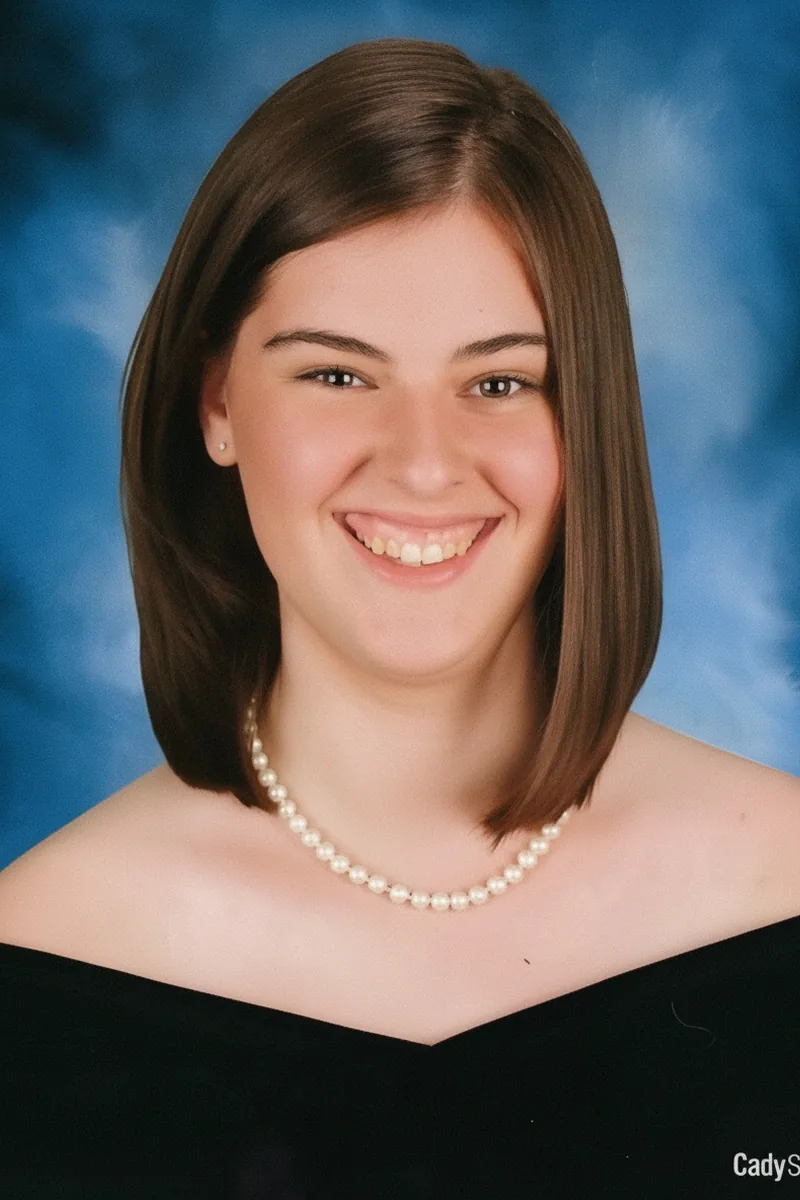
Dual-majoring in mathematics and psychology at UGA — with awards for her math coursework — Hailey knows pre-calculus from the inside, not as a distant memory. She's especially sharp on the transition points where students stall: building intuition for how polynomial end behavior works, why composite functions chain the way they do, and what's actually happening when a graph undergoes a sequence of transformations. Her 1570 SAT and 5.0 rating back that up.
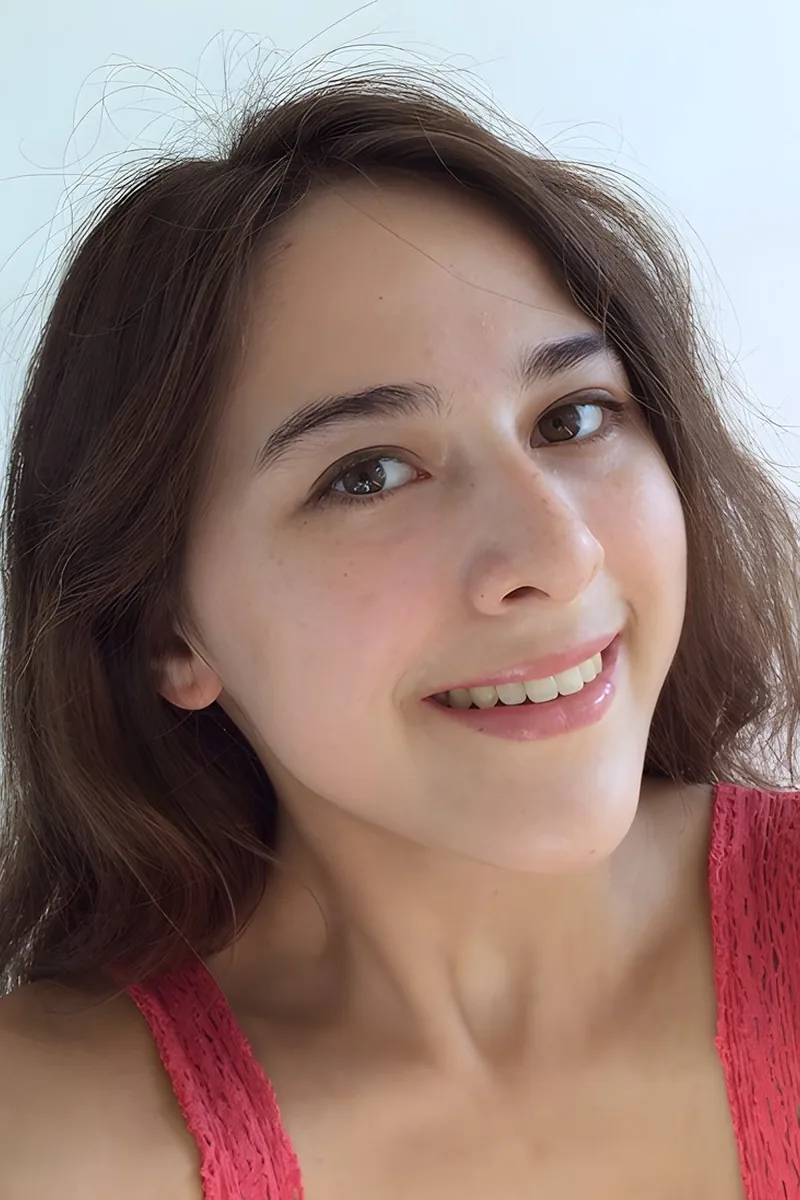
The jump from algebra to calculus is where most students lose their footing, and pre-calculus is the bridge that either holds or collapses. Alexandra tackles the trickiest parts — limits intuition, polar coordinates, parametric equations, and the behavior of rational functions — by connecting each one to the physical systems she models in her astrophysics research.
Prosthetics design at Georgia Tech puts Michael in constant contact with the biomechanical math that pre-calculus is really building toward — sinusoidal gait models, parametric curves describing joint motion, and the trigonometric relationships that govern how forces transfer through an artificial limb. He teaches topics like function transformations and trig identities by connecting them to the physical systems he's engineering, which turns abstract graph behavior into something students can visualize. His 34 ACT reflects the quantitative instincts behind that applied approach.
Chemical and biomolecular engineering at Georgia Tech meant Matthew spent four years where pre-calculus wasn't a class — it was the toolkit. Rational functions modeled reaction rates, trigonometric identities simplified wave equations, and logarithmic scaling made sense of kinetic data long before any textbook told him to memorize them. That applied instinct, backed by a 34 ACT and a 5.0 rating, lets him teach the "why" behind each topic in a way that sticks.
Biochemistry lab work at UGA means Aditya regularly encounters the exponential and logarithmic relationships that pre-calculus students are seeing for the first time — reaction rate curves, concentration decay, dose-response models all depend on fluency with function families and their transformations. He zeros in on the moment where algebra ends and functional reasoning begins, walking through how to read and manipulate graphs rather than just solve for x. His 1580 SAT confirms the mathematical precision behind that approach.
The jump to pre-calculus is where many students first encounter the idea that a single function can be transformed, composed, and inverted — and that's before limits even enter the picture. Adel breaks down topics like trigonometric identities and sequences so that each concept builds logically toward calculus readiness rather than feeling like an isolated formula to memorize.
Nuclear engineering at Tech means Corey spent his undergrad immersed in the differential equations and wave mechanics that pre-calculus is quietly building toward — so when he teaches topics like sinusoidal modeling or exponential decay, he knows exactly where each concept lands in the bigger picture. His current Medical Physics master's work keeps him actively using polar coordinates, complex number operations, and function transformations in contexts like radiation dosimetry and imaging physics. That ongoing fluency lets him show students the structural logic connecting pre-calc topics instead of presenting them as isolated chapters to survive.
After an 11-year hiatus, I am excited to return to one-on-one tutoring in high school and college-level precalculus, calculus, and physics. My goal is to build students' confidence in subjects that often feel overwhelming by identifying the root of their challenges - whether it's a forgotten foundational skill or a mismatch in teaching and learning styles - and helping them work through those roadblocks with clarity and patience. I discovered my passion for tutoring in high school through volunteer mentoring and later assisted classmates in physics at my teacher's request. Since then, I have supported students in courses ranging from geometry to upper-level calculus. I am currently tutoring while pursuing my next full-time opportunity, most recently having worked for a railroad construction products supplier.
The jump from Algebra 2 to Pre-Calculus trips students up when trigonometric identities, polar coordinates, and limit intuition all arrive at once. Darien tackles each concept by building from what students already know about functions and graphs, extending familiar ideas into new territory rather than treating every topic as brand new. His 5.0 rating speaks to how well that approach lands.
An aerospace engineering degree followed by a mechanical engineering master's means Cole has spent years relying on the pre-calculus toolkit — parametric equations for trajectory modeling, trigonometric functions for force resolution, conic sections for orbital mechanics — long before teaching it. He tackles the course by reverse-engineering each topic from the engineering problems where it actually matters, which turns abstract curve-sketching and identity work into something students can visualize. Holds a 5.0 rating.
Having been a math major at Boston College before switching to computer science, Alexander spent semesters deep in the function analysis, trigonometric reasoning, and limit-adjacent thinking that define pre-calculus — it's the territory where his two fields overlap most. He tackles topics like rational functions and composite transformations by emphasizing the algebraic intuition students already have, then stretching it toward calculus-ready thinking. Rated 5.0 by students.
Fifteen years of teaching math from sixth grade through college means Taha has watched hundreds of students hit the same pre-calculus stumbling blocks — the shift from manipulating expressions to reasoning about function behavior, or the moment trigonometric identities stop feeling like isolated formulas and start connecting. He zeroes in on bridging that gap between algebra comfort and calculus readiness, particularly around graphing transformations and building intuition for how functions behave before students ever see a limit. His physics background adds another layer, letting him ground abstract topics like vectors and parametric equations in problems that move and make sense.
Nuclear engineering at Georgia Tech means Corey solves differential equations daily — but he remembers exactly where those skills started, in the pre-calculus concepts like limits of sequences, trigonometric manipulation, and the behavior of rational and exponential functions. He teaches the course as a bridge, making sure each topic is locked in tight enough to hold weight when calculus arrives. His 33 ACT and 4.9 rating reflect a tutor who's both sharp and easy to learn from.
The jump to pre-calculus is really a jump in abstraction: trigonometric identities, polar coordinates, and limits all require students to think about functions as objects rather than formulas to plug into. Tahmeed breaks these ideas down by connecting each new concept back to the algebra and geometry students already know. His math degree from Emory gives him the depth to explain not just how to manipulate a rational function, but what it actually represents.
I have tutored and/or taught mathematics since 2009. I have received graduate degrees in mathematics from Clark Atlanta University and the University of Florida. I am very patient with my students and strive to develop their skills, strategies and critical thinking.
A chemistry and political science double major at Williams College, Matthew spent his undergraduate years toggling between quantitative problem-solving and analytical writing — a combination that sharpens the kind of careful, step-by-step reasoning pre-calculus demands. He's particularly strong on the algebraic scaffolding underneath topics like rational expressions and polynomial end behavior, catching the foundational gaps that quietly derail students once limits and derivatives enter the picture. Holds a 5.0 rating.
Hello, I am an 19 year old senior at Kennesaw State University and I'm studying for a degree in Software Engineering. I am also minoring in mathematics. I love learning and helping people find new ways to think about things to strengthen their understanding. I specialize in mathematics and computer science fields because these fields remind me of puzzles. Being given a set of ground rules and then instructed to get from point A to point B within the confines is the definition of a puzzle. Viewing these topics in this way is a great way to give people a different perspective on the concepts they're learning. That is the kind of help I want to provide.
The jump to Pre-Calculus catches students off guard because it asks them to think about functions — logarithmic, trigonometric, polynomial — as objects with behavior, not just equations to solve. Kaustubh unpacks why these functions work the way they do, connecting transformations and identities back to patterns students already recognize. That conceptual grounding is what makes the transition into calculus feel manageable instead of overwhelming.
Chemical engineering coursework drills the exact pre-calculus toolkit — rational functions for reaction rate modeling, trigonometric relationships for heat transfer cycles, logarithmic scaling for pH and concentration curves — until it becomes second nature. Kellie draws on that applied fluency to teach function behavior and transformations as interconnected ideas rather than isolated chapters. Her 34 ACT confirms the quantitative rigor she brings to every session.
Aerospace engineering at Georgia Tech means Christopher solves problems daily that hinge on the trigonometric relationships, vector operations, and function transformations that pre-calculus introduces — orbital mechanics alone demands fluency with polar coordinates and parametric equations. He teaches these topics by connecting them to the physical systems where they actually matter, turning abstract curve sketching and identity work into something students can visualize. Rated 5.0 by students.
Chemical engineering at Georgia Tech means Brittany hits pre-calculus concepts like trigonometric identities, composite functions, and rate-of-change intuition every semester — they're baked into reactor design and thermodynamic modeling before calculus even enters the picture. She zeroes in on the algebraic structure underneath each topic, walking through how to decompose a complex expression or sketch a transformation so the reasoning sticks rather than the shortcut. That engineering context lets her show students exactly where each skill is headed and why it's worth mastering now.
A chemistry degree trains you to think in functions — reaction rates follow exponential decay, pH operates on a logarithmic scale, and orbital geometry is pure trigonometry. Aaron brings that scientific fluency to pre-calculus, connecting abstract function families to the quantitative reasoning he built through years of lab work and problem sets. He's especially sharp at bridging the gap between algebraic mechanics and the conceptual leaps that trip students up before calculus.
Hello! My name is Neha, and I'm a data scientist currently in my gap year before starting medical school this coming summer. I earned both my Bachelor of Science in Computer Science with a focus in Intelligence and Modeling & Simulation and my Master of Science in Bioinformatics from the Georgia Institute of Technology. I'm passionate about helping students of all ages break down challenging topics and develop effective study strategies. I specialize in tutoring college and high school level Biology, Chemistry, and Computer Science, drawing on both my technical and scientific background to make complex material approachable and engaging. My teaching philosophy centers on creating a supportive, interactive environment where students feel confident asking questions and exploring ideas. I adapt my approach to each student's unique learning style and interests, with the goal of building understanding, confidence, and long-term curiosity. Watching my students grow and succeed academically is the most rewarding part of what I do.
Testimonials
Because the right Pre-Calculus tutor makes all the difference.
Average Session Rating – Based on 3.4M Learner Ratings
Practice Pre-Calculus
Free practice tests, flashcards, and AI tutoring for Pre-Calculus
Nearby Pre-Calculus Tutors
Other Atlanta Tutors
Related Math Tutors in Atlanta
Frequently Asked Questions
Pre-Calculus shifts from solving equations to understanding functions deeply. While Algebra 2 focuses on "how do I solve this," Pre-Calculus asks "why does this function behave this way?" You'll move from procedural steps to conceptual understanding—analyzing graphs, identifying patterns, and connecting multiple representations of the same concept. This transition can feel challenging, but it's also where many students develop real mathematical thinking. Personalized tutoring helps bridge this gap by building confidence in both the mechanics and the reasoning behind them.
Students for students in Atlanta commonly struggle with trigonometry (especially unit circle concepts and trig identities), transformations of functions, and problems requiring multiple steps across different topics. Word problems that involve setting up equations from real-world scenarios also trip up many students—not because the math is hard, but because translating English to mathematical notation takes practice. Expert tutors focus on helping you see why trigonometric identities work rather than memorizing them, and they break multi-step problems into manageable pieces so you understand each stage.
Graphing mastery comes from seeing the connection between an equation and its visual representation. Rather than plotting points mechanically, tutors help you predict how changing a parameter (like the amplitude in a sine function) shifts or stretches the graph. The key is practice with intentional feedback—sketching a graph, explaining your reasoning, and immediately seeing where your prediction matched or missed. Personalized instruction lets you work at your own pace on the specific transformations giving you trouble, whether that's reflections, vertical stretches, or phase shifts in trigonometric functions.
Word problems are hard because they require three skills at once: understanding the English, translating it to math, and then solving the equation. Many students skip the translation step and jump straight to solving, which leads to wrong answers even when their algebra is perfect. Tutors help by teaching you to annotate word problems systematically—identifying what you know, what you're solving for, and which Pre-Calculus concept applies (exponential growth, trigonometric relationships, etc.). Once you build that translation skill with guided practice, word problems become much less intimidating.
Yes. Atlanta's 19 school districts use different textbooks and pacing guides, and tutors connected through Varsity Tutors adapt to your specific materials. Whether your school uses Stewart, Larson, or another popular Pre-Calculus series, a tutor can work directly from your assignments, notes, and exams. They'll also help if your class uses a non-traditional approach (like integrated math) or if you need to catch up on prerequisites. The personalized approach means the tutoring matches your exact curriculum, not a generic outline.
Pre-Calculus is where many students hit a confidence wall—the math feels more abstract and harder to "see." Personalized tutoring builds confidence by showing you that struggle is normal and that you can understand this material with the right explanation. Tutors break down intimidating topics (like proofs or complex trigonometric identities) into smaller pieces, celebrate progress, and help you recognize patterns you've already mastered. Working one-on-one means there's no embarrassment in asking questions repeatedly until concepts click, and that safe space transforms anxiety into curiosity.
Pre-Calculus exam prep involves mastering both procedures and conceptual understanding—tutors help you do both through practice testing, error analysis, and targeted review of weak spots. For SAT preparation, Pre-Calculus covers much of the advanced math tested (quadratic functions, exponentials, trigonometry in word problems), so strong Pre-Calculus skills directly boost your SAT math score. Tutors create a study plan focused on your specific gaps, teach test-taking strategies for multi-step problems, and use spaced repetition so concepts stay solid long-term rather than crammed the night before.
Let’s find your perfect tutor
Answer a few quick questions. We’ll recommend the right plan and match you with a top 5% tutor.