Award-Winning Geometry Tutors
serving Chicago, IL
Geometry
Tutors in Chicago
Private 1-on-1 tutoring, weekly live classes for academic support, test prep & enrichment, practice tests and diagnostics, and more to elevate grades and test scores.
Based on 3.4M Learner Ratings
UniversitiesSchools & Universities
DeliveredHours Delivered
ProficiencyGrowth in Proficiency
Who needs tutoring?
No obligation. Takes ~1 minute.
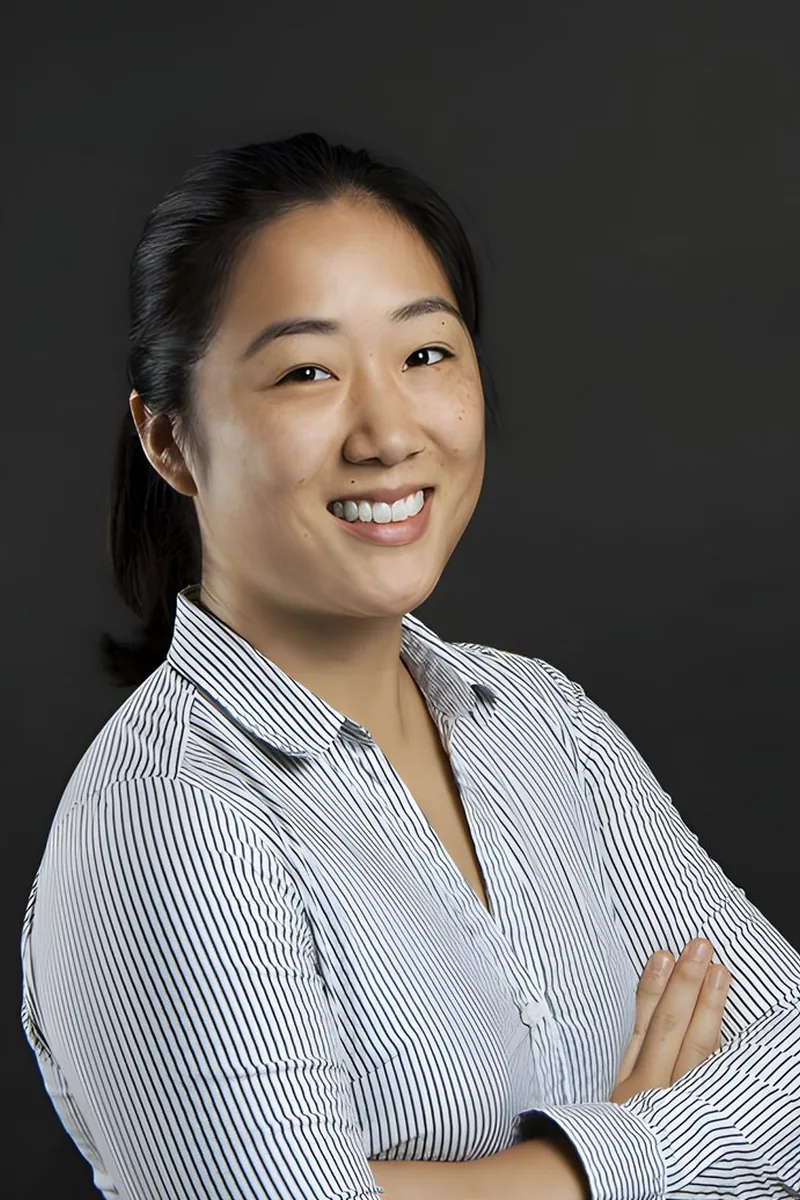
A political science degree from the University of Chicago means Asta spent four years constructing airtight arguments from premises to conclusions — exactly the skill that makes geometric proofs click. She applies that structured reasoning to two-column proofs and logical chains involving congruence, triangle properties, and circle theorems, treating each one like a case to be built rather than a formula to memorize. Rated 5.0 by students.
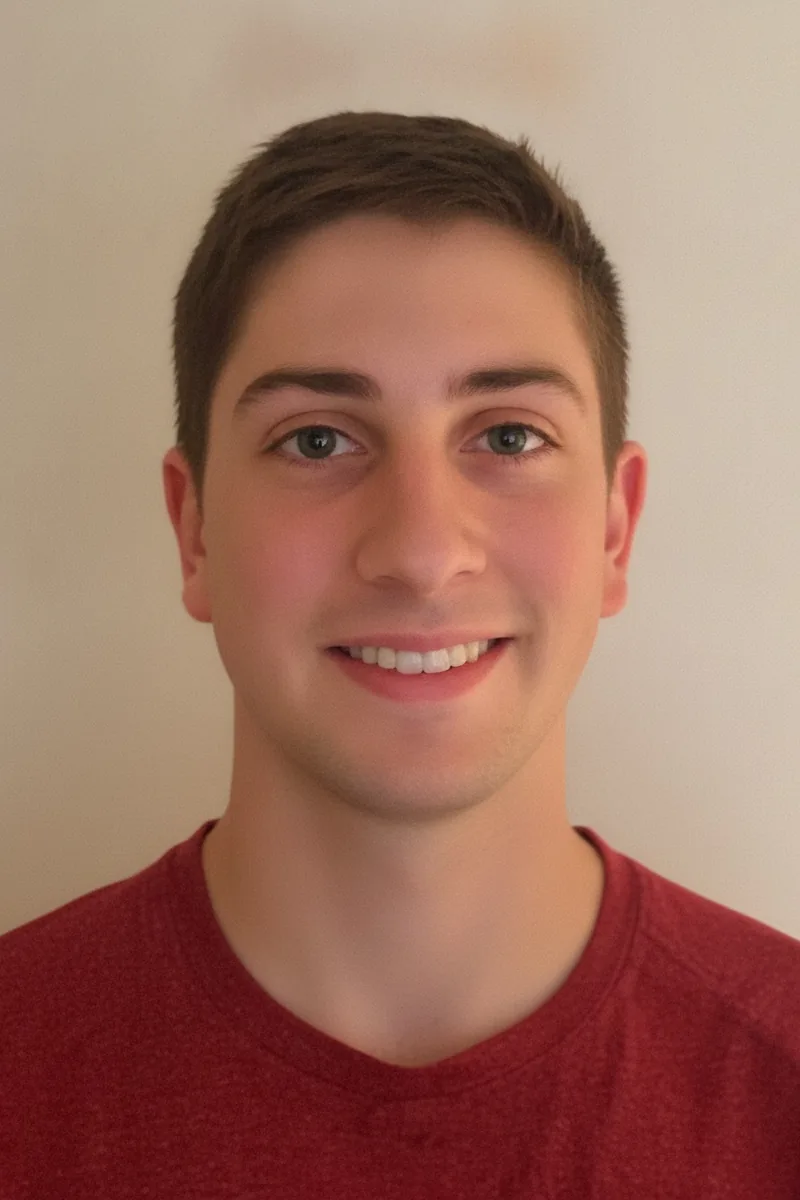
Proofs are usually the part of geometry that makes students want to quit, but they're also the part that teaches the most transferable thinking skills. Benjamin approaches geometric proofs as structured arguments — each statement needs evidence, each step needs justification — which clicks especially well for students who think verbally. His background spanning both math and writing makes him effective at bridging that gap between visual intuition and formal reasoning.
Proofs are where most geometry students panic — the logic feels nothing like the arithmetic they're used to. Pinelopi breaks two-column and paragraph proofs into small reasoning steps, treating each one like a mini-argument rather than a memorization exercise. Her Duke psychology training actually lends itself well to teaching logical structure.
Economics at UChicago is surprisingly proof-heavy — Ellie's coursework in mathematical economics requires the same kind of structured, step-by-step logical reasoning that geometry proofs demand. She applies that training to help untangle the visual-to-logical leap students struggle with, particularly when translating a diagram involving circle theorems or polygon properties into a written argument. Her 1520 SAT speaks to the broader math fluency she brings to the table.
The trickiest part of geometry for most students isn't the shapes — it's translating a word problem or diagram into a plan of attack. Zac's Human and Organizational Development training at Vanderbilt is essentially about breaking messy, real-world situations into structured steps, and he brings that same problem-decomposition instinct to topics like triangle congruence setups and multi-step angle relationship chains. Rated 4.9 by students.
Proofs tend to be the moment geometry stops feeling intuitive and starts feeling impossible. Elizabeth tackles that head-on by teaching students how to build logical arguments step by step, linking angle relationships and triangle congruence back to reasoning skills they already have from everyday life.
Proofs are where most Geometry students stall — the jump from computation to logical argumentation catches people off guard. Jhonatan teaches proof-writing as a skill in structured reasoning, walking through how to identify given information, select the right theorem, and build an argument step by step. His 5.0 rating speaks to how clearly he makes that transition.
Proof-based reasoning is where most geometry students hit a wall — suddenly math requires logical arguments, not just calculations. Gabriel's University of Chicago training in both formal logic (through his Fundamentals program) and mathematical modeling gives him a sharp lens for teaching students how to construct proofs and reason spatially about congruence, similarity, and transformations.
Proofs are where most geometry students stall — not because the logic is hard, but because nobody taught them how to organize it. Dylan's statistics training at the University of Chicago sharpened his ability to build structured arguments, and he applies that same logical rigor to angle relationships, congruence proofs, and coordinate geometry problems.
Proofs are usually the make-or-break topic in Geometry — students who can set up a logical chain of reasoning thrive, while those who can't often struggle silently. Richard's scientific research at Northwestern revolves around constructing rigorous arguments from evidence, and he applies that same logical scaffolding to angle relationships, congruence, and similarity proofs. He's rated 5.0 by students.
Theatre training at Northwestern taught Jack to think about blocking, sightlines, and stage design — all of which are fundamentally spatial problems involving angles, distances, and proportions. He brings that concrete, visual instinct to geometry topics like transformations and symmetry, making abstract theorems feel more like staging a scene than memorizing rules. Rated 5.0 by students.
Proof writing is often the first time a math student has to construct a logical argument rather than compute an answer, and it's where many geometry students struggle most. Alan teaches two-column and paragraph proofs by treating them as storytelling — each statement follows from the last, building toward a conclusion the reader can't dispute. His master's in education and special education experience give him a sharp eye for where a student's reasoning breaks down.
Proofs are usually where geometry students start to panic, because suddenly math requires structured written arguments instead of just calculations. Nicki approaches proof-writing as a form of logical storytelling — identifying given information, building toward a conclusion, and learning to justify each step with the right theorem or postulate.
Studying architecture at Harvard meant Isabel spent years analyzing how shapes, angles, and proportions create physical structures — which is essentially geometry with higher stakes. She teaches proofs, similarity, and transformations by grounding them in the visual and spatial reasoning that makes the subject intuitive. Students who think they're "not geometry people" often discover they just needed someone who could make the diagrams mean something.
Proofs are usually where geometry students panic, but Seong approaches them as logical arguments rather than mysterious rituals. She teaches students to read a diagram the way a scientist reads data — extracting what's given, identifying what's missing, and building a case step by step. Her analytical training in neuroscience at Northwestern reinforces that same structured reasoning.
With an accounting degree and years teaching math across the full spectrum from pre-algebra through calculus, Sam knows that geometry is often where students first encounter the demand to explain *why* something is true — not just compute an answer. He tackles that transition by connecting geometric reasoning back to the algebraic thinking students already have, especially when setting up equations from diagrams involving angle relationships or proportional sides. It's a practical, no-nonsense approach that builds real fluency with proofs and problem-solving alike.
Non-Euclidean geometry doesn't appear on most tutors' subject lists — but Felix studies it alongside standard Euclidean geometry, which means he understands *why* the postulates and theorems in a typical geometry course work the way they do, not just how to apply them. That deeper mathematical perspective, built on a BS in Mathematics, makes him especially effective at teaching proof structure and the logical reasoning behind congruence and similarity. Rated 5.0 by students.
Proofs are where most geometry students lose confidence — the jump from calculating angles to constructing logical arguments feels like a different subject entirely. Oliver's industrial engineering background at Northwestern means he thinks in spatial relationships and structured reasoning daily, and he breaks down two-column and paragraph proofs into steps that actually make sense.
Public policy and psychology at the University of Chicago both demand building arguments from evidence — a skill Brandon applies directly to geometric proofs, where each statement needs a clear justification rooted in definitions, postulates, or prior results. He unpacks the logic behind two-column and paragraph proofs so students see them as persuasive arguments rather than mysterious rituals. His broader math range, from pre-algebra through calculus, means he can quickly spot and patch the foundational gaps that make geometry frustrating.
Proofs are usually the first place geometry students feel lost, because suddenly math asks them to argue logically instead of just calculate. Mercy's dual focus on computer science and neuroscience at MIT sharpened her ability to construct and explain step-by-step logical arguments, which translates directly to walking through triangle congruence proofs, parallel line theorems, and circle properties.
Proofs are where most geometry students panic, but they're really just logical arguments built one step at a time. As a neuroscience major at the University of Chicago, Gabriela is trained in constructing precise, evidence-based reasoning — the same skill she teaches when walking through triangle congruence proofs or angle relationship chains.
Mark's bioengineering grad work regularly involves modeling physical structures — tissue geometries, device dimensions, fluid flow through shaped channels — so reasoning about angles, areas, and spatial relationships is baked into his daily problem-solving. He tackles geometry by connecting each theorem to something tangible, making topics like circle properties and triangle congruence feel less abstract and more like tools with a clear purpose.
Proofs are where most geometry students panic, but they're really just structured arguments — and Ali, with a theatre and liberal arts background, knows how to teach logical storytelling. He walks students through angle relationships, triangle congruence, and circle theorems by emphasizing the reasoning chain that connects each statement to the next.
My passion for tutoring stems from my experience as a TA, where I discovered that effective teaching goes beyond just delivering content; it's about building relationships and instilling confidence in students. With over two years of tutoring experience in math and computer science, I focus on fostering an interactive learning environment where students actively engage with the material. I believe in the power of practice over passive learning, guiding students to identify their challenges and develop effective study habits. As a National Merit Scholar, I've honed my own test-taking strategies, which I enjoy sharing for SAT prep as well. I'm excited to support you on your academic journey!
A PhD in chemistry means Taryn has spent years thinking in three-dimensional molecular structures — tetrahedral bond angles, planar ring systems, orbital geometries — which gives her an unusually intuitive feel for spatial reasoning and shape properties. She brings that structural instinct to geometry, especially when tackling problems involving angle relationships in polygons and the logic behind why geometric rules hold, not just how to apply them. Her teaching style leans heavily on word problems that ground abstract theorems in something concrete.
Proofs are where Geometry stops feeling like math class and starts feeling like logic class — and that transition trips up a lot of students. Lee approaches geometric reasoning the way an engineer would: systematically, with clear diagrams and step-by-step justification for every claim about congruence, similarity, or angle relationships.
Proofs are usually the first place geometry students panic — the logic feels completely different from anything they've done in math before. Sofia approaches them as structured arguments, teaching students to identify given information, spot congruence relationships, and build each step logically. Her training in scientific reasoning at UChicago translates directly into the kind of deductive thinking geometry demands.
A psychology major might seem like an unlikely geometry tutor, but Rebecca's Northwestern training in research design and logical reasoning maps directly onto proof-based thinking — structuring an argument about congruent triangles isn't so different from building a case from experimental evidence. She's especially effective at teaching students how to read a diagram and identify which definitions, postulates, or theorems apply before writing a single line of proof. Rated 4.9 by students.
Proofs are usually the first place geometry students feel lost, because suddenly math asks them to argue rather than calculate. Thomas approaches each proof as a puzzle — identifying what's given, what's needed, and which theorem bridges the gap — turning an intimidating format into a repeatable process. His physics training at Notre Dame gave him years of practice translating spatial reasoning into logical steps.
Proofs are usually the first place Geometry students feel lost — suddenly math requires structured logical arguments instead of computation. Brea's approach breaks proof-writing into a repeatable process, teaching students to identify given information, choose the right postulates, and build each step deliberately. Her math education background means she's seen every common misconception around congruence, similarity, and parallel-line reasoning.
Proofs are usually the first place Geometry students feel lost, because suddenly math requires constructing a logical argument instead of just computing an answer. Hannah walks through each proof as a chain of reasoning, teaching students to identify what they know, what they need, and which theorem bridges the gap. Her experience with diverse learners means she has multiple ways to explain the same concept when the first approach doesn't click.
Proofs are usually the first time a math student has to build a logical argument from scratch, and that shift trips up even strong students. James approaches geometry proofs as storytelling — each statement follows from the last, and he teaches students to see the narrative thread connecting given information to the conclusion. He also covers coordinate geometry and circle theorems with the same emphasis on reasoning over memorization.
Proofs are where most geometry students stall — not because the logic is too hard, but because nobody showed them how to organize their reasoning step by step. Steve breaks two-column and paragraph proofs into a decision-making process, teaching students to identify which postulate or theorem applies before they start writing. His 5.0 rating speaks to how well that structured approach lands.
An environmental science degree from UChicago means Ignacio spent years working with topographic maps, land surveys, and spatial data — all of which rely on the same angle relationships, area calculations, and coordinate reasoning that geometry students encounter daily. He approaches the subject practically, connecting abstract theorems about triangles and polygons to real measurement problems so the logic behind each step feels grounded rather than arbitrary.
Proofs are usually the first place geometry students feel lost, because suddenly math requires structured written arguments instead of just calculations. Martina teaches students to build those logical chains step by step — connecting postulates to theorems in a way that makes triangle congruence and parallel-line reasoning click rather than feel arbitrary.
Proofs are where most geometry students freeze, unsure how to chain together postulates and theorems into a logical argument. Kishore walks through each proof as a storytelling exercise — every statement needs a reason, and the conclusion should feel inevitable by the end. That structured thinking mirrors the engineering design process he uses daily at UIC.
Proofs are usually the first place geometry students feel lost, because the subject suddenly asks them to justify every claim in a logical chain. Victor approaches proof-writing as a structured argument, drawing on the same analytical thinking his economics training required. He walks through each theorem until students can construct their own reasoning from scratch.
Teaching geometry in urban classrooms — where you can't assume every student walked in with the same algebra background — forced Bryson to develop clear, scaffolded explanations for everything from triangle congruence to circle properties. His Master's in Urban Education means he knows how to diagnose exactly where a student's reasoning breaks down in a multi-step proof and rebuild it on the spot. Rated 5.0 by students.
Proofs are usually where Geometry students start to panic — the logic feels nothing like the arithmetic they're used to. Christine approaches them as structured arguments, teaching students to identify what's given, what's needed, and which theorems bridge the gap, whether they're working with congruent triangles or parallel line relationships.
A physics degree from MIT means Elise spent years working with vectors, symmetry, and spatial relationships in contexts where getting the geometry wrong meant getting the physics wrong. She brings that precision to teaching everything from circle theorems to triangle congruence, breaking down why each geometric relationship holds rather than just how to apply it. Her linguistics background also gives her an unusual knack for unpacking the language-heavy logic of formal proofs.
Testimonials
Because the right Geometry tutor makes all the difference.
Average Session Rating – Based on 3.4M Learner Ratings
Practice Geometry
Free practice tests, flashcards, and AI tutoring for Geometry
Nearby Geometry Tutors
Other Chicago Tutors
Related Math Tutors in Chicago
Frequently Asked Questions
Geometry proofs require a shift from memorizing formulas to understanding logical reasoning—and that's where many students hit a wall. A tutor can break down the proof-writing process into manageable steps, helping your student see how each statement connects to the next and why certain theorems matter. Rather than just checking if an answer is right, tutoring focuses on building that logical thinking skill, which carries over to other math courses and problem-solving in general.
Word problems require translating real-world situations into geometric diagrams and equations—a skill that many students find intimidating. Tutors work with students to develop a step-by-step strategy: identifying what's given, sketching the problem, deciding which theorems apply, and then solving. By practicing this approach repeatedly with feedback, students build confidence and can tackle unfamiliar problems independently.
Yes. Chicago's 12 school districts and 882 schools use different textbooks and pacing schedules—some emphasize coordinate geometry early, others focus on proofs first. When you connect with a tutor through Varsity Tutors, they'll align instruction with your student's specific curriculum, textbook, and teacher's approach, ensuring that tutoring reinforces what's happening in class rather than creating confusion.
Math anxiety is common, especially in geometry where the visual and logical demands feel different from algebra. Tutoring works because it's personalized—a tutor meets your student at their level, celebrates small wins, and builds confidence gradually. Working through geometry problems one-on-one, with immediate feedback and encouragement, helps students see that they can understand these concepts. Over time, the anxiety often decreases as competence grows.
Geometry is full of patterns—angle relationships, similarity, symmetry, and how shapes relate to each other. A tutor helps students move beyond memorizing isolated facts to seeing these connections. For example, a student might discover why the angles in a triangle always add to 180 degrees, or how transformations preserve certain properties. When students understand the 'why,' geometry shifts from feeling like a random collection of rules to a coherent system, making it easier to retain and apply concepts.
Coordinate geometry bridges algebra and geometry, and students often struggle when those skills aren't solid. Tutors diagnose whether the issue is plotting points, understanding slope, writing equations of lines, or visualizing transformations on a coordinate plane. From there, they rebuild foundational skills while connecting them to the geometric concepts your student is learning. This targeted approach prevents frustration and helps students see how the coordinate plane is a tool for solving geometric problems.
Varsity Tutors connects Chicago students with expert tutors who specialize in geometry. When you reach out, you'll be matched with someone who understands your student's learning style, specific challenges, and school's curriculum. The process is straightforward—no long contracts or rigid scheduling. You'll work with a tutor who fits your family's needs and helps your student build real understanding, not just answers to homework.
Let’s find your perfect tutor
Answer a few quick questions. We’ll recommend the right plan and match you with a top 5% tutor.