Award-Winning AP Statistics Tutors
serving Chicago, IL
AP Statistics
Tutors in Chicago
Private 1-on-1 tutoring, weekly live classes for academic support, test prep & enrichment, practice tests and diagnostics, and more to elevate grades and test scores.
Based on 3.4M Learner Ratings
UniversitiesSchools & Universities
DeliveredHours Delivered
ProficiencyGrowth in Proficiency
Who needs tutoring?
No obligation. Takes ~1 minute.
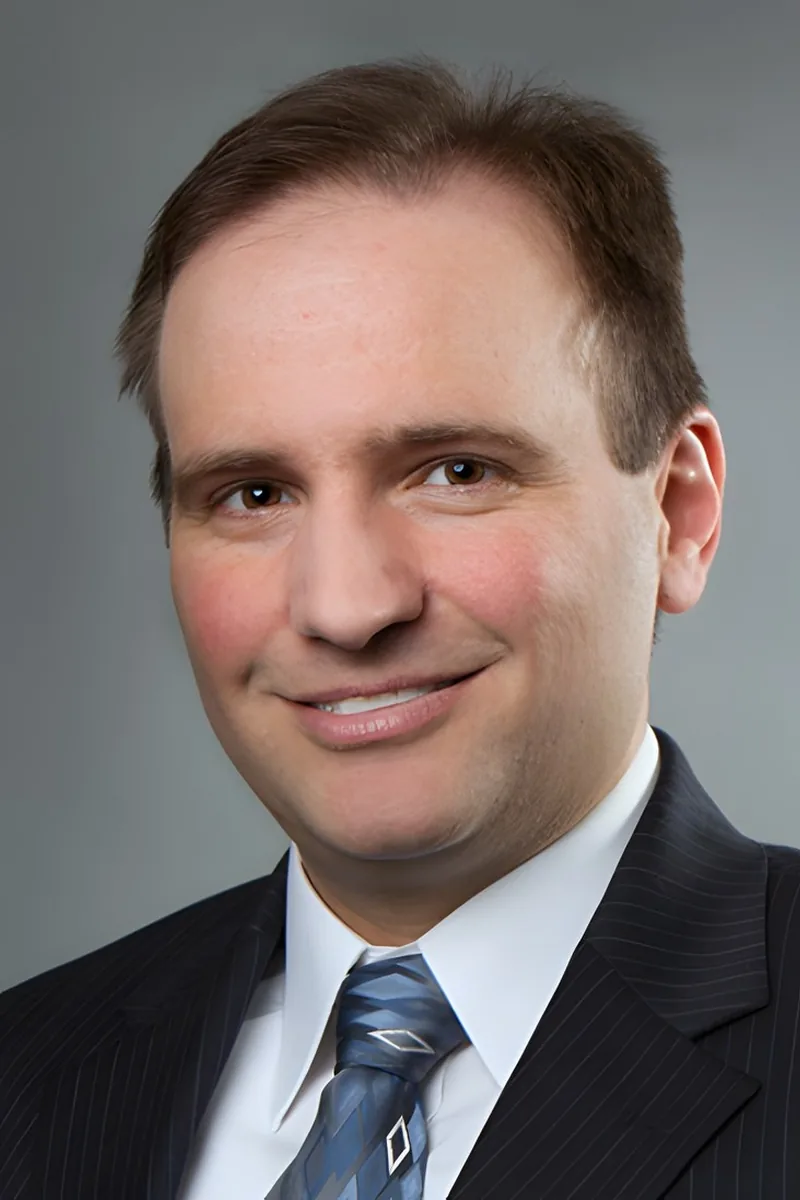
A physics PhD requires living inside probability distributions, error analysis, and hypothesis testing — Jonathan has spent years determining whether experimental results are statistically significant or just noise, which is the exact reasoning AP Stats builds its entire free-response section around. He unpacks the logic behind confidence intervals and chi-square tests by grounding them in real data scenarios, making the interpretive leaps feel intuitive rather than formulaic. Rated 5.0 by students.

I am a graduate of Cornell University's College of Arts and Sciences. I received my Bachelor of Arts in Chemistry with Distinction in 2015. Since graduation, I was a physics/chemistry teacher and soccer coach at a private school in Virginia for a year, where I led the soccer team to an undefeated season. Before teaching and coaching professionally, I was a Teaching Assistant for the Cornell Math and Physics Departments, where I taught many subjects including calculus, mechanics, electromagnetism. Throughout my time at Cornell and as a teacher, I tutored subjects ranging from the SAT to AP Physics and Algebra II, which is where my true talents lie: in small group or one-on-one settings where I can give students the full attention they deserve and tailor my approach specifically to their learning styles. This is why I am now pursuing tutoring as a part-time occupation at Varsity Tutors. I embrace teaching all math and science subjects, especially physics and calculus, at both the college and high school level and will go above and beyond to make sure all of my students succeed, according to their definition of success. In my spare time, I enjoy playing league soccer, basketball, tennis and guitar, and also like to travel and see as much of the world as I can.
The AP Statistics exam rewards students who can interpret context, not just compute — explaining what a confidence interval actually means, or why a particular experimental design introduces bias. Irene breaks down inference logic, probability distributions, and regression analysis in ways that prepare students for the free-response questions where conceptual clarity matters most. Her Ph.D.-level statistical training gives her the depth to answer the 'but why?' questions that come up during exam prep.
I am a Molecular Engineering major at the University of Chicago, I am currently taking time off to focus on other aspects of my career but I don't want to stop tutoring outside college campus!. I am a child of immigrants and have spent my life tutoring my siblings and younger students, and I loved working with them! See y'all in class!
Neuroscience and psychology research both demand fluency in experimental design and data interpretation — Sareen has analyzed behavioral data sets and evaluated study methodologies throughout her undergraduate work at Pitt, which maps directly onto AP Stats units covering inference, study design, and probability. She zeros in on the conceptual traps in questions about confounding variables and the conditions for applying specific tests, areas where her science training gives her an edge over purely math-focused approaches. Rated 5.0 by students.
Studying economics at Oberlin meant Ben was constantly working with datasets — running regressions, interpreting significance levels, and deciding whether correlations in economic data held up under scrutiny. That background maps directly onto the AP Stats curriculum, especially the units on inference and regression where students need to move beyond calculator output and explain in context what their results actually mean. Rated 4.9 by students.
Most AP Stats students come in expecting another math class and get blindsided by how much the exam rewards written explanation over calculation — Benjamin's finance and economics training at Notre Dame, where he constantly interpreted data to support business decisions, built exactly that skill set. He teaches students his own shortcuts for quickly reading output tables and translating statistical results into the precise, context-specific language that earns full marks on free-response inference questions. Rated 5.0 by students.
Studying statistics at Northwestern means Jake isn't just learning the concepts AP Stats covers — he's using them daily in upper-division coursework involving real data analysis, probability models, and inference procedures. That ongoing immersion makes him sharp on the details students tend to blur, like the difference between a parameter and a statistic or why checking conditions before running a test isn't optional. Rated 5.0 by students.
As a statistics major at Carleton College, Aya doesn't just teach AP Stats formulas — she uses them daily in her own coursework. She breaks down tricky concepts like inference for regression slopes, chi-square tests, and experimental design by connecting each one to real data scenarios that make the logic behind the math click.
Most AP Stats students come in expecting another formula-driven math class, then hit a wall when the exam asks them to explain *why* a normal model applies or *what* a 95% confidence level actually means in context. Miriam, a WashU student who tutors across the full math spectrum from pre-algebra through multivariable calculus, uses that range to pinpoint exactly where a student's mathematical instincts need to shift — trading the hunt for a single right number for the messier work of describing variability and defending conclusions in plain language. She's especially sharp at coaching students through the interpretive writing that separates 3s from 5s on the exam.
Unlock your academic potential with a tutor who bridges the gap between elite performance and foundational mastery. As a National AP Scholar with advanced coursework in Multivariable Calculus and Data Structures, I bring high-level expertise to your studies. Whether you are tackling complex algorithms or advanced math, I provide the precise guidance you need to excel. My experience at Kumon and Mathnasium taught me that even the most complex goals start with strong basics. I believe in both individual learning as well learning through guided practice, so whatever your way to learn I can accomodate to help you do the very best.
As a former statistics tutor at Marquette University, Alena spent semesters breaking down hypothesis testing, confidence intervals, and chi-square analyses for fellow students in a way that made the logic behind each test click. Her biomedical sciences background means she can pull real examples from clinical research — showing why a p-value matters when you're evaluating an actual drug trial, not just a textbook problem.
Actuarial science is essentially applied statistics — Noah uses probability distributions, hypothesis testing, and regression analysis every day in his coursework at Illinois State. That constant exposure means he can teach AP Statistics concepts like confidence intervals and chi-square tests with real-world context baked in, not just formula sheets.
Industrial engineering is built on statistical process control — analyzing variability, designing experiments, and making data-driven decisions — which gives Nick a practical fluency with the exact concepts AP Stats tests on, from sampling distributions to regression and inference. He tackles the interpretive side of the exam, teaching students how to structure their reasoning on questions about experimental design and hypothesis testing so the language matches what the rubric rewards. Holds a 5.0 rating.
Cognitive science at Rice meant Adam spent semesters immersed in experimental design, hypothesis testing, and statistical inference — the exact skills AP Statistics demands. He teaches students to think through probability distributions and confidence intervals the way a researcher would, connecting each concept to the logic behind the test rather than just the formula sheet.
Studying neuroscience at Cornell with a math minor, Aneri encounters statistics constantly — analyzing behavioral data, interpreting research findings, and evaluating whether experimental results actually mean something. She digs into the normal distribution and sampling logic that underpin most AP Stats inference questions, connecting the abstract formulas to the kind of real study designs her psychology coursework requires her to critique every week.
Pure math training at the University of Chicago might seem like an odd fit for AP Stats, but Carson's coursework in probability theory and combinatorics gives him the formal backbone behind concepts like sampling distributions and expected value that most students only encounter as calculator procedures. He's especially sharp at demystifying the normal distribution and z-score logic, connecting them back to the mathematical reasoning that makes the formulas make sense rather than just appear on a formula sheet.
Neuroscience research at Duke meant Ankit was knee-deep in experimental design before he ever opened an AP Stats textbook — controlling for confounding variables, choosing between-subjects versus within-subjects designs, and deciding whether behavioral data actually supports a hypothesis. That background makes him especially sharp on the exam's experimental design and chi-square inference questions, where understanding why you structure a study a certain way matters more than memorizing formulas. Rated 4.8 by students.
Scoring a 36 ACT means Ethan knows how to break down standardized testing — and AP Statistics is really a standardized test in statistical thinking, where the free-response grading hinges on precise language about inference and experimental design. His environmental science and public policy background at the undergraduate level required constant engagement with data analysis, from interpreting regression models in climate studies to evaluating sampling methods in policy research. Rated 5.0 by students, he zeroes in on the communication side of stats that most math-oriented tutors overlook.
Most AP Stats students come in expecting another calculation-heavy math class, then hit a wall when the exam asks them to explain *why* they chose a particular test or *what* a confidence interval actually captures in context. Elena's Child Development background gives her sharp instincts for identifying exactly where that conceptual shift stalls out for each student, and her 1540 SAT confirms the quantitative chops to back it up. She breaks down the free-response writing demands — describing distributions, justifying inference choices — as a communication skill, not just a math skill.
Philosophy, Politics, and Economics at Penn is a surprisingly stats-adjacent combination — Kevin's coursework requires interpreting polling data, evaluating economic models, and dissecting whether a study's methodology actually supports its conclusions. That training in rigorous argument transfers well to the AP Stats free-response section, where earning full credit depends on explaining *why* a particular inference procedure applies, not just executing calculator steps. His 34 ACT speaks to the kind of precise, test-ready thinking that keeps answers tight under exam pressure.
Cognitive science trains you to think about how people reason under uncertainty — which is surprisingly close to what AP Stats actually tests, from interpreting conditional probabilities to explaining why a particular sampling method can skew results. Kimberly uses that background to teach the mental models behind concepts like normal distributions and inference, so the logic clicks before students ever touch a calculator. Rated 5.0 by students.
A PhD in economics at Yale means Anthony lives in regression output, probability models, and econometric inference daily — and his undergraduate physics and math training is where he first learned to think rigorously about uncertainty and distributions. He's especially sharp on the chi-square and inference units where students need to move past calculator mechanics and articulate the reasoning behind their procedure choice, which is exactly what the free-response rubric scores hardest. Rated 5.0 by students.
Most AP Stats students already know how to crunch numbers — what trips them up is the interpretive writing, like explaining in precise language what a confidence interval captures or why a study's design supports (or undermines) a causal claim. Talia scored a 36 ACT and brings sharp reading comprehension and argumentative writing skills from her political science background, which turns out to be exactly what the free-response section rewards: constructing clear, evidence-based reasoning under time pressure. Rated 5.0 by students.
Biostatistics coursework during her Master's in Biotechnology gave Rithi hands-on experience designing experiments, running statistical tests on biological data, and interpreting whether results actually mean something — which is the exact reasoning cycle AP Stats builds its curriculum around. She's especially sharp on the probability and sampling distribution units, where her neuroscience research background makes concepts like normal approximations and variability in sample means feel concrete rather than abstract. Rated 4.9 by students.
Computational mathematics at Rice means Vinson doesn't just know the formulas behind normal distributions and chi-square tests — he understands the underlying theory well enough to explain why a particular inference procedure works, not just when to use it. That mathematical depth is especially useful for the AP Stats units on sampling distributions and probability, where students with strong computational instincts often struggle to shift into the interpretive, context-driven reasoning the exam actually scores on. Rated 4.8 by students.
Testimonials
Because the right AP Statistics tutor makes all the difference.
Average Session Rating – Based on 3.4M Learner Ratings
Practice AP Statistics
Free practice tests, flashcards, and AI tutoring for AP Statistics
Nearby AP Statistics Tutors
Other Chicago Tutors
Related Math Tutors in Chicago
Frequently Asked Questions
AP Statistics focuses on four main units: exploring data through visualization and summary statistics, sampling and experimentation design, probability and random variables, and inference using confidence intervals and hypothesis testing. The course emphasizes real-world data analysis and statistical reasoning rather than heavy computation. Understanding these core concepts deeply—especially probability foundations and inference—is key to performing well on the exam.
Score improvement depends on your starting point and effort level, but students typically see meaningful gains when they work with a tutor to identify conceptual gaps and practice strategic problem-solving. The AP Statistics exam is scored 1-5, with a 3 considered passing and qualifying for college credit at most institutions. A strong tutoring plan focuses on mastering inference concepts and interpreting statistical output correctly—two areas where many students struggle.
Students often struggle with understanding when to use different statistical tests, interpreting p-values and confidence intervals correctly, and designing proper experiments versus observational studies. Many also find the free-response section challenging because it requires clear communication of statistical reasoning, not just correct calculations. Tutors help break down these conceptual hurdles and teach you to explain your thinking in the language statisticians use.
Your first session focuses on understanding your current strengths and weak areas. A tutor will likely review your recent test scores or practice problems, ask about topics that feel confusing, and assess how comfortable you are with probability foundations and hypothesis testing. From there, they'll create a personalized plan that targets your specific gaps while building confidence in areas where you're already strong.
Practice tests are essential for AP Statistics preparation because they help you get comfortable with the exam format, manage your time across multiple-choice and free-response sections, and identify exactly which concepts need more review. Taking full practice tests under timed conditions also builds test-taking stamina and helps reduce anxiety on exam day. A tutor can review your practice test results with you to pinpoint patterns in your mistakes and adjust your study strategy accordingly.
The AP Statistics exam gives you 3 hours total: 90 minutes for 40 multiple-choice questions (about 2 minutes per question) and 90 minutes for 6 free-response questions (about 13-15 minutes each). Many students benefit from working through multiple-choice questions first to build confidence, then tackling free-response questions where they can show detailed statistical reasoning. A tutor can help you practice pacing strategies and teach you to skip difficult questions strategically rather than getting stuck.
Inference—using sample data to draw conclusions about populations—is the heart of applied statistics and makes up roughly 30-40% of the AP exam. This includes confidence intervals, hypothesis testing, and understanding Type I and Type II errors. Because inference requires both computational skill and conceptual understanding, it's where many students need targeted help to move from memorizing formulas to truly grasping why and when to use each test.
Varsity Tutors connects Chicago students with experienced AP Statistics tutors who understand the curriculum deeply and know how to explain tricky concepts like hypothesis testing and experimental design clearly. When you get matched with a tutor, you can discuss your specific goals—whether that's reaching a 4 or 5, understanding inference better, or building confidence before exam day—and they'll tailor sessions to your needs. You'll work with someone who has helped other Chicago students succeed on this challenging exam.
Let’s find your perfect tutor
Answer a few quick questions. We’ll recommend the right plan and match you with a top 5% tutor.