Award-Winning ACT Reading Tutors
serving Chicago, IL
ACT Reading
Tutors in Chicago
Private 1-on-1 tutoring, weekly live classes for academic support, test prep & enrichment, practice tests and diagnostics, and more to elevate grades and test scores.
Based on 3.4M Learner Ratings
UniversitiesSchools & Universities
DeliveredHours Delivered
ProficiencyGrowth in Proficiency
Who needs tutoring?
No obligation. Takes ~1 minute.

After scoring a perfect 36 ACT composite, Anna developed a question-first approach to the Reading section — previewing what each question demands before touching the passage, so every line read serves a purpose. Her medical education background means she's used to processing dense, unfamiliar material quickly and extracting exactly what matters, a skill that translates directly to the natural science and social science passages. Rated 5.0 by students.
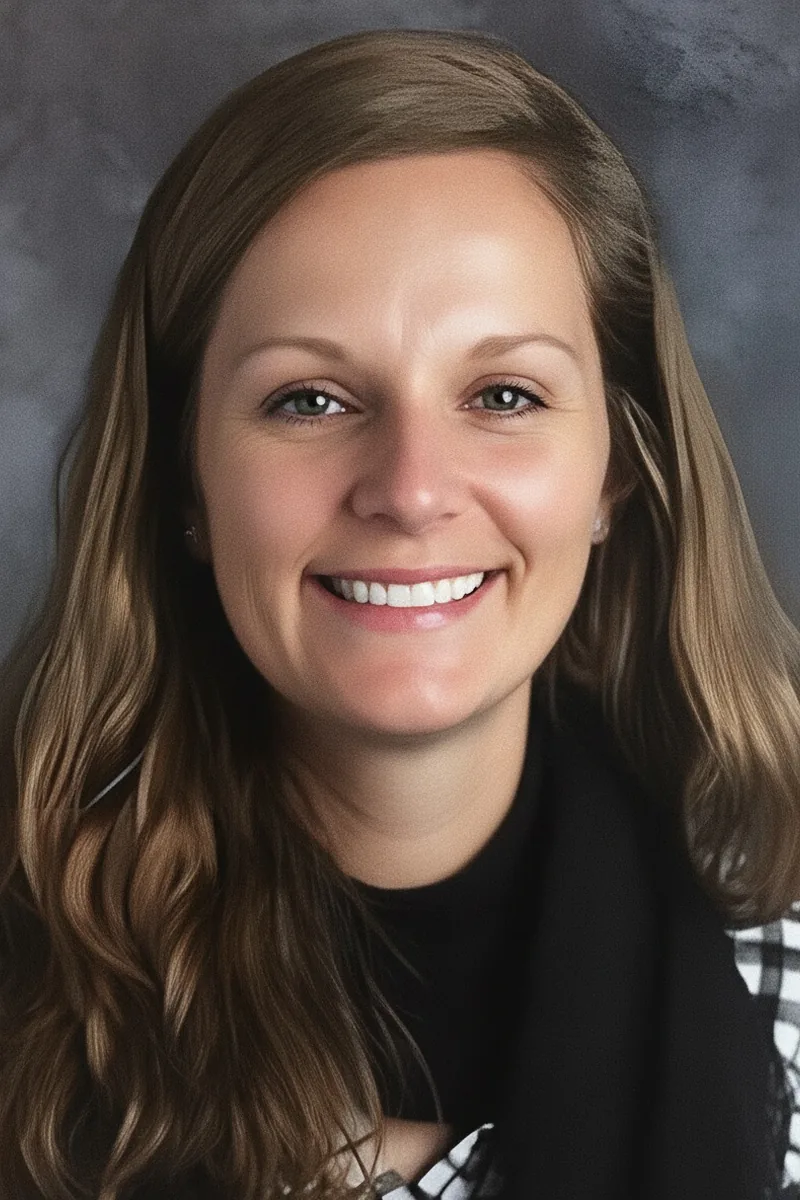
I'm Lizz, a middle school math teacher working in Chicago Public Schools. I love to see students go from describing themselves as "not a math person" to feeling like they meet exciting challenges in math and other parts of their lives. Even though I love working in the classroom, I feel like tutoring allows me to make more of an impact and connect with students.
I'm referring to math, of course, but I didn't always like the subject. Until about age 16, I thought of math as a boring, mind-numbing process of blindly memorizing formulas and then forgetting them after the test, but a series of wonderful teachers showed me the truth. I had thought that everything in math was invented arbitrarily just to torture students, but actually it all made sense in a deep way. When I caught a glimpse of what math really was, I found it irresistible and I ended up majoring in math in college at UChicago. I'm currently a Master's student in Computer Science at NYU.
Having studied political science at the University of Chicago — where the Core Curriculum demands rapid synthesis of dense, argument-heavy readings across disciplines — Asta built the exact close-reading stamina the ACT Reading section punishes students for lacking. She teaches students to identify an author's central claim and track how supporting evidence is layered through each paragraph, which turns detail and inference questions into targeted lookups rather than full re-reads. Her 35 ACT composite and 5.0 student rating speak for themselves.
Most students lose ACT Reading points not because they misunderstand passages but because they mismanage time — spending four minutes on a dense humanities passage and then rushing through natural science. Oliver teaches a passage-triage strategy built around identifying question types before rereading, which keeps pacing tight across all four passages. His own 36 composite came partly from treating Reading as a skills section, not a luck section.
The ACT Reading section isn't really about reading — it's about extracting specific evidence under a brutal time constraint. Spencer, who scored a 36 composite, teaches a systematic passage approach: how to identify what each question is actually asking, where to find the answer in the text, and when to eliminate trap choices. His sessions are built around timed practice so students develop the pacing instincts that make 40 questions in 35 minutes feel manageable.
I am an MD/PhD student at Northwestern University (PhD Chemistry). I previously received my B.S. in Chemical Science from the University of Michigan in 2020, and am continuing my education both in medicine and in organic synthesis. Although I am capable of tutoring a number of academic topics, my expertise specifically lies in organic chemistry. It is my goal to provide students a fundamental feel for and understanding of chemistry which will enable them to critically analyze problems as opposed to relying on memorization. Outside of classroom, I've both worked on and led a number of academic research, industry, and engineering projects. Additionally, I enjoy photography, going on long walks, and binging TV shows!
Most students lose points on ACT Reading not because they can't comprehend the passages but because they spend too long re-reading. Blake, who earned a 35 composite, teaches a passage-mapping technique that isolates main claims and evidence locations on the first read, turning each set of questions into a targeted retrieval exercise rather than a scavenger hunt.
The ACT Reading section isn't really testing whether you understood a passage — it's testing whether you can locate specific evidence under a four-minute-per-passage time constraint. Gabe breaks down each passage type (prose fiction, social science, humanities, natural science) and teaches annotation strategies tailored to the kind of questions each one tends to generate. His 35 composite and 5.0 rating speak to how well this approach translates to score gains.
The ACT Reading section is really a speed-and-strategy test disguised as a reading test — four passages in 35 minutes means there's no time to second-guess. Jack scored a 35 ACT composite and teaches students to identify question types quickly, locate evidence without rereading entire passages, and avoid the trap answers that sound right but misrepresent the text. Rated 5.0 by students.
Every ACT Reading passage is an exercise in disciplined attention — finding the one sentence that actually supports an answer choice instead of the three that almost do. Jacob studied close reading as a Literature major at Vanderbilt, and he applies that training directly to the test's social science, humanities, and prose fiction passages. His 35 ACT shows the approach translates to real scores.
I'm thrilled to work with anybody on any subjects of interest, reach out with any questions!
I am comfortable tutoring a variety of subjects, I am most passionate about writing and language, and I truly believe that strong writing skills are an asset in every area of life. Through my experience as an after-school program manager, I learned to build relationships and work well with students, parents, and teachers to meet student goals. In response to the pandemic, I quickly learned ways to adapt my educational youth work to a virtual setting. My social work background helps me connect with students on a personal and social-emotional level, which lays a trusting foundation for real growth and learning.
I'm a tutor from Princeton University, studying in the School of Public and International Affairs and the Creative Writing Department. I have tutored children of all ages for the past 5 years firstly through the Latin School of Chicago's Middle School Writing Center and now through Varsity Tutors. Additionally, I have served as a Teacher's Assistant for various high school English classes. As a writer myself, I bring passion to my tutoringI hope to spread an appreciation for reading and writing, and to give back what the English language has given to me. I've edited for the international Literary Magazine Polyphony Lit. and am currently a reader for the Nassau Literary Review. I keep my lessons energetic and fun while also remaining focused so that my students can make meaningful progress to help them succeed for years to come.
The ACT Reading section gives students just 35 minutes for four dense passages, so pacing strategy matters as much as comprehension. Charlie's method treats each passage like a mini-argument: identify the author's claim, locate the key evidence, and move on. With a 35 ACT composite and years of literary analysis training at UChicago, he knows exactly where the test hides its trickiest answer choices.
I am a student at the University of Chicago. I grew up on the upper east side and attended the Dalton School in Manhattan. My whole life I've enjoyed math and science but what I am really passionate about is teaching others. I've worked in all different areas from coaching to teaching, and if you want someone who will be relentlessly positive while also capable and engaged I'm your guy.
Cognitive science trained Ilana to study how people process language and meaning — which gives her a practical edge when teaching the ACT Reading section, since she can pinpoint why a student misreads an inference question or falls for a distractor that subtly shifts the author's scope. With a 35 ACT composite and a 5.0 student rating, she zeroes in on the dual-passage comparison and prose fiction sections where students most often lose time second-guessing their instincts.
Most ACT Reading mistakes come not from poor comprehension but from poor time management — students reread passages too slowly and then rush through the questions. Hanlu teaches a targeted skimming method that captures a passage's structure and main claims in under three minutes, leaving enough time to carefully answer detail and inference questions. Her 34 ACT composite speaks to the effectiveness of her strategic approach across all four sections.
I am a runner, a reader, a lover of outdoors, and a traveller! I am also a people person and enjoy spending time with family and friends, as well as meeting new people!
I am passionate for the sciences, specifically biology. Tutoring helps me directly engage with students in a way that is both fulfilling for the student and myself.
I am currently a first-year student at MIT studying computer science and neuroscience. As of right now, I am pre-med and hope to become a pediatric dermatologist.
I am seeking to continue this since I have graduated.
The ACT Reading section isn't really about being a good reader — it's about extracting specific answers from dense passages in under nine minutes each. Zac breaks down how to attack each passage type, from prose fiction to natural science, using annotation shortcuts that keep students from re-reading entire paragraphs. His 34 ACT composite speaks to how well these strategies actually work on test day.
I am a student at the University of Illinois Chicago in their Guaranteed Dental program, in which I have a guaranteed spot in their dental school after my bachelor's degree is complete. I have been involved in many activities throughout my undergraduate and high school career, including reading to third graders, teaching juniors how to take the ACT, and editing many essays in college as well. I love aiding other students, even my own peers, and one, it brings me satisfaction when the light bulb finally clicks in the students' minds as well as I feel as if I am contributing to society by passing on my knowledge and preparing the younger generation, as they are the future. My favorite subjects to tutor is English and Writing, Chemistry, and ACT prep. I have always been passionate about helping others more than myself, and I have proven that through the years and will never give up until my students understand the concept. I am a firm believer of taking my time with the student and taking the steps as slow as possible as well as giving them many practice problems, as that is the best way to drill the concepts. In my free time, I dance, paint and draw, bake, and be active outdoors.
Most ACT Reading mistakes happen not because students can't comprehend the passage but because they run out of time or misread what the question is actually asking. Karishma, who scored a 34 composite, teaches a passage-mapping technique that cuts re-reading in half and sharpens the distinction between "what the author said" and "what the author implied." Her dual background in English and Psychology makes her especially sharp on the social science and prose fiction passages.
I am interested in tutoring math and math-related subjects including economics. Throughout sessions I will always try to convey exactly how important it is to learn the information, because like it or not, even if the student is not interested in learning, I want to convey that in life we often are forced into tasks that are not always enjoyable. Whats important is to persevere and understand that there is no other option but to complete the task or learn the material and we can only gain from giving it our best effort. During free time I enjoy reading The Economist magazine, playing table tennis and badminton, and eating Thai food. Thank you for your time.
I am most happy when I am actively learning, sharing, and growing with others.
I'm a recent graduate of Northwestern University, and have worked as a tutor for Westchester Counseling and Psychological Services and Scarsdale Recreation Camp.
Most ACT Reading mistakes come from misreading what a question is actually asking, not from a lack of comprehension. Nathaniel — a Northwestern English minor who reads and writes constantly — teaches students to distinguish between "the passage states" and "the passage implies," then practice the dual-passage comparison format that trips up even strong readers. His 34 ACT composite backs up the approach.
I am currently a freshman neuroscience major at the University of Illinois at Chicago in the B.S./M.D. GPPA Medicine Program. I am a member of UIC's Speech/ Forensics Team, a writer for Journal for Pre-Med Affiliated Students, and a research assistant in the neurobiology department at the University of Illinois College of Medicine.
At the University of Chicago, Masooma's political science coursework meant weekly encounters with competing op-eds, policy briefs, and dense academic arguments — all under time pressure, all requiring her to separate an author's actual position from surrounding noise. She brings that same discipline to ACT Reading, teaching students to quickly identify how answer choices introduce subtle distortions like scope shifts or unsupported generalizations, particularly on the social science passages where persuasive framing makes every option look plausible. Her 34 ACT composite and 4.9 student rating back it up.
I am currently a Sophomore at the University of Illinois, studying Computer Science. I have an extensive history of tutoring, from helping middle school students in math and science to teaching high-level coding workshops to undergraduates and graduates. I have always loved math and I am pursuing a minor in the field. In my spare time, I am a huge book nerd and have spent many days with my nose in between pages. I also played tennis competitively in high school and am a part of the club team at the University of Illinois.
I am a 2018 graduate of the University of Notre Dame, where I received my Bachelor of Business Administration in Information Technology, and a minor in Latin. Since graduation, I have lived in Chicago working for a high frequency trading firm, and volunteering on week nights with a nonprofit called Tutoring Chicago.
Reading comprehension on the ACT isn't really about understanding — it's about locating evidence under a brutal time constraint. Smith teaches students to attack each passage type differently, spending less time on literary narrative (where intuition helps) and more on natural science passages (where the answer is almost always a direct paraphrase). His Kaplan and StudyPoint teaching experience means he's seen hundreds of students work through the same timing pitfalls.
Speed is the real enemy on ACT Reading — four passages in 35 minutes means there's no time for re-reading. Zach teaches a deliberate passage-mapping technique that lets students locate answers without hunting, turning a frantic section into a methodical one. His 34 ACT composite and 5.0 tutoring rating back up the approach.
I'm currently a medical student at Northwestern Feinberg School of Medicine. I graduated summa cum laude in April 2020 from the University of Pittsburgh with a B.S. in Neuroscience, B.S. with honors in Psychology, B.A. in French, minor in Chemistry and certificate in Conceptual Foundations of Medicine. I love teaching and tutoring people in topics of all kinds and have done so since freshman year of high school when I began working as a private tutor and a junior teacher at a local learning center. Working with students is a passion of mine since I love learning, teaching and getting to know new people as well. I believe education is an important part of life and strive to give all my students a solid foundation to the best of my ability.
I have studied engineering at UIUC and Oakton college, and am currently working on both my Bachelors and Masters degrees at Depaul University for Secondary Math Education. I have been tutoring for about 4 years as volunteering for a local elementary/middle school. Academics have played a major role in my life, as I was a student who personally struggled and took many steps to overcome the challenges presented during my early education. As somebody who has had to work to find new intuitive ways to learn, I highly value the qualities of patience and out-of-the-box thinking to help my students succeed! I have tutored all fundamental subjects for students in K-12. However, as a student currently pursuing a degree in Secondary Education Math, my affinity for tutoring especially lends itself towards STEM subjects. I believe that a vital component to learning is being able to appreciate and enjoy the presented content. I always hope to achieve this by contextualizing topics learned in the classroom, with the goal of helping students grasp the importance and real-world applications of each subject.
I am currently a sophomore at Northwestern University with a Neuroscience Major and Psychology minor.
Most students lose points on ACT Reading not because they can't comprehend the passages but because they run out of time toggling between the text and the questions. Victoria teaches a passage-mapping technique that cuts re-reading in half, especially on the paired-passage and natural science sections where detail questions demand precise line references.
Speed is the real enemy on ACT Reading — students who understand passages perfectly still run out of time because they read every word equally. Christine teaches an active-reading method that front-loads attention on argument structure and key claims, so answering the questions becomes a matter of relocating evidence rather than re-reading entire passages. Her 33 ACT composite backs up the approach.
Testimonials
Because the right ACT Reading tutor makes all the difference.
Average Session Rating – Based on 3.4M Learner Ratings
Practice ACT Reading
Free practice tests, flashcards, and AI tutoring for ACT Reading
Nearby ACT Reading Tutors
Other Chicago Tutors
Related Test Prep Tutors in Chicago
Frequently Asked Questions
Score improvement depends on your starting point and how consistently you prepare. Students often see 2-4 point gains within 8-12 weeks of focused study, though some improve more quickly if they identify specific weaknesses early. The ACT Reading section rewards both speed and accuracy, so improvement typically comes from learning strategic approaches to different question types—not just reading faster. A tutor can help you pinpoint whether you're struggling with vocabulary, inference questions, or pacing, then target those areas specifically.
The ACT Reading section gives you 35 minutes to read four passages and answer 40 questions—roughly 8-9 minutes per passage. Many students try to read every word, which eats up time and doesn't improve accuracy. More effective strategies include previewing questions before reading, focusing on the main idea and structure rather than details, and knowing when to skip difficult questions to maximize points. Tutors can help you practice these techniques on real ACT passages so pacing becomes automatic on test day.
ACT Reading questions focus on main idea, inference, vocabulary in context, author's tone, and detail comprehension. The hardest questions are typically inference and purpose questions, which require understanding the author's intent rather than just finding facts. Many Chicago students also struggle with questions about tone and rhetorical techniques, especially in the paired humanities passages. Working with a tutor on question format patterns helps you recognize what each question is really asking, even when the wording is tricky.
Taking full, timed practice tests every 1-2 weeks helps you build stamina and identify patterns in your mistakes. However, the quality of your analysis after each test matters more than the quantity—rushing through practice tests without reviewing your errors wastes time. Between full tests, practicing individual passages under timed conditions is more efficient for building speed and strategy. A tutor can help you create a structured study schedule that balances full practice tests with targeted drills on your weaker question types.
Test anxiety on ACT Reading often stems from time pressure and fear of running out of time before finishing. Building confidence through repeated practice with timed passages desensitizes you to the pressure—you literally train your brain to stay calm under constraints. Some students also benefit from having a "backup plan," like knowing which questions to prioritize or skip if time runs short. Tutors can help you develop pre-test routines, teach breathing techniques during the exam, and ensure you've practiced enough that you trust your preparation.
The ACT Reading section focuses more on straightforward comprehension and author's purpose, while the SAT emphasizes data interpretation and evidence-based answers. ACT passages tend to be more narrative-driven, while the SAT includes more paired passages and graphs. If you're preparing for the ACT specifically, your study materials should use ACT passages and question formats—mixing in SAT prep can actually slow you down. For students in Chicago preparing for college applications, working with tutors who know both tests can help you decide which exam suits your strengths better.
Look for tutors who have strong knowledge of ACT Reading specifically—test prep requires understanding the exact question formats, timing constraints, and scoring system. It's helpful when a tutor can identify your specific weaknesses quickly (vocabulary, inference, pacing) rather than using a one-size-fits-all approach. Experience teaching other Chicago high school students is valuable too, as tutors understand local school schedules and testing deadlines. Varsity Tutors connects you with expert tutors experienced in ACT Reading preparation who can create a personalized study plan based on your diagnostic scores.
Let’s find your perfect tutor
Answer a few quick questions. We’ll recommend the right plan and match you with a top 5% tutor.