Award-Winning ACT Reading Tutors
serving Rockford, IL
ACT Reading
Tutors in Rockford
Private 1-on-1 tutoring, weekly live classes for academic support, test prep & enrichment, practice tests and diagnostics, and more to elevate grades and test scores.
Based on 3.4M Learner Ratings
UniversitiesSchools & Universities
DeliveredHours Delivered
ProficiencyGrowth in Proficiency
Who needs tutoring?
No obligation. Takes ~1 minute.
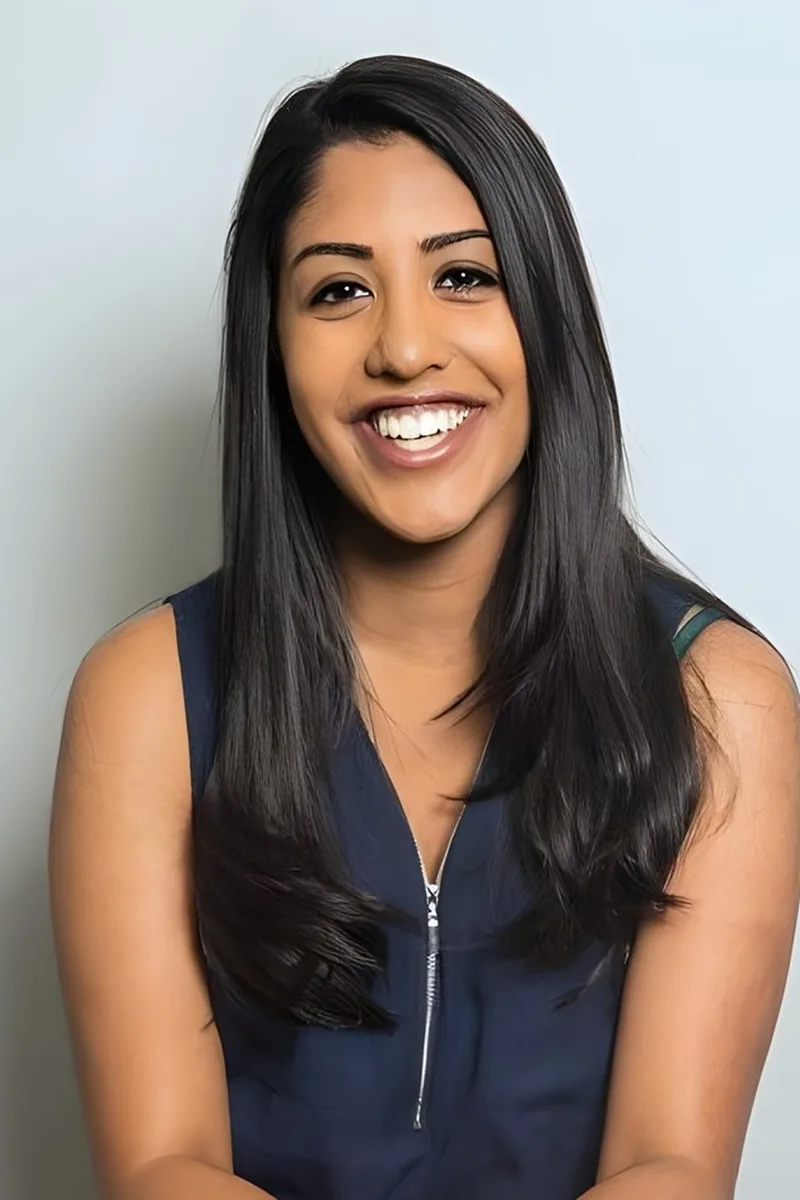
After scoring a perfect 36 ACT composite, Anna developed a question-first approach to the Reading section — previewing what each question demands before touching the passage, so every line read serves a purpose. Her medical education background means she's used to processing dense, unfamiliar material quickly and extracting exactly what matters, a skill that translates directly to the natural science and social science passages. Rated 5.0 by students.
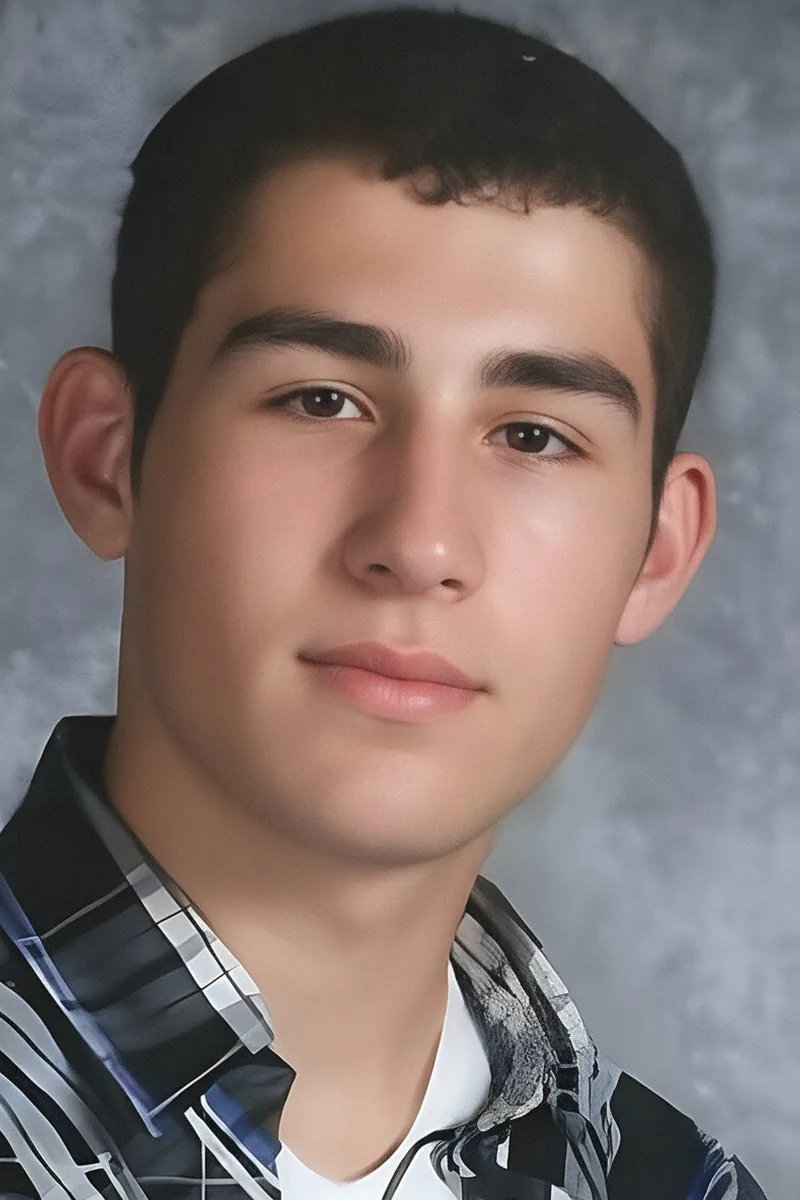
Mechanical engineering coursework at Harvard means Christopher reads the way the ACT Reading section rewards — extracting key claims from dense technical material fast and ignoring everything that doesn't answer the question in front of him. He applies that same efficiency to all four passage types, teaching students to map an author's argument structure in the first read so that inference and detail questions become quick lookups rather than guesswork. His 35 ACT composite and 4.8 student rating back up the approach.
The ACT Reading section isn't really about comprehension — it's about extracting specific evidence under a brutal time constraint. Benjamin scored a 36 composite and applies the close-reading skills from his Columbia English program to teach students how to identify what each question is actually asking, locate proof in the passage quickly, and eliminate trap answers with confidence.
I am a 2023 graduate of the University of Notre Dame with a Finance/Economics major and a minor in Innovation and Entrepreneurship. I am a passionate student in the math and business realms, as I enjoy the intuitiveness of the former and the real-world potential of the latter. During classes in middle and high school, I developed a reputation of being a good source of help within my classes in a non-tutor capacity, and grew that into a peer tutor role a couple times a week during lunch my senior year of high school. What I hope to accomplish with my tutoring is ensure that you not only achieve your desired grade/score, but see how the different concepts relate to each other in the bigger picture. The more important part is to critically think about the subject matter in other, more unfamiliar contexts. Also, in my math subjects, I seek to provide personal secrets in realms including quicker computation strategies, unique acronyms for certain rules, and other intuitive shortcuts.
I'm referring to math, of course, but I didn't always like the subject. Until about age 16, I thought of math as a boring, mind-numbing process of blindly memorizing formulas and then forgetting them after the test, but a series of wonderful teachers showed me the truth. I had thought that everything in math was invented arbitrarily just to torture students, but actually it all made sense in a deep way. When I caught a glimpse of what math really was, I found it irresistible and I ended up majoring in math in college at UChicago. I'm currently a Master's student in Computer Science at NYU.
I really enjoy helping students master the fundamentals of math, physics, computer science, and electrical engineering, as well as succeed on standardized tests like the ACT. I focus on teaching in an interactive way by trying to understand your thought process and building your understanding using simple examples and guidance. Learning these fields is challenging but also very rewarding, and I believe everyone can find enjoyment in it and see the beauty in the theory and use the applications throughout their careers.
I'm Lizz, a middle school math teacher working in Chicago Public Schools. I love to see students go from describing themselves as "not a math person" to feeling like they meet exciting challenges in math and other parts of their lives. Even though I love working in the classroom, I feel like tutoring allows me to make more of an impact and connect with students.
I am most excited about helping other students achieve their dreams of going to medical school by helping them study for the MCAT. Besides MCAT tutoring, my favorite subjects are chemistry, biology, and math which are all subjects I have tutored in before. I believe that every student can learn the material they hope to with the right guidance and effort. I hope that I can help students realize their full potential and grow in confidence as a learner. Outside of teaching, I like to perform in musicals, most recently I have been in local productions of Mamma Mia and Footloose, as well spend time with friends.
Having studied political science at the University of Chicago — where the Core Curriculum demands rapid synthesis of dense, argument-heavy readings across disciplines — Asta built the exact close-reading stamina the ACT Reading section punishes students for lacking. She teaches students to identify an author's central claim and track how supporting evidence is layered through each paragraph, which turns detail and inference questions into targeted lookups rather than full re-reads. Her 35 ACT composite and 5.0 student rating speak for themselves.
I am an undergraduate at Washington University in St. Louis majoring in Philosophy-Neuroscience-Psychology on the Premed track. I have two years worth of experience peer tutoring. I feel the most confident tutoring ACT preparation. During my time as a high school student, I worked from an ACT score of 25 to a 36 and developed many effective strategies that I will tailor to the students I tutor and understand the ins and outs of the test. In addition to working with high school peers, I have also enjoyed teaching private piano and violin lessons for elementary students. Helping people knock down their roadblocks is a passion of mine. Standardized tests and basic education may feel removed from our passions, but developing those foundations are essential for opening up opportunities and becoming capable of taking on our pursuits.
Cognitive science at Northwestern is essentially the study of how people process language and meaning — which makes Amanda unusually well-suited to teach the ACT Reading section, where every question boils down to how carefully you tracked what an author actually said versus what you assumed. With a perfect 36 ACT composite, she zeroes in on the dual-passage and comparative questions that trip up even strong readers, training students to isolate each author's specific claim before comparing them. Her linguistics background means she can explain exactly why a tempting wrong answer distorts the original text.
The ACT Reading section isn't really about reading — it's about extracting specific evidence under a brutal time constraint. Spencer, who scored a 36 composite, teaches a systematic passage approach: how to identify what each question is actually asking, where to find the answer in the text, and when to eliminate trap choices. His sessions are built around timed practice so students develop the pacing instincts that make 40 questions in 35 minutes feel manageable.
I am exploring my creativity by pursuing a double major in Asian Languages and Cultures with a focus in Korean, studying abroad in South Korea as a Benjamin A. Gilman Scholar, leading workshops that teach 3D printing and CAD for undergraduate students as the president of 3D4E, advocating for the first-generation and low-income student community as the Outreach Chair of the Quest+ Scholars Network, and getting involved with the Society of Women Engineers' outreach committee. I currently hold a work-study position as an administrative clerical aide in the Institute of Sustainability and Energy at Northwestern and was an undergraduate researcher in the John Rogers Lab. As I look forward with aspirations of applying to graduate school, areas of research in biomedical engineering and biotechnology that I am particularly interested in include biomaterials, pharmaceuticals, and drug delivery systems. Outside of the classroom, I enjoy learning on my own and sharing my experience and knowledge with my peers and other students. I hope to make use of my experiences with academics and learning in high school and so far in my undergraduate career in order to effectively tutor students who may be experiencing the same struggles in learning that I also experienced.
The ACT Reading section gives students just over eight minutes per passage, which means skimming isn't optional — it's a skill that needs practice. Neha, who scored a 35 composite, walks students through an active-reading method that prioritizes locating evidence over re-reading, turning the section's time crunch from a panic point into a manageable routine.
Most ACT Reading mistakes happen not because students misunderstand the passage, but because they spend too long on it and rush the questions. Jessica scored a 36 composite and teaches a dual-passage strategy — active annotation for detail-heavy science and social science passages, and a skim-then-target approach for prose fiction and humanities — so students can adapt their reading speed to each passage type.
Speed is usually what kills ACT Reading scores, not comprehension. Connor teaches a passage-mapping strategy that cuts down re-reading time and sharpens the ability to distinguish between what the text actually says and what an answer choice merely implies. His 35 ACT composite backs up an approach built on efficiency and precision.
Most students lose ACT Reading points not because they misunderstand passages but because they mismanage time — spending four minutes on a dense humanities passage and then rushing through natural science. Oliver teaches a passage-triage strategy built around identifying question types before rereading, which keeps pacing tight across all four passages. His own 36 composite came partly from treating Reading as a skills section, not a luck section.
I am a third-year student pursuing a Bachelor's of Science in Human Development and Psychological Services and Psychology at Northwestern University's School of Education and Social Policy. Before coming to Northwestern, I had the privilege to grow up with good teachers under a rigorous IB curriculum in Shanghai, China, granting me access to quality education that I know many of my peers and other students across the world do not have. Thus, my hopes to combat education inequities, utilize my experiences with multicultural/special education contexts, and be continually inspired by students in addition to offering them the personalized support they deserve is what drives me to work with students. I've guided students with special needs aged 3-14 through summer program activities in Shanghai, coordinated an after-school program for K-12 refugee students in Chicago, and interacted with secondary school students in Jinja, Uganda. Since my first year in college, I've worked as a tutor for a morning program in an elementary school in Evanston. I have the most experience tutoring Elementary School Math and Reading and the most content knowledge in Psychology, though I am also passionate about helping students with ACTs/College apps due to having myself navigated through the system's challenges recently. In addition, I'd be happy to dive into Mandarin Chinese as it is another native language I speak. From my tutoring experiences and taking classes within the Learning Sciences, I find it important to listen to student needs and interests while maintaining encouragement to challenge themselves in the spirit of learning, and be a source of emotional support in addition to providing knowledge. In my spare time, I love reading, playing the guitar, having conversations with people of all different backgrounds, and traveling locally or abroad to experience different cultures.
I am comfortable tutoring a variety of subjects, I am most passionate about writing and language, and I truly believe that strong writing skills are an asset in every area of life. Through my experience as an after-school program manager, I learned to build relationships and work well with students, parents, and teachers to meet student goals. In response to the pandemic, I quickly learned ways to adapt my educational youth work to a virtual setting. My social work background helps me connect with students on a personal and social-emotional level, which lays a trusting foundation for real growth and learning.
The ACT Reading section punishes students who read every word at the same pace — the trick is knowing how to scan for argument structure, then zero in on evidence when a question demands it. Nicolette, who scored a 35 composite and nearly pursued an English major at Rice, walks students through passage-type strategies that turn 35 minutes from a scramble into a system.
The ACT Reading section is really a speed-and-strategy test disguised as a reading test — four passages in 35 minutes means there's no time to second-guess. Jack scored a 35 ACT composite and teaches students to identify question types quickly, locate evidence without rereading entire passages, and avoid the trap answers that sound right but misrepresent the text. Rated 5.0 by students.
Every ACT Reading passage is an exercise in disciplined attention — finding the one sentence that actually supports an answer choice instead of the three that almost do. Jacob studied close reading as a Literature major at Vanderbilt, and he applies that training directly to the test's social science, humanities, and prose fiction passages. His 35 ACT shows the approach translates to real scores.
I am planning on entering medical school at the Northwestern University Feinberg School of Medicine in the fall. Throughout high school and college, I have fallen in love with tutoring and seeing so many new faces in the process. I especially love to tutor in math, chemistry, MCAT, and chemical engineering topics, and have experience tutoring students of all ages - from elementary school to fellow college students. When I am not tutoring or in school, I am an avid lifter and love to bake with friends!
I am an MD/PhD student at Northwestern University (PhD Chemistry). I previously received my B.S. in Chemical Science from the University of Michigan in 2020, and am continuing my education both in medicine and in organic synthesis. Although I am capable of tutoring a number of academic topics, my expertise specifically lies in organic chemistry. It is my goal to provide students a fundamental feel for and understanding of chemistry which will enable them to critically analyze problems as opposed to relying on memorization. Outside of classroom, I've both worked on and led a number of academic research, industry, and engineering projects. Additionally, I enjoy photography, going on long walks, and binging TV shows!
I'm thrilled to work with anybody on any subjects of interest, reach out with any questions!
The ACT Reading section isn't about being a fast reader — it's about knowing where to look and how to eliminate wrong answers under time pressure. David scored a 35 ACT composite and teaches a passage-mapping strategy that cuts down on re-reading, especially for the trickier social science and humanities passages. Rated 5.0 by students.
Most students lose points on ACT Reading not because they can't comprehend the passages but because they spend too long re-reading. Blake, who earned a 35 composite, teaches a passage-mapping technique that isolates main claims and evidence locations on the first read, turning each set of questions into a targeted retrieval exercise rather than a scavenger hunt.
The ACT Reading section isn't really testing whether you understood a passage — it's testing whether you can locate specific evidence under a four-minute-per-passage time constraint. Gabe breaks down each passage type (prose fiction, social science, humanities, natural science) and teaches annotation strategies tailored to the kind of questions each one tends to generate. His 35 composite and 5.0 rating speak to how well this approach translates to score gains.
I am a student at the University of Chicago. I grew up on the upper east side and attended the Dalton School in Manhattan. My whole life I've enjoyed math and science but what I am really passionate about is teaching others. I've worked in all different areas from coaching to teaching, and if you want someone who will be relentlessly positive while also capable and engaged I'm your guy.
Hi! My name is Julia.I currently work as a statistics tutor at Harper College. I also have a BS in Immunology and MS in Biomedical Science from the University of Alabama at Birmingham and a MS in Computational Data Analytics from Georgia Tech, where I served as a TA for the introductory coding class. I graduated high school in 2017, and scored a 1570 on the SAT, 34 ACT, and a perfect 1520 pSAT. I am an AP scholar and National Merit Finalist. I scored a 5 on the AP Biology exam and although I did not take the AP Statistics class in high school, I still scored a 4 on the exam after self-studying the material. I customize my tutoring style for each student based on how they learn, but always like to emphasize how and why we get to an answer, not just giving the solutions or blindly running through formulas. I myself prefer to learn this way because it helps with knowledge retention and relies less heavily on rote memorization, which can be tedious at best and even impossible with more complex subjects. If that sounds good to you, I'd love to schedule a session with you or answer any questions you may have. I'll hopefully see you soon!
Analytical chemistry taught Hannahlore to read methodically — isolating the one relevant data point from pages of experimental detail — and she brings that same precision to ACT Reading passages, especially when students get lost in the natural science and social science sections trying to absorb everything instead of targeting what the question actually asks. With a 35 ACT composite and a 5.0 student rating, she drills the habit of treating each answer choice as a claim that either matches the text's exact wording or doesn't, cutting through the second-guessing that eats up time.
I am a student at University of Illinois at Urbana-Champaign studying Computer Science, as well as a National Merit Finalist. I also have experience working with kids ages 6-13 because of a history volunteering at a diverse range of locations, including the Park Ridge Public Library and Picture Us Different Dance Studio. I am most passionate about Math, because of its close relationship with my course of study, and English because of my personal love for reading. I view education as an integral part of developemnt, and am a strong proponent of making sure that it's enjoyable for everyone involved.
I'm a tutor from Princeton University, studying in the School of Public and International Affairs and the Creative Writing Department. I have tutored children of all ages for the past 5 years firstly through the Latin School of Chicago's Middle School Writing Center and now through Varsity Tutors. Additionally, I have served as a Teacher's Assistant for various high school English classes. As a writer myself, I bring passion to my tutoringI hope to spread an appreciation for reading and writing, and to give back what the English language has given to me. I've edited for the international Literary Magazine Polyphony Lit. and am currently a reader for the Nassau Literary Review. I keep my lessons energetic and fun while also remaining focused so that my students can make meaningful progress to help them succeed for years to come.
Adrianne's bilingual education training — where she learned to teach reading comprehension across languages — gave her a sharp eye for the vocabulary-in-context and author-purpose questions that trip up ACT Reading test-takers, since bilingual readers naturally track how meaning shifts with word choice and framing. She walks students through a pacing strategy for the four-passage format, prioritizing the passage types they're strongest in first to bank time for tougher ones. Her 34 ACT composite and 5.0 student rating back up the method.
The ACT Reading section gives students just 35 minutes for four dense passages, so pacing strategy matters as much as comprehension. Charlie's method treats each passage like a mini-argument: identify the author's claim, locate the key evidence, and move on. With a 35 ACT composite and years of literary analysis training at UChicago, he knows exactly where the test hides its trickiest answer choices.
As both a student and an employee, I have been involved in higher education for over twenty years. I earned my bachelor's degree from the University of Illinois at Chicago (English-Writing), my master's degree from Regis University (Nonprofit Management), and currently hold a college administrative position by day. For a number of years now, I have enjoyed tutoring students in middle school, high school, and college on test preparation (primarily the verbal/reading/writing sections for ACT, SAT, PSAT, HSPT), as well as essay and speech writing. I have a passion for the written word because I feel it is often times the best way to communicate - a way to express our thoughts and feelings in an organized and structured manner, in our own voice and within our control.
I am a research chemist at Northwestern University with ten years of experience as a tutor, teacher, or mentor. I have experience tutoring collegiate physics, calculus, and chemistry. I have also taught introductory college chemistry courses (both as a TA and head instructor). I am best suited as a chemistry tutor since I am a chemist by training. However, I also enjoy tutoring physics and math. I try to promote a growth mindset in my tutoring sessions and aim to help students build confidence in math and science. I received a Ph.D. in Physical Chemistry from UC Berkeley and a B.S. in Chemistry and Physics from Haverford College.
Cognitive science trained Ilana to study how people process language and meaning — which gives her a practical edge when teaching the ACT Reading section, since she can pinpoint why a student misreads an inference question or falls for a distractor that subtly shifts the author's scope. With a 35 ACT composite and a 5.0 student rating, she zeroes in on the dual-passage comparison and prose fiction sections where students most often lose time second-guessing their instincts.
Testimonials
Because the right ACT Reading tutor makes all the difference.
Average Session Rating – Based on 3.4M Learner Ratings
Practice ACT Reading
Free practice tests, flashcards, and AI tutoring for ACT Reading
Nearby ACT Reading Tutors
Other Rockford Tutors
Related Test Prep Tutors in Rockford
Frequently Asked Questions
Varsity Tutors matches Rockford students with expert ACT Reading tutors for 1-on-1 instruction. We pair each student with a tutor based on their specific needs, learning style, and goals.
Whether you need homework help, exam prep, or want to get ahead, our ACT Reading tutors are ready to help.
Common challenges include gaps from earlier material, difficulty with specific concepts, and trouble applying learning to new problems. These issues can snowball quickly in ACT Reading.
A tutor identifies where you're stuck, fills in gaps, and provides targeted practice. The 1-on-1 format means you get help exactly where you need it.
Tutors work with your student's actual coursework—homework assignments, class notes, and upcoming tests. This keeps tutoring directly relevant to what's happening in the classroom.
When you share information about your student's school and curriculum, we can match you with a tutor who has relevant experience.
All tutors complete background checks, credential verification, and teaching evaluation. Many of our ACT Reading tutors hold advanced degrees or have years of teaching experience.
You can review tutor profiles to find someone with the right background for your student's level and needs.
Many students see improved grades within a few weeks, along with better understanding of ACT Reading concepts and more confidence tackling challenging material.
Tutors track progress and adjust their approach to ensure continued improvement.
Most students benefit from 1-2 sessions per week. More frequent sessions help if your student is significantly behind or has an important exam coming up.
Your tutor can recommend a schedule based on your student's specific situation and goals.
Tutoring is purchased in packages of hours, with rates varying by tutor experience. Varsity Tutors offers several options to fit different budgets and needs.
You can discuss pricing during your consultation to find what works best.
Your tutor will assess where your student is, discuss goals, and start working on priority areas. Most students bring current homework or upcoming test material to focus on.
By the end, you'll have a clear sense of how the tutor can help and a plan for moving forward.
Let’s find your perfect tutor
Answer a few quick questions. We’ll recommend the right plan and match you with a top 5% tutor.