Award-Winning ACT Science Tutors
serving Rockford, IL
ACT Science
Tutors in Rockford
Private 1-on-1 tutoring, weekly live classes for academic support, test prep & enrichment, practice tests and diagnostics, and more to elevate grades and test scores.
Based on 3.4M Learner Ratings
UniversitiesSchools & Universities
DeliveredHours Delivered
ProficiencyGrowth in Proficiency
Who needs tutoring?
No obligation. Takes ~1 minute.
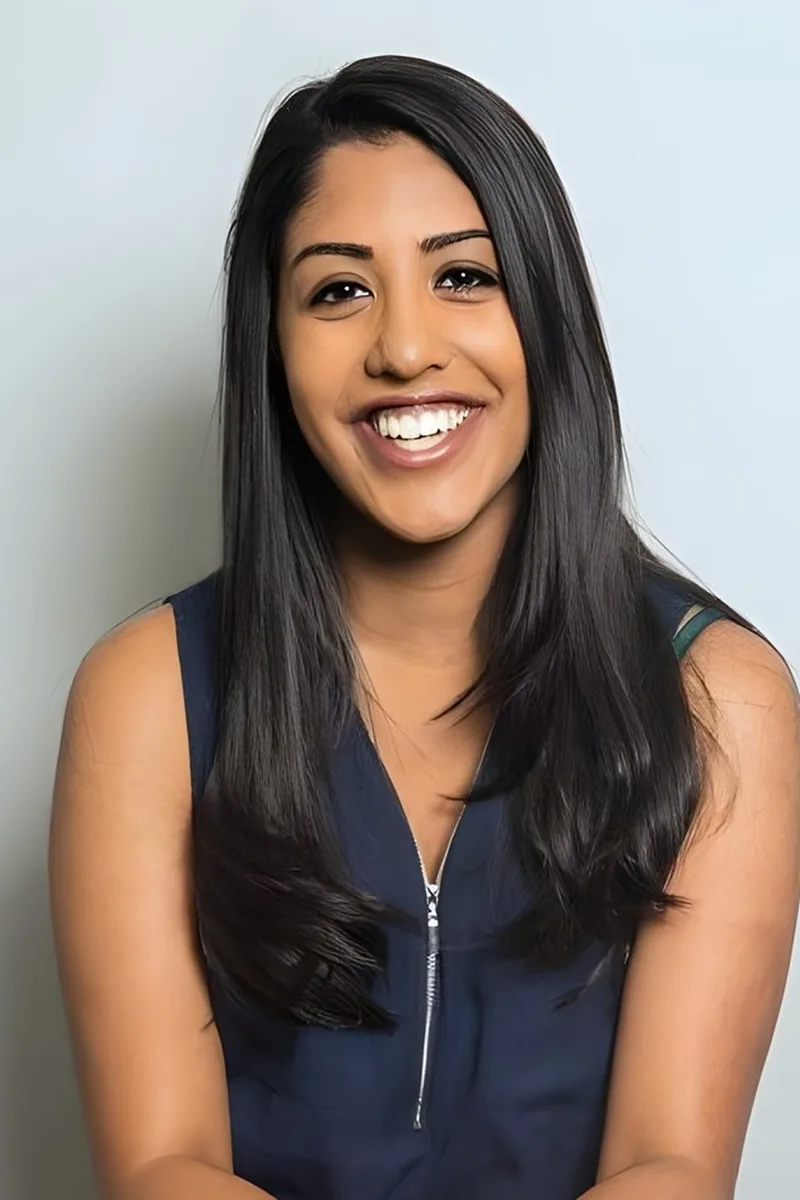
The ACT Science section is really a data interpretation exam disguised as science — success depends on reading graphs, identifying trends, and evaluating conflicting hypotheses quickly and accurately. Anna scored a 36 ACT composite and, as a current MD/MBA student at Northwestern's Feinberg School of Medicine, brings genuine scientific literacy that makes parsing experimental passages second nature. Rated 5.0 by students.
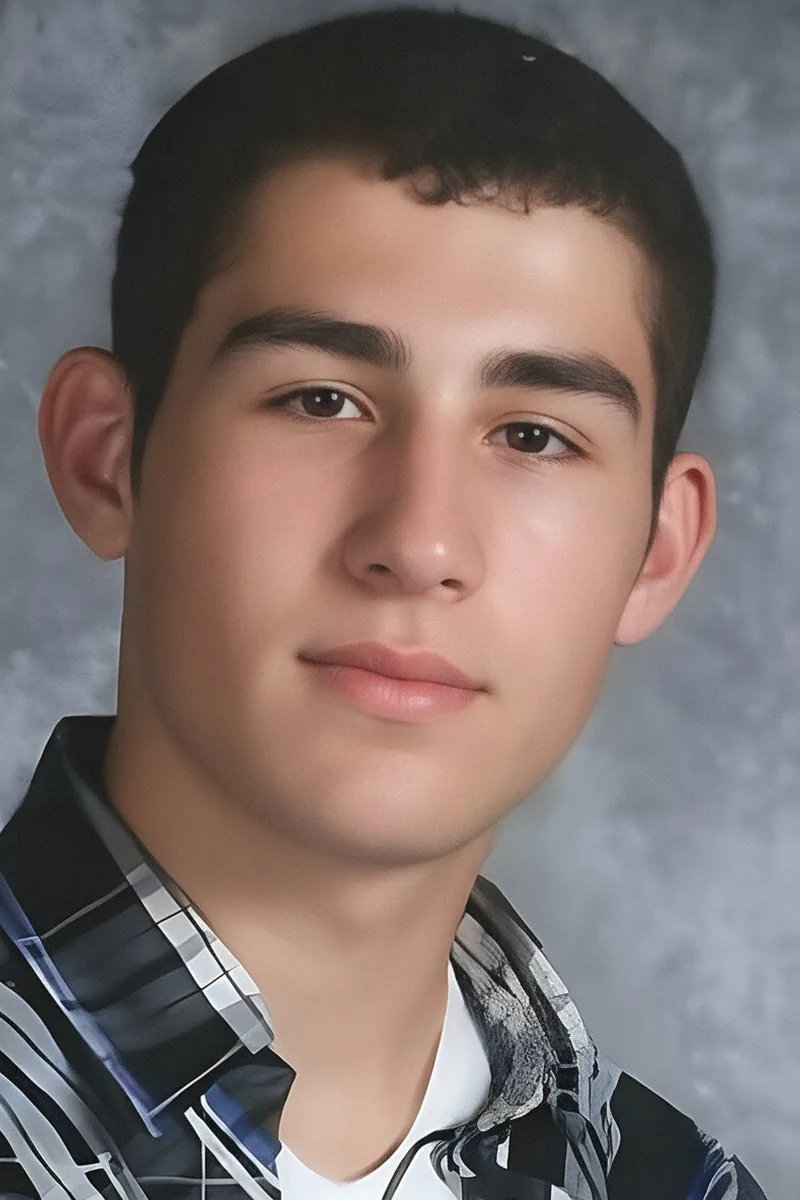
The ACT Science section isn't really a science test — it's a data interpretation exercise disguised as one. Christopher scored a 35 composite and teaches students to read graphs, compare experimental designs, and identify conflicting viewpoints quickly, drawing on his mechanical engineering background at Harvard to make scientific reasoning feel intuitive.
Treat the ACT Science section like a data-interpretation exercise, not a biology or chemistry quiz — that's the approach Benjamin teaches, and it's how he earned a perfect 36 composite. His computer science training makes him especially sharp at reading graphs, tables, and conflicting experimental designs quickly, and he walks students through the exact process for each passage type.
I am an undergraduate at Washington University in St. Louis majoring in Philosophy-Neuroscience-Psychology on the Premed track. I have two years worth of experience peer tutoring. I feel the most confident tutoring ACT preparation. During my time as a high school student, I worked from an ACT score of 25 to a 36 and developed many effective strategies that I will tailor to the students I tutor and understand the ins and outs of the test. In addition to working with high school peers, I have also enjoyed teaching private piano and violin lessons for elementary students. Helping people knock down their roadblocks is a passion of mine. Standardized tests and basic education may feel removed from our passions, but developing those foundations are essential for opening up opportunities and becoming capable of taking on our pursuits.
Most students panic when they see unfamiliar experiments on the ACT Science section, but the trick is that it's really a data-interpretation test disguised as science. Aleeza's biology background and 36 composite mean she can teach students to read graphs, compare experimental setups, and identify conflicting viewpoints quickly — without needing to actually know the science behind every passage.
I'm Lizz, a middle school math teacher working in Chicago Public Schools. I love to see students go from describing themselves as "not a math person" to feeling like they meet exciting challenges in math and other parts of their lives. Even though I love working in the classroom, I feel like tutoring allows me to make more of an impact and connect with students.
I'm referring to math, of course, but I didn't always like the subject. Until about age 16, I thought of math as a boring, mind-numbing process of blindly memorizing formulas and then forgetting them after the test, but a series of wonderful teachers showed me the truth. I had thought that everything in math was invented arbitrarily just to torture students, but actually it all made sense in a deep way. When I caught a glimpse of what math really was, I found it irresistible and I ended up majoring in math in college at UChicago. I'm currently a Master's student in Computer Science at NYU.
I really enjoy helping students master the fundamentals of math, physics, computer science, and electrical engineering, as well as succeed on standardized tests like the ACT. I focus on teaching in an interactive way by trying to understand your thought process and building your understanding using simple examples and guidance. Learning these fields is challenging but also very rewarding, and I believe everyone can find enjoyment in it and see the beauty in the theory and use the applications throughout their careers.
I am a 2023 graduate of the University of Notre Dame with a Finance/Economics major and a minor in Innovation and Entrepreneurship. I am a passionate student in the math and business realms, as I enjoy the intuitiveness of the former and the real-world potential of the latter. During classes in middle and high school, I developed a reputation of being a good source of help within my classes in a non-tutor capacity, and grew that into a peer tutor role a couple times a week during lunch my senior year of high school. What I hope to accomplish with my tutoring is ensure that you not only achieve your desired grade/score, but see how the different concepts relate to each other in the bigger picture. The more important part is to critically think about the subject matter in other, more unfamiliar contexts. Also, in my math subjects, I seek to provide personal secrets in realms including quicker computation strategies, unique acronyms for certain rules, and other intuitive shortcuts.
Most students panic when they see unfamiliar experiments on the ACT Science section, but the test barely requires scientific knowledge — it's really about reading graphs, interpreting data tables, and comparing conflicting hypotheses. Asta treats each passage as a data-literacy exercise and teaches students to locate variables, identify trends, and answer questions without getting lost in technical jargon. Her 35 composite ACT score backs up the approach.
The ACT Science section isn't really a science test — it's a data interpretation test, and Spencer treats it that way. He teaches students to read graphs, compare experimental setups, and identify conflicting viewpoints without getting bogged down in content they don't need. His own 36 ACT composite came from exactly this kind of strategic, efficient approach.
A biomedical sciences background makes Connor especially effective on the ACT Science section, where interpreting conflicting experimental designs and extracting trends from dense data tables trips up most students. He treats the section as a data-literacy exercise — teaching students to read graphs and evaluate hypotheses before ever worrying about scientific content knowledge. His own 35 ACT composite came from exactly this kind of systematic approach.
I am exploring my creativity by pursuing a double major in Asian Languages and Cultures with a focus in Korean, studying abroad in South Korea as a Benjamin A. Gilman Scholar, leading workshops that teach 3D printing and CAD for undergraduate students as the president of 3D4E, advocating for the first-generation and low-income student community as the Outreach Chair of the Quest+ Scholars Network, and getting involved with the Society of Women Engineers' outreach committee. I currently hold a work-study position as an administrative clerical aide in the Institute of Sustainability and Energy at Northwestern and was an undergraduate researcher in the John Rogers Lab. As I look forward with aspirations of applying to graduate school, areas of research in biomedical engineering and biotechnology that I am particularly interested in include biomaterials, pharmaceuticals, and drug delivery systems. Outside of the classroom, I enjoy learning on my own and sharing my experience and knowledge with my peers and other students. I hope to make use of my experiences with academics and learning in high school and so far in my undergraduate career in order to effectively tutor students who may be experiencing the same struggles in learning that I also experienced.
The ACT Science section barely tests science knowledge — it tests whether you can read a graph under pressure and figure out what an experiment was actually measuring. Oliver, an industrial engineering student at Northwestern, approaches it as a data-interpretation drill: isolate the variables, trace the trend, answer the question, move on. He scored a 36 composite and walks students through the specific graph-reading shortcuts that save the most time.
I am a part of the University of Chicago class of 2020, where I plan to pursue a major in economics and possibly biology, and a medical degree afterwards. I’ve had about 3 years of tutoring experience, and I tutor SAT, ACT, English, math, biology, and chemistry.
The ACT Science section isn't really a science test — it's a data interpretation test disguised as one. Amanda scored a 36 composite and teaches students to read graphs, compare experimental designs, and identify conflicting viewpoints quickly, treating each passage like a puzzle with predictable patterns. Her cognitive science background sharpens the way she breaks down how to extract answers from dense tables without getting lost in unfamiliar terminology.
The ACT Science section is really a data interpretation exam disguised as science — it rewards students who can quickly parse graphs, conflicting viewpoints, and experimental designs without getting lost in jargon. Neha's biological sciences background means she reads these passages fluently, and her 35 ACT composite shows she knows how to move through all seven passages with speed and accuracy. She teaches students to identify control variables, spot trends in data tables, and eliminate answer choices based on evidence rather than intuition.
I'm thrilled to work with anybody on any subjects of interest, reach out with any questions!
Most students panic when they see the ACT Science section's dense graphs and conflicting experiments, but David treats it as a data interpretation exercise rather than a science test. His engineering background at UIUC means reading charts, extracting trends, and comparing experimental setups are second nature. With a 35 ACT composite and a 5.0 rating, he shows students how to answer confidently without getting lost in the scientific jargon.
The ACT Science section isn't really testing science knowledge — it's testing whether students can read graphs, compare experimental setups, and draw conclusions under time pressure. Amol scored a 35 composite and treats this section as a data-interpretation exercise, drilling students on how to extract the right information from dense passages in under a minute. His engineering background makes him especially sharp at spotting trends in tables and figures.
I am comfortable tutoring a variety of subjects, I am most passionate about writing and language, and I truly believe that strong writing skills are an asset in every area of life. Through my experience as an after-school program manager, I learned to build relationships and work well with students, parents, and teachers to meet student goals. In response to the pandemic, I quickly learned ways to adapt my educational youth work to a virtual setting. My social work background helps me connect with students on a personal and social-emotional level, which lays a trusting foundation for real growth and learning.
Nicolette's bioengineering research — including her current work on a 3D printed artificial leg in Costa Rica — means she lives in the world of experimental data, control variables, and results tables every day. She brings that fluency to ACT Science prep, teaching students to quickly decode what each figure is actually measuring and match it to the question without reading a single line of background text. Her 35 composite and 5.0 rating back up an approach rooted in real lab instincts.
I am a third-year student pursuing a Bachelor's of Science in Human Development and Psychological Services and Psychology at Northwestern University's School of Education and Social Policy. Before coming to Northwestern, I had the privilege to grow up with good teachers under a rigorous IB curriculum in Shanghai, China, granting me access to quality education that I know many of my peers and other students across the world do not have. Thus, my hopes to combat education inequities, utilize my experiences with multicultural/special education contexts, and be continually inspired by students in addition to offering them the personalized support they deserve is what drives me to work with students. I've guided students with special needs aged 3-14 through summer program activities in Shanghai, coordinated an after-school program for K-12 refugee students in Chicago, and interacted with secondary school students in Jinja, Uganda. Since my first year in college, I've worked as a tutor for a morning program in an elementary school in Evanston. I have the most experience tutoring Elementary School Math and Reading and the most content knowledge in Psychology, though I am also passionate about helping students with ACTs/College apps due to having myself navigated through the system's challenges recently. In addition, I'd be happy to dive into Mandarin Chinese as it is another native language I speak. From my tutoring experiences and taking classes within the Learning Sciences, I find it important to listen to student needs and interests while maintaining encouragement to challenge themselves in the spirit of learning, and be a source of emotional support in addition to providing knowledge. In my spare time, I love reading, playing the guitar, having conversations with people of all different backgrounds, and traveling locally or abroad to experience different cultures.
Most students panic when they see dense graphs and competing experiments in the ACT Science section, but the trick is that almost no outside science knowledge is required — it's a data interpretation exam in disguise. As a neuroscience graduate who scored a 35 ACT composite, Gabe teaches students to read figures before reading text and to identify conflicting variables across experiments in seconds rather than minutes.
I am planning on entering medical school at the Northwestern University Feinberg School of Medicine in the fall. Throughout high school and college, I have fallen in love with tutoring and seeing so many new faces in the process. I especially love to tutor in math, chemistry, MCAT, and chemical engineering topics, and have experience tutoring students of all ages - from elementary school to fellow college students. When I am not tutoring or in school, I am an avid lifter and love to bake with friends!
Most students panic when they see the ACT Science section, but it's less about knowing biology or chemistry and more about reading graphs, interpreting experimental setups, and spotting trends in data tables. Jack breaks each passage into a quick scan-and-extract routine that keeps students moving through all 40 questions without getting bogged down in scientific jargon. His 35 ACT composite and 5.0 rating speak to how well that approach works.
Most students overthink ACT Science because they assume it tests biology and chemistry content. Jacob treats it as a data-interpretation and reading exercise — extracting trends from graphs, comparing experimental setups, and evaluating conflicting viewpoints — which is exactly the analytical approach that contributed to his 35 ACT composite.
The ACT Science section is really a data interpretation exam disguised with scientific vocabulary, and Blake approaches it that way — teaching students to read graphs, identify trends, and compare experimental setups before even glancing at the answer choices. His 35 ACT composite and analytical training in architecture make him especially sharp at extracting meaning from dense visual information.
I am an MD/PhD student at Northwestern University (PhD Chemistry). I previously received my B.S. in Chemical Science from the University of Michigan in 2020, and am continuing my education both in medicine and in organic synthesis. Although I am capable of tutoring a number of academic topics, my expertise specifically lies in organic chemistry. It is my goal to provide students a fundamental feel for and understanding of chemistry which will enable them to critically analyze problems as opposed to relying on memorization. Outside of classroom, I've both worked on and led a number of academic research, industry, and engineering projects. Additionally, I enjoy photography, going on long walks, and binging TV shows!
The ACT Science section is really a data interpretation exam in disguise — it rewards students who can read graphs quickly, compare experimental setups, and spot conflicting viewpoints without getting lost in jargon. Ilana's cognitive science background at Northwestern trained her to parse dense research designs, and she teaches that same skill set to cut through the section's trickiest passages. Her 35 ACT composite speaks to how well the approach works.
Charlie's 35 ACT composite came from an English lit major who figured out that the Science section rewards careful reading, not scientific expertise — a realization that changes how students approach every passage. He teaches a timing strategy built around the Conflicting Viewpoints passages, which most students spend too long on because they try to reconcile the arguments instead of just identifying each one. Rated 5.0 by students.
I am a student at University of Illinois at Urbana-Champaign studying Computer Science, as well as a National Merit Finalist. I also have experience working with kids ages 6-13 because of a history volunteering at a diverse range of locations, including the Park Ridge Public Library and Picture Us Different Dance Studio. I am most passionate about Math, because of its close relationship with my course of study, and English because of my personal love for reading. I view education as an integral part of developemnt, and am a strong proponent of making sure that it's enjoyable for everyone involved.
The ACT Science section isn't really a science test — it's a data interpretation sprint, and Benjamin treats it that way. With a 35 ACT composite and a strong math and science background at the University of Chicago, he teaches students to read graphs, compare experimental designs, and eliminate answer choices quickly without getting bogged down in content they don't need.
Most of ACT Science isn't really about knowing science — it's about reading graphs, interpreting experimental designs, and drawing conclusions from data under time pressure. Hannahlore's analytical chemistry degree means data interpretation is literally what she was trained to do. She teaches students to identify variables, read trends, and handle conflicting-viewpoints passages quickly and accurately.
I am a research chemist at Northwestern University with ten years of experience as a tutor, teacher, or mentor. I have experience tutoring collegiate physics, calculus, and chemistry. I have also taught introductory college chemistry courses (both as a TA and head instructor). I am best suited as a chemistry tutor since I am a chemist by training. However, I also enjoy tutoring physics and math. I try to promote a growth mindset in my tutoring sessions and aim to help students build confidence in math and science. I received a Ph.D. in Physical Chemistry from UC Berkeley and a B.S. in Chemistry and Physics from Haverford College.
I'm a tutor from Princeton University, studying in the School of Public and International Affairs and the Creative Writing Department. I have tutored children of all ages for the past 5 years firstly through the Latin School of Chicago's Middle School Writing Center and now through Varsity Tutors. Additionally, I have served as a Teacher's Assistant for various high school English classes. As a writer myself, I bring passion to my tutoringI hope to spread an appreciation for reading and writing, and to give back what the English language has given to me. I've edited for the international Literary Magazine Polyphony Lit. and am currently a reader for the Nassau Literary Review. I keep my lessons energetic and fun while also remaining focused so that my students can make meaningful progress to help them succeed for years to come.
As both a student and an employee, I have been involved in higher education for over twenty years. I earned my bachelor's degree from the University of Illinois at Chicago (English-Writing), my master's degree from Regis University (Nonprofit Management), and currently hold a college administrative position by day. For a number of years now, I have enjoyed tutoring students in middle school, high school, and college on test preparation (primarily the verbal/reading/writing sections for ACT, SAT, PSAT, HSPT), as well as essay and speech writing. I have a passion for the written word because I feel it is often times the best way to communicate - a way to express our thoughts and feelings in an organized and structured manner, in our own voice and within our control.
Hi! My name is Julia.I currently work as a statistics tutor at Harper College. I also have a BS in Immunology and MS in Biomedical Science from the University of Alabama at Birmingham and a MS in Computational Data Analytics from Georgia Tech, where I served as a TA for the introductory coding class. I graduated high school in 2017, and scored a 1570 on the SAT, 34 ACT, and a perfect 1520 pSAT. I am an AP scholar and National Merit Finalist. I scored a 5 on the AP Biology exam and although I did not take the AP Statistics class in high school, I still scored a 4 on the exam after self-studying the material. I customize my tutoring style for each student based on how they learn, but always like to emphasize how and why we get to an answer, not just giving the solutions or blindly running through formulas. I myself prefer to learn this way because it helps with knowledge retention and relies less heavily on rote memorization, which can be tedious at best and even impossible with more complex subjects. If that sounds good to you, I'd love to schedule a session with you or answer any questions you may have. I'll hopefully see you soon!
The ACT Science section is less about remembering biology or chemistry facts and more about reading graphs, interpreting conflicting experimental results, and drawing conclusions from data tables under time pressure. Adrianne treats it as a data-literacy exercise, teaching students to identify variables and trends before even glancing at the answer choices. Her 34 ACT composite and cross-disciplinary teaching background make her well-suited to a section that deliberately mixes scientific fields.
Testimonials
Because the right ACT Science tutor makes all the difference.
Average Session Rating – Based on 3.4M Learner Ratings
Practice ACT Science
Free practice tests, flashcards, and AI tutoring for ACT Science
Nearby ACT Science Tutors
Other Rockford Tutors
Related Test Prep Tutors in Rockford
Frequently Asked Questions
Varsity Tutors matches Rockford students with expert ACT Science tutors for 1-on-1 instruction. We pair each student with a tutor based on their specific needs, learning style, and goals.
Whether you need homework help, exam prep, or want to get ahead, our ACT Science tutors are ready to help.
Common challenges include gaps from earlier material, difficulty with specific concepts, and trouble applying learning to new problems. These issues can snowball quickly in ACT Science.
A tutor identifies where you're stuck, fills in gaps, and provides targeted practice. The 1-on-1 format means you get help exactly where you need it.
Tutors work with your student's actual coursework—homework assignments, class notes, and upcoming tests. This keeps tutoring directly relevant to what's happening in the classroom.
When you share information about your student's school and curriculum, we can match you with a tutor who has relevant experience.
All tutors complete background checks, credential verification, and teaching evaluation. Many of our ACT Science tutors hold advanced degrees or have years of teaching experience.
You can review tutor profiles to find someone with the right background for your student's level and needs.
Many students see improved grades within a few weeks, along with better understanding of ACT Science concepts and more confidence tackling challenging material.
Tutors track progress and adjust their approach to ensure continued improvement.
Most students benefit from 1-2 sessions per week. More frequent sessions help if your student is significantly behind or has an important exam coming up.
Your tutor can recommend a schedule based on your student's specific situation and goals.
Tutoring is purchased in packages of hours, with rates varying by tutor experience. Varsity Tutors offers several options to fit different budgets and needs.
You can discuss pricing during your consultation to find what works best.
Your tutor will assess where your student is, discuss goals, and start working on priority areas. Most students bring current homework or upcoming test material to focus on.
By the end, you'll have a clear sense of how the tutor can help and a plan for moving forward.
Let’s find your perfect tutor
Answer a few quick questions. We’ll recommend the right plan and match you with a top 5% tutor.