Award-Winning AP Biology Tutors
serving Baltimore, MD
AP Biology
Tutors in Baltimore
Private 1-on-1 tutoring, weekly live classes for academic support, test prep & enrichment, practice tests and diagnostics, and more to elevate grades and test scores.
Based on 3.4M Learner Ratings
UniversitiesSchools & Universities
DeliveredHours Delivered
ProficiencyGrowth in Proficiency
Who needs tutoring?
No obligation. Takes ~1 minute.
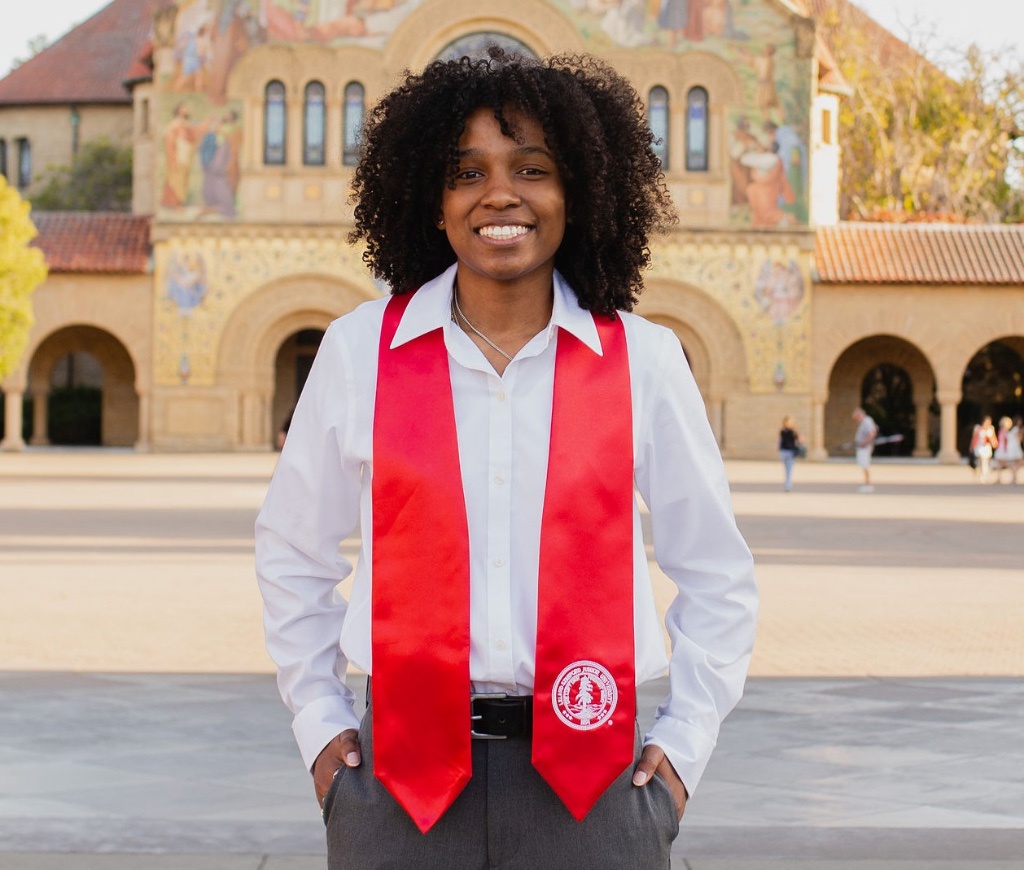
Teaching has been a lifelong passion of mine. What drives me is sharing knowledge while genuinely connecting with others. I discovered my love for tutoring in high school and have been dedicated to it ever since. At Stanford University, I earned a BS in Human Biology and Chemistry while continuing to tutor throughout, advancing to Lead Tutor. After graduation, I spent a year as a Teaching Associate, designing and delivering course content which significantly broadening my pedagogical approach. What sets me apart is my versatility. Having served as both tutor and instructor, I can adapt my teaching style to each student's unique needs, whether that be building up foundational skills or pursuing advanced mastery. I'm now pursuing graduate studies at The Johns Hopkins School of Medicine, staying engaged with cutting-edge science while maintaining my commitment to education. I look forward to helping you achieve your academic goals!

As a cellular and molecular biology major at Johns Hopkins, Christopher lives inside the content that AP Biology tests — from signal transduction and gene regulation to cellular respiration and evolutionary mechanisms. He unpacks dense topics like feedback loops and phylogenetics by tying them back to experimental design, which is critical for the exam's data-analysis questions.
AP Bio covers an enormous range — from signal transduction and gene regulation to ecology and evolution — and the exam rewards students who can apply concepts to unfamiliar experimental scenarios. Sarah's neuroscience degree at Johns Hopkins required deep coursework in molecular biology, cell biology, and genetics, giving her firsthand fluency with the material that appears most heavily on the free-response section.
Cellular respiration, genetics, and evolution each require a different kind of thinking — sometimes quantitative, sometimes conceptual, sometimes both at once. Nima breaks down processes like the electron transport chain or Hardy-Weinberg equilibrium into logical steps, drawing on the same analytical rigor that earned him a full merit scholarship to Duke.
Lee's physics and astronomy degrees from the University of Maryland might seem like an unusual fit for AP Bio, but his work in the Physics Education Research group gave him a deep understanding of how students actually learn complex scientific reasoning — the same skill that separates a 3 from a 5 on the exam. He's particularly effective at teaching the quantitative and experimental design side of the course, like analyzing data from ecology field studies or working through chi-square problems in genetics labs, where his math and physical science instincts give students a concrete framework. Rated 4.6 by students.
Genetic counseling training at Northwestern's Feinberg School of Medicine means Weilong spends her days translating complex genomic data into clear explanations for patients — a skill that transfers directly to breaking down AP Bio's heredity and gene expression units for students who find the molecular detail overwhelming. She's especially sharp on the intersection of genetics and evolution, like explaining how mutations create the variation that natural selection acts on, because that's the conceptual bridge her clinical training reinforces daily. Rated 5.0 by students.
Hi there! NYU neuroscience graduate with experience teaching math, science, coding, and debate. I've tutored at Mathnasium, served as a Course Assistant for neuroscience / biology courses, taught neural networks in coding bootcamps, and coached nationally competitive debate students who reached Harvard and UPenn. My teaching philosophy uses neuroscience-backed strategies like active recall and spaced repetition. I help students deeply understand concepts, think critically, and build lasting confidence!
Saniya's neuroscience degree at Rhodes College required her to learn biology from the molecular scale up — gene expression, cell signaling, neural communication — which means she's tackled AP Bio's toughest conceptual territory in a context where every pathway had to connect to a bigger physiological story. She's continued auditing advanced coursework in anatomy, histology, and embryology since graduating, so the organism-level units on body systems and development are still sharp. Rated 5.0 by students.
AP Bio covers an enormous range — from cellular respiration pathways to population genetics to signal transduction — and the exam rewards students who can apply concepts, not just recall them. Vignesh breaks each unit into its core mechanisms and then runs practice with free-response and data-analysis questions until students can explain processes like photosynthesis or gene expression under timed conditions. His science background complements a study approach built on high-volume repetition.
Studying biological engineering at MIT means Lainie encounters AP Bio's core content — gene regulation, cellular energetics, metabolic pathways — through the lens of designing and modeling biological systems, which gives her a more mechanistic understanding than a standard biology curriculum provides. She scored a 1580 SAT and has tutored students as young as four, so she's practiced at adjusting her explanations to match exactly how much detail a student can absorb. Rated 5.0 by students.
A Yale biochemistry degree plus a year of wet lab research at the NIH means Matthew knows AP Biology's toughest units — molecular genetics, cellular energetics, signal transduction — from the inside out. He teaches the exam's data-analysis questions the way a working scientist reads them: by identifying variables, controls, and what the graph is actually telling you. His 4.9 rating speaks to how well that real-world perspective translates in sessions.
AP Biology's shift toward data analysis and experimental design catches many students off guard — it's no longer enough to memorize cell structures and metabolic pathways. Noel's policy-analysis training at the University of Chicago sharpened his ability to interpret graphs, evaluate experimental controls, and construct evidence-based arguments, which maps directly onto the AP exam's free-response demands. He pairs content review with targeted practice on the analytical skills the College Board actually tests.
Ruthie studied the biological basis of behavior in college, which means she didn't just memorize AP Bio content like cell signaling and genetics — she had to apply it to understand how nervous systems produce behavior, how neurotransmitters cross synapses, and how gene expression shapes organisms at every level. That interdisciplinary angle is especially useful for the exam's ecology and evolution units, where students need to connect molecular mechanisms to organism-level outcomes. Rated 5.0 by students.
Three years running a cell biology lab section at Notre Dame gave Connor a front-row seat to exactly where students stumble on AP Bio material — signal transduction pathways, gene regulation, experimental design questions. His master's work in biomedical sciences deepened that knowledge, and he teaches the course with an eye toward the free-response questions that separate 4s from 5s.
As a biology major at Washington University in St. Louis who served as a teaching assistant for an upper-level biology course, Alexander knows AP Bio from both sides — the content and the exam. He digs into the trickiest units, like cell signaling pathways and gene regulation, by mapping out the logic visually rather than relying on rote memorization. His approach emphasizes the data-analysis and experimental-design questions that carry heavy weight on the AP exam.
The premedicine track at Rochester means Ian has taken the full sequence of biology courses — genetics, cell biology, physiology — alongside the chemistry that makes AP Bio's trickier units on enzyme kinetics and cellular energetics click. He's especially good at unpacking how molecules actually behave during processes like photosynthesis or signal transduction, giving students the mechanistic detail that earns full credit on free-response questions. Holds a 5.0 rating.
Between his neuroscience research at the Jungers Center and molecular biology work at the Oregon Stem Cell Center, Daniel has lived the content that shows up on the AP Biology exam — from cellular signaling pathways to gene expression and evolution. He teaches the free-response section by connecting big biological ideas to the experimental design skills the College Board actually tests for.
The free-response questions on the AP Bio exam reward students who can explain *why* a process works, not just label its steps — and Rebecca's biology degree means she's spent years building that kind of mechanistic thinking around topics like gene regulation, cellular energetics, and ecological dynamics. She also brings strong writing chops from her English and composition background, which turns out to be a real advantage when students need to construct clear, logical explanations under time pressure. Rated 5.0 by students.
Brown's Health and Human Biology concentration has Nova deep in the cellular and molecular content that AP Bio tests hardest — but her real edge is on the SAT Subject Test in Biology E/M, which means she's drilled the kind of rapid concept application the AP exam's multiple-choice section demands. She scored a 1530 SAT and holds a 5.0 rating, and she approaches the evolution and ecology units by tying them back to the human biology lens that makes abstract population dynamics feel concrete.
Testimonials
Because the right AP Biology tutor makes all the difference.
Average Session Rating – Based on 3.4M Learner Ratings
Practice AP Biology
Free practice tests, flashcards, and AI tutoring for AP Biology
Other Baltimore Tutors
Related Science Tutors in Baltimore
Frequently Asked Questions
AP Biology covers eight major units: chemistry of life, cell structure and function, cellular transport, cell communication and division, heredity, gene expression and regulation, natural selection, and ecology. The course emphasizes understanding biological concepts at the molecular and organismal levels, with heavy focus on data analysis and scientific reasoning. Most Baltimore-area students spend 9-10 months covering these units before the May exam.
The AP Biology exam consists of two sections: a 90-minute multiple-choice section with 60 questions and a 90-minute free-response section with 6 questions. The exam tests both content knowledge and your ability to analyze data, interpret graphs, and apply concepts to real-world scenarios. Success requires not just memorizing facts, but understanding how biological systems work and why.
Many students struggle with the volume of content—there's a lot to master in one year—and the shift from memorization to conceptual understanding and data analysis. The free-response questions require you to explain your reasoning clearly, which trips up students who can identify correct answers but can't articulate why. Time management during the exam is also critical, especially learning to work through multi-part questions efficiently.
A score of 3 or higher (out of 5) is considered passing and may earn college credit depending on your school's policies. Most competitive colleges look for 4s and 5s. The national average hovers around a 2.5, so scoring a 3 puts you above average. With focused preparation and personalized tutoring, many students improve by 1-2 score points from their diagnostic practice tests.
Ideally, you should start tutoring early in the school year—September or October—to build a strong foundation in the first units and establish effective study habits. However, students who start in January or February can still see significant improvement with consistent, targeted work on weak areas. Many Baltimore students benefit from 2-3 sessions per week during the school year, then increase frequency to weekly or bi-weekly sessions in April and May for final exam prep.
Practice tests are essential—they help you identify weak content areas, get comfortable with question formats, and build test-taking stamina. Taking full-length practice exams under timed conditions 4-6 weeks before the exam is crucial. Beyond that, targeted practice on specific units and question types throughout the year helps reinforce learning and builds confidence. Tutors can review your practice test results to pinpoint exactly where you need to focus your studying.
The College Board emphasizes scientific practices and real-world application, so the exam includes lots of graphs, tables, and experimental data that you need to interpret and analyze. These questions test whether you understand not just facts, but how biologists actually work. Many students underestimate this skill until they see practice questions—personalized tutoring can help you develop strategies for reading graphs quickly, identifying trends, and explaining what the data means biologically.
Varsity Tutors connects you with expert tutors who specialize in AP Biology and understand the specific curriculum and exam format. You can get matched with a tutor who fits your schedule and learning style, whether you need help with specific units, exam strategy, or comprehensive preparation. Most Baltimore students work with tutors who have taught AP Biology or scored highly on the exam themselves, bringing both expertise and practical test-taking insight.
Let’s find your perfect tutor
Answer a few quick questions. We’ll recommend the right plan and match you with a top 5% tutor.