Award-Winning SAT Tutors
serving Boston, MA
SAT
Tutors in Boston
Private 1-on-1 tutoring, weekly live classes for academic support, test prep & enrichment, practice tests and diagnostics, and more to elevate grades and test scores.
Based on 3.4M Learner Ratings
UniversitiesSchools & Universities
DeliveredHours Delivered
ProficiencyGrowth in Proficiency
Who will be getting tutoring?
No obligation. Takes ~1 minute.
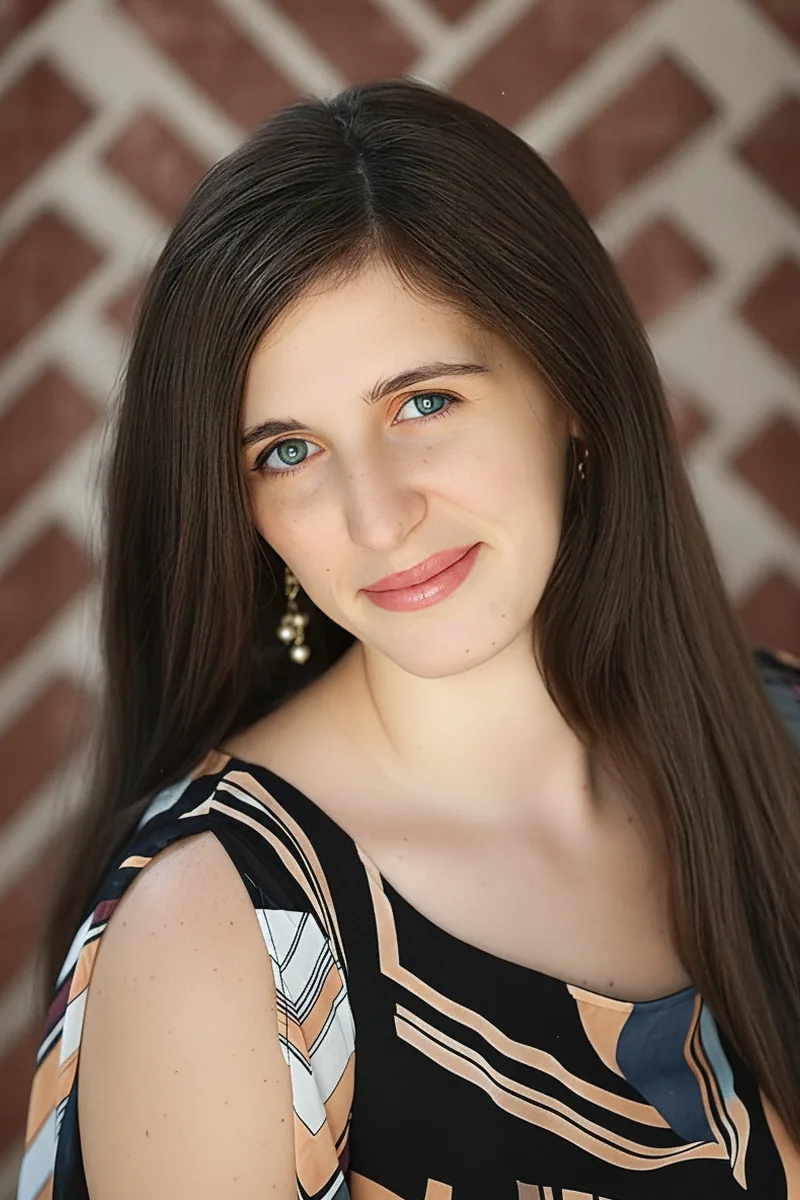
Carnegie Mellon's Creative Writing program trained Sydney to read like an editor — a skill that translates directly to the SAT's evidence-based reading and writing questions, where spotting rhetorical structure and grammatical precision under time pressure is everything. She scored a 1600 on the SAT herself and pairs that full-score fluency with concrete strategies for pacing, eliminating trap answers, and translating word problems into solvable equations on the math side. Rated 4.9 by students.

Won's chemistry degree and pre-med trajectory mean he's deeply familiar with the analytical reasoning the SAT Math section demands — translating word problems into equations, interpreting data tables, and working through multi-step algebra under time pressure. His 1560 SAT score backs up a strategy he builds around identifying each student's specific point-loss patterns across both the Math and Evidence-Based Reading sections, then drilling those weak spots systematically.
Six months living in Spain and a Notre Dame English and Philosophy degree might seem like an unusual SAT prep combination, but Rebecca's deep fluency in language structure — how arguments are built, how grammar rules function, how meaning shifts with word choice — maps directly onto the Evidence-Based Reading and Writing sections. She scored a 1550 and knows how to turn that same close-reading instinct into a repeatable test-day strategy for passage analysis and command-of-evidence questions. Her Writing Center experience means she can also pinpoint exactly where a student's reasoning breaks down on tricky answer eliminations.
Neuroscience training builds a specific kind of test-taking brain — the ability to process dense, data-heavy passages quickly and extract exactly what's being asked. Maedeh scored a 1560 on the SAT and uses that same analytical precision to teach students how to navigate evidence-based reading questions and spot the grammar patterns that repeat across Writing and Language sections. Rated 5.0 by students, she also covers the algebra and data interpretation that anchor the Math section.
What sets Zoe apart for SAT prep is the breadth of her academic background — an undergraduate degree blending science, technology, and society at Vassar, now paired with Harvard Medical School training, means she's equally comfortable coaching the math and data reasoning sections as she is unpacking evidence-based reading passages. She scored a 1550 on the SAT herself and uses that experience to teach students how to spot the structural patterns behind both tricky algebra questions and rhetoric-heavy writing prompts. Rated 5.0 by students.
Scoring a 1500 on the SAT herself, Kerry knows the test inside and out — from pacing strategies on the Reading section to avoiding common traps in Evidence-Based Writing questions. What sets her apart is her psychology background and experience as a productivity coach: she teaches concrete techniques for managing test anxiety, maintaining focus across four hours of testing, and building the executive functioning habits that make prep actually stick.
Pharmacy coursework at Northeastern means Amy spends her days parsing dense scientific texts and solving quantitative problems under pressure — exactly the skill set the SAT rewards across both its Reading and Math sections. She scored a 1550 and uses a chunk-it-down method, isolating the specific algebra concepts or passage structures a student keeps missing rather than grinding through full-length practice tests without direction. Rated 4.9 by students.
Medical school admissions demanded that Priyanka master the SAT early — she scored a 1560 and developed a section-by-section approach rooted in the same analytical reasoning she now uses daily in clinical rotations at Boston University's accelerated medical program. She teaches students to decode the math section's word problems by translating them into clean equations and to attack evidence-based reading pairs by treating passages like diagnostic puzzles where every detail either supports or rules out an answer.
Having developed standardized test prep curricula and coordinated college admissions seminars for underrepresented students at the University of Chicago, Noel knows the SAT inside out — not just the content but the strategic decisions that separate a good score from a great one. His 1550 composite reflects the kind of section-by-section pacing and answer-elimination discipline he now teaches to his own students. His public policy background also sharpens his coaching on the Evidence-Based Reading passages, where understanding how authors construct arguments is half the battle.
What sets Anthony apart for SAT prep is that he thinks like both a writer and a test-taker — his literary arts and psychology training means he can unpack why a Reading passage's wrong answers feel right and how the test exploits common reasoning shortcuts. He scored a 1550 and applies that same analytical lens to the Math section, where translating word problems into clean algebra is second nature. Rated 5.0 by students.
Most SAT prep treats the Reading and Math sections as completely separate challenges, but Marisa — a writing major at MIT surrounded by engineers and scientists — straddles both worlds daily. She scored a 1540 and built her approach around the verbal side, teaching students to decode passage structure, spot grammar traps in the Writing section, and translate word problems into solvable setups by reading them like an editor would.
Lesleigh's graduate work in English literature and Classical Studies means she's spent years doing exactly what the SAT's Evidence-Based Reading section demands — pulling apart dense, argumentative passages and identifying how authors use evidence to support claims. She scored a 1430 on the SAT herself and applies that same close-reading discipline to the Writing and Language section, where her command of grammar and rhetorical structure turns tricky questions into straightforward pattern matches. Rated 5.0 by students.
Peter scored a 1550 on the SAT while carrying a full biomedical engineering course load at Boston University, which means the math section's toughest problems — nonlinear systems, data modeling, advanced algebra — are territory he covers daily. His fluency in three languages also sharpens his instinct for the Reading and Writing sections, where parsing unfamiliar sentence structures and vocabulary-in-context questions rewards exactly that kind of linguistic flexibility.
Applied math majors tend to see the SAT Math section differently — Roel treats each problem type as a system with predictable structure, teaching students to spot the underlying algebra or data relationship before touching their calculator. His 1540 SAT score backs up that approach, and his experience with college essays and SAT essay prep means he can also coach students through the Reading and Writing sections with an eye for argument structure and evidence pairing.
Students who struggle with SAT pacing often don't realize the test rewards a specific kind of scientific reading — scanning for evidence, interpreting data in passages, and reasoning through answer choices methodically. Katharine's biochemistry training built exactly those habits, and her 1550 SAT score shows they translate directly to test day. She covers both the math and verbal sides, with particular strength in the evidence-based reading questions that reward careful analysis over speed.
A dual degree in Biomedical and Mechanical Engineering means Jennifer has spent years under the kind of time pressure and analytical reasoning the SAT demands — she scored a 1470 and knows exactly where those final points hide in the Math and Evidence-Based Reading sections. She breaks down data interpretation questions and passage-based grammar rules into repeatable strategies students can deploy on test day without second-guessing.
Boston University's accelerated BS/MD program doesn't leave much room for weak test-taking skills — John earned a 1570 SAT while balancing that demanding pre-med curriculum, which means he knows how to prep efficiently under real constraints. He teaches students to spot the algebraic shortcuts buried in the Math section and to treat Reading passages like scientific abstracts: find the claim, find the evidence, move on. Rated 5.0 by students.
Christine's creative writing training at Emerson sharpened the close-reading and rhetorical analysis skills that show up constantly on the SAT's Reading and Writing sections — spotting how an author builds an argument or why a particular word choice shifts tone. She scored a 1470 on the SAT herself and uses her deep familiarity with language structure to teach grammar and evidence-based questions as patterns rather than guesswork.
Greetings, my name is Karthik! I studied at Northeastern University and earned a BS in math and physics, and I started tutoring formally in undergrad via a mix of online tutoring and university sponsored peer tutoring later taking on responsibilities as a student grader and TA. But well before I started formal tutoring, it was not uncommon for peers to remark that I explained things better than our teachers. While at first I was prone to lecturing due to my assumption that others found theory as elucidating as I did, my sessions are now dominated by working through problems provided by either the student or me. Also software visualization is a boon whenever my drawing skills don't pass muster. Ultimately, my purpose is to cultivate disciplined learning and excellence in STEM, whether that be for a class or purely out of curiosity/passion, so please do not hesitate to reach out if you think I can help you achieve your goals.
What separates a good SAT score from a great one is often the Writing and Language section, where most students rely on instinct instead of learning the actual grammar rules being tested. Julia scored a 1570 and brings particular strength there — her background in writing, essay editing, and international relations coursework means she can teach the logic behind comma rules, parallel structure, and rhetorical synthesis questions rather than leaving students to guess. She also covers the Reading section's evidence-based pairs and the math fundamentals needed to push a composite score higher.
What sets Allison apart for SAT prep is that she lives on both sides of the exam — her computer science major keeps quantitative reasoning sharp, while her deep involvement in writing, literature, and philosophy builds the close-reading instincts the Evidence-Based Reading section demands. She scored a 1460 on the SAT herself and uses that experience to teach students how to spot grammar patterns on the Writing and Language section and translate word problems into solvable equations under time pressure.
Scoring a 1410 on the SAT while balancing a rigorous pre-med course load, Anthony developed efficient strategies for tackling both the Evidence-Based Reading and Math sections under time pressure. He breaks down tricky question types — like command-of-evidence pairs and passport-to-advanced-math problems — into repeatable steps that make the test feel less unpredictable. His psychology background also gives him practical insight into managing test-day anxiety and building focused study habits.
I'm a patient and results-driven Computer Science student at Northeastern University with years of experience tutoring students in math and computer science. I specialize in breaking down complex topics, such as calculus, algebra, geometry, and programming, into manageable, step-by-step lessons that meet each student's unique learning style. My goal is to not only help students improve their grades but also build confidence in their academic abilities. Whether you're preparing for an exam or need help staying on top of your classwork, I'm here to support your success.
Scoring a 1470 on the SAT while balancing a dual focus in Computer Science and Biology at Northeastern, Adriell knows how to break down both the math and evidence-based reading sections with equal confidence. She teaches concrete strategies for the SAT's trickiest question types — like no-change grammar answers and multi-step algebra problems that look harder than they are.
A 1400 SAT scorer with years of math tutoring under his belt, Alex brings particular strength to the quantitative sections — breaking down word problems, algebraic reasoning, and data analysis into repeatable steps. He also coaches students on the reading and writing sections by teaching them to identify evidence-based answer patterns rather than relying on gut instinct. Rated 4.5 by students, he's known for a patient, low-stress approach that keeps test anxiety in check.
Research at Harvard Medical School means Patrick spends his days parsing dense scientific literature and interpreting data — exactly the skills that drive the SAT's evidence-based reading passages and data analysis questions in the math section. He scored a 1410 on the SAT himself and uses his quantitative background to teach students how to translate word problems into solvable equations quickly. Rated 5.0 by students.
Biochemistry coursework trains you to read dense material under pressure and extract exactly what matters — the same skill that separates strong SAT readers from students who run out of time on evidence-based questions. Darian applies that analytical precision across both sections, pairing a 1470 SAT score with strategies for grammar rules, passage structure, and the algebra-heavy math problems that reward careful setup over speed.
Nnang earned the CollegeBoard AP Scholar with Honors Award during a postgraduate year at a Connecticut prep school, where he immersed himself in the kind of rigorous math and reasoning the SAT demands. He's developed specific strategies for the SAT's trickiest question formats — problems that test conceptual understanding of algebra and data analysis rather than straightforward computation. That blend of deep content knowledge and test-day tactics is what he brings to every session.
Scoring a 1470 on the SAT herself, Allie knows the specific strategies that move scores from good to great — timing tricks on the math no-calculator section, process-of-elimination techniques for evidence-based reading, and grammar rules that the Writing and Language section tests over and over. Her neuroscience background also means she understands how memory and focus actually work, so she builds study plans around how the brain retains information under test-day pressure. Rated 5.0 by students.
Scoring a 1440 on the SAT herself, Kathrine knows what it takes to push past the 1400 threshold where small timing mistakes and misread answer choices make the biggest difference. Her math education background means she can break down both the quantitative and evidence-based reading sections with equal clarity — connecting grammar rules to underlying logic and translating word problems into equations quickly. She's particularly effective at teaching pacing strategies that keep students from leaving easy points on the table.
Desiree's chemical engineering degree means the SAT Math section — especially the algebra, data analysis, and multi-step problem-solving questions — plays directly to her strongest skills, and her 1400 SAT score confirms she knows how to perform under timed test conditions. She also coaches students on the Reading and Writing side by connecting passage questions back to argument structure, teaching them to spot what the question is really asking before scanning answer choices. Rated 5.0 by students.
Scoring a 1430 on the SAT himself, Jeremiah knows the specific strategies that move scores — like identifying trap answers in Evidence-Based Reading and managing time across the no-calculator math section. His neuroscience background also gives him insight into how test anxiety and focus affect performance, so he builds practical habits around pacing and mental stamina. Rated 4.8 by students.
Comparative literature trains you to read closely across genres, registers, and rhetorical styles — exactly the skill set the SAT's Evidence-Based Reading section demands when it throws a paired science passage next to an 18th-century political argument. Cassandra pairs that background with a perfect 1600 SAT score, meaning she knows how to turn deep reading instincts into points under timed conditions. She also covers the Writing and Language section by teaching the specific grammar and usage rules the test cycles through, drawing on her Latin and Spanish fluency to make sentence structure feel intuitive.
What separates a good SAT score from a great one is often section-level strategy — knowing when to skip and return, how to eliminate two answers fast on evidence-based reading pairs, and where the math section rewards algebraic setup over calculation. Arthur scored a 1490 and teaches the exam as a system of repeatable decisions, drawing on his economics training to approach data interpretation and graph-based questions with particular precision. His 36 ACT composite confirms he knows standardized testing inside and out.
Most SAT prep splits neatly into 'math tutor' and 'reading tutor' — Hope doesn't need that split. Her math degree covers everything from algebra and data analysis through the trickiest no-calculator problems, while her background teaching literature, grammar, and essay writing means she can coach the verbal sections with equal depth. A 1600 SAT score and a 4.8 rating from students back up that full-exam fluency.
Most SAT prep treats the verbal and math sections as separate worlds, but Cindy — a Harvard freshman who scored a 1580 — connects them through the same core skill: precise, careful reading of what's actually being asked. Her English studies sharpen her work on Evidence-Based Reading and Writing, while her fluency in Mandarin Chinese gives her an unusual comfort with pattern recognition across the math section's trickiest word problems. Holds a 5.0 rating from students.
Teaching both native and non-native English speakers sharpened Diana's ability to explain exactly why one answer choice is grammatically or rhetorically correct and another just looks right — a skill that pays off across the SAT's Reading and Writing sections. Her 1560 SAT score backs up the strategies she teaches, from dissecting evidence-based questions to pacing through grammar-heavy passages. A linguistics degree and TESOL certification mean she can unpack the structure of English in ways most test-prep tutors take for granted.
Rob's triple major in English, Philosophy, and American Studies means the SAT's Evidence-Based Reading section plays to his strengths — he teaches students to trace an author's argument through paired passages and nail command-of-evidence questions by treating them like close readings rather than guessing games. His 1580 SAT score and 5.0 tutoring rating back up an approach that also extends to the math side, where his structured, logic-driven thinking turns word problems into straightforward translations.
A 1480 SAT scorer who also designs her own courses at Harvard, Alyssa brings unusual clarity to both the Evidence-Based Reading and Writing sections — particularly the command-of-evidence and words-in-context questions that trip up students stuck between two answer choices. Her background spanning environmental science and gender studies means she's genuinely comfortable with the wide range of passage topics the SAT throws at test-takers, from social science to natural science.
A 1590 SAT gives Marika credibility, but what actually sets her apart is how she reverse-engineers each section — breaking down Reading passages by argument structure, identifying the grammar rules that repeat most on Writing, and teaching the specific algebra and data-analysis patterns that dominate the Math section. Her physics background means quantitative reasoning comes naturally, and she translates that fluency into concrete strategies students can replicate on test day. Rated 5.0 by students.
Testimonials
Because the right SAT tutor makes all the difference.
Average Session Rating – Based on 3.4M Learner Ratings
Practice SAT
Free practice tests, flashcards, and AI tutoring for SAT
Nearby SAT Tutors
Other Boston Tutors
Related Test Prep Tutors in Boston
Frequently Asked Questions
For students in Boston targeting selective New England colleges, score targets vary by school. Boston University typically sees admitted students with SAT scores between 1370-1490, while Northeastern averages around 1450-1560. For Ivy League schools like Harvard, Yale, and Princeton—all within the region—competitive scores generally fall between 1500-1580. A score of 1200+ puts you in the top 25% nationally, 1350+ reaches the top 10%, and 1500+ places you in the top 1%. Starting SAT prep with a clear target school in mind helps you set a realistic goal and focus your study strategy.
Most students see score improvements of 100-300 points with focused, personalized prep—though the amount depends on your starting score and how much you study. Students starting around 1000 often see larger gains (200-300 points), while those already scoring 1400+ may improve 50-150 points as the ceiling gets higher. The key is identifying your specific weak areas—whether that's time management on Reading, grammar patterns on Writing & Language, or multi-step problem-solving on Math—and targeting those through deliberate practice. Varsity Tutors connects you with expert tutors who can diagnose exactly where you're losing points and create a personalized study plan.
Most Boston-area students benefit from starting SAT prep in the spring of junior year (around March-April) if they plan to take the test in the fall, or in the fall of junior year for a winter or spring test date. This gives you 4-6 months to work through content review, practice tests, and targeted skill-building without rushing. If you're aiming for a highly competitive score (1400+) for selective colleges, starting earlier—even in the fall of junior year—allows time for multiple test attempts and score improvements. Many Boston students take the SAT twice (junior year and senior year) to maximize their score, so planning your timeline early helps you fit prep into your schedule alongside schoolwork and other commitments.
The Reading section gives you 65 minutes to answer 52 questions across multiple passages—roughly 13 minutes per passage—which many Boston students find tight. Effective strategies include reading the questions first to know what to look for, then reading the passage strategically rather than word-for-word, and flagging tough questions to return to if time allows. Some students benefit from reading the passage introduction and first/last sentences to build context before diving into questions. Since evidence-based questions require you to cite specific lines, practicing with real SAT passages and timing yourself helps you find the rhythm that works for your reading speed. Tutors can help you identify whether you're losing time on vocabulary, evidence selection, or overthinking questions—then practice the specific strategies that address your bottleneck.
Data analysis and graph interpretation appear throughout the SAT Math section, especially in the calculator portion, and require you to extract information accurately and apply it to multi-step problems. Start by practicing problems that isolate this skill—reading tables, interpreting scatter plots, and calculating percentages—before moving to harder multi-step questions. Many students improve by learning to annotate graphs (circling key values, labeling axes) and writing out their reasoning step-by-step rather than trying to solve mentally. Since these questions often test both reading comprehension and math skills, slowing down to ensure you understand what the graph shows before solving is crucial. Personalized tutoring helps you practice with the exact graph types and question formats that appear on the SAT, building confidence and speed.
For Boston students targeting selective colleges, taking the SAT twice is common and often strategic. Many students take it once in the fall of senior year to establish a baseline, then use score reports to identify weak areas and prep for a second attempt in winter or spring. Colleges see all your scores, but most use your highest score, so a second attempt is generally worth it if you have time to address specific gaps. However, taking it three or more times with minimal prep between attempts shows diminishing returns—the improvement typically comes from focused studying on your weak sections, not just repeated test-taking. Varsity Tutors can help you analyze your first score report to pinpoint exactly which sections and question types to target before your next attempt.
The SAT has historically been more popular in Massachusetts and the Northeast, and most Boston-area colleges are more familiar with SAT score ranges for admissions. That said, the choice depends on your strengths: the SAT emphasizes evidence-based reading and data analysis, while the ACT tests faster-paced content with slightly different question formats. Many Boston students take a practice test in both formats to see which plays to their strengths—some naturally score higher on one test. Since most selective colleges in the region weight SAT scores more heavily in admissions, and prep resources are more abundant for the SAT locally, it's often the default choice. If you're unsure, a tutor can help you take diagnostic tests in both formats and recommend which test aligns better with your skills.
Your first session focuses on understanding where you stand and where you want to go. You'll likely take a diagnostic test or review a recent SAT score to identify your strengths and specific weak areas—whether that's Reading speed, Writing grammar patterns, or Math problem types. The tutor will ask about your college targets and timeline, then work with you to create a personalized study plan that prioritizes the sections and skills that will have the biggest impact on your score. From there, sessions typically blend targeted skill instruction (learning strategies for a specific question type), guided practice with real SAT problems, and review of mistakes to build long-term improvement. Varsity Tutors connects you with a tutor who specializes in SAT prep and can adapt their approach to your learning style.
Let’s find your perfect tutor
Answer a few quick questions. We’ll recommend the right plan and match you with a top 5% tutor.