Award-Winning Calculus Tutors
serving Ann Arbor, MI
Calculus
Tutors in Ann Arbor
Private 1-on-1 tutoring, weekly live classes for academic support, test prep & enrichment, practice tests and diagnostics, and more to elevate grades and test scores.
Based on 3.4M Learner Ratings
UniversitiesSchools & Universities
DeliveredHours Delivered
ProficiencyGrowth in Proficiency
Who needs tutoring?
No obligation. Takes ~1 minute.
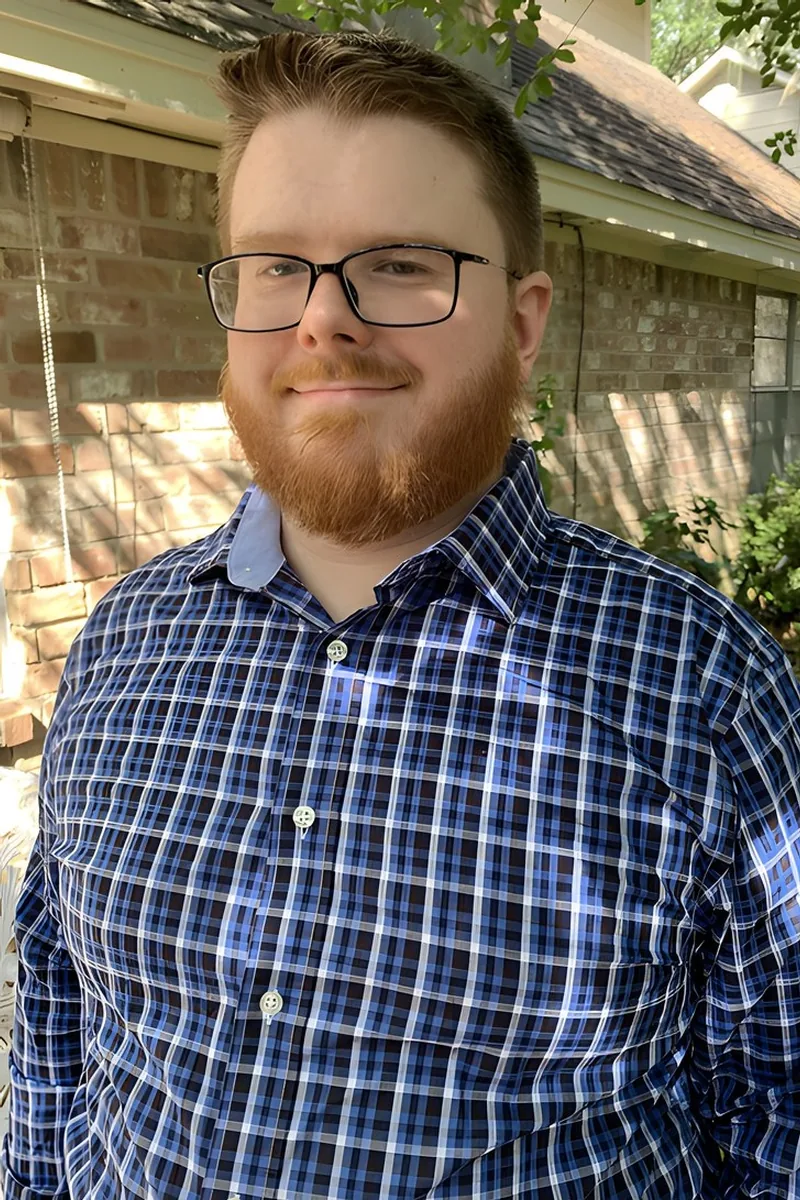
Physics runs on calculus — every force equation, every orbital trajectory, every electromagnetic field Michael studied through his PhD required fluency with integrals, derivatives, and differential equations. That constant application means he teaches calculus not as abstract symbol manipulation but as a toolkit that actually describes how things move, change, and interact. He's especially sharp on multivariable calculus and vector calculus, the areas where most students first feel lost.

Skyler's graduate work is in Russian and Eurasian studies, not mathematics, so calculus sits well outside her academic home — but a 1510 SAT demonstrates she can reason through quantitative material with precision. Her tutoring spans math and science alongside her humanities work, and she brings a language-learner's instinct for decoding unfamiliar notation, which is exactly what trips up most students encountering limits and derivatives for the first time.
Martha's quantitative background in psychology and global health research gave her steady practice with the calculus concepts that trip students up most — derivatives in the context of rates of change, integration for area problems, and the chain rule applied across composite functions. She approaches each topic by connecting the mechanics of problem-solving to the intuition behind them.
Engineering coursework at Yale means Megan uses calculus daily — derivatives, integrals, and differential equations aren't just textbook exercises for her but tools she applies to real problems in fluid dynamics and environmental modeling. She breaks down tricky concepts like the chain rule or integration by parts by connecting each step to a visual or physical intuition that makes the logic stick.
Sophia's degree is in English at Yale, not mathematics, so she's straightforward that calculus isn't her primary lane. That said, her perfect 36 ACT composite reflects genuine quantitative ability, and her approach to close reading — dissecting how each piece of an argument builds on the last — maps surprisingly well onto unpacking the logic of limits and early derivative rules.
Chemical and biological engineering at the undergraduate level means Suzie didn't just take calculus — she used it daily, solving differential equations for reaction kinetics, modeling heat transfer, and optimizing process flows where integrals and derivatives were the working language. That engineering fluency lets her teach concepts like the chain rule or integration by parts with the confidence of someone who's applied them under pressure, not just studied them for an exam. Rated 5.0 by students.
Between biology coursework and medical school, Ruth has used calculus repeatedly in applied settings — enzyme kinetics, drug absorption curves, and the rate-of-change math that underpins physiology. She graduated summa cum laude with her biology degree, which means she didn't just survive calculus; she internalized it well enough to keep building on it through increasingly quantitative material. That depth lets her teach integration and differentiation as tools with real purpose, not just abstract procedures.
Megan's undergraduate biology degree at the University of Michigan required heavy calculus coursework — differential equations, integration techniques, and modeling biological systems with continuous functions. That science-meets-math background means she can explain concepts like the chain rule or area under a curve using concrete, real-world applications rather than purely abstract notation.
Biochemistry at Michigan means Ajay didn't just take calculus — he kept using it, working through enzyme kinetics, reaction rate equations, and the quantitative reasoning that underpins physical chemistry and organic chemistry coursework. That ongoing exposure gives him a practical grip on derivatives and integrals that goes beyond the standard calc sequence, and a 34 ACT composite confirms the quantitative chops to back it up.
I am a learner for life and I love sharing my knowledge with others. I have tutored middle-school students for one year and university students for two years. My focus is mainly on mathematics, chemistry, and related fields. I have degrees in both mathematics and biomedical engineering so I cover a lot of ground in the physiological sciences, computer programming, and statistics as well. Taking tests is one of my strong points and I have some killer strategies to share!
Business students at Michigan Ross don't just encounter calculus in a math class — they use it to optimize profit functions, analyze marginal cost, and model revenue curves. Kerry's BBA coursework means she can walk through derivatives and integrals with those real-world business applications ready to go, turning abstract rules into decisions about pricing, production, and growth. Her 33 ACT composite backs up the quantitative chops behind that approach.
Business administration coursework at Michigan Ross covers optimization, marginal analysis, and cost modeling — all of which require fluency with derivatives and their applications. Jason brings that quantitative business lens to calculus tutoring, connecting rules like the power rule and chain rule to problems about maximizing profit or minimizing cost so the math has a clear purpose. Rated 4.7 by students.
Eva's degree is in English at Harvard, not mathematics, so she's straightforward that calculus isn't her primary lane — but a 35 ACT composite shows she can handle serious quantitative reasoning when the situation calls for it. She approaches early concepts like limits and derivative rules the way she'd approach a dense passage: methodically, one layer at a time, making sure the underlying logic is clear before moving forward.
Computer science at Carleton means Henry has used calculus as a working tool — analyzing algorithm runtimes with limits, optimizing functions in machine learning models, and applying integrals in probability distributions. That gives him a programmer's intuition for derivatives and summation that makes the material feel like problem-solving rather than abstract symbol-pushing.
Heading to the University of Michigan to major in Mathematics, Phil brings the kind of deep comfort with calculus that comes from someone who chose to build a career around it. His 35 ACT composite backs up that quantitative fluency, and he's particularly effective at adapting how he explains concepts like the chain rule or integration techniques to match how each student actually thinks through problems.
Dental school at Michigan means Surina uses calculus constantly without calling it that — pharmacokinetic models for anesthesia dosing, rate-of-change problems in bone remodeling, and the integration concepts behind drug absorption curves are all part of her daily training. Her microbiology background adds another layer, since bacterial growth models are essentially derivative problems in disguise. Rated 5.0 by students.
Computer science at Michigan means Nikitha didn't just take calculus — she used it, working through the optimization algorithms, summation logic, and continuous-to-discrete translations that underpin so much of CS theory. That gives her a programmer's intuition for derivatives and integrals: she can explain what's happening under the hood of a formula the same way she'd walk through what's happening under the hood of a function. Rated 5.0 by students.
Rachel's background is in special education and elementary/middle school math, so she's honest that calculus isn't her deepest subject. That said, her experience teaching math across grade levels means she knows how to slow down and unpack foundational ideas — like what a limit is really saying or how slope becomes a rate of change — for students who need the conceptual buildup before the formulas make sense.
Psychology research leans on statistics, but Trishani's math tutoring background runs deeper — she's taught the full progression from elementary arithmetic through algebra and pre-calculus, which means she understands exactly where students' foundations crack when they hit concepts like limits and derivatives for the first time. She zeroes in on rebuilding the algebraic fluency that makes calculus manageable, particularly the function behavior and rate-of-change intuition that textbooks tend to rush past. Rated 5.0 by students.
Between pharmacokinetics in medical school and biochemistry research at the NIH, Uchenna has spent years working with the calculus that underpins biological systems — drug clearance rates modeled by integrals, enzyme kinetics driven by derivatives, and concentration curves that only make sense through differential equations. His magna cum laude biochemistry degree from UMBC means the quantitative foundations are rigorous, not just applied. Rated 4.9 by students.
Ceren's academic home is in creative writing and psychology, not mathematics, so she's upfront that calculus is outside her core expertise. Her experience tutoring math at multiple levels means she can support students working through early concepts like limits and basic derivatives, bringing the same careful, structured thinking that defines her writing instruction.
Geology-Biology at Brown meant Rebekah spent semesters applying calculus to real physical systems — modeling sediment transport rates, analyzing how mineral concentrations change through rock layers, and interpreting the differential equations behind geological processes. That science-lab fluency with derivatives and integrals gives her a way to teach the material as something tangible rather than purely abstract. Rated 5.0 by students.
Engineering science at Michigan State meant William didn't just take calculus — he used it daily, applying derivatives to model system dynamics and integrals to solve real force-and-motion problems across mechanical and electrical domains. That hands-on engineering context makes him especially effective at explaining *why* the chain rule or integration by parts works, not just how to execute the steps. Rated 5.0 by students.
Pursuing a chemistry doctorate at the University of Michigan means Tyler uses calculus daily — reaction rate equations, thermodynamic integrations, and the differential equations that govern chemical kinetics are all part of his research toolkit. That hands-on fluency lets him teach concepts like the chain rule or integration by substitution through problems rooted in how real systems behave, not just textbook exercises. Rated 5.0 by students.
Mechanical engineering students don't just take calculus — they live in it, from stress analysis to fluid dynamics to thermodynamic modeling, which means Nikki encounters derivatives and integrals as working tools every day in her coursework at Eastern Michigan. That engineering context lets her explain concepts like integration by parts or the chain rule through physical problems where the math actually drives a result. Rated 5.0 by students.
Tackling limits, derivatives, and integrals requires more than memorizing formulas — it requires seeing how each concept builds on the last. Vikhyathi's science-heavy coursework at the University of Michigan means she uses calculus regularly, from modeling biological systems to analyzing rates of change, and she brings that applied perspective into her teaching.
Biology at Michigan means Samantha has pushed through calculus the way most science students do — modeling population growth with differential equations, calculating rates of enzyme activity, and using integrals to analyze area under concentration curves. That firsthand experience with calculus as a tool for solving real problems gives her a practical vocabulary for explaining derivatives and integrals that pure-math approaches often skip. Her 35 ACT composite confirms the quantitative chops to back it up.
Biochemistry at Michigan meant Kirby didn't just take calculus — she used it, working through reaction rate equations, enzyme kinetics curves, and the integration problems that show up whenever you're modeling how concentrations change over time. That hands-on scientific context gives her a way to teach derivatives and integrals as tools with a purpose, not just abstract procedures on a worksheet. Rated 4.9 by students.
Limits, derivatives, and integrals aren't just hoops to jump through — Haley uses all three constantly in her chemical engineering program at Michigan, from modeling reaction rates to analyzing fluid flow. That real-world fluency means she can explain why the chain rule works the way it does, not just walk through the steps. She's particularly sharp on applied optimization and related rates problems.
Psychology research leans heavily on statistical modeling, and Alexandra's BS training gave her hands-on experience with the rate-of-change thinking that underpins calculus — interpreting slopes on growth curves, understanding how variables shift in relation to each other. Her 33 ACT composite confirms strong quantitative chops, and she brings that analytical mindset to early calculus topics like limits and differentiation, making the notation less intimidating by connecting it to patterns students can actually visualize. Rated 5.0 by students.
An English degree and years running writing workshops don't scream calculus, and Julia is honest about that — this is far from her primary territory. That said, her analytical training at Denison and her experience teaching structured, step-by-step reasoning through writing translates surprisingly well to walking through the logic of limits and early derivatives, where understanding the *shape* of an argument matters as much as the computation.
Chemical engineering at Michigan means Alec isn't just taking calculus — he's applying it daily, whether it's solving heat transfer equations, modeling fluid flow, or optimizing reactor designs. That constant use gives him an intuitive grasp of derivatives and integrals that he can translate back into the foundational language students need when they're first encountering the material. Rated 5.0 by students.
Engineering PhD work at Michigan means Vazrik uses calculus daily — whether he's modeling phase transformations in materials science, solving heat transfer equations, or analyzing stress-strain relationships that depend on integration techniques. That hands-on fluency with both single-variable and multivariable calculus lets him teach concepts like the chain rule or integration by parts through problems where the math is doing real physical work. Rated 4.7 by students.
Derivatives and integrals clicked for Nicholas during his biochemistry studies at Michigan, where calculus wasn't just a math requirement but a tool for modeling reaction rates and enzyme kinetics. He teaches limits, the chain rule, and integration techniques by grounding each one in a concrete problem so the logic sticks beyond exam day.
Economics coursework at the undergraduate level is built on calculus — marginal analysis, optimization of cost and revenue functions, and interpreting how small changes in one variable ripple through a model all require fluency with derivatives and integrals. Jack has internalized that math through his economics degree, which means he teaches calculus concepts with an intuitive sense of what they're actually for. Rated 4.9 by students.
An Applied Physics degree means Juliane didn't just take calculus — she used it daily, working through integrals in electromagnetism, derivatives in kinematics, and differential equations in wave mechanics. That physics-trained intuition for what a function is actually doing makes her especially effective at teaching concepts like the chain rule or integration by parts, where seeing the structure matters more than grinding through steps. Rated 4.9 by students.
Graduate-level coursework in education gave Anna a deep understanding of how people learn sequential, concept-dependent material — which is exactly what calculus is, where every new idea (limits, derivatives, integration) builds on the last. Her psychology background adds insight into where and why students get stuck on abstract reasoning, so she can pinpoint the specific conceptual gap rather than just re-explaining the same procedure louder.
Business majors at Michigan don't just take calculus — they live in it, from marginal cost analysis to optimization problems that drive real pricing and production decisions. Sarnath is working through that coursework right now, which means the material is fresh and he can pinpoint exactly where concepts like the chain rule or related rates tend to trip students up. His 33 ACT composite backs up the quantitative chops behind that firsthand experience.
Limits, derivatives, and integrals each build on the one before, so a shaky grasp of early concepts can snowball fast. Timothy's math minor coursework at Michigan keeps him sharp on calculus fundamentals, and he unpacks tricky topics like the chain rule and related rates by tying them back to the algebraic skills students already have.
Engineering coursework doesn't just teach calculus — it pressure-tests it, forcing you to apply integration by parts, multivariable chain rules, and convergence tests to problems that actually matter. Justin brings that applied fluency to his calculus tutoring, walking through each technique with the kind of intuition that comes from having used it repeatedly in design and analysis work.
Testimonials
Because the right Calculus tutor makes all the difference.
Average Session Rating – Based on 3.4M Learner Ratings
Other Ann Arbor Tutors
Related Math Tutors in Ann Arbor
Frequently Asked Questions
Varsity Tutors matches Ann Arbor students with expert Calculus tutors for 1-on-1 instruction. We pair each student with a tutor based on their specific needs, learning style, and goals.
Whether you need homework help, exam prep, or want to get ahead, our Calculus tutors are ready to help.
Common challenges include gaps from earlier material, difficulty with specific concepts, and trouble applying learning to new problems. These issues can snowball quickly in Calculus.
A tutor identifies where you're stuck, fills in gaps, and provides targeted practice. The 1-on-1 format means you get help exactly where you need it.
Tutors work with your student's actual coursework—homework assignments, class notes, and upcoming tests. This keeps tutoring directly relevant to what's happening in the classroom.
When you share information about your student's school and curriculum, we can match you with a tutor who has relevant experience.
All tutors complete background checks, credential verification, and teaching evaluation. Many of our Calculus tutors hold advanced degrees or have years of teaching experience.
You can review tutor profiles to find someone with the right background for your student's level and needs.
Many students see improved grades within a few weeks, along with better understanding of Calculus concepts and more confidence tackling challenging material.
Tutors track progress and adjust their approach to ensure continued improvement.
Most students benefit from 1-2 sessions per week. More frequent sessions help if your student is significantly behind or has an important exam coming up.
Your tutor can recommend a schedule based on your student's specific situation and goals.
Tutoring is purchased in packages of hours, with rates varying by tutor experience. Varsity Tutors offers several options to fit different budgets and needs.
You can discuss pricing during your consultation to find what works best.
Your tutor will assess where your student is, discuss goals, and start working on priority areas. Most students bring current homework or upcoming test material to focus on.
By the end, you'll have a clear sense of how the tutor can help and a plan for moving forward.
Let’s find your perfect tutor
Answer a few quick questions. We’ll recommend the right plan and match you with a top 5% tutor.