Award-Winning AP Chemistry Tutors
serving Albany, NY
AP Chemistry
Tutors in Albany
Private 1-on-1 tutoring, weekly live classes for academic support, test prep & enrichment, practice tests and diagnostics, and more to elevate grades and test scores.
Based on 3.4M Learner Ratings
UniversitiesSchools & Universities
DeliveredHours Delivered
ProficiencyGrowth in Proficiency
Who needs tutoring?
No obligation. Takes ~1 minute.

Equilibrium calculations and thermodynamics tend to be the units where AP Chemistry separates students who understand the 'why' from those running on memorized procedures. Sharan digs into the conceptual logic behind Le Chatelier shifts and Gibbs free energy so that quantitative problems feel like extensions of ideas, not isolated formulas. Her premed science background at Cornell keeps her sharp on exactly the kind of rigorous problem-solving the AP exam rewards.
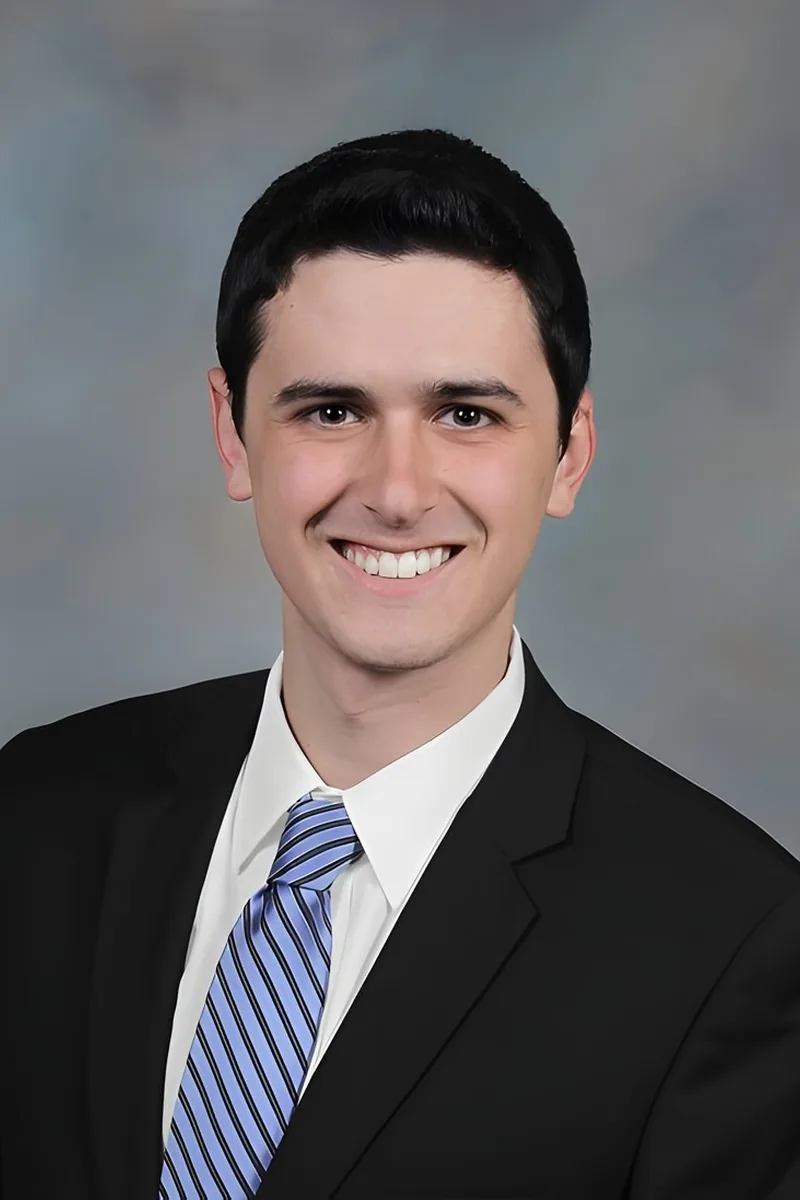
Neuroscience at Yale meant David didn't just take chemistry — he needed it to make sense of membrane potentials, neurotransmitter synthesis, and receptor pharmacology, all of which rest on principles like electrochemistry and molecular interactions that show up directly on the AP Chemistry exam. That gives him a knack for explaining why a reaction proceeds spontaneously or how intermolecular forces dictate physical properties, because he learned those concepts as tools for solving real problems, not as isolated textbook chapters. Rated 5.0 by students.
Cornell's Chemistry & Chemical Biology program meant Samantha spent years doing the kind of lab work and quantitative problem-solving that AP Chemistry's free-response section is designed to test — from designing experiments around reaction stoichiometry to interpreting spectroscopic data. She's a deeply visual teacher who uses molecular models and diagrams to make abstract ideas like orbital hybridization and intermolecular forces click, especially for students who struggle when the textbook stays purely symbolic. Rated 5.0 by students.
Running an immunology lab at Columbia University Medical Center means Matthew deals with chemical assays, buffer systems, and reaction protocols daily — the kind of hands-on chemistry that makes AP topics like acid-base equilibria and reaction energetics feel concrete rather than abstract. His physics degree also sharpens how he teaches the thermodynamics and kinetics portions of the exam, where understanding energy relationships mathematically is just as important as knowing the chemistry. A 35 ACT and 1540 SAT reflect the analytical precision he brings to exam preparation.
Blake's neuroscience studies at Vanderbilt required college-level chemistry where concepts like molecular bonding, reaction energetics, and acid-base chemistry weren't electives — they were foundations for understanding how the brain works at a chemical level. That background means he can teach AP Chemistry's trickiest quantitative problems, from stoichiometry to gas laws, while explaining the molecular logic behind each step. His 34 ACT and 5.0 rating speak to the rigor and clarity he brings to exam preparation.
Immunology and genetics lab work at Washington University in St. Louis gave Colin hands-on experience with the chemical principles — reaction kinetics, molecular interactions, acid-base behavior — that AP Chemistry tests in a more theoretical context. His biology degree required extensive chemistry and physics coursework, so he teaches topics like electrochemistry and thermodynamics by connecting them to the real molecular systems he studied in the lab. MCAT scores in the 91st percentile confirm his command of the physical sciences content this course demands.
James is finishing a chemistry degree at UB while simultaneously working toward a master's in education — meaning he's studying both the content of AP Chemistry and the craft of teaching it at the same time. His teaching assistant experience in college chemistry courses sharpened his ability to explain concepts like electron configuration and reaction stoichiometry in multiple ways until something clicks. Rated 4.7 by students.
I am a physician in training, living in New York City. I was born and grew up in Minneapolis, Minnesota. I lived in both Israel and Denmark growing up. I went to the University of Pennsylvania for college, where I majored in history and completed the pre-med curriculum. I graduated from Penn cum laude and went on to medical school at Tufts University in Boston. I went on to complete my internship and residency in internal medicine at The Mount Sinai Hospital in New York City. I continue to live in New York and am now completing a fellowship (speciality training) in gastroenterology on Long Island.
Kevin earned his chemistry degree at Penn, where the department's emphasis on physical and analytical chemistry gave him a deep understanding of the quantitative reasoning AP Chemistry demands — particularly in areas like electrochemistry and thermodynamic calculations that require more than plugging into equations. He started tutoring the subject back in high school, prepping classmates for AP exams, and that early instinct for anticipating where students get stuck has only sharpened since. Rated 4.8 by students.
Sourav is a Chemistry professor at SUNY with a Ph.D. from UConn, meaning he's taught concepts like equilibrium, bonding theory, and reaction kinetics at levels far beyond what AP requires. That depth shows up in how he tackles the exam's trickiest free-response prompts — connecting particulate diagrams to mathematical reasoning in a way that earns full credit. Rated 5.0 by students.
Neuroscience majors don't just dabble in chemistry — Deana's degree required deep engagement with chemical bonding, molecular interactions, and the thermodynamic principles that govern how neurotransmitters and proteins behave at the atomic level. She unpacks AP Chemistry's toughest conceptual areas, like Le Chatelier's principle and solution chemistry, by tying them back to tangible molecular scenarios that make the logic stick. Rated 4.9 by students.
Hyun's applied math background at Notre Dame — with a biology concentration — means he approaches AP Chemistry's quantitative side (ICE tables, Hess's law, rate law calculations) with the kind of mathematical fluency that turns intimidating multi-step problems into structured exercises. He also spent two years tutoring at Turning Point, where he developed multiple problem-solving approaches for each topic so students aren't stuck when their first strategy doesn't click. His 34 ACT reflects the analytical rigor he brings to exam-style questions.
A biology degree from Binghamton means Gabrielle built her understanding of living systems on top of serious college chemistry — the kind where acid-base equilibria, molecular bonding, and thermodynamics aren't standalone topics but tools for explaining how biological processes actually work. She brings that integrated perspective to AP Chemistry, particularly when teaching students to reason through free-response questions on reaction energetics and equilibrium rather than defaulting to formula hunting. Rated 4.9 by students.
Equilibrium calculations, thermodynamics, and electrochemistry each have their own logic, and AP Chemistry expects students to move fluidly between all of them. Tara's medical school background means she applies chemistry concepts constantly and can show students how reaction kinetics and molecular interactions actually matter beyond the exam. She holds a 5.0 rating from her students.
AP Chemistry's toughest units — equilibrium, thermodynamics, electrochemistry — require students to think quantitatively about invisible processes. Thomas brings both the math fluency and the molecular intuition for this, since his biochemistry degree demanded mastery of these exact concepts in contexts like enzyme kinetics and reaction energetics.
AP Chemistry's free-response questions demand more than memorized reactions — they require students to connect thermodynamic reasoning, equilibrium shifts, and kinetic data into coherent written arguments. Shin tackles these connections head-on, drawing on his engineering chemistry foundation at Columbia to unpack topics like electrochemistry and intermolecular forces at the level the exam expects.
Currently studying chemistry at Carnegie Mellon, Alex is learning the college-level material that AP Chemistry is building toward — from thermodynamics and kinetics to electrochemistry and acid-base equilibria — in real time. That means he can pinpoint exactly where the AP curriculum's explanations fall short and fill in the deeper reasoning that makes multi-step free-response problems solvable rather than overwhelming. Rated 4.8 by students.
One of Eric's proudest tutoring moments was coaching an Honors Chemistry student from an 83 to a 96 over a single semester — the kind of improvement that comes from rebuilding how a student thinks about reactions, not just drilling practice problems. His finance and statistics background at NYU sharpens the quantitative side of AP Chemistry, particularly stoichiometric reasoning and equilibrium calculations where careful setup matters more than memorized formulas. Rated 5.0 by students.
A chemistry degree from SUNY Geneseo means James didn't just study AP-level material — he spent years in college labs and coursework where concepts like equilibrium, electrochemistry, and reaction thermodynamics were daily currency. He draws on that depth to unpack the free-response questions that intimidate most students, teaching them to read what a problem is really asking before touching a calculator. Rated 5.0 by students.
Biology majors at Villanova don't just take AP-level chemistry — they take the college version, where understanding reaction stoichiometry and acid-base equilibria is prerequisite to everything from genetics to physiology. Nicole draws on that ongoing coursework to teach AP Chemistry's quantitative problems with an emphasis on why the math tracks the way it does, particularly in areas like gas laws and solution chemistry where unit analysis can make or break a free-response answer.
Hi! My name is Mandy, and I am a Biochemistry and Psychology double major with a minor in Finance at Stony Brook University. I am passionate about helping students build confidence in their abilities and achieve their academic goals. As an Undergraduate Teaching Assistant for Introductory Biology Laboratory at Stony Brook University, I work closely with students to explain complex concepts, guide laboratory activities, teach data analysis using Excel, and help students improve their scientific writing skills. Through this experience, I have learned that every student learns differently, and I enjoy adapting my teaching style to meet each student's individual needs. I tutor biology, chemistry, psychology, ACT preparation, and study skills for middle school, high school, and college students. My approach focuses on breaking down challenging topics into manageable steps while encouraging students to think critically and develop effective problem-solving strategies. I strive to create a supportive and welcoming environment where students feel comfortable asking questions and learning from mistakes. As a student myself, I understand the challenges that come with balancing coursework, exams, and extracurricular responsibilities. Because of this, I emphasize not only subject mastery but also strong study habits, organization, and confidence-building techniques that students can apply throughout their academic journey. Whether you're preparing for an important exam, looking to improve your grades, or seeking a deeper understanding of a subject, I would love to help. I look forward to working with you and supporting your success!
Rice University's kinesiology program required Tori to tackle the full general and organic chemistry sequence alongside a biochemistry and cell biology minor — meaning she's worked through the same reaction energetics, acid-base chemistry, and molecular structure concepts that AP Chemistry students face, but applied them to biological systems like metabolic pathways and enzyme function. That applied lens gives her a knack for making abstract topics like enthalpy diagrams and Le Chatelier's principle feel concrete and purposeful. Rated 4.9 by students.
AP Chemistry's free-response questions demand more than knowing content — they require structured reasoning about equilibrium, thermodynamics, and kinetics under time pressure. As a chemical engineering major at Columbia, Jordan tackles these topics in advanced coursework every semester and knows exactly where the AP exam tests conceptual depth versus calculation speed.
AP Chemistry's free-response questions demand more than memorized formulas — they require students to connect equilibrium, thermodynamics, and kinetics into coherent explanations. Jared's Cornell biology training gave him deep fluency in chemistry at the molecular level, and his experience as a TA taught him how to break down multi-step problems so the reasoning clicks. Rated 4.8 by students.
Thermodynamics, equilibrium, and electrochemistry require students to think quantitatively and conceptually at the same time — a combination that doesn't come naturally. Jay's biochemistry background and ongoing cardiology research mean he regularly applies these chemical principles in biological contexts, giving him a knack for explaining why Le Chatelier's principle or Hess's law actually matters beyond the exam.
Currently studying biochemistry at Barnard College, Meghna is neck-deep in the college-level chemistry that AP students are working toward — and she's tutored both high school and college students specifically in AP Chem and organic chemistry. Her neural engineering research adds a practical dimension to topics like electronegativity and molecular interactions, since she sees those principles govern real systems daily. Rated 4.7 by students with a 35 ACT.
Equilibrium, thermodynamics, and electrochemistry are where AP Chem gets genuinely difficult, because they demand both conceptual reasoning and precise math. Aaron's biochemistry degree at Columbia requires deep fluency in exactly these areas, and he approaches each topic by unpacking the underlying logic before touching a calculator. He holds a 5.0 client rating.
Equilibrium, thermodynamics, and electrochemistry each have their own logic, and AP Chemistry expects students to toggle between all of them under time pressure. Mariam's dual background in biology and chemistry means she connects molecular-level behavior to quantitative problem-solving — teaching students to set up ICE tables or balance redox half-reactions with genuine understanding of what's happening at the particle level.
As a teaching assistant for Calc IV and a residential tutor for Organic Chemistry at Stony Brook, Krish has spent semesters breaking down the kind of multi-step quantitative reasoning that AP Chemistry's free-response questions demand — particularly in stoichiometry and gas law problems where one missed conversion derails everything. His chemical engineering major means he doesn't just know the reactions; he understands the thermodynamic and kinetic principles driving them, which lets him explain why equilibrium shifts or why a reaction is spontaneous instead of asking students to memorize rules.
Daniel earned his B.S. in Chemistry and is heading to the University of Maryland for his PhD this fall — meaning he's not just familiar with AP Chemistry content like equilibrium, electrochemistry, and kinetics, but actively doing research that depends on it. He teaches students to recognize the structural patterns in problems so they can adapt when exam questions present familiar concepts in unfamiliar ways. Rated 5.0 by students.
Daniel's double major in Applied Mathematics and Physics at Rensselaer Polytechnic Institute means he spent years working through the quantitative backbone of chemistry — thermodynamics, kinetics, and the mathematical modeling that ties energy changes to molecular behavior. He unpacks AP Chemistry's most calculation-heavy topics, like enthalpy diagrams and equilibrium constants, by showing students the physical intuition behind the math instead of treating formulas as black boxes.
Damani's pre-med coursework at Columbia covered the exact material AP Chemistry tests — equilibrium, thermodynamics, electrochemistry, and molecular orbital theory. He approaches each unit by linking the math (ICE tables, Hess's law calculations) to the conceptual reasoning the AP exam rewards on free-response questions. That combination of quantitative precision and conceptual depth is why students rate him 5.0.
Stoichiometry, equilibrium, thermodynamics, and electrochemistry each demand a slightly different way of thinking, which is what makes AP Chem so challenging. Ben approaches each unit by anchoring abstract ideas to concrete calculations — turning Le Chatelier's principle, for instance, into a predictable decision-making tool. His science-heavy pre-dental track at Rochester means these concepts are part of his daily coursework.
As a chemistry major in Stony Brook's Scholars for Medicine program, Kunal is immersed in college-level chemistry daily — from reaction kinetics to acid-base equilibria — which gives him a clear picture of exactly where AP Chem concepts are heading. He teaches students to think through problems like ICE tables and enthalpy diagrams by connecting each step to the underlying chemistry rather than treating them as rote procedures. Rated 4.8 by his students.
Being in Brooklyn College's BAMD program means Olga is taking college-level chemistry courses right now — the same material that underpins AP Chemistry's toughest units on bonding, acid-base equilibria, and reaction energetics. She teaches the problem-solving logic behind each concept, connecting particulate diagrams to the math so students can tackle both multiple-choice and free-response questions with confidence. Rated 4.9 by her students.
Biomedical science coursework means Charlene encounters chemistry not as an isolated subject but as the language underlying physiology, pharmacology, and disease — context that makes AP Chemistry topics like acid-base equilibria and reaction thermodynamics feel purposeful rather than abstract. She zeroes in on the free-response section's demand for clear, logical reasoning, teaching students to articulate their problem-solving steps the way the exam actually scores them. Rated 4.7 by students.
Thermochemistry, equilibrium, and electrochemistry each require a different style of quantitative reasoning, and AP Chemistry expects students to switch between them fluidly. Usama unpacks the logic behind each calculation — why Hess's Law works, what Le Chatelier's principle actually predicts at the molecular level — so students can handle unfamiliar problem setups on exam day. His dual comfort with biology and chemistry makes biochemical crossover questions especially easy to address.
I graduated from Binghamton University, a top state university in New York, with a B.S. in Biochemistry. I have over two years of experience tutoring K-12 chemistry (including AP/IB Chemistry and elementary science). My teaching philosophy focuses on understanding each student's unique learning style and adapting my methods accordingly. I strive to create a supportive learning environment where students feel comfortable exploring complex concepts. I am particularly proud to have received the Educator of the Month award from Numerate Labs for my work in K-12 chemistry tutoring.
Equilibrium, thermodynamics, and reaction kinetics aren't abstract concepts to Zachary — they're the foundation of every drug interaction and formulation he studied in pharmacy school. He teaches AP Chemistry by tying each unit back to tangible applications, making concepts like Le Chatelier's principle and electrochemistry click rather than blur together.
Columbia's Biostatistics program requires Suhina to think about chemical data the way AP Chemistry's free-response section demands — interpreting experimental results, quantifying uncertainty, and connecting numerical outputs back to molecular behavior. Her bioengineering degree from UC Berkeley built the foundation in thermodynamics, kinetics, and equilibrium that she now uses to unpack the trickiest AP problem types, especially those requiring students to reason through multi-step quantitative setups rather than recall a single formula.
Testimonials
Because the right AP Chemistry tutor makes all the difference.
Average Session Rating – Based on 3.4M Learner Ratings
Practice AP Chemistry
Free practice tests, flashcards, and AI tutoring for AP Chemistry
Nearby AP Chemistry Tutors
Other Albany Tutors
Related Science Tutors in Albany
Frequently Asked Questions
AP Chemistry covers eight major units: atomic structure and properties, molecular and ionic bonding, intermolecular forces and properties, chemical reactions, kinetics, thermodynamics, equilibrium, and acids and bases. The course emphasizes both conceptual understanding and problem-solving skills, with labs and experiments playing a key role in the curriculum. Students typically spend the year building from foundational concepts like mole calculations to complex topics like equilibrium constants and reaction rates.
Score improvement depends on your starting point and consistency with tutoring. Students who work with tutors typically see gains of 1-3 points on the AP scale (out of 5), with stronger improvements when tutoring begins early in the year rather than just before the exam. The key is identifying your specific weak areas—whether that's stoichiometry, equilibrium, or free-response strategies—and targeting those systematically over time.
Many students struggle with the mathematical reasoning required for stoichiometry and equilibrium problems, as well as connecting macroscopic observations to molecular-level explanations. Time management during the exam is another common challenge—the multiple-choice section requires quick problem-solving, while free-response questions demand clear communication of reasoning. Additionally, students often underestimate the importance of lab skills and experimental design, which make up a significant portion of the AP exam.
Effective AP Chemistry test-taking starts with understanding the format: 60 multiple-choice questions in 90 minutes, followed by three long free-response and four short free-response questions in 105 minutes. On the multiple-choice section, eliminate obviously wrong answers and manage your time so you don't get stuck on difficult problems. For free-response questions, show all your work and reasoning—partial credit is available even if your final answer is incorrect. Practice tests under timed conditions are essential for building confidence and identifying which question types slow you down.
Most AP Chemistry students benefit from 5-7 hours of study per week throughout the school year, with increased intensity in the weeks before the May exam. This includes time spent in class, completing problem sets, reviewing concepts, and taking practice tests. In the final 4-6 weeks before the exam, many students increase their study time and shift focus to full-length practice exams and reviewing weak areas identified through tutoring sessions.
Free-response questions require you to explain your reasoning step-by-step, so practice writing out complete solutions rather than just calculating answers. Focus on clearly stating what you're solving for, showing all calculations, and explaining the chemistry concepts behind your approach. Work through released AP exams and sample questions, and have someone review your responses for clarity and completeness—this is where tutors can provide valuable feedback that helps you communicate your thinking more effectively.
Look for tutors with strong chemistry backgrounds, ideally with experience teaching or tutoring AP-level students. Tutors who are familiar with the current AP Chemistry curriculum and exam format can help you focus on what actually matters for your score. It's also valuable to work with someone who can explain concepts in multiple ways and help you understand not just how to solve problems, but why certain approaches work.
Your first session typically focuses on assessment and goal-setting. A tutor will likely review your current understanding of key AP Chemistry concepts, identify your strongest and weakest areas, and learn about your learning style and exam timeline. From there, you'll work together to create a personalized study plan that addresses your specific challenges, whether that's conceptual gaps, problem-solving speed, or exam strategy.
Let’s find your perfect tutor
Answer a few quick questions. We’ll recommend the right plan and match you with a top 5% tutor.