Award-Winning IB Mathematics: Analysis and Approaches Tutors
serving Brooklyn, NY
IB Mathematics: Analysis and Approaches
Tutors in Brooklyn
Private 1-on-1 tutoring, weekly live classes for academic support, test prep & enrichment, practice tests and diagnostics, and more to elevate grades and test scores.
Based on 3.4M Learner Ratings
UniversitiesSchools & Universities
DeliveredHours Delivered
ProficiencyGrowth in Proficiency
Who needs tutoring?
No obligation. Takes ~1 minute.

IB Analysis and Approaches demands comfort with abstraction — moving fluidly between trigonometric identities, differential calculus, and probability distributions, often within the same paper. Anna's science background means she can contextualize these tools in real modeling scenarios, which is exactly what IB examiners reward in Paper 3. She also knows how to structure the exploration (IA) so the mathematics drives the narrative rather than decorating it.
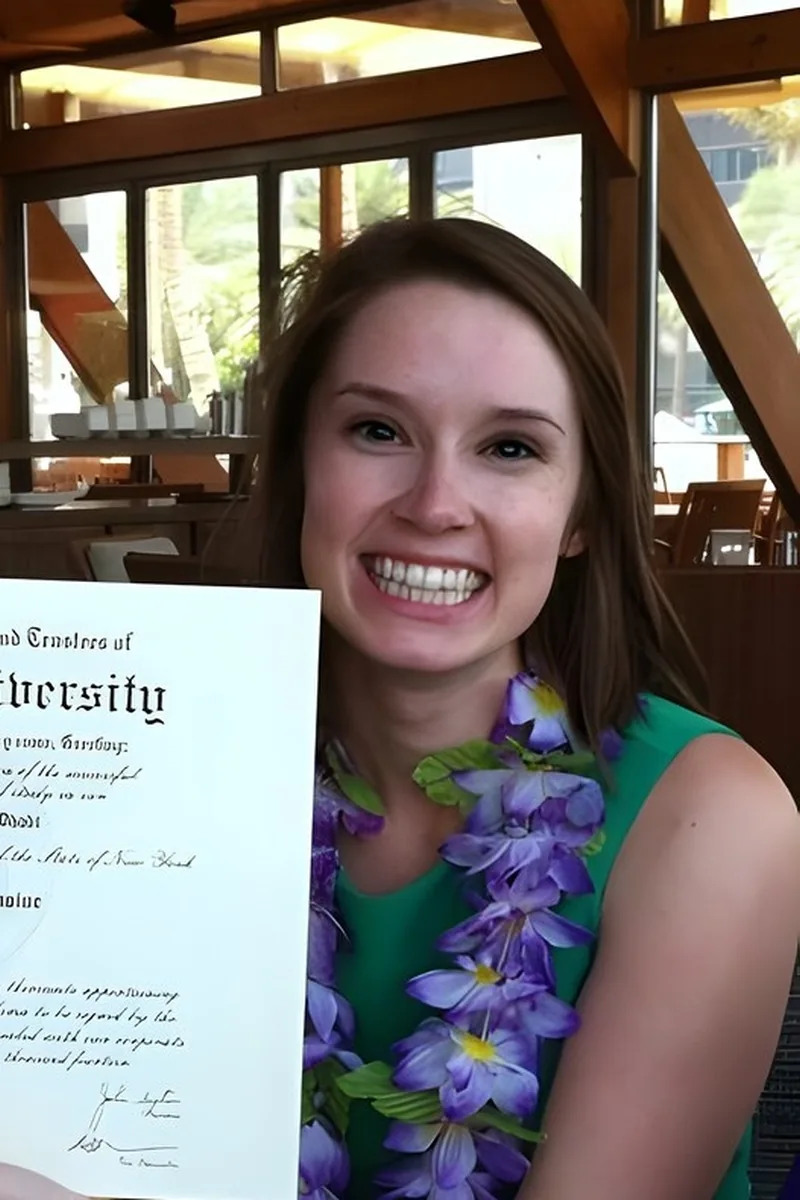
IB Analysis and Approaches leans heavily on proof-style reasoning and formal calculus — topics that reward deep understanding over formula memorization. Carmen teaches across the full IB math lineup, so she knows exactly where AA diverges from Applications and Interpretation and can tailor sessions to the specific paper formats and internal assessment expectations. She's especially sharp on the connections between functions, derivatives, and their graphical interpretations that Paper 2 loves to test.
IB Math: Analysis and Approaches blends proof-based reasoning with applied problem-solving across topics like sequences, differential calculus, and probability distributions. Anna's comfort with both pure and applied math — developed through coursework up to Calc 2 and a neuroscience major heavy on quantitative analysis — makes her well-suited to the program's dual demands. She emphasizes the internal logic connecting each unit so students can handle the exam's less predictable questions.
IB Analysis and Approaches is proof-heavy and conceptual in a way that surprises students used to procedural math classes — the exam expects real reasoning about functions, sequences, and differential calculus. Having navigated the IB system herself, Kaya knows how to prepare for both Paper 1's no-calculator rigor and Paper 2's applied problems. She also coaches students through the internal assessment from topic selection to final write-up.
IB Math: Analysis and Approaches demands fluency across calculus, proof-based reasoning, and mathematical modeling at a level that surprises many students. Ryan's coursework at Cornell in computer science overlaps heavily with the program's emphasis on sequences, series, and formal logic, giving him a practical grip on the material that goes well beyond exam prep.
IB Math: Analysis and Approaches demands comfort with proof-style reasoning and multi-step problems that blend calculus, algebra, and statistics in a single question. Allison's physics background gives her fluency with the kind of mathematical modeling the IB curriculum emphasizes, and her eight years of tutoring experience mean she knows how to pace students through both SL and HL content without letting anything slip through the cracks.
IB Analysis and Approaches leans heavily into proof, abstraction, and mathematical reasoning — territory Sabry navigates naturally after years of graduate-level applied mathematics. He digs into the trickier HL topics like complex numbers, differential equations, and series convergence with concrete examples drawn from physics and engineering, making the theoretical content feel grounded.
IB Analysis and Approaches leans heavily on proof, calculus, and algebraic rigor — especially at Higher Level, where topics like complex numbers and differential equations demand deep conceptual fluency. Jing's 99th-percentile GMAT quant performance reflects the kind of precise mathematical reasoning this course requires, and she structures sessions around the long-form problem style IB exams actually use.
IB Analysis and Approaches leans heavily on proof-based reasoning and formal calculus — topics like convergence of series, differential equations, and rigorous probability that demand both computational skill and conceptual clarity. Emily's math background extends through Calc 3, giving her the depth to explain the theory behind HL topics rather than just walking through mark schemes. As a University of Chicago student familiar with the IB system, she also knows how to prep for the paper-specific question styles that catch students off guard.
Analysis and Approaches is the IB's most proof- and theory-heavy math course, demanding fluency in topics from complex sequences and series to differential equations. John's Yale-trained analytical rigor and self-described love of problem-solving make him well-suited to a curriculum that prizes mathematical reasoning over calculator shortcuts. He's particularly strong at walking students through multi-step problems where choosing the right approach matters as much as executing it.
IB Analysis and Approaches leans heavily on proof-style thinking and formal calculus, which can overwhelm students used to procedural math. Wesley's dual-degree engineering training at UC Irvine required exactly this kind of rigorous mathematical reasoning, and he unpacks topics like convergence tests, complex differentiation, and vector geometry with the precision the HL exams demand.
I am a firm believer of this and, as such, I do not spoon feed students during sessions but rather guide them to figure out how to answer their own questions and solve their own problems. Thus, I focus not only on what to do, but how and why to do it. One of the most significant drivers of independent learning is curiosity, and this is one of the primary traits I aim to cultivate in students.
I am not someone who is satisfied when a student memorizes steps to solve a problem. I always want the student to understand what he/she is doing and why they are doing. This insight will make them a stronger, faster and better student, particularly in the field of mathematics. This brings the student long term results that could extend far beyond the work done in the tutoring sessions. Mathematics is my love and economics is my passion and because of this I bring incredible enthusiasm for the subject to my work. I bring the beauty of mathematics into my explanations, through theoretical and visual interpretations. In my spare time I like to paint and run.
Having completed the full IB programme at the highest level — earning 39 out of 45 points — Brad knows the specific demands of Analysis and Approaches, from the paper structure to the depth expected in calculus and probability topics. He unpacks the exam's emphasis on multi-step justification, teaching students to write solutions that earn full marks on show-that and proof-style questions.
IB Analysis and Approaches leans heavily on proof-style thinking — the kind of rigor that standard high school math courses rarely demand. Nikhil's university-level math training at NYU maps directly onto the HL syllabus topics like complex numbers, differential equations, and series convergence. He also understands the IB exam format, including how internal assessments are scored and structured.
IB Analysis and Approaches leans heavily on proof-style thinking and abstract problem-solving, especially in Paper 1's non-calculator sections. Diptesh's chemistry concentration at NYU means he regularly applies calculus, series, and complex algebra in scientific contexts — giving him a practical fluency with the mathematical rigor this course demands.
IB Analysis and Approaches leans heavily on proof-style thinking and formal calculus, which can feel like a steep jump from previous math courses. Jared breaks down topics like differential equations and series convergence by tying them to the scientific applications he studied at Cornell, making the abstract reasoning feel purposeful. His experience with IB Mathematics at both SL and HL levels means he knows exactly how the exam rewards structured problem-solving.
IB Analysis and Approaches demands comfort with proof-style reasoning and multi-step problems that blend calculus, algebra, and trigonometry into a single question. Saad's experience across all three math levels, combined with his own background in quantitative coursework at Vanderbilt, makes him well-suited to tackle Paper 1 and Paper 2 style problems. He emphasizes building the kind of algebraic fluency the IB examiners reward with method marks, not just final answers.
IB Analysis and Approaches blends pure math rigor with applied problem-solving in a way that catches many students off guard, especially in the calculus and statistics units. Kristen's dual background in mathematics and economics at Duke maps closely onto the course's emphasis on modeling, proof, and interpretation. She knows how to prepare students for both the exam's style and the internal assessment.
Having completed the IB program himself at an international school, Dhruv knows Analysis and Approaches from the inside — the pacing, the internal assessment expectations, and the jump from SL to HL content. He's particularly strong at unpacking the calculus and proof-based topics that distinguish this course from Applications and Interpretation. Students preparing for Paper 1's non-calculator section benefit from his emphasis on algebraic fluency over calculator shortcuts.
IB Analysis and Approaches leans heavily on proof, algebraic manipulation, and calculus — it's the most rigorous IB math track and rewards deep conceptual understanding. Alex tackles the course's toughest units, like differential calculus and the binomial theorem, by walking through the derivations so students can reconstruct methods on exam day instead of relying on memorized formulas. His background in economics also makes the applied modeling components feel intuitive.
I was born in a small town, went to college in the big city, and now live in a medium-sized Rust Belt city. I enjoy learning and teaching, playing music, and casual bike riding, among other things. I hold a bachelor's degree in Politics with a minor in History from New York University. While I enjoy discussing a variety of subjects, tutoring math, history, and political science are perhaps most appealing to me. I find that the act of explaining something to someone else helps me to understand it on an even deeper level, and I find that almost as gratifying as helping someone discover something new. The best thing about tutoring is helping someone to discover, or rediscover, the joy of discovery in themselves.
The IB Analysis and Approaches syllabus demands proof-based reasoning and multi-step problem solving that go well beyond standard calculus courses. Martin's engineering math training at RIT aligns closely with this rigor — he's comfortable unpacking everything from sequences and series convergence to the calculus of kinematics that IB examiners love to test. His 4.7 rating speaks to how clearly he communicates that level of material.
I am an Environmental Engineering graduate of Cornell University. I love math and have plenty of tutoring experience. I adapt very well to each students learning styles.
IB Analysis and Approaches leans heavily on proof-based reasoning and abstract problem-solving — exactly the style of mathematics Lillian practices as a Columbia math major studying algebra and topology. She tackles the course's trickier territory, like complex numbers, differential equations, and series convergence, by building each concept from its underlying logic rather than handing students formulas to memorize.
I am applying to medical schools to attend Fall 2016 and I like to play basketball, go backpacking and volunteer with youth in my free time.
IB Analysis and Approaches leans heavily on proof-based thinking — from limits and continuity in calculus to the logic behind binomial expansions and series convergence. Sally's mathematics degree at Georgia Tech means she lives in that abstract, proof-driven world daily and can translate it into clear steps for HL and SL students alike. She's rated 4.9 by her students.
IB Analysis and Approaches demands comfort with proof-style reasoning and multi-step problems that blend calculus, trigonometry, and statistics in a single question. Ehigbor's science-heavy premed training gave her daily practice with exactly that kind of applied mathematical thinking. She tackles both SL and HL content, including the exploration (IA), where choosing a viable research question is half the battle.
IB Math: Analysis and Approaches demands comfort with proof-style reasoning and multi-step problem solving that goes well beyond a standard curriculum. Karen's education training at Vanderbilt, combined with her own strong math background, means she can unpack topics like sequences, differential calculus, and probability distributions in ways that align with IB's emphasis on mathematical thinking. She knows how to bridge the gap between understanding a concept and performing under exam conditions.
Having gone through the IB program herself and earned top marks in mathematics, Zofia knows exactly how Analysis and Approaches is structured — from the internal assessment expectations to the way Paper 2 weaves calculus and statistics into multi-part problems. She tackles proof-based questions and mathematical modeling with the rigor Brown's math program reinforced.
IB Analysis and Approaches covers a demanding range — from proof by induction and complex numbers to calculus-based optimization — and the exam expects both procedural skill and conceptual depth. Florence's combined CS and physics background at Duke maps directly onto the course's emphasis on mathematical modeling and rigorous reasoning. She's scored a 36 ACT and holds a 5.0 tutoring rating, so she knows how to perform under pressure and teach others to do the same.
Analysis and Approaches leans heavily on proof-style thinking and algebraic manipulation, especially at HL, but even SL students need to be comfortable with sequences, calculus concepts, and function transformations. Lindsey's double major in biology and maritime studies gave her daily practice applying these exact tools to data analysis and modeling, so she teaches them with that practical lens intact.
IB Analysis and Approaches leans heavily on proof-style reasoning and abstract problem-solving, especially in the calculus and algebra units at Higher Level. Jane's physics degree gave her deep practice with exactly this kind of mathematical thinking — constructing arguments, working through multi-step derivations, and connecting results back to underlying principles. She breaks down Paper 1 and Paper 2 question styles so students know what examiners are actually looking for.
IB Analysis and Approaches is one of the most demanding high school math curricula out there, blending proof-based reasoning with heavy calculus and statistics content. Kaitlyn's strength is connecting the course's abstract topics — sequences and series, complex differentiation, probability distributions — to the scientific modeling she does as a medical student. She also knows how to structure study around IB's specific exam format, including the paper 3 investigation component.
I am a recent graduate of Princeton University's Mechanical and Aerospace Engineering Department. I am passionate about teaching and mentoring and have done so in multiple capacities over the last four years, including a fellowship during which I taught pre-algebraic math to a group of middle school students from traditionally underserved backgrounds in Saint Paul, MN. I love interacting with students and seeing them grow over the course of their studies. I'm ecstatic at the opportunity to learn alongside them as we venture into educational rabbit holes and uncover key concepts about math, science, and everything else.
IB Analysis and Approaches leans heavily on proof-style reasoning and formal calculus, which can blindside students used to plug-and-chug math. Yan breaks down topics like differential calculus and sequences and series by tying each theorem to a visual or real-world anchor. Her Master's in Curriculum and Instruction also means she understands how to structure study around IB's internal assessment requirements.
IB Analysis and Approaches demands more than computation — the program expects students to think mathematically, communicate proofs clearly, and connect ideas across topics like functions, calculus, and probability. William's IB teaching background and comfort with both quantitative and written reasoning make him well-suited to the course's emphasis on mathematical argumentation and long-form problem solving.
Testimonials
Because the right IB Mathematics: Analysis and Approaches tutor makes all the difference.
Average Session Rating – Based on 3.4M Learner Ratings
Nearby IB Mathematics: Analysis and Approaches Tutors
Other Brooklyn Tutors
Related Math Tutors in Brooklyn
Frequently Asked Questions
IB Mathematics: Analysis and Approaches focuses on developing deep conceptual understanding alongside procedural fluency. The curriculum includes functions and equations, trigonometry, calculus (limits, derivatives, and integrals), statistics and probability, and complex numbers. The course emphasizes mathematical reasoning, problem-solving, and real-world applications rather than rote memorization.
For students in Brooklyn working toward the IB diploma, understanding how these topics connect—rather than treating them as isolated skills—is essential for success on both the internal assessments and final exams. A tutor can help you see the underlying patterns and relationships that make the course more coherent and manageable.
Analysis and Approaches is the more theoretical, proof-focused pathway designed for students planning to study mathematics, engineering, science, or economics at university. It emphasizes algebraic and analytical methods, calculus, and mathematical reasoning. Applications and Interpretation, by contrast, prioritizes modeling real-world situations and uses technology more heavily.
Choosing the right pathway depends on your university goals and comfort with abstract mathematical thinking. If you're already in Analysis and Approaches and finding the proof-based content challenging, personalized tutoring can help you build the logical reasoning skills the course demands.
Many students struggle with the shift from procedural problem-solving to conceptual understanding—especially in calculus and proof-writing. Word problems that require translating real scenarios into mathematical models, multi-step proofs, and understanding why mathematical rules work (not just how to apply them) are frequent pain points. Additionally, the course moves quickly, making it easy to fall behind if gaps emerge.
Students in Brooklyn preparing for IB exams often benefit from tutoring that addresses these challenges directly: breaking down complex problems into manageable steps, building confidence in proof-writing, and connecting abstract concepts to concrete examples. Regular one-on-one support helps prevent small misunderstandings from accumulating into larger obstacles.
The Internal Assessment (IA) requires you to investigate a mathematical topic in depth and present your findings in a written report. A tutor can help you select a compelling topic that aligns with the curriculum, guide your investigation process, ensure your mathematical reasoning is sound, and help you communicate your findings clearly.
Many students underestimate the rigor expected in the IA—it's not just about solving a problem, but explaining your mathematical thinking, exploring different approaches, and reflecting on your results. Personalized instruction throughout this process helps you understand what examiners are looking for and strengthens both your mathematics and communication skills.
IB exams test both procedural fluency and conceptual understanding through multiple-choice, short-answer, and extended-response questions. Success requires not just knowing formulas, but understanding when and why to apply them. Many students benefit from practicing with past IB papers, learning to identify problem types, and developing efficient problem-solving strategies under time pressure.
A tutor can help you work through challenging past papers, identify your weak areas, and teach you how to approach different question types strategically. They can also help you understand the common mistakes that cost points and ensure you're showing your work in ways that earn full credit from examiners.
IB Mathematics: Analysis and Approaches exams include both calculator and non-calculator sections. The non-calculator section tests your understanding of concepts and algebraic manipulation, while the calculator section allows you to use technology to solve more complex or computational problems. Many students focus too much on one section and neglect the other.
Effective preparation requires practicing both types of problems separately. A tutor can help you develop the mental math and algebraic skills needed for non-calculator work, teach you which calculator features are most useful for specific problem types, and ensure you understand when technology is helpful versus when you need to rely on mathematical reasoning alone.
Varsity Tutors connects students in Brooklyn with tutors who have deep expertise in the IB Mathematics: Analysis and Approaches curriculum. When you get matched with a tutor, you can discuss your specific goals—whether that's improving your grade, preparing for the Internal Assessment, or building confidence before exams—and find someone with a teaching approach that works for you.
Look for a tutor who understands not just the content, but the IB assessment style and expectations. The right tutor will help you move beyond memorizing procedures to truly understanding the mathematics, which is what IB examiners are ultimately assessing.
Let’s find your perfect tutor
Answer a few quick questions. We’ll recommend the right plan and match you with a top 5% tutor.