Award-Winning College Physics Tutors
serving Brooklyn, NY
College Physics
Tutors in Brooklyn
Private 1-on-1 tutoring, weekly live classes for academic support, test prep & enrichment, practice tests and diagnostics, and more to elevate grades and test scores.
Based on 3.4M Learner Ratings
UniversitiesSchools & Universities
DeliveredHours Delivered
ProficiencyGrowth in Proficiency
Who needs tutoring?
No obligation. Takes ~1 minute.

As a senior physics major at Yale, Ian tackles college-level topics like electromagnetism, rotational dynamics, and wave optics with the fluency of someone who uses them daily. He breaks intimidating derivations into logical steps, connecting the math to physical intuition so that concepts like Gauss's Law or Lagrangian mechanics actually make sense rather than feeling like symbol-pushing.
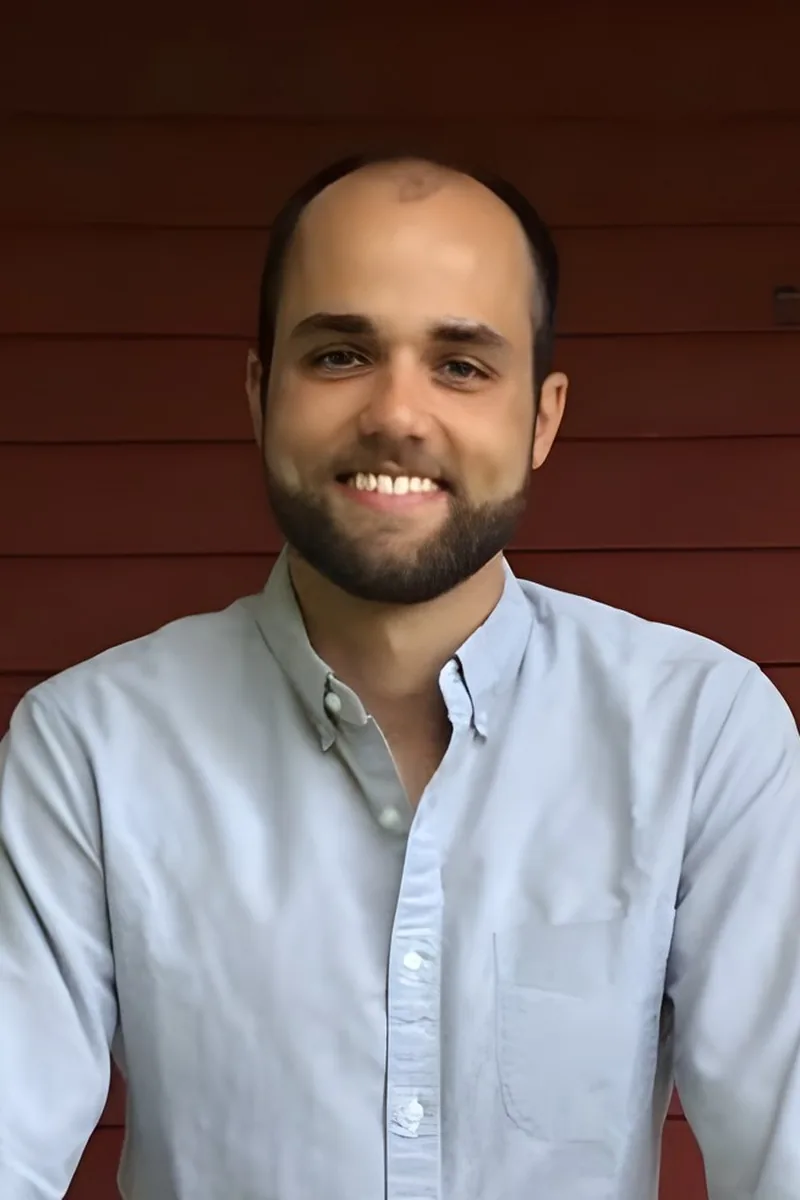
College-level physics demands comfort with calculus-based problem solving, and Robert's dual background in electrical engineering and classroom teaching makes that transition smoother. He digs into topics like Gauss's law, rotational dynamics, and energy conservation by walking through the derivations rather than just handing students formulas to memorize. His engineering training at Duke means he can connect textbook problems to how these principles show up in real systems.
Victor's applied mathematics master's gives him a particular edge when college physics problems demand setting up and solving differential equations — modeling damped oscillations, calculating electric fields via integration, or working through projectile motion with drag. He teaches the mathematical machinery alongside the physical intuition, so students aren't stuck choosing between understanding the concept and actually getting through the calculation. Rated 5.0 by students.
Cornell's pre-med track put Emily through the full sequence of calculus-based physics alongside organic chemistry and biology, so she understands how physics concepts like wave optics, fluid pressure, and energy conservation show up not just on problem sets but across the sciences. She spent her senior year tutoring student-athletes in quantitative coursework, which sharpened her ability to break down intimidating multi-step problems into manageable physical reasoning. Rated 4.8 by students.
Jamie's math degree gives him the calculus fluency that college physics requires, but it's his special education training that shapes how he actually teaches it — he's unusually good at diagnosing exactly where a student's understanding breaks down in multi-step problems like projectile motion or circuit analysis. He rebuilds that reasoning piece by piece, adjusting his explanations to match how each student actually thinks rather than defaulting to textbook language.
Heading into Weill Cornell Medical School, Elizabeth is actively deep in MCAT physics prep — which means topics like optics, fluid dynamics, and electrostatics are fresh in her mind and she can pinpoint exactly where conceptual gaps tend to hide. Her Dartmouth coursework and 1540 SAT reflect strong quantitative chops, and she brings a pre-med lens that grounds abstract force diagrams and energy calculations in biological and clinical contexts. Rated 4.9 by students.
I am a graduate from Cornell University where I received a bachelor's degree in Biological Engineering with a minor in Mechanical Engineering. For several years, I have always had a passion for tutoring/teaching others around me whether they were children, classmates or adults much older than I. From my studies, my favorite subjects to help with were Mathematics and Physics; they are closely integrated with each other and personally it is rewarding when my students understand concepts that they initially struggled with. As for my past tutoring experience, I volunteered teaching GED courses around the Brooklyn area. I also took up private one to one sessions with locals who requested my help in subjects. Currently I am teaching an after-school program where I show middle school students STEM related topics through hands on activities. I am also volunteering with SAT Math through Brooklyn College on Saturdays and I am a part time bartender around the Park Slope area. When I am not busy working, I enjoy cycling, playing video games, and just kicking it back with friends.
As an adjunct lecturer in a college physics department and a Ph.D. candidate in theoretical physics at Kent State, Kelly lives in this material daily. She's taught both lab and lecture sections for over six years, covering everything from rotational dynamics and electric fields to introductory quantum concepts. Her approach leans on building the mathematical reasoning behind each law so students can tackle unfamiliar problems, not just replicate textbook examples.
Computational linguistics might sound far from physics, but Justin's program demands serious fluency in linear algebra, probability, and mathematical modeling — the same quantitative backbone that holds together mechanics and electromagnetism problem sets. He breaks down word-heavy physics scenarios into structured setups, teaching students to translate language into free-body diagrams and equations before solving. His 1470 SAT reflects the analytical sharpness he brings to calculus-based reasoning.
Earning a physics degree from Sapienza University in Rome means Fabrizio learned mechanics, electromagnetism, and thermodynamics in a European tradition that emphasizes rigorous derivation over plug-and-chug — so he's unusually good at walking through the *why* behind each step of a calculus-based solution. His parallel philosophy degree trained him to dissect arguments logically, a skill he now applies to breaking down multi-concept problems where students struggle to identify which physical principles are actually at play.
Organic chemistry is often called the hardest pre-med course, but David would argue that college physics gives it a run — and his Columbia biochemistry training put him through both, building the kind of systematic problem-solving instinct that lets him break down mechanics, thermodynamics, and electromagnetism problems into clear logical steps. He teaches students to diagnose what a problem is actually asking before touching an equation, a skill he considers essential for anyone heading toward a science or medical career.
Neuroscience and biochemistry training means Charles has spent years thinking about physics in biological contexts — membrane capacitance, diffusion equations, fluid dynamics in circulatory systems — which gives him a practical anchor for the abstract concepts that fill college physics problem sets. He breaks down mechanics and electromagnetism by connecting the math to physical intuition, especially for pre-med students who need these ideas to stick for the MCAT. Rated 5.0 by students.
A dual degree in Physics and Mechanical Engineering from Columbia means Nadine didn't just take college physics — she took it twice over, from both the theoretical and applied sides, covering everything from Lagrangian mechanics to heat transfer and stress analysis. That double exposure gives her an unusually complete picture of where the conceptual gaps form, especially when students hit the jump from single-particle mechanics to systems involving rigid bodies, fluids, or fields. Rated 5.0 by students.
Biomedical engineering at the master's level means Juliet spent years applying physics to biological systems — modeling fluid flow through vessels, analyzing stress on implant materials, working through the electromagnetism behind imaging technologies like MRI and ultrasound. She breaks down the calculus-based problem-solving that makes college physics demanding by connecting abstract force diagrams and energy equations back to the physical systems they describe. Rated 5.0 by students.
Biomedical engineering at the graduate level means solving physics problems daily — from fluid dynamics in vascular systems to the electromagnetic principles behind MRI imaging. Sunny brings that applied perspective to college physics, breaking down Newtonian mechanics, circuits, and wave behavior with real-world engineering context. Rated 5.0 by students.
I am a Sophomore college student currently studying Mechanical Engineering at Stony Brook University. I strongly encourage and aims to motivate high school students to become leaders in their careers as engineers, expand the idea of engineering as a means of improving the quality of life, and increase the diversity of the engineering profession.
Breaking a college physics problem into fundamental principles — free-body diagrams before forces, energy accounting before kinematics equations — is the strategy Eugene uses both as a tutor and in his day job at a chemical engineering startup. His physics degree and hands-on engineering work mean he can show students how concepts like Newton's laws or conservation of momentum actually drive real technical decisions, not just homework solutions. Rated 5.0 by students.
Pre-health coursework means Priyanka has tackled the full introductory physics sequence — mechanics, waves, thermodynamics, optics — with the same intensity as the pre-med students she now tutors, and she knows which conceptual leaps (free-body diagrams that suddenly involve friction and inclines, or applying Bernoulli's principle to fluid flow) cause the most trouble. Her science background across biology, chemistry, and physical science gives her a knack for translating physics problems into language that clicks for students who think more naturally in those disciplines.
Preparing for medical school means Mikhail has recently worked through the full sequence of physics that pre-med programs demand — mechanics, optics, waves, electricity — and he remembers exactly which problem types felt straightforward and which required rethinking from scratch. That recent experience is an underrated advantage: he can walk through force diagrams and energy conservation setups the way someone still close to the material naturally does, without skipping the intermediate steps that textbooks gloss over.
College-level physics demands more mathematical rigor than high school — suddenly you're integrating electric fields, working with vector calculus, and deriving equations from scratch. Sam's electrical engineering background means he lived inside these problems for years, especially in electromagnetism, circuit analysis, and wave optics. He teaches by peeling back each complex derivation to the simple physical intuition underneath it.
Three years of tutoring introductory physics while completing dual bachelor's degrees in physics and mathematics gave Justin a detailed map of exactly where students lose the thread — the jump from one-dimensional kinematics to rotational analogs, the shift from intuitive force reasoning to formal energy methods. His PhD in Computational Mathematics at the University of Chicago deepened that foundation, adding fluency with the differential equations and vector calculus that make the leap from algebra-based to calculus-based physics so steep. Rated 5.0 by students.
A chemistry degree from Yale means Zosia spent years in courses where physics does the heavy lifting — thermodynamics driving reaction spontaneity, quantum mechanics explaining atomic structure, electrostatics governing molecular interactions — so she knows these concepts from the inside out. She's particularly effective at teaching students to translate word-heavy problem statements into clean free-body diagrams or energy bar charts before touching an equation. Rated 4.9 by students.
College-level physics ramps up quickly, especially once calculus-based mechanics and electromagnetism enter the picture. Richard's time as a course assistant in Harvard's math department gave him deep comfort with the calculus underpinning topics like electric flux integrals and differential equations of motion. He teaches the physics and the math simultaneously, so students aren't left wondering where a derivation came from.
Three science-focused bachelor's degrees — including biology — meant Garrett sat through the full calculus-based physics sequence and kept coming back to it in physiology and physical chemistry, where concepts like fluid dynamics, pressure gradients, and energy transfer show up again and again. That repeated exposure across disciplines gives him an intuitive feel for when to apply conservation of energy versus momentum, or how to reason through a thermodynamics problem without getting lost in the formalism. His 1530 SAT speaks to the quantitative sharpness he brings to each session.
Engineering physics at Cornell means Daniel is taking the most mathematically demanding version of every physics course — mechanics, E&M, waves, thermo — and building the intuition to move fluidly between physical reasoning and formal derivation. He's particularly strong at teaching students how to set up problems from scratch, translating a word problem into a free-body diagram or energy equation before any numbers appear. Rated 5.0 by students.
College-level physics layers calculus and more rigorous problem-solving onto the conceptual foundations from high school, and Samantha's Cornell science background means she's fluent in both the math and the theory. She breaks down topics like rotational dynamics, electric fields, and thermodynamic cycles using visual models and step-by-step dimensional analysis that keep the problem-solving process clear.
Three physics-related bachelor's degrees give Avram an unusually deep undergraduate perspective on the subject — he's worked through mechanics, electromagnetism, and modern physics multiple times across different programs, which means he knows exactly where the conceptual gaps tend to hide. He breaks down wave phenomena and optics problems by connecting the math back to physical intuition, so equations feel like descriptions of real behavior rather than symbols to manipulate. His 1520 SAT reflects the quantitative precision he brings to problem solving.
Running an immunology lab at Columbia University Medical Center means Matthew applies physics daily in ways most tutors haven't — calibrating imaging equipment, analyzing force and pressure data in tissue samples, and troubleshooting instruments that depend on optics and electromagnetism. That hands-on fluency, combined with a physics degree and a 35 ACT, lets him teach college-level mechanics and E&M problems by connecting equations to the physical systems they actually describe.
Dartmouth's Biology modified with Engineering track means Kiera doesn't just study physics concepts in isolation — she applies mechanics, thermodynamics, and wave behavior to engineering design problems and biological systems every semester. That dual framing makes her especially effective at unpacking the physical intuition behind equations, so students see what a formula actually describes before they start solving. Rated 5.0 by students.
Wall Street research demands the same quantitative rigor as a physics problem set — building models from raw data, pressure-testing assumptions, and reasoning through systems with multiple variables. Frank applies that analytical discipline to college physics topics like kinematics, energy conservation, and electromagnetism, teaching students to dissect a problem's structure before plugging anything into an equation. His MBA and years of tutoring physics at the AP and regents levels mean he's comfortable with both the math and the conceptual reasoning behind it.
Applying to PhD programs in applied mathematics means Romeo spends his days inside the differential equations and vector calculus that college physics courses lean on hardest — setting up integrals for work-energy problems, solving second-order ODEs for oscillatory motion, handling the multivariable machinery behind electric flux and field calculations. That mathematical fluency lets him teach the physics and the math simultaneously, so students aren't stuck guessing which technique to apply when a problem requires both.
Biology majors at Cornell still take calculus-based physics sequences, and Drishti has worked through the mechanics and electromagnetism problem sets that make those courses notoriously time-consuming — she knows exactly where the conceptual gaps hide. She breaks down force diagrams and energy conservation problems by connecting them back to the biological systems she studies, which gives pre-med and life-science students a way into physics that actually sticks. Rated 5.0 by students.
Starting medical school this fall, Kelsey is actively deep in the physics that pre-med students find most demanding — optics, fluid dynamics, and the mechanics of how forces act on biological systems. Her cellular and molecular biology training means she naturally connects physics concepts like pressure gradients and wave behavior to the biological contexts where they actually matter. Holds a 5.0 rating.
MCAT physics preparation gave Benjamin a ground-up rebuild of mechanics, electromagnetism, and optics — the same core topics that dominate introductory college physics courses. He breaks down force diagrams and energy conservation problems by connecting the math to physical intuition, making problem sets feel less like formula hunts. Rated 5.0 by students.
Teaching 7th grade science daily means Jay constantly translates abstract physics ideas — forces, energy, motion — into language that actually lands, a skill that's just as valuable when college-level problems pile on calculus and vector notation. His economics degree built the quantitative modeling instincts (optimization, graphical analysis, working through systems of equations) that map cleanly onto mechanics and thermodynamics problem sets. He's strongest at the problem-setup phase: figuring out what a question is really asking before diving into the math.
Currently pursuing a physics degree at Cornell, Michael works through the same mechanics, thermodynamics, and electromagnetism problem sets his students face — which means he knows exactly where the conceptual gaps tend to hide. He breaks problems down to their physical intuition first, making sure the math follows from understanding rather than formula-hunting. Rated 5.0 by students.
Pre-med research at the Hospital for Special Surgery means Marcus regularly encounters the physics behind clinical tools — force mechanics in orthopedic procedures, pressure and fluid dynamics in imaging, energy transfer in therapeutic devices — giving him a concrete frame for the concepts that fill college physics problem sets. His Yale coursework in the sciences, plus a 33 ACT, reflect the quantitative chops needed to walk students through calculus-based mechanics and thermodynamics without glossing over the math.
An applied math degree plus active graduate work in mathematics means Drisana doesn't flinch at the calculus-heavy lifting in college physics — setting up integrals for center-of-mass problems, solving second-order differential equations for oscillatory motion, or working through vector fields in electromagnetism. She also teaches statics, dynamics, and thermodynamics separately, so the core physics content isn't something she's borrowing from her math training alone. Rated 5.0 by students.
Lab work in immunology and genetics at Washington University in St. Louis means Colin has hands-on experience with the physics that underpins biological measurement — optics in microscopy, fluid dynamics in centrifugation, electromagnetic principles in gel electrophoresis. He pairs that practical grounding with extensive coursework in physics and chemistry, so he can walk through force diagrams or energy conservation problems while connecting them to systems students in the life sciences actually care about. His GRE scores in the 90th percentile speak to the quantitative chops behind those explanations.
Biomedical engineering sits squarely at the intersection of physics and biology — Robert's training means he's worked through mechanics, fluid dynamics, and electromagnetism not as abstract exercises but as tools for understanding things like blood flow, prosthetic design, and medical imaging systems. That applied perspective makes him especially useful for college physics students who struggle to see the point behind free-body diagrams or pressure calculations, because he can ground each concept in something tangible.
Testimonials
Because the right College Physics tutor makes all the difference.
Average Session Rating – Based on 3.4M Learner Ratings
Nearby College Physics Tutors
Other Brooklyn Tutors
Related Science Tutors in Brooklyn
Frequently Asked Questions
College Physics typically covers mechanics (motion, forces, energy), waves and sound, thermodynamics, electricity and magnetism, and often introductory modern physics. The exact curriculum depends on your course and institution, but most programs emphasize both theoretical understanding and problem-solving skills. A tutor can help you master each unit's core concepts and tackle the challenging problem sets that build on previous material.
Many students struggle with connecting abstract concepts—like electric fields or wave behavior—to real-world situations, and with applying mathematical skills to physics problems. Unit conversions, free-body diagrams, and multi-step problem solving are frequent pain points. Personalized 1-on-1 instruction helps you build conceptual understanding rather than just memorizing formulas, which is essential for success in College Physics.
Yes. A tutor can help you understand the scientific method, design experiments, analyze data, and interpret results—skills that are just as important as the theory. They can also help you prepare lab reports, troubleshoot experimental issues, and connect what you're observing in the lab to the concepts you're learning in lecture. This deeper understanding strengthens both your lab performance and your overall grasp of physics principles.
Your first session is about understanding where you are and where you want to go. A tutor will assess your current understanding of key concepts, identify specific challenges (whether it's problem-solving strategy, visualization of forces, or mathematical skills), and learn about your course goals. From there, they'll create a personalized plan to strengthen your foundation and build confidence in tackling College Physics material.
College Physics problems require you to identify relevant concepts, set up equations correctly, and execute multi-step solutions—skills that improve with guided practice. A tutor walks you through the problem-solving process, helping you develop strategies for different problem types, check your work, and understand why certain approaches work. Over time, you'll build the confidence and intuition to tackle unfamiliar problems independently.
Concepts like electric fields, magnetic forces, and wave interference are hard to picture without guidance. Tutors use diagrams, real-world analogies, and step-by-step explanations to help you build mental models of these abstract ideas. When you can visualize what's happening—not just memorize equations—you understand the physics more deeply and can apply it to new situations.
Varsity Tutors connects you with expert tutors who specialize in College Physics and understand the specific challenges of the material. You can share your course details, learning style, and goals, and we'll match you with a tutor who fits your needs. Whether you need help with a specific unit, exam prep, or ongoing support throughout the semester, we have tutors ready to work with you.
Absolutely. A tutor can help you review key concepts, practice problem types likely to appear on exams, identify gaps in your understanding, and develop test-taking strategies. They'll also help you manage time during exams and build confidence by working through past exams or practice problems. With targeted preparation, you'll be better equipped to demonstrate what you actually know on test day.
Let’s find your perfect tutor
Answer a few quick questions. We’ll recommend the right plan and match you with a top 5% tutor.