Award-Winning Pre-Calculus Tutors
serving Brooklyn, NY
Pre-Calculus
Tutors in Brooklyn
Private 1-on-1 tutoring, weekly live classes for academic support, test prep & enrichment, practice tests and diagnostics, and more to elevate grades and test scores.
Based on 3.4M Learner Ratings
UniversitiesSchools & Universities
DeliveredHours Delivered
ProficiencyGrowth in Proficiency
Who needs tutoring?
No obligation. Takes ~1 minute.
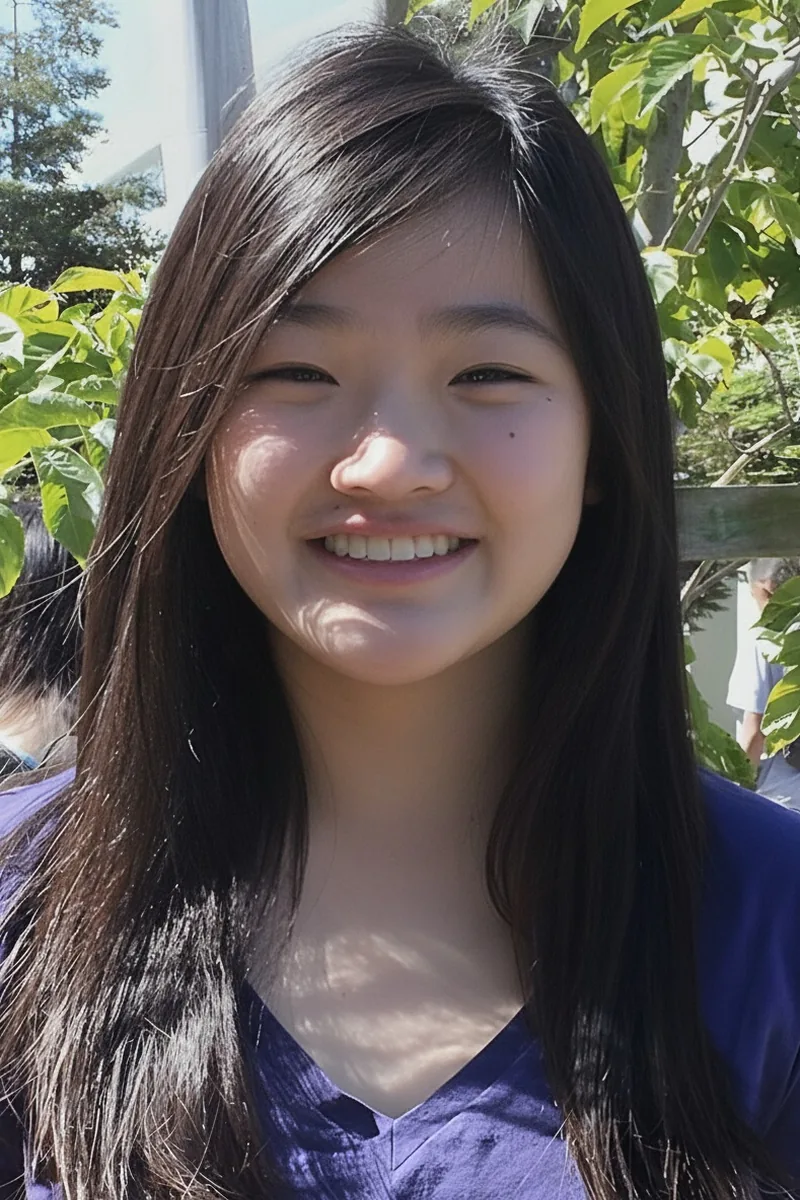
A philosophy major at Princeton with a certificate in Statistics and Machine Learning, Julie approaches pre-calculus proofs and function analysis with the logical rigor her coursework demands — she's especially sharp at breaking down the 'why' behind trigonometric identities and limit intuition before students hit calculus. She teaches across the full math ladder from elementary through Calculus II, so she knows exactly which algebraic instincts need to be solid and which conceptual leaps trip students up at the pre-calc stage. Rated 4.9 with a 1570 SAT.
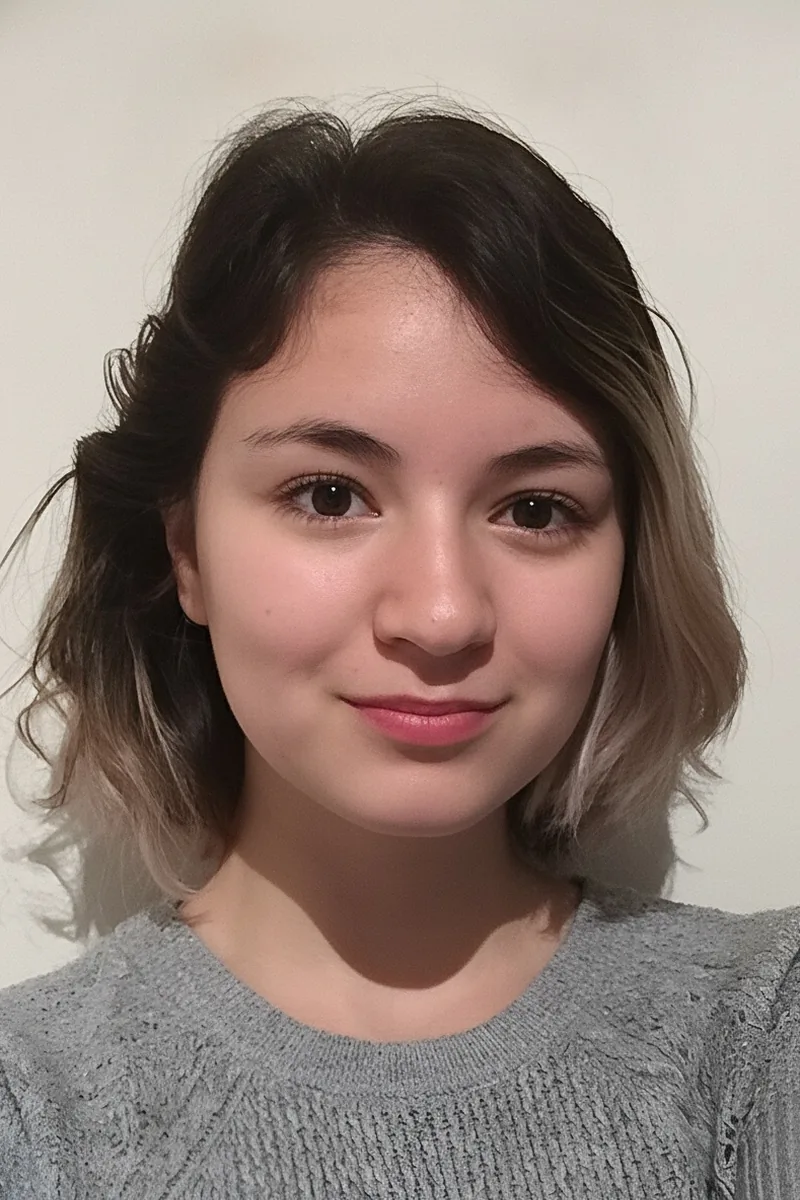
The jump to pre-calculus is really a jump in abstraction — suddenly students need to think about function behavior, limits of trigonometric identities, and how polynomial end behavior connects to graphing. Manolya studied mathematics and computer science at MIT, so she approaches these topics with both theoretical depth and a knack for making complex relationships visual and concrete.
Phillips Exeter's math program is built around problem sets that force students to derive concepts before seeing formal definitions — and that training shaped how Violet teaches pre-calculus topics like rational functions, sequences, and the behavior of composite expressions. Her BS in Mathematics from Brown means she's carried these ideas through multivariable calculus and beyond, so she can pinpoint exactly where a pre-calc concept is headed and why mastering it now saves real pain later. Her 1550 SAT confirms the quantitative sharpness behind that long-view approach.
A geography master's degree might seem unrelated to pre-calculus, but Duncan's research at UBC leaned heavily on quantitative spatial analysis — the kind that demands real command of function transformations, logarithmic scaling, and trigonometric relationships. He teaches these topics by building the conceptual bridge between algebra and calculus, making sure students understand *why* a transformation shifts a graph before worrying about memorizing the rules. Rated 5.0 by students.
Most pre-calculus students already know more algebra than they realize — the trick is seeing how those skills extend into trigonometric reasoning, limits of sequences, and the behavior of rational expressions. Laura, a biology and French double major at WashU with a 35 ACT, teaches the course by bridging what's familiar to what's new, especially when it comes to function transformations and the unit circle. Rated 5.0 by students.
The jump from algebra to pre-calculus — trigonometric identities, polar coordinates, sequences and series — trips up students who've relied on memorizing procedures. Samantha teaches the underlying logic so that verifying a trig identity or graphing a rational function becomes a reasoning exercise, not a guessing game. She scored a 1490 on the SAT and brings that same precision to every session.
Holding a master's in applied mathematics, Victor has taught every course in the algebra-to-calculus pipeline — which means he knows exactly where pre-calculus fits and what it needs to set up. He zeroes in on the transition points that trip students up, like moving from manipulating expressions to analyzing how rational and trigonometric functions actually behave as systems. Rated 5.0 by students.
The jump into pre-calculus — limits intuition, trigonometric identities, analyzing rational and logarithmic functions — trips up students who coasted through earlier math courses. Rachel's math education background means she can pinpoint exactly which foundational gaps are causing confusion and address them alongside the new material. She teaches through discovery and targeted practice, connecting each pre-calc concept back to the algebra skills supporting it.
An economics major at Penn, Bethany regularly works with the polynomial and logarithmic models that pre-calculus students are just starting to encounter — demand curves, elasticity functions, and growth projections all depend on fluent function analysis. She zeroes in on graph transformations and end behavior, teaching students to read what a function is doing and why, so the leap into calculus feels like a natural next step rather than a cliff.
Amber's electrical engineering master's means she didn't just pass through pre-calculus — she built an entire career on top of it, using sinusoidal analysis, complex number operations, and transfer functions daily in circuit design. She teaches the course backward from that vantage point, showing students exactly how polynomial behavior or a tricky trigonometric identity will matter once the math gets real. Rated 5.0 by students.
Kevin's chemistry degree from Penn means he's already navigated every pre-calculus concept — logarithmic relationships in reaction kinetics, exponential models in decay processes, trigonometric functions in spectroscopy — as prerequisites for the upper-level science that came after. That perspective lets him teach the course as someone who knows exactly which skills in function analysis and graph behavior actually matter once students move into calculus and the sciences. Rated 4.8 by students.
I am a PhD student at SUNY Downstate Medical Center studying Molecular & Cellular Biology. I graduated from Columbia University with a Bachelor of Arts in Biochemistry. I love to teach, mostly because of the impact of great teachers throughout my academic career. I think learning can be really fun, if teachers think outside the box and really challenge themselves to find novel ways of conveying concepts to students. Tried and true methods are always great in the classroom, but to work one-on-one with students requires a different approach. It's also critical that learning be something students want, not grudgingly sit through, so that their academic success is tied to their ability to understand and engage the material, not to what score they get on an arbitrary test.
Ken's master's in applied mathematics took him well past calculus and differential equations, which means he teaches pre-calculus knowing exactly which skills — polynomial end behavior, trigonometric manipulation, rational function analysis — will matter most when the difficulty ramps up. He digs into the mechanics of each topic with the precision of someone who's built advanced work on top of them. His 1520 SAT reflects that same quantitative rigor.
A literature degree might seem like an unlikely background for pre-calculus, but Carmen's 1550 SAT and 35 ACT reveal serious quantitative chops — and her analytical training in close reading translates surprisingly well to parsing multi-step problems involving rational expressions and composite functions. She approaches each topic by slowing down the logic, making sure students can articulate why a transformation shifts a graph or how an inverse function undoes its parent before moving on to the next layer.
An English major might seem like an unusual pick for pre-calculus, but William's 1600 SAT and 34 ACT prove he's deeply comfortable with the quantitative side — and his teaching range from algebra through calculus means he knows exactly how each pre-calc concept threads forward. He's especially sharp at demystifying the shift from procedural algebra to the more abstract functional thinking pre-calc demands, walking through how transformations, compositions, and inverses all connect into a coherent framework.
I am a graduate from Cornell University where I received a bachelor's degree in Biological Engineering with a minor in Mechanical Engineering. For several years, I have always had a passion for tutoring/teaching others around me whether they were children, classmates or adults much older than I. From my studies, my favorite subjects to help with were Mathematics and Physics; they are closely integrated with each other and personally it is rewarding when my students understand concepts that they initially struggled with. As for my past tutoring experience, I volunteered teaching GED courses around the Brooklyn area. I also took up private one to one sessions with locals who requested my help in subjects. Currently I am teaching an after-school program where I show middle school students STEM related topics through hands on activities. I am also volunteering with SAT Math through Brooklyn College on Saturdays and I am a part time bartender around the Park Slope area. When I am not busy working, I enjoy cycling, playing video games, and just kicking it back with friends.
As a passionate tutor working on a Bachelor's degree in Economics, Mathematics, and Philosophy from the University of Toronto, I have over two years of tutoring experience that spans various subjects, including Writing, English, and advanced math topics. My approach centers on creating engaging, tailored lessons that resonate with students' individual goals and interests. I believe in fostering a supportive learning environment where trial and error can lead to discovery and growth. My experience includes working with elementary and high school students, helping them navigate their homework, prepare for tests like the SAT, and cultivate a deeper appreciation for math and writing. I am deeply motivated to inspire students and help them achieve their academic aspirations while nurturing their curiosity and confidence. I enjoy: Writing, Reading, Piano, Fencing, Archery, Math, Economics, Philosophy, Law.
Kelly's PhD work in theoretical physics at Kent State means she lives in the mathematics that pre-calculus is building toward — differential equations, complex analysis, and multivariable frameworks that all trace back to mastering function behavior, trigonometric structures, and limits of sequences right now. Years of lecturing introductory physics gave her a sharp eye for the specific algebraic weak spots that derail students when they hit topics like polar coordinates or parametric equations. She teaches each concept by connecting it to the calculus it's preparing students for, so nothing feels arbitrary.
Having earned a Master's in Mathematics Education and a state teaching certification, Christina knows exactly where students tend to stumble in pre-calculus — particularly when rational functions, composite functions, and limit intuition start demanding a level of abstraction that earlier math courses didn't require. She tackles those sticking points by rebuilding the algebraic reasoning underneath each new concept, so the jump from manipulating expressions to analyzing function behavior feels like a natural next step. Her 1420 SAT and experience teaching everything from middle school math through calculus mean she can pinpoint and fill gaps quickly.
The jump into pre-calculus often feels like juggling — trigonometric identities, limits intuition, and polynomial behavior all land at once. Thanh's applied mathematics degree and graduate work in computational biology mean he uses these tools daily, so he teaches them as interconnected ideas rather than isolated chapters. He's especially sharp at demystifying unit circle reasoning and function transformations.
I am a recent BS. Civil Engineering Graduate from RPI, and working as a Bridge Engineer! Since HS I enjoyed all things math and science (hence Engineering aha) and have a passion for teaching/tutoring other students! Throughout HS and college, being tutored myself helped me a lot and taught me the value of learning and sharing knowledge. I strongly believe that sparking curiosity and being a life-long learner is very important, and the skills and concepts learned in school can have many applications in any/every aspiration possible. I've tutored other students for about 3-4 years and look forward to tutoring you!
Having studied both physics and philosophy at Sapienza University in Rome, Fabrizio approaches pre-calculus with an unusual combination of mathematical rigor and logical precision — he can derive why the unit circle works the way it does, then walk a student through the reasoning step by step until the abstraction feels intuitive. His physics training means topics like vectors, parametric motion, and trigonometric identities aren't classroom exercises for him but tools he's used to model real systems. That dual perspective makes him especially effective at bridging the gap between algebraic mechanics and the conceptual thinking calculus will demand.
Computational linguistics — Justin's current master's focus — runs on the same sequence and function logic that pre-calculus is built around, from recursive definitions to transformations that map one structure onto another. He tackles the course by connecting each new concept back to the algebraic reasoning students already have, making topics like rational functions and asymptotic behavior feel like natural extensions rather than unfamiliar territory. His 1470 SAT confirms solid quantitative grounding behind that approach.
The jump to pre-calculus is where many students lose confidence, especially around trigonometric functions, limits, and complex polynomial behavior. Hudson tackles these topics by connecting each new idea back to the algebraic foundations a student already has, filling gaps in understanding before they snowball. He's particularly effective at demystifying function transformations and the unit circle.
Roberto's master's in operations research is essentially applied mathematics — optimization problems built on the polynomial, rational, and exponential functions that form the backbone of pre-calculus. He zeroes in on how transformations and function composition actually work mechanically, giving students the structural understanding they'll need when these same tools reappear in calculus. Rated 5.0 by students.
The moment pre-calculus shifts from familiar algebra to abstract function families — rational expressions with asymptotes, trigonometric graphs that behave nothing like lines, logarithms that seem to follow their own rules — is where Damian zeroes in. He teaches each new function type by connecting it back to the algebraic instincts students already have, building the bridge to calculus one concept at a time. His 1570 SAT and 5.0 rating reflect the clarity he brings to that transition.
An English major might seem like an unusual pick for pre-calculus, but Andrew's 35 ACT and years of tutoring math through pre-calc mean he's deeply comfortable with the material — and his literary training gives him a knack for explaining abstract ideas like function transformations and trigonometric identities in plain, intuitive language. He approaches the course as a bridge-builder, making sure the algebraic reasoning underneath each new concept is solid before layering on complexity. His 1560 SAT confirms the quantitative skill behind the clear explanations.
Dual-majoring in mathematics and English at City College of New York gives Aidan an unusual ability to explain abstract pre-calculus concepts — like limit behavior, composite functions, and trig identities — in clear, precise language that actually lands. He teaches each topic by first showing where it sits in the bigger arc from algebra to calculus, so new ideas feel like logical next steps rather than isolated procedures. His 33 ACT and 1470 SAT confirm the quantitative grounding behind that approach.
Biomedical engineering at Georgia Tech meant Laura spent four years translating real-world systems — signal processing, biomechanical motion, fluid dynamics — into the mathematical language that pre-calculus introduces: sinusoidal models, composite functions, and rational expressions. She zeroes in on how these tools connect, so that moving from polynomial behavior to trigonometric identities feels like a natural progression rather than a topic switch. Rated 4.7 by students.
The jump into trigonometric identities, limits, and composite functions trips up students who were comfortable in earlier math courses. Joseph treats pre-calculus as a bridge-building exercise, connecting polynomial behavior and rational functions back to the algebraic intuition students already have. His math degree gives him the depth to explain not just how to graph a transformed function, but why the transformation works the way it does.
A music degree might seem unrelated to pre-calculus, but Jane's training in music theory built deep comfort with the periodic structures and harmonic ratios that map directly onto trigonometric functions and the unit circle. She tackles the course's trickiest conceptual leaps — like connecting sinusoidal graphs to their equations or demystifying composite and inverse functions — by drawing on that intuitive sense of pattern and symmetry. Her 33 ACT and 4.8 rating confirm she delivers on the math side, not just the analogies.
Chemical engineering at Stony Brook means Eldon hit pre-calculus concepts like rational functions, exponential models, and trigonometric relationships early — then kept using them through thermodynamics, reactor kinetics, and fluid dynamics courses. He teaches the course as someone who knows exactly which skills carry forward, breaking down the shift from algebraic manipulation to functional thinking by connecting each new idea to the concrete engineering problems where it actually matters.
Biomedical engineering coursework means Leticia regularly encounters the pre-calculus concepts students find most intimidating — sinusoidal modeling for physiological signals, exponential functions for decay processes, and the trigonometric reasoning that underpins vector analysis. She breaks down each topic by connecting it to the algebra students already have under their belt, making the jump to abstract function behavior feel like a logical next step rather than a sudden leap. Rated 5.0 by students.
After completing both a bachelor's and master's in biomedical engineering at NYU Tandon, Sunny has spent years relying on the exact toolkit pre-calculus teaches — sinusoidal modeling for physiological signals, exponential decay for drug delivery systems, and matrix transformations for imaging analysis. She breaks down these topics by connecting them to the engineering applications where they actually matter, which turns abstract function families into something students can visualize. Rated 5.0 by students.
I am a Sophomore college student currently studying Mechanical Engineering at Stony Brook University. I strongly encourage and aims to motivate high school students to become leaders in their careers as engineers, expand the idea of engineering as a means of improving the quality of life, and increase the diversity of the engineering profession.
Three years at Goldman Sachs gave Lawrence a daily relationship with the polynomial, exponential, and logarithmic models that pre-calculus students are just meeting on paper — he built financial forecasts around these function families before ever stepping into a tutoring session. His approach leans on tying each new concept back to a concrete scenario, which is especially effective for demystifying graph transformations and rational function behavior. A 98.67 average on his New York math Regents exams reflects the quantitative instincts he's carried since high school.
Most pre-calculus students hit a wall not because the individual topics are hard, but because nobody connects them — polynomial behavior feeds into limits, trig identities set up integration techniques, and sequences preview series convergence. Usama teaches across the full arc from algebra through Calculus II and AP Bio, so he knows exactly which pre-calc skills will matter most and which shortcuts will backfire later. His 1520 SAT reflects the kind of cross-subject quantitative fluency that makes those connections second nature.
As someone preparing for medical school, Mikhail recently worked through the full pre-calculus sequence himself — polynomial end behavior, rational function asymptotes, trig identities — with the stakes of needing every concept to stick for calculus and beyond. That proximity to the material means he remembers exactly where the confusion hits, especially when students first encounter abstract function transformations or try to connect the unit circle to graphing. He teaches each topic by rebuilding the algebraic intuition underneath it, closing gaps before they compound.
Joseph's applied math degree means he didn't just pass through pre-calculus — he built on it daily, using trigonometric models, composite functions, and limit reasoning across upper-level coursework. He teaches the course with that hindsight, showing students how mastering something like a tricky trig identity now pays off concretely once derivatives and integrals arrive. Rated 5.0 by students.
Mechanical and aerospace engineering at Princeton means Matthew is constantly applying the trigonometric relationships, parametric equations, and function transformations that pre-calculus introduces — they're the building blocks of orbital mechanics and fluid dynamics problems he tackles in coursework. His teaching style is deliberately hands-on: he walks through a concept step by step, then puts students in the driver's seat with progressively harder problems, catching misunderstandings in real time. A 34 ACT confirms the quantitative instincts behind that approach.
Testimonials
Because the right Pre-Calculus tutor makes all the difference.
Average Session Rating – Based on 3.4M Learner Ratings
Practice Pre-Calculus
Free practice tests, flashcards, and AI tutoring for Pre-Calculus
Nearby Pre-Calculus Tutors
Other Brooklyn Tutors
Related Math Tutors in Brooklyn
Frequently Asked Questions
Pre-Calculus moves from mostly procedural problem-solving ("follow these steps") to understanding the deeper patterns and connections between concepts. You'll spend less time memorizing formulas and more time understanding why functions behave certain ways, how transformations affect graphs, and how different mathematical ideas relate to each other. This conceptual shift can feel challenging at first, but it's what prepares you for Calculus and makes higher math click.
Students often struggle with graphing transformations, understanding trigonometric functions beyond memorizing values, and connecting algebraic equations to their visual representations. Word problems that require setting up complex equations, working with rational functions, and proving trigonometric identities are also frequent pain points. Many students also experience math anxiety when moving into more abstract concepts—personalized tutoring helps break these topics into manageable pieces and builds confidence through targeted practice.
Varsity Tutors connects you with a tutor who will start by understanding where you are right now—what concepts feel solid, where you're struggling, and what your specific goals are (like improving your grade or preparing for Calculus). They'll assess your current understanding and learning style, then create a personalized plan tailored to your needs. This first session sets the foundation for targeted instruction that addresses your exact challenges rather than generic review.
A tutor can teach you problem-solving strategies and help you organize your thinking so your work is clear and logical. They'll show you how to break multi-step problems into manageable parts, explain your reasoning at each stage, and identify where you might be skipping steps. By working through problems together and getting immediate feedback, you'll develop habits that make your solutions easier to follow—and you'll catch your own mistakes faster.
Yes. Brooklyn schools use different textbooks and curricula, and Varsity Tutors connects you with tutors who can work with your specific course materials and approach. Whether your class focuses on function families, trigonometric applications, or a particular textbook's sequence, tutors adapt their instruction to align with what you're learning in class while filling in gaps and deepening your understanding.
Graphing is one of the most visual topics in Pre-Calculus, and tutors help you see the connection between equations and their graphs. They'll teach you to recognize patterns—like how changing a coefficient affects the shape or position of a graph—and give you strategies for sketching transformations quickly and accurately. With guided practice and visual explanations, what once felt abstract becomes intuitive.
Many students memorize trig values without understanding where they come from or why they matter. A tutor helps you see the unit circle as a connected system, understand sine and cosine as ratios with real meaning, and recognize trig functions as tools for modeling periodic behavior. When you understand the "why" behind trig concepts, solving equations and proving identities becomes much more manageable.
Calculus builds directly on Pre-Calculus foundations—if you deeply understand functions, transformations, and how to analyze behavior, Calculus concepts like limits and derivatives will make sense. Tutoring focuses on solidifying these foundational ideas and helping you see the connections that Calculus relies on. This preparation means you'll enter Calculus with confidence rather than struggling to catch up on prerequisite material.
Let’s find your perfect tutor
Answer a few quick questions. We’ll recommend the right plan and match you with a top 5% tutor.