Award-Winning Geometry Tutors
serving Brooklyn, NY
Geometry
Tutors in Brooklyn
Private 1-on-1 tutoring, weekly live classes for academic support, test prep & enrichment, practice tests and diagnostics, and more to elevate grades and test scores.
Based on 3.4M Learner Ratings
UniversitiesSchools & Universities
DeliveredHours Delivered
ProficiencyGrowth in Proficiency
Who needs tutoring?
No obligation. Takes ~1 minute.
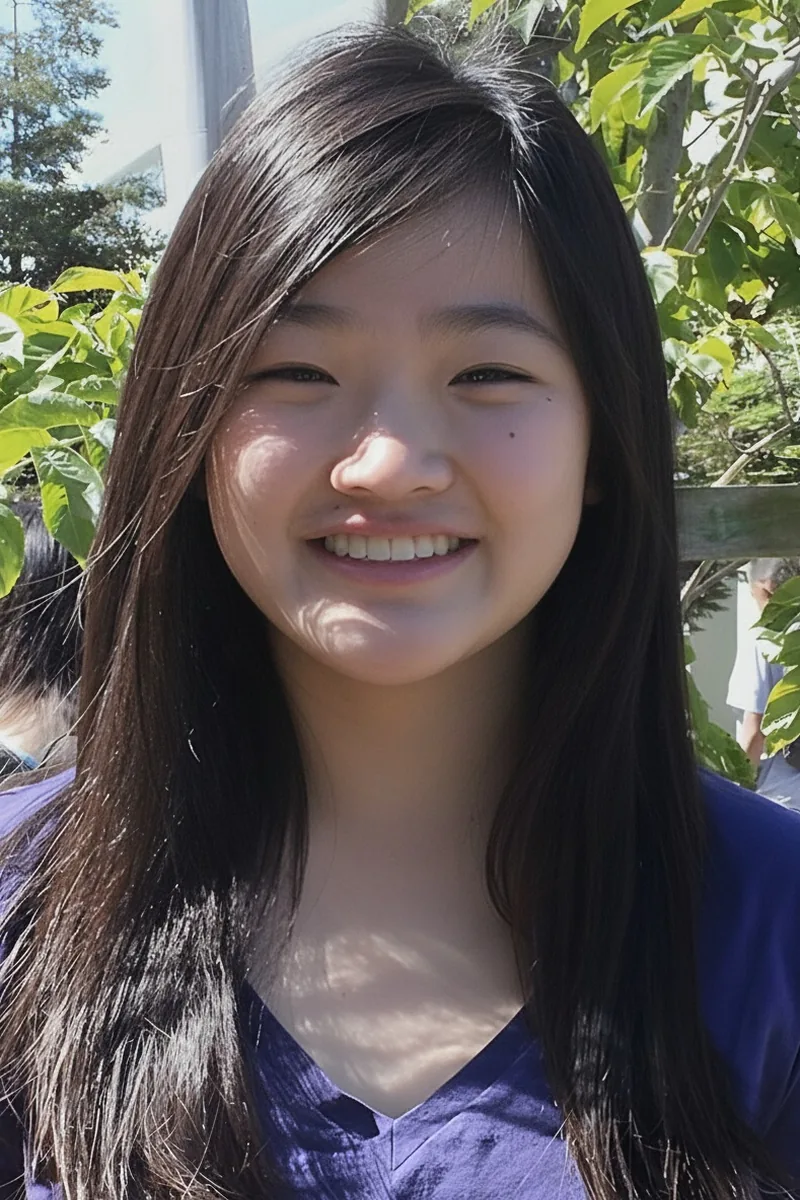
Julie's philosophy coursework at Princeton — where every paper is essentially a proof built from premises to conclusion — trained her in exactly the kind of structured reasoning geometry demands. She applies that logical rigor to coordinate geometry, transformations, and circle properties, teaching students to see how each theorem connects rather than treating them as isolated facts. Rated 4.9 by students.

Proofs are usually the first place geometry students get stuck, because suddenly math asks them to argue logically instead of just compute. Ian approaches proof-writing the way he approaches physics derivations at Yale — step by step, with each claim grounded in a specific theorem or postulate. He also covers triangle congruence, circle theorems, and coordinate geometry with the same structured clarity.
Proofs are usually where geometry stops feeling intuitive and starts feeling intimidating. Allen tackles that head-on by teaching students to read a diagram like a puzzle — identifying congruent triangles, parallel-line angle relationships, or circle theorems before writing a single line of formal reasoning. His Yale-trained analytical rigor translates well to the logical structure geometry demands.
Proofs trip up most geometry students because they demand a completely different kind of reasoning than plugging numbers into formulas. David's economics training at the University of Chicago built the same logical, step-by-step argumentation that geometric proofs require, and he applies that structured thinking to everything from triangle congruence to circle theorems.
Proofs are usually where geometry students panic — the jump from calculating angles to constructing logical arguments feels enormous. Dana's policy background trained her to build airtight, step-by-step cases from evidence, and she applies that same structured thinking to geometric reasoning and formal proofs.
As a premed student studying economics at Cornell, Tameem toggles daily between quantitative reasoning and structured argumentation — two skills that converge in geometry when a problem asks you to calculate an area and then justify your steps in a proof. He breaks down the subject's visual logic, teaching students to see how angle relationships and triangle properties connect before jumping to formulas. His 1510 SAT reflects the kind of precise, methodical thinking that keeps multi-step geometry problems from spiraling.
Proofs are usually the first time a math student has to construct a logical argument rather than compute an answer, and that transition can be jarring. Violet tackles geometry proofs by teaching students to read diagrams like puzzles — identifying congruent triangles, parallel line relationships, and angle pairs before writing a single statement. Having tutored across public, private, and boarding school curricula, she adapts quickly to whatever proof style a student's class requires.
Neuroscience is surprisingly geometry-heavy — mapping brain regions, interpreting cross-sectional imaging, reasoning about three-dimensional structures from two-dimensional slices — so Anna's triple-science background gives her a natural comfort with spatial reasoning that most math-only tutors don't have. She leans into the logical side of the subject, teaching students to build geometric arguments step by step the same way she'd work through a scientific hypothesis. Rated 5.0 by students.
Proofs tend to be the part of geometry that trips students up most, because they require a completely different kind of thinking than computation. Manolya breaks down the logic behind congruence and similarity proofs step by step, drawing on the rigorous proof-writing skills she developed through her MIT math coursework. She also tackles coordinate geometry and transformations with a precision that builds real geometric intuition.
Proofs are where most Geometry students panic, but they're really just structured arguments — and Abismael teaches them that way, walking through how to link angle relationships, congruence postulates, and parallel-line theorems into a logical chain. His engineering training gave him a spatial reasoning instinct that translates well when explaining transformations, similarity, or circle theorems. He deliberately ramps up problem difficulty so students aren't caught off guard on test day.
Proofs are where most geometry students stall — not because the logic is hard, but because nobody teaches them how to organize their reasoning step by step. Tim's philosophy background gives him a natural edge here, since formal logic and structured argumentation are exactly what a two-column proof demands. He breaks down congruence, similarity, and angle relationships in a way that makes the "why" click before the "how."
A Masters in Applied Mathematics means Victor has spent years working with the abstract structures that underpin geometry — so when students hit the leap from calculating angles to writing formal proofs about why those angle relationships hold, he can bridge that gap with real mathematical depth. He's especially effective at teaching students to read a diagram strategically, identifying which congruence or similarity relationships unlock a multi-step problem before writing a single line of proof. Rated 5.0 by students.
An interdisciplinary background in Spanish and International Studies might seem far from geometry, but Megan's real edge is her ability to translate abstract ideas into concrete, accessible language — a skill she's honed across eight years of tutoring subjects that range from foreign languages to math. She's especially effective at demystifying geometric vocabulary and notation, so students stop freezing when they see terms like "corresponding parts" or "included angle" and start actually engaging with the problem in front of them.
A history degree might seem unrelated to geometry, but Peter's training in building structured arguments from evidence maps directly onto two-column proofs — identifying given information, selecting the right theorem, and chaining logical steps toward a conclusion. He approaches geometric reasoning the same way he approaches a historical thesis: one well-supported claim at a time. Rated 4.8 by students.
Environmental studies at Brown involves a surprising amount of spatial analysis — mapping land use, interpreting topographic data, reading satellite imagery — and Julia draws on that same visual reasoning when she teaches geometry concepts like transformations, symmetry, and properties of polygons. She's especially good at getting students to sketch things out and build geometric intuition from diagrams rather than jumping straight to formulas, a habit that pays off on proof-heavy and multi-step problems alike.
An economics major at Penn, Bethany brings the same logical structuring she uses to model economic systems to breaking down geometric proofs — mapping out given information, identifying which theorems apply, and building each step toward a conclusion. She's particularly effective with students who feel comfortable solving equations but freeze when a problem asks them to reason through angle relationships or triangle congruence without numbers to crunch.
The jump from algebra to geometry trips up a lot of students because suddenly they're asked to reason visually and write logical arguments instead of just solving equations — Delon tackles that transition head-on by connecting geometric ideas back to the algebraic thinking students already have. His broad math background, from pre-algebra through calculus, means he can spot exactly which earlier skills need reinforcing when a student stalls on something like triangle congruence or properties of quadrilaterals. Rated 4.8 by students.
A chemistry concentration at Stanford means Idara spent years thinking about molecular geometry — bond angles, spatial arrangements, symmetry — before ever stepping into a tutoring session, giving her an unusually tactile sense for how shapes behave in two and three dimensions. She leans into that intuition when teaching circle theorems and polygon properties, connecting abstract definitions to the kind of structural reasoning her students can actually visualize. Rated 4.8 by students.
Proofs are usually where geometry students panic, but the logic behind them is surprisingly similar to how engineers think through problems. Amber earned both a bachelor's and master's in electrical engineering, so constructing step-by-step logical arguments is second nature to her — she applies that same structured thinking to triangle congruence, parallel line theorems, and circle properties.
Proofs trip up most geometry students because they require a completely different kind of thinking than computation. Monica's cognitive science training gives her a sharp understanding of how spatial reasoning actually develops, and she uses that to teach angle relationships, congruence, and logical proof structure in ways that click.
Proofs are where most geometry students get stuck — moving from "I can see it's true" to writing a logical argument feels like a completely different skill. Ken's applied mathematics training means he can break down how to structure a proof step by step, connecting each theorem about angles, triangles, or parallel lines to the reasoning behind it.
Proofs are usually the make-or-break topic in geometry, and Carmen teaches them as logical arguments rather than rigid templates to memorize. She connects each theorem — from triangle congruence to circle properties — back to a visual intuition, so students can reconstruct reasoning on their own during exams. Her literature training in building and analyzing arguments translates surprisingly well to two-column and paragraph proofs.
Stuyvesant High School's geometry curriculum is notoriously rigorous, and Emmelina came through it with the kind of fluency that makes her especially effective at teaching circle theorems, arc length calculations, and the logic behind inscribed angle relationships. Her environmental science work at Columbia also keeps her sharp on applied measurement — calculating areas of irregular regions and working with scale aren't abstract exercises when you're modeling real landscapes. Rated 5.0 by students.
Proofs are usually the part of geometry that makes students want to quit — the logic feels backwards, and the format is unfamiliar. Elizabeth teaches proof-writing as a structured argument, connecting it to the same critical thinking she sharpened studying anthropology and preparing for medical school at Dartmouth. She also digs into coordinate geometry and triangle congruence with an emphasis on why each theorem holds.
Studio arts training builds a surprisingly useful geometric intuition — Ben spent years thinking about proportion, perspective, and spatial composition before ever applying those ideas to formal math. He unpacks concepts like transformations and symmetry by connecting them to the visual logic students can actually see, making abstract definitions feel concrete. His teaching across pre-algebra through calculus means he can quickly spot and patch the foundational gaps that make geometry problems harder than they need to be.
Proofs are usually the sticking point in Geometry — students can calculate angles and areas but freeze when asked to construct a logical argument about congruence or similarity. William's English training actually gives him an edge here, since geometric proofs are fundamentally about building airtight written arguments from evidence. He teaches students to treat each proof like a persuasive essay with a clear structure.
Proofs are where geometry becomes genuinely challenging, and Kelly's background in theoretical physics means she lives in the world of logical argument. She teaches students to construct proofs about congruence, similarity, and circle theorems by treating each one as a mini-argument — identifying what's given, what's needed, and which theorem bridges the gap.
Applied math training builds a specific habit: translating abstract relationships into concrete steps — and that's exactly what geometry problems demand when a diagram hands you three angle relationships and expects you to find a missing side. Thanh unpacks those multi-step problems by teaching students to identify which properties (parallel lines, triangle angle sums, similarity ratios) actually apply before jumping into calculations. His comfort with both pure math and coding in Python and MATLAB means he can also bring coordinate geometry to life with visual, computational examples.
Proofs trip up most geometry students because they require a completely different kind of thinking than computation. Amena teaches students to build logical arguments step by step — whether they're proving triangle congruence or working through angle relationships in parallel lines — by treating each proof like a persuasive essay with a clear structure. Her background at Brooklyn Tech, where rigorous math was a daily expectation, makes that analytical approach second nature.
Proof-writing is the skill that separates Geometry from every math class that came before it, and it's where most students feel lost. Christina approaches proofs as structured arguments — teaching students to identify given information, choose the right postulates, and build logical chains — drawing on both her teaching certification and her graduate-level math education training.
Cancer research at Mount Sinai means Sima spends her days looking for patterns in complex data — a skill that transfers surprisingly well to geometry, where recognizing relationships between angles, parallel lines, and similar figures is half the battle. Her pre-med and epidemiology training built the kind of systematic thinking that makes geometric problem-solving (especially multi-step problems involving area, similarity, and right-triangle trigonometry) feel more like detective work than guesswork. She's particularly effective with students who understand concepts individually but struggle to combine them on harder problems.
I am an avid reader of canonical and "experimental" literature, so I love tutoring writing and english literature. I am also great at tutoring Algebra, and I have helped students prepare for the SAT.
Proofs are where most geometry students panic, but they're really just structured arguments — and Robert, with his journalism and language background, knows how to teach logical sequencing. He walks through each proof as a chain of small, defensible claims, making the format feel more like persuasive writing than alien math.
Woody's dream is to teach geometry through woodworking — and that tells you everything about how he approaches the subject. Angle relationships, congruence proofs, and area calculations come alive when tied to building and spatial reasoning, an approach shaped by his furniture-making experience and his Vanderbilt thesis on the educational value of shop class. He brings that same physicality to proofs and constructions, making abstract theorems feel like something you can hold.
Proofs are usually the first place geometry students feel stuck — the logic feels foreign compared to the computation they're used to. Hudson approaches geometric reasoning as an argument-building exercise, teaching students to construct each proof the way they'd build a persuasive essay: claim, evidence, logical connection. That framework clicks especially well for students who think of themselves as "not math people."
A computational linguistics grad student, Justin lives at the intersection of formal logic and structured reasoning — skills that translate directly to writing geometric proofs, where every statement needs airtight justification. He approaches congruence and similarity arguments the way a linguist parses sentence structure: breaking complex diagrams into their component relationships, then building the logical chain one step at a time.
The trick with geometry is that it's really two subjects stitched together — visual-spatial reasoning and formal logical argument — and most students are stronger at one than the other. Damian teaches across the full K-12 math spectrum, so he spots exactly which side a student needs to shore up, whether that's seeing why two triangles must be congruent or translating that intuition into a clean, step-by-step proof. Rated 5.0 by students.
Proofs are where most geometry students panic — the jump from calculating angles to constructing logical arguments feels completely different from earlier math. David treats proofs as exercises in deduction, a skill he sharpened throughout his Columbia biochemistry program where building evidence-based arguments was a daily requirement. He connects geometric reasoning to the kind of structured thinking students will use in every subject that follows.
Proofs are usually where geometry students panic, and Dennis tackles that head-on by teaching logical structure before expecting anyone to write a two-column proof from scratch. He walks through congruence and similarity theorems, angle relationships, and coordinate geometry with an emphasis on why each step follows from the last. His 5.0 rating speaks to how well that methodical approach lands with students.
Proofs are usually the first time a math student has to build a logical argument rather than just find an answer, and that shift is what makes Geometry uniquely challenging. Roberto teaches students to read a diagram like a puzzle — identifying congruent triangles, parallel-line angle relationships, or circle theorems before writing a single statement. His engineering training sharpened exactly this kind of structured, step-by-step reasoning.
Testimonials
Because the right Geometry tutor makes all the difference.
Average Session Rating – Based on 3.4M Learner Ratings
Practice Geometry
Free practice tests, flashcards, and AI tutoring for Geometry
Other Brooklyn Tutors
Related Math Tutors in Brooklyn
Frequently Asked Questions
Many students in Brooklyn struggle with the shift from computational math to geometry's emphasis on spatial reasoning and logical proof. Personalized 1-on-1 instruction allows tutors to identify whether a student is memorizing formulas without grasping the underlying principles—like why the Pythagorean theorem works, not just when to apply it. Tutors can use visual strategies, manipulatives, and guided discovery to help students see how geometric concepts connect to real-world applications and previous mathematical knowledge. This approach builds the conceptual foundation that makes geometry click, rather than treating it as a collection of unrelated facts.
Proof-writing is one of geometry's biggest hurdles because it requires students to think logically and communicate mathematical reasoning—skills that feel completely new. Personalized tutoring breaks down the proof process into manageable strategies: identifying what you know, what you need to prove, and which theorems or properties connect them. Tutors work through proofs step-by-step, teaching students to recognize common proof patterns and building their comfort with the format. With regular practice and immediate feedback in a low-pressure setting, many students move from avoiding proofs to understanding them as a natural way to justify geometric claims.
Geometry curricula can vary significantly depending on your school's textbook and approach—some emphasize coordinate geometry and transformations, while others focus on traditional Euclidean proofs. When you connect with a tutor through Varsity Tutors, you can share your student's specific curriculum, textbook, and recent assignments to ensure personalized instruction is aligned with what they're studying in class. Tutors can preview upcoming units, reinforce concepts using the same language and methods as the classroom, and help bridge gaps between how the textbook presents a topic and how your student learns best.
Word problems require students to translate written descriptions into geometric diagrams and calculations—a skill that combines reading comprehension, spatial visualization, and mathematical reasoning. Tutors help students develop a consistent strategy: carefully reading the problem, sketching or labeling a diagram, identifying what's given and what's being asked, and selecting appropriate theorems or formulas. Through targeted practice with increasingly complex scenarios—from simple triangle problems to multi-step applications involving circles and three-dimensional figures—students build confidence interpreting word problems and seeing geometry as a tool for solving real situations, not just an abstract exercise.
Geometry is fundamentally visual—students need to mentally rotate figures, understand spatial relationships, and see how 2D and 3D shapes connect. In personalized 1-on-1 sessions, tutors can use dynamic strategies tailored to each student's learning style: sketching diagrams together, using physical manipulatives, or leveraging interactive tools to visualize transformations and spatial concepts. This visual scaffolding is especially valuable for students who struggle with abstract thinking. Rather than passively reading a textbook, personalized instruction lets tutors adjust explanations in real-time, redraw figures from different angles, and guide students to see the geometric patterns and relationships that make concepts stick.
Whether your student is preparing for the New York Geometry Regents or a cumulative final exam, personalized tutoring focuses on the specific skills and content areas they need to master. Tutors can review past exams, identify which problem types or concepts your student finds challenging, and create targeted practice sessions that build both accuracy and speed. They help students develop test-taking strategies—like sketching diagrams for word problems, organizing multi-step proofs, and checking work—while reinforcing the core theorems, formulas, and reasoning skills that appear most frequently on assessments. This targeted approach helps students move from anxious cramming to confident, strategic preparation.
Geometry builds progressively—missing foundational concepts like angle relationships or triangle properties creates obstacles for understanding later units like circles and trigonometry. Personalized tutoring allows a tutor to quickly diagnose exactly where gaps emerged and address them without spending time on concepts the student has already mastered. Tutors can accelerate learning by focusing on the essential connections and patterns, then maintain momentum by supporting the student through new material as it's introduced in class. With consistent 1-on-1 support, students in Brooklyn schools can close gaps, rebuild confidence, and stay on track rather than falling further behind.
Let’s find your perfect tutor
Answer a few quick questions. We’ll recommend the right plan and match you with a top 5% tutor.