Award-Winning ACT Science Tutors
serving Brooklyn, NY
ACT Science
Tutors in Brooklyn
Private 1-on-1 tutoring, weekly live classes for academic support, test prep & enrichment, practice tests and diagnostics, and more to elevate grades and test scores.
Based on 3.4M Learner Ratings
UniversitiesSchools & Universities
DeliveredHours Delivered
ProficiencyGrowth in Proficiency
Who needs tutoring?
No obligation. Takes ~1 minute.
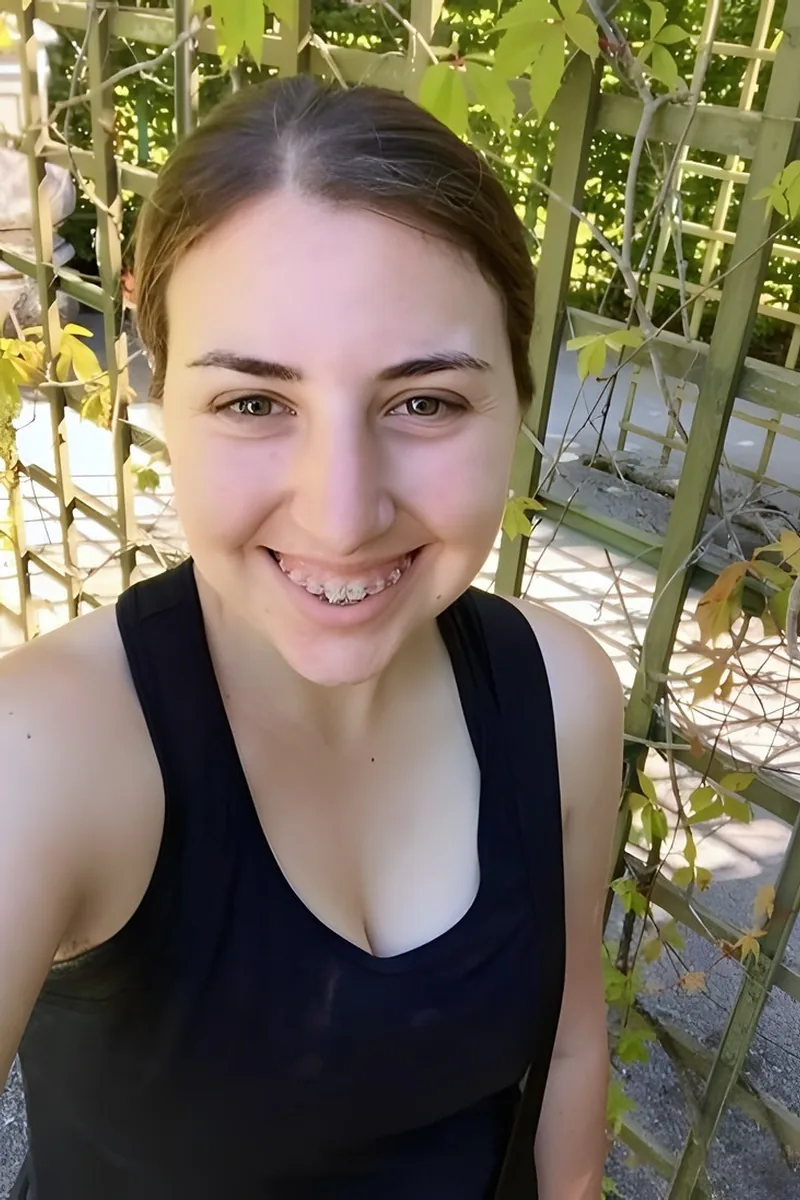
Most students overthink the ACT Science section because they assume it requires deep content knowledge — it doesn't. Dana treats it as a data interpretation exercise, teaching students to read graphs, compare experimental setups, and identify conflicting viewpoints without getting lost in unfamiliar terminology. She scored a 36 composite and finds this section is often where students see the fastest score jumps once they shift their approach.
I'm not tutoring, I love walking through New York for design inspiration and taking carpentry, metalworking, and illustration classes.
I'm Solange - a recent graduate from Harvard where I studied Sociology & Women's Studies. I've been tutoring for eight years now, and have worked with a wide range of ages and in a wide range of subjects. Some of my specialties are college prep/test taking II worked in the admissions office on campus); social sciences; and literature/writing.
I am currently interviewing for medical school for matriculation in August 2017.
Most students panic when they see the ACT Science section, but the secret is that it barely tests science knowledge — it tests whether you can read graphs, compare experimental setups, and draw conclusions from conflicting data. Carmen walks students through each passage type (data representation, research summaries, conflicting viewpoints) with a systematic method for extracting answers without getting lost in jargon. She scored a 35 ACT composite using exactly this approach.
I'm a graduate of Columbia College Chicago; after exploring many fields of interest (writing, linguistics, computer science, and more), I completed a Bachelor of Fine Arts degree in Fashion Design graduating Cum Laude.
I am an energetic tutor with an abundance of tutoring experience in a broad range of subjects. As a biology major at Washington University in St. Louis, I am well-versed in chemistry, biology, physics and calculus. I have privately tutored elementary through high school students in these areas of study, as well as algebra, trigonometry and geometry. However, my academic interests are not limited to math and science. My true academic passion is for French language and literature, which is my second major at my university. I developed this passion at a young age, but mastered the language during my semester abroad in a language-immersion program in Toulouse, France.
Most students panic when they see an unfamiliar experiment on the ACT Science section, but the test rarely asks you to know actual science — it asks you to read graphs, compare data trends, and evaluate conflicting hypotheses. Sonali, who is in a BA-MD program and scored a 35 ACT composite, teaches students to treat each passage like a data interpretation exercise and ignore the intimidating terminology.
I am a current undergraduate student at the Macaulay Honors College at Hunter College, where I received a full tuition merit scholarship. I am pursuing a Bachelor of Arts in Biochemistry, as well as minoring in English. For years, I have tutored high school students in preparation for New York State Regents Exams, as well as elementary school and middle school students, mainly in English, Mathematics, and Biology. I enjoy exposing students to different learning techniques to allow them to discover their unique learning style. I find that this is especially important for younger students, who benefit from visuals, hands-on interaction, and interesting analogies. Thus, I customize my teaching methods to each individual student.
Despite its name, ACT Science is really a data interpretation exam — students rarely need to recall scientific facts, but they do need to read graphs, compare experimental designs, and draw conclusions quickly. Reid reframes the section as a reading exercise, teaching students to extract trends from tables and figures without getting lost in unfamiliar terminology. His 32 ACT composite confirms he knows how to execute this approach under real test conditions.
Most students panic when they see the ACT Science section, but it's really a data interpretation test disguised as biology and chemistry. Rachel, who scored a 34 composite, teaches students to ignore the jargon and read graphs, tables, and conflicting viewpoints like they would any other text. Her approach turns the section from the scariest part of the test into one of the easiest to improve.
I'm a graduate of Loyola University Chicago's Honors Interdisciplinary Program, from which I received a Bachelor of Arts in Classical Civilization. After graduating, I relocated to New York City to pursue my creative goals and obtain an MFA in Fiction writing. I have experience tutoring both adults and gifted adolescents; while I am capable of tutoring a broad range of subjects, I am most passionate about English, Writing, History, and Literature. I believe in the intellectual potential of every student, and have observed that a great many obstacles in a student's educational journey can be overcome through a personal and case-by-case approach on the part of the teacher or tutor. I also believe that early educational success is the foundation for lifetime achievement and general well-being, and I try to relate this in motivational terms to all students. In my spare time, I enjoy reading, writing, running through Brooklyn, and seeing almost any movie in theaters.
The ACT Science section looks intimidating, but it's mostly a data interpretation exercise disguised as biology and chemistry. Maya teaches students to ignore the jargon, go straight to the graphs and tables, and extract exactly what each question asks for. Her 34 composite and systematic approach turn what feels like the hardest section into one of the most improvable.
The ACT Science section is really a data interpretation exam disguised as science — most questions can be answered without any outside knowledge if a student knows how to read graphs, tables, and conflicting viewpoints efficiently. Andrew approaches it exactly that way, teaching students to extract trends from figures and identify the key variable in each experiment before touching the questions. His 35 ACT composite confirms he's mastered this section's particular brand of fast analytical reading.
I am Texas transplant and graduated from Tulane University, where I majored in economics. After graduation I moved to New York to serve as an AmeriCorps with Habitat for Humanity. The skills I learned in teaching volunteers to build a house translate well to tutoring, and I am sure that I can help you improve your scores! With a perfect score on the 2016 MCAT CARS section, I specialize in tutoring reading comprehension and English for both the ACT and MCAT. My goal is to help you learn to read between the lines and develop strategies for test-day success. Other than tutoring, I do woodworking, read, bike, and box. I am looking forward to working with you!
I am now pursuing a career in Choreography and Dance Writing. In high school, I was named a National Merit Scholar and received a bilingual International Baccalaureate diploma in French. I have extensive tutoring experience in a variety of subjects, and I can't wait to help your son or daughter in their studies!
I'm a chemical engineering PhD student at NYU. I love to help people learn and hope to be a professor one day!
The ACT Science section barely tests science knowledge — it's really about reading graphs, interpreting conflicting viewpoints, and pulling data from dense tables under time pressure. Savannah, who scored a 34 composite, trains students to ignore the intimidating jargon and zero in on axes, trends, and relationships, which is where nearly every answer actually lives.
I am also an actor and musician, most recently having performed in Much Ado About Nothing at The Public Theater's Shakespeare in the Park.
The ACT Science section is really a data interpretation exam disguised as science — it rewards students who can quickly parse graphs, conflicting viewpoints, and experimental designs without getting bogged down in content knowledge. Hudson scored a 34 ACT composite and teaches a systematic approach to each passage type that cuts through the time pressure. His method zeroes in on reading figures first and questions second, which keeps pacing tight across all 40 questions.
I am a graduate of USC's School of Dramatic Arts with a B.A. in Theatre and a minor in Musical Theatre. I love traveling, and was lucky enough to spend an entire year of my college career studying abroad in London. I studied Shakespeare and the classics and appeared in several productions while in London, all of which have contributed to my love of words. My passion for the arts extends to working with children and young adults. I have been a choreographer for middle school musicals for several years. I love working with kids, and have experience tutoring middle school students in Spanish, tutoring high school students in the ACT and SAT Verbal sections, guiding students through essay writing, and have worked with children with learning and behavioral disabilities, including those with ADHD and on the Autism spectrum.
I am passionate about tutoring the ACT, high school math, biology, and English. My greatest ACT tutoring success story was increasing a student's overall score from a 23 to a 28 in a matter of 8 weeks during the summer of 2015. Ideally, I would like to tutor students preparing for the ACT and advise them as they prepare to apply to college.
I'm interested in one day becoming a doctor, but much of my work experience thus far has led me to education: working as a Spanish teaching assistant while at Bowdoin, as Education Coordinator for a middle school healthy dating curriculum in an office of the Puerto Rico Department of Health, and as a community health worker providing health education Spanish-speaking migrant farm workers, among others. I've found that effective, individual-focused education is an important component of overall health, and I hope my continued teaching experience will better inform my practice as a future physician.
The ACT Science section isn't really a science test — it's a data interpretation test wrapped in scientific language. Miranda's 34 ACT composite reflects her ability to cut through dense graphs, tables, and conflicting viewpoints to find the specific information each question demands. She teaches students to ignore the intimidating terminology and zero in on trends, variables, and experimental design.
I'm a recent Northwestern grad and NYC transplant, with a passion for reading, fashion, and social media. In addition to tutoring, I've spent multiple years interning in the literary world and working at my university's fashion magazine; I have both a diverse range of experiences and an eye for detail. I don't believe in giving anything less than 110% of my time and effort, especially when understanding the needs of my students.
I am passionate about languages, and know that learning a language is most effective when it is fun and engaging. I have spent almost a year traveling internationally and have tutored in both English and French along the way. I believe that the most critical aspect of teaching a foreign language is getting a student interested and excited to practice it, and I have developed many successful strategies to do this, through tutoring and through studying languages myself.
I am a rising junior at Brown University pursuing a Bachelor of Arts in Environmental Studies with a focus on Sustainability in Development. I graduated from West Islip High School as class valedictorian in 2013. My tutoring career began on a mission trip to El Salvador in which I tutored children from different villages in English and Math. Since then I have been a peer tutor for all four years of my high school career, tutoring all subjects. I went on to do a community outreach tutoring program for children in the community of Providence, Rhode Island near my university. While I tutor a broad range of subjects, my favorite subjects to tutor are Math, Spanish, Environmental and Earth Science, and Biology. I'm passionate about helping students because I've seen many have that "a-ha moment" while tutoring, and I know how important those moments are to their understanding and learning. I want to help more students find those moments of clarity in whatever subject they are struggling in so that they can have more confidence in their abilities and succeed. My tutoring philosophy is to give students the skills and tools they need to understand and learn without telling them how to do everything. I teach students to practice to perfection, which involves re-doing problems until they get it right the first time, which demonstrates complete understanding. My tutoring style is characterized by patience and I'm very attentive, making sure they are truly understanding when I ask the question, "does that make sense?"
I am currently a senior at the City College of New York completing a dual degree in mathematics and English with an emphasis in creative writing. I am equally passionate about both subjects and greatly enjoy stimulating others' interest in them through education. As a tutor, I do so by emphasizing the importance of understanding the greater context of the subject into which the specific skills to be learned fit. I find this method to be successful in easing the learning process, particularly in mathematics, as it helps students both to see how the various topics they are learning fit together and to retain the knowledge in the long term. As an added benefit, it also helps to fill any gaps in their education from previous years and improves their ability to quickly absorb new topics in the future.
I am an experienced writer and teacher with a degree in Political Science from Northwestern University in Evanston, Illinois and a Master's degree in Teaching from Relay Graduate School of Education in New York, New York. My essays and poetry have appeared in publications such as GlobalPost, Nashville Review, North American Review, and more. I have taught and tutored students for over five years, with four years of experience in the classroom.
I'm Rob! I graduated from Duke University in 2016 with a double major in Electrical and Computer Engineering and Economics. I've been a math teacher in the DOE for the last 2 years and have a Master's of Arts in Teaching. I specialize in high school math and test prep for the ACT, SAT, and GRE.
I am incredibly patient, and can adapt to any learning style. My energy as both a teacher and learner is infectious, and I try to convey that passion for learning to all of my students.
The ACT Science section barely tests science knowledge — it's really about reading graphs, interpreting conflicting viewpoints, and pulling data from dense tables under time pressure. Devin's analytical training in philosophy at Yale made him unusually good at parsing complicated information fast, and his 34 ACT composite shows that skill in action.
I am a 2016 alumna of Cornell University, graduating summa cum laude in Anthropology with a minor in Global Health. I also participated in the pre-med curriculum, taking courses in Physics, Biology, Chemistry, and Math. During my senior year, I tutored students from the Department of Athletics and the Office of Academic and Diversity Initiatives in Calculus I. I am passionate about helping others gain the skills, confidence, and understanding to achieve academic success.
I am currently working in a contemporary gallery as well! I also enjoy making art works and sitting back with a delicious new book.
The ACT Science section barely tests science knowledge — it's really about reading graphs, interpreting experimental setups, and comparing competing hypotheses under a tight clock. Brian scored a 32 ACT composite and teaches a data-extraction method that cuts through dense passages quickly. His CS training at Columbia sharpened exactly the kind of analytical reading this section demands.
The ACT Science section looks intimidating, but it's really a data-interpretation test that rarely requires actual science knowledge. Deanna's daily work in a genetics research lab means she reads graphs, tables, and experimental designs for a living — the exact skills this section demands. She teaches students to ignore the jargon, locate the variables, and extract answers directly from the figures in under a minute per question.
Most students panic at ACT Science because they think they need to know biology, chemistry, and physics cold. Jackson reframes the section as a data-interpretation exercise — reading graphs, spotting trends, and comparing experimental setups under time pressure. His math training at NYU makes him especially sharp at teaching students to pull numbers from complex figures without getting lost in the scientific jargon.
I have always been a highly ambitious student and strive to learn in everything I do. In high school I became enthralled with my ACT exams, embracing the challenge and being reinvigorated with each improvement I could make; over the course of a year, I self-studied from a 21 to a 34 and even had fun doing it! With that score I was able to attend Columbia University where I received two BAs: one in Archaeology and the other in Classics with a focus on Latin. In each step of my educational journey, I have been interested in accessibility and have been passionate about spreading information as widely as I can. I am now pursuing an MA at Columbia's Teacher's College in Anthropology and Education, specializing in the experiences of Neurodivergent learners.
I am an aspiring actress with a love of learning. I hope to share this love with every student I encounter. I attended Ouachita Baptist University where I worked towards a degree in theater. I have experience tutoring a fifth grade girl, and I've always been helping my friends with their homework and helping them study for tests. I tutor English, History, Geography, ACT Prep, and Math. I enjoy all the subjects I tutor. I teach with love and encouragement, helping the student to see and realize their potential. My hobbies include acting, reading, taking walks, and spending time with my friends and family.
I am a graduate of New York University, where I studied psychology, studio art, and English. I chose to go to NYU because it is a good school and because I wanted to experience life in a different setting and because I love to travel and explore. I'm patient and passionate about helping students learn new things that they can use in the future. My favorite subjects are art and English. In my spare time, I like to draw, take photographs, and read.
Testimonials
Because the right ACT Science tutor makes all the difference.
Average Session Rating – Based on 3.4M Learner Ratings
Practice ACT Science
Free practice tests, flashcards, and AI tutoring for ACT Science
Nearby ACT Science Tutors
Other Brooklyn Tutors
Related Test Prep Tutors in Brooklyn
Frequently Asked Questions
The ACT Science section gives you 35 minutes to complete 40 questions, which means you have roughly 5 minutes per passage. Many students struggle with timing because they spend too long analyzing data before reading the questions. A proven strategy is to spend 1-2 minutes skimming the passage and diagrams, then jump directly to the questions—you can reference the passage as needed. Personalized 1-on-1 instruction helps you practice this approach with real ACT passages and identify which question types slow you down most, so you can adjust your strategy accordingly.
It's actually both. About 40% of the section tests scientific reasoning and data interpretation, while 30% requires reading comprehension and 30% involves visualization and analysis skills. The key difference from a typical science class is that you don't need to memorize formulas or specific science facts—you extract information from graphs, tables, and passages. Many Brooklyn students find they can boost their scores quickly by focusing on the data interpretation patterns that repeat across test sections, rather than trying to brush up on general science knowledge. A tutor can show you which reasoning skills matter most and help you recognize common question patterns.
The best way is to take a full-length practice test under timed conditions and score it carefully by question type—whether it was a data representation, research summary, or conflicting viewpoints passage, and which specific skill tripped you up (reading the graph, understanding the hypothesis, comparing results). Many students discover they struggle more with one passage type than others, or they lose points on specific reasoning skills like extrapolation or identifying experimental flaws. Getting matched with a tutor who can analyze your practice test results means you'll spend study time on what actually moves your score, rather than reviewing material you already understand.
Realistic improvement depends on where you're starting and how much you practice. Students who are scoring in the 16-20 range often see gains of 3-5 points with focused instruction and consistent practice, while those already scoring above 25 may see smaller but still meaningful improvements as they refine their approach. The research on 1-on-1 instruction shows it's particularly effective for test prep because tutors can target your specific weak spots rather than generic test content. Most students need 4-8 weeks of regular tutoring sessions combined with practice tests to see measurable score changes.
Test anxiety often peaks during Science because of the tight timing and unfamiliar passage types. Effective strategies include practicing with actual ACT Science passages repeatedly so the format becomes familiar, using timed drills to build confidence in your pacing, and learning breathing or mental reset techniques to use when you feel stuck on a question. The best confidence-builder is knowing your patterns—if you know you typically struggle with conflicting viewpoints passages, you can mentally prepare for that and have a backup strategy. Working with a tutor gives you someone to practice with and get feedback from, which significantly reduces anxiety by test day because nothing on the real test will feel completely new.
If you're aiming for significant score improvement, aim for 3-4 hours per week of focused study over 6-8 weeks. This typically breaks down to one or two tutoring sessions (1 hour each) combined with independent practice on your own. Your study time should include a mix of timed practice passages, full-length practice tests, and review of questions you missed. With Brooklyn's average student-teacher ratio of about 11.7 students per teacher, you likely haven't had much individualized feedback on your science skills—that's where tutoring creates the biggest difference by giving you targeted guidance you won't get in a classroom setting.
Ideally, start 2-3 months before your test date if you want time for both skill-building and practice testing. However, even 4-6 weeks of focused tutoring can make a meaningful difference if you're willing to put in consistent study time outside sessions. If you're taking the ACT for the first time, starting earlier gives you time to get comfortable with the passage types and develop your timing strategy. Many students benefit from taking a diagnostic practice test first to see where they stand, then connecting with a tutor who can create a study plan based on your specific score goals and timeline.
Let’s find your perfect tutor
Answer a few quick questions. We’ll recommend the right plan and match you with a top 5% tutor.