Award-Winning Calculus Tutors
serving Brooklyn, NY
Calculus
Tutors in Brooklyn
Private 1-on-1 tutoring, weekly live classes for academic support, test prep & enrichment, practice tests and diagnostics, and more to elevate grades and test scores.
Based on 3.4M Learner Ratings
UniversitiesSchools & Universities
DeliveredHours Delivered
ProficiencyGrowth in Proficiency
Who needs tutoring?
No obligation. Takes ~1 minute.
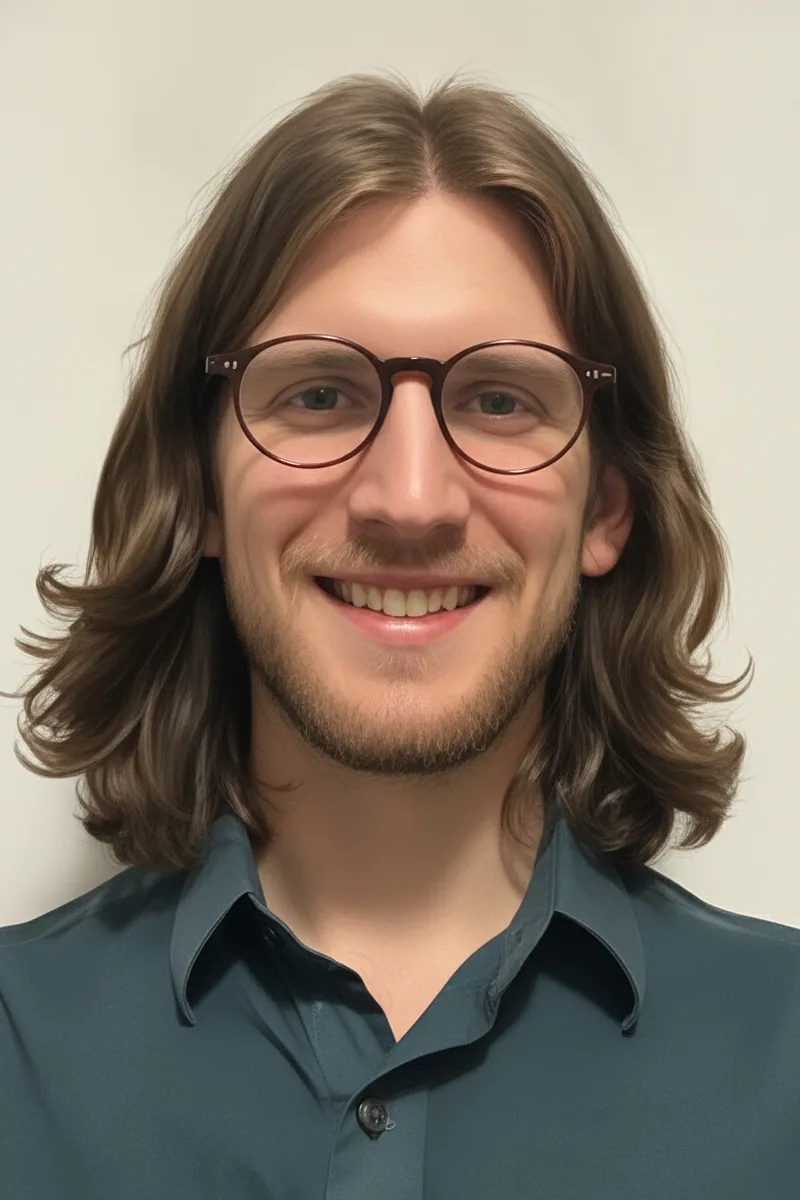
A PhD in Education means Reid thinks deeply about *how* people learn abstract concepts — and calculus, where students must shift from computing answers to reasoning about rates and accumulation, is exactly where that expertise pays off. His sociology and math tutoring background gives him a knack for translating the conceptual leap from algebra into limits and derivatives, breaking down the notation barrier that trips up so many students encountering calculus for the first time.
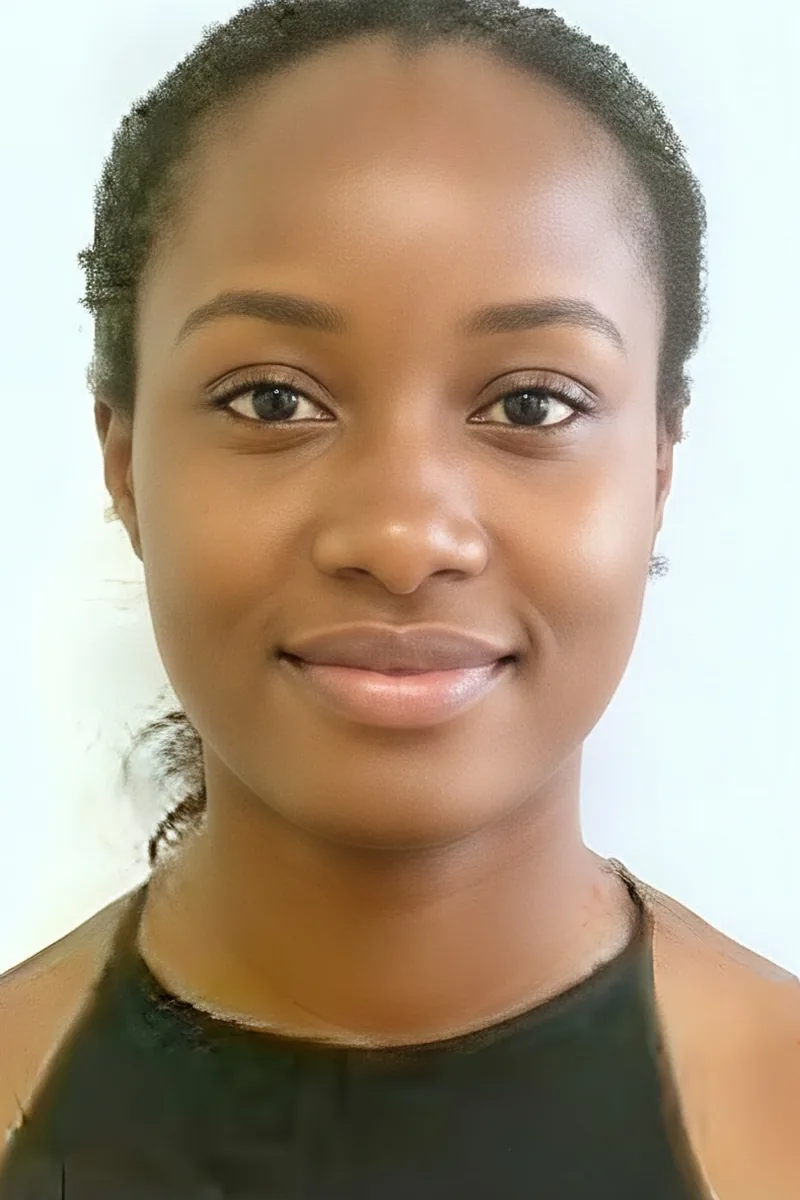
Scoring a 34 on the ACT means Solange has the quantitative chops to handle calculus, even though her Harvard degrees are in sociology and women's studies. Her eight years of tutoring math at multiple levels give her a clear read on where students get stuck — particularly the conceptual shift from algebraic manipulation to thinking about instantaneous rates of change and accumulation. She breaks down the logic behind each new idea before diving into computation, so the notation stops feeling like a foreign language.
Daniel's sociology degree isn't a math credential, but sociology's quantitative methods — analyzing rates of change in population data, modeling trends over time — sit surprisingly close to what early calculus actually asks students to do. His 1500 SAT confirms strong quantitative chops, and he brings a 5.0 tutoring rating to sessions where he breaks down derivatives and limits by connecting them to real patterns rather than abstract symbol-pushing.
Dual-degree work in Applied Mathematics and Computer Science at Johns Hopkins means Sabira isn't just familiar with calculus — she uses it daily, from optimization algorithms to the linear algebra and multivariable calc that underpin machine learning models. That depth lets her trace a concept like the chain rule or integration by parts back to why it was invented in the first place, turning mechanical steps into intuition. Rated 5.0 by students.
Maya's Yale degree is in the arts and religious studies, not mathematics, so she's straightforward that calculus isn't her deepest subject. That said, her 34 ACT composite shows real quantitative ability, and her approach to tutoring — slowing down, finding what motivates each learner, and building from there — translates well to demystifying early concepts like limits and the intuition behind what a derivative actually represents.
Having completed AP Calculus BC and continued into college-level coursework at Princeton, Julie tackles everything from limit definitions and derivative rules through integration techniques and series convergence. She's especially sharp at explaining the conceptual "why" behind procedures like the chain rule or u-substitution, drawing on the same logical rigor her philosophy training demands.
Rachel's 34 ACT composite and 1510 SAT confirm she can handle quantitative reasoning well, though her degrees are in history and political science rather than math. Her approach to any unfamiliar problem mirrors how she tackles a dense primary source — systematically breaking it into smaller claims, checking each one, then building back up — which makes the conceptual logic behind limits and early derivatives more accessible than rote formula work alone.
Philosophy trains you to follow an argument step by step and spot exactly where the logic breaks — which is precisely what Moon brings to early calculus, where students often lose the thread between the intuition behind a limit and the formal definition. A 1560 SAT confirms strong quantitative chops, and a 5.0 tutoring rating shows that patient, clear reasoning translates into real results.
Limits, derivatives, and integrals each represent a genuine conceptual leap, and rushing past the 'why' makes later topics like related rates or the Fundamental Theorem nearly impossible to grasp. Allen unpacks each idea with both algebraic precision and graphical intuition, drawing on the quantitative depth of his economics training at Yale. He's rated 5.0 by students.
Limits, derivatives, and integrals become far more intuitive when a student understands what they physically represent — rates of change, accumulated quantities, instantaneous slopes. Ian is a Yale physics major who uses calculus as his daily language, and he connects each new technique back to a concrete meaning so the mechanics never feel arbitrary.
Journalism training teaches you to break complex stories into clear, logical sequences — and that's essentially what early calculus asks you to do with rates of change and accumulation. Michelle applies that same structured thinking from her Columbia and NYU education to walking through limits and derivative rules, translating dense notation into plain, step-by-step reasoning. Rated 5.0 by students.
Philosophy trains you to follow an argument step by step and know exactly where the logic breaks — which is precisely what early calculus demands when a student stares at a limit definition and can't see why it works. Noah's philosophy degree and 1540 SAT give him both the abstract reasoning chops and the quantitative fluency to unpack derivatives and continuity in plain, structured language. He treats each new rule as a claim that needs justifying, not just applying.
A Classics degree might not scream calculus, but Sarah's 1440 SAT and her experience tutoring across math and science mean she's comfortable with the quantitative reasoning that underpins early calculus work. She approaches derivatives and limits the way she'd approach translating a dense Latin passage — methodically, piece by piece, making sure each step makes sense before moving to the next.
Limits and derivatives click faster when someone walks you through the *why* behind each rule instead of just the formula. Dana connects calculus concepts to real-world applications — rates of change, optimization, area under curves — so the mechanics feel purposeful rather than abstract.
Philosophy trains you to follow an argument step by step, holding each premise accountable before moving to the next — which turns out to be exactly the discipline calculus demands when working through limit definitions or applying the chain rule. Lucas brings that logical rigor from his philosophy degree to breaking down proofs and procedures into clear, defensible reasoning. His 1480 SAT confirms the quantitative chops to back it up.
Running a startup means David thinks in rates of change every day — revenue growth, cost curves, marginal returns — which is exactly what calculus formalizes. He connects derivatives and integrals to tangible problems so that concepts like the chain rule or area under a curve feel like tools rather than abstract procedures.
Economics at Cornell means Tameem has worked through the calculus that underpins the discipline — marginal analysis, optimization of cost and revenue functions, and the derivatives behind supply-and-demand modeling. That coursework gives him a practical anchor for teaching differentiation and integration rules, since he can point to exactly where each concept shows up in real economic reasoning.
Derivatives and integrals click faster when a student sees them applied to something real — modeling bacterial growth, calculating areas under drug-concentration curves, or analyzing velocity. As a biology major at WashU who uses calculus in her science coursework daily, Laura teaches the mechanics and the meaning simultaneously. She holds a 5.0 rating from students.
An English major with a 1540 SAT, Ben has the quantitative chops to handle math even if it's not his home discipline — and his background in close, structured reading translates surprisingly well to parsing the layered notation that makes early calculus intimidating. He breaks down limits and derivative rules the way he'd break down a dense passage: piece by piece, making sure the logic of each step is clear before moving forward.
A neuroscience degree means Anna didn't just take calculus — she used it daily, modeling neural firing rates, interpreting differential equations in pharmacokinetics, and applying integration to real biological systems. That applied fluency shows up in how she teaches limits, derivatives, and integrals: every concept ties back to what it actually means, not just the mechanics of solving it.
Geography at the graduate level is more quantitative than most people realize — Duncan's UChicago and UBC training involved spatial analysis, rate-of-change modeling across landscapes, and the kind of applied math that makes derivatives and integrals feel like tools rather than abstractions. His teaching assistant experience at UBC means he's walked students through rigorous coursework before, and his 5.0 rating suggests that methodical, concept-first approach carries over well to calculus tutoring.
Religious studies and philosophy at Pomona College might not scream calculus, but Miranda's 1560 SAT demonstrates serious quantitative chops, and her philosophical training — constructing rigorous logical arguments, tracing how one premise necessarily leads to the next — maps surprisingly well onto understanding why derivative rules work rather than just applying them mechanically. She brings that same precision to walking through the chain of reasoning behind limits and integration, where each step has to justify itself.
Honestly, calculus sits well outside Harry's core training in communications and theater — but his SAT math tutoring background means he's comfortable with the algebraic and function-based reasoning that underpins early calculus concepts. He takes a structured, step-by-step approach to demystifying notation like limits and basic derivatives, treating each new symbol the way he'd break down an unfamiliar script: piece by piece until the whole thing makes sense.
Limits, derivatives, and integrals each represent a fundamentally new way of thinking about functions, and Violet introduces each one with concrete, visual examples before moving to formal notation. She earned her math degree at Brown and has extensive experience tutoring calculus at both the high school and college level. Her emphasis on connecting graphical intuition to algebraic technique keeps students from falling into the trap of memorizing formulas they don't understand.
MIT's math and computer science curriculum puts Manolya deep into calculus territory daily — from multivariable integration to the differential equations that power machine learning algorithms. That firsthand fluency means she can unpack not just how to apply the chain rule or evaluate an integral, but why each technique works the way it does. Her 1550 SAT and 5.0 tutoring rating back up the quantitative chops.
Philosophy majors at UCLA don't escape formal logic, and Willow's honors work trained her to dissect complex arguments step by step — a habit that maps directly onto working through limit definitions and derivative proofs where each line has to justify the next. Her 1440 SAT confirms solid quantitative chops, and she brings that same precision to walking through the chain rule or integration techniques so each step earns its place rather than appearing out of nowhere.
There's a moment in Calculus where related rates or integration by parts stops being a set of steps and starts making intuitive sense — Abismael accelerates that moment by explaining the same concept from multiple angles until one lands. Three degrees' worth of engineering math means he's solved differential equations, optimization problems, and series convergence questions in contexts that go well beyond the textbook. He's also not afraid to throw the hardest possible problem at a student to see what they really understand.
Though his BA is in European History from Johns Hopkins, Alexander's tutoring fellowship at a Massachusetts charter school had him drilling math daily — building the kind of procedural fluency that carries into early calculus topics like limits, continuity, and derivative rules. His 1470 SAT confirms solid quantitative chops, and his teaching instinct is to slow down and make sure each step makes logical sense before moving on.
Studying cognitive science at Michigan meant Corey spent serious time with the math behind neural modeling — differential equations, rates of change, and the calculus that describes how systems evolve over time. He unpacks topics like the chain rule and integration by grounding them in that kind of concrete, applied reasoning, making the jump from computation to comprehension feel manageable.
Samantha's degrees are in anthropology and the arts rather than mathematics, so she's honest that calculus isn't her deepest subject — but a 1490 SAT and years of tutoring math from elementary through pre-calculus mean she understands the quantitative scaffolding that leads into it. She's particularly effective at bridging the gap between algebraic manipulation and calculus-level reasoning, walking through what a derivative actually represents before diving into computation rules.
Philosophy trained Tim to dissect arguments step by step — a skill that maps surprisingly well onto calculus proofs and the formal logic behind epsilon-delta definitions of limits. His Master's in Education and state teaching certification mean he knows how to sequence those abstract leaps so students actually build intuition for derivatives and integration, not just pattern-match through problem sets. Rated 5.0 by students.
Psychology research at Penn's Positive Psychology Center involves statistical modeling and data analysis — skills that share DNA with the rate-of-change thinking at the heart of calculus. Jeanette's comfort with quantitative reasoning in a research context means she can walk through early derivative and limit concepts with an eye toward what the numbers actually represent, not just how to compute them.
Biological sciences at Cornell meant Rebecca didn't just take calculus — she used it, working through enzyme kinetics, growth rate models, and the quantitative reasoning that underpins upper-level biology and biochemistry. That background gives her a practical grip on derivatives and integration techniques that she can connect back to real problems rather than leaving them as abstract symbol manipulation. Rated 4.8 by students.
Katarah's degree is in Literary Arts from Brown, not mathematics, so she's straightforward that calculus is far from her primary wheelhouse. That said, her experience tutoring math across multiple levels — from elementary through pre-algebra and beyond — means she can support students navigating the conceptual shift into early calculus, particularly the intuition behind limits and what a rate of change actually represents before the notation takes over.
Having earned both a Bachelor's in Mathematics and a Master's in Education from Harvard, Esteban teaches calculus with the depth of someone who studied the theory and the clarity of someone trained to make it accessible. His work at a school for gifted students means he's comfortable pushing beyond standard derivative and integral techniques into the deeper reasoning — epsilon-delta proofs, convergence arguments, and the kind of rigorous thinking that prepares students for AP-level expectations. Rated 5.0 by students.
Robert's engineering background at Duke means he didn't just take calculus — he applied derivatives, integrals, and differential equations daily across circuit analysis, signal processing, and economic modeling. That cross-disciplinary fluency lets him explain concepts like the chain rule or integration by parts through real problems where the math actually matters. Two years of classroom teaching in NYC sharpened his ability to break down even the trickiest limit problems step by step.
An anthropology and visual art degree doesn't scream calculus, and Sarah is honest about that — but her 5.0 tutoring rating across dozens of subjects reflects a genuine ability to break down unfamiliar material into something a student can actually hold onto. She's strongest at the conceptual entry points: what a limit is really saying, how slope becomes something dynamic, and why the notation looks scarier than the idea behind it.
Sofia's music degree at Yale might not scream calculus, but songwriting is fundamentally about structure and pattern — skills that translate directly to reading the shape of a function or understanding why an integral accumulates the way it does. Her 1590 SAT confirms she has serious quantitative ability, and her writing-center training means she's practiced at slowing down and rebuilding a concept from scratch when a student's understanding breaks down.
Elena's academic background is in art history and French, not mathematics, so she's straightforward that calculus isn't her primary area — but a 1580 SAT and 35 ACT demonstrate she can handle rigorous quantitative reasoning. Her IB diploma program included the kind of analytical problem-solving that translates well to unpacking early calculus ideas like limits and instantaneous rates of change, and she approaches the material with the same precision she brings to close reading in her stronger subjects.
History majors don't usually end up teaching calculus, but Ava's graduate work at Harvard's School of Education centered on cognitive development — specifically, how students build conceptual understanding of abstract material, which is exactly what happens when limits and derivatives enter the picture. She approaches early calculus by slowing down the reasoning behind each step, making sure the logic of a rate of change or an accumulation problem lands before the notation piles up. Rated 5.0 by students.
Testimonials
Because the right Calculus tutor makes all the difference.
Average Session Rating – Based on 3.4M Learner Ratings
Other Brooklyn Tutors
Related Math Tutors in Brooklyn
Frequently Asked Questions
Many Brooklyn students find limits, derivatives, and related rates challenging because they require shifting from purely procedural thinking to deeper conceptual understanding. Word problems involving optimization and rates of change are particularly tricky—students often struggle to translate real-world scenarios into mathematical equations. Additionally, graphical interpretation of derivatives and integrals trips up students who've relied heavily on algebraic approaches in previous math courses. Personalized 1-on-1 instruction helps students break through these conceptual barriers by connecting abstract ideas to concrete examples and building intuition alongside calculation skills.
Tutors work directly with you to develop clear problem-solving strategies and communication skills that go beyond just finding the right answer. They'll ask you to walk through your thinking, identify where you're making logical jumps, and help you organize multi-step solutions in ways that demonstrate understanding. This approach is especially valuable because calculus demands that you justify why you're using a particular method—whether it's the chain rule, u-substitution, or L'Hôpital's rule. With consistent feedback and practice, students develop confidence in articulating their reasoning, which translates directly to better performance on tests and exams.
Yes. Brooklyn's 103 school districts use different calculus curricula and resources, so tutors understand how to work with various textbooks—whether your school uses Stewart, Larson, or another standard resource. Tutors can align their instruction with your specific course sequence, notation preferences, and the way your teacher presents material, which makes tutoring sessions complement what you're learning in class rather than introduce conflicting approaches. Whether your calculus course emphasizes rigorous proofs, applied applications, or a balance of both, a tutor can customize their explanations to match your curriculum and help you succeed on your particular exams and assessments.
Calculus anxiety often stems from feeling lost or rushed in a classroom setting—and with Brooklyn's average student-teacher ratio of 11.7:1, students in larger classes may not get the individual support they need to build confidence. One-on-one instruction creates a judgment-free environment where you can ask "basic" questions without hesitation, work at your own pace, and celebrate small wins that accumulate into genuine understanding. Tutors help you recognize patterns and connections between topics—seeing how the derivative builds on limits, or how integration undoes differentiation—which transforms calculus from an intimidating collection of rules into a logical, interconnected system. This foundation of understanding and personalized encouragement is powerful for reducing math anxiety.
Varsity Tutors connects you with expert tutors in Brooklyn who have deep calculus expertise and experience working with students at your level. When you get matched with a tutor, you'll be able to discuss your specific challenges—whether that's mastering integrals, acing the AP Calculus exam, or building conceptual understanding for college-level math—and find someone whose teaching style clicks with how you learn best. The matching process takes into account factors like your goals, schedule, and what you need most right now, so you can start sessions with a tutor who's already aligned with your needs rather than spending weeks finding the right fit.
Many calculus students memorize procedures without understanding why they matter, which makes word problems and application questions feel disconnected from what they've learned. Tutors help bridge this gap by showing how derivatives model rates of change in physics, economics, and biology, or how integrals calculate area, volume, and accumulation in practical contexts. This conceptual grounding is especially important because standardized tests and college-level courses increasingly emphasize applications and interpretation—not just computation. When you understand that calculus describes how things change in the real world, abstract formulas suddenly make sense and stick with you longer.
The best time is when you first sense confusion or want to deepen your understanding—waiting until you're failing is harder to recover from. Many Brooklyn students benefit from tutoring early in the course, especially in the first few weeks when foundational concepts like limits and continuity are introduced. These early topics cascade throughout calculus, so solidifying them prevents struggles later with derivatives and integrals. That said, tutoring at any point helps: whether you want to boost a B to an A, build confidence before an exam, or catch up after falling behind, personalized instruction adapts to where you are right now and moves you forward.
Let’s find your perfect tutor
Answer a few quick questions. We’ll recommend the right plan and match you with a top 5% tutor.