Award-Winning Calculus Tutors
serving Bronx, NY
Calculus
Tutors in Bronx
Private 1-on-1 tutoring, weekly live classes for academic support, test prep & enrichment, practice tests and diagnostics, and more to elevate grades and test scores.
Based on 3.4M Learner Ratings
UniversitiesSchools & Universities
DeliveredHours Delivered
ProficiencyGrowth in Proficiency
Who needs tutoring?
No obligation. Takes ~1 minute.

Medical school runs on calculus — pharmacokinetics, modeling cardiac output, interpreting rate-of-change data in physiology. Michael applies derivatives and integrals to real biological systems, which gives students a concrete reason to care about concepts like chain rule or area under a curve. He graduated summa cum laude in biology from Yeshiva College, where quantitative reasoning was central to his coursework.
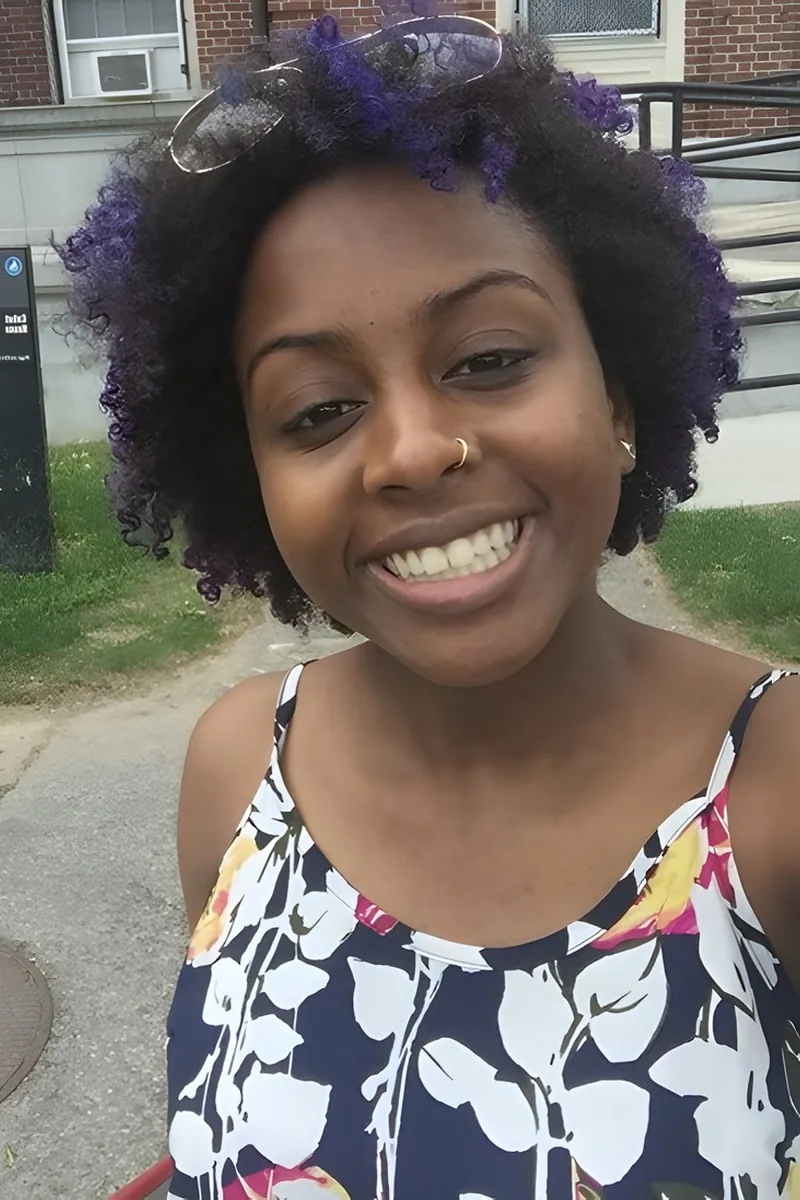
African American Studies at Harvard isn't a math degree, but Gabriela's 1450 SAT and 33 ACT show she can handle quantitative reasoning with real confidence. She's particularly effective at translating the intimidating notation of early calculus — what a limit expression is actually saying, how to read a derivative as a rate — into clear, plain-language explanations that make the concepts stick.
Computer science at Penn State meant Nicholas didn't just take calculus — he applied it, using derivatives in gradient descent algorithms and integrals in computational geometry problems where math becomes working code. That background lets him explain concepts like the chain rule or area under a curve by connecting them to the logic and problem-solving patterns CS students already understand. Rated 5.0 by students.
Biology coursework at Cornell — modeling growth curves, interpreting dose-response relationships, tracking nutrient absorption rates — is quietly full of calculus, and Victoria has worked through that quantitative side firsthand. Her science background means she can ground derivatives and integrals in the kinds of rate-of-change problems that actually appear in life sciences, making the abstract notation feel less arbitrary and more like a tool with a job to do.
Before earning two graduate degrees in comparative literature, Dan built a serious math foundation — and calculus is where that shows most clearly. He unpacks limits, derivatives, and integration techniques by emphasizing what's actually happening to a function, so students can set up related-rates or area problems from understanding rather than pattern-matching.
Ten years teaching across general ed, special ed, and collaborative classrooms in New York City means Ivan knows how to break down intimidating material for students who process information differently — a skill that transfers directly to unpacking calculus notation and the conceptual leap from algebra to limits. His English background might seem unrelated, but close-reading habits train the same careful, step-by-step logic that early derivative problems demand. Rated 4.8 by students.
The jump to calculus often feels overwhelming because it layers new notation on top of algebra and trig skills that may be rusty. Devon breaks down limits, derivatives, and integration by connecting each concept back to the underlying algebra, so students aren't just memorizing formulas — they're seeing why the chain rule or u-substitution actually works. His patient, structured approach is especially useful for students encountering calculus for the first time.
International affairs at Columbia included enough quantitative coursework — economic modeling, statistical analysis of policy outcomes — that Abigail isn't starting from scratch with calculus, though it's clearly not her primary lane. Her real asset is the analytical discipline that comes from breaking down complex policy arguments, which she applies to walking through limits and early derivative concepts step by step until the reasoning is airtight.
Chimdi's engineering coursework at Carnegie Mellon means calculus isn't an abstract exercise — it's the language he uses for circuit analysis, optimization, and differential equations every semester. He digs into the intuition behind limits, derivatives, and integration techniques so students understand the reasoning driving each step.
Physiological Science at UCLA is quietly calculus-heavy — modeling how oxygen diffusion rates change across membranes, how hormones accumulate and decay in the bloodstream, and how cardiac output curves behave all require derivatives and integrals. Samantha learned calculus through that biological lens, which means she can anchor abstract rules in systems that actually move and breathe. Her Spanish minor won't help much here, but the science training does the heavy lifting.
Neuroscience coursework at Washington University in St. Louis put Taylor through the full calculus sequence — modeling action potentials, analyzing decay rates, and working the differential equations that describe how neurons communicate. That hands-on, science-embedded experience with derivatives and integrals means she can ground abstract rules in systems that actually behave according to them, making the math feel purposeful rather than procedural.
Studying environmental health sciences at Columbia's Mailman School means Laura regularly encounters calculus in disguise — exposure-response curves, rate-of-change models for pollutant dispersion, and the integration problems embedded in epidemiological data analysis. Her biology undergraduate work at Fordham built the quantitative backbone for that, giving her a concrete, science-grounded way to teach derivatives and integrals that connects each rule to something measurable. Rated 5.0 by students.
Neuroscience at Mount Holyoke meant Zarrin didn't just take calculus — she used it, modeling neural signal propagation, analyzing rate-dependent behavior in biological systems, and working through the math that describes how the brain actually functions. That hands-on context makes her especially effective at teaching derivatives and integrals as tools with meaning, not just symbol manipulation. Rated 4.9 by students.
Psychology research at Boston University involves more statistics and quantitative reasoning than most people expect, and June's 1500 SAT score confirms she can handle the math side comfortably. She's straightforward that calculus isn't her deepest subject, but her one-on-one tutoring background means she's practiced at slowing down and rebuilding a concept — like what a derivative actually represents — until the logic lands rather than just the memorized rule.
Political science trains you to build arguments step by step, and Charles applies that same sequential logic to calculus — tracing how a limit becomes a derivative becomes an integral, so each concept earns the one after it. His 1380 SAT confirms solid quantitative chops, and his broad math tutoring range from pre-algebra through calculus means he knows exactly where students' algebra gaps tend to trip them up in differentiation. Rated 4.9 by students.
An English degree doesn't scream calculus, but Joshua's work as a teaching assistant in a rigorous academic environment means he's built the scaffolding and questioning techniques that make abstract concepts — like what a limit is actually doing, or why a derivative describes a rate — accessible to students who feel lost in the notation. His 1360 SAT confirms solid quantitative reasoning, and his 5.0 rating speaks to a teaching style that breaks intimidating material into manageable, logical steps.
Business majors encounter calculus through the back door — marginal cost, revenue optimization, elasticity — and that's exactly the context Miguel brings to teaching derivatives and integrals. He grounds each concept in the kind of quantitative decision-making his coursework demands, so the math feels like a tool for solving real problems rather than an abstract exercise. Rated 5.0 by students.
Philosophy trains you to take a dense, abstract argument and reconstruct it piece by piece until the logic is airtight — which is exactly what early calculus asks you to do with limits and continuity definitions. Ava applies that same precision to unpacking epsilon-delta reasoning and the chain of logic behind derivative rules, making the formal language less intimidating. Rated 4.9 by students.
Classical Studies and Linguistics might not scream calculus, but Nathaniel's 1530 SAT reflects the kind of quantitative fluency that keeps early calculus from feeling like a foreign language — and as someone who's tackled Ancient Greek and Hebrew, he knows exactly how to decode unfamiliar symbol systems. He treats derivatives and limit notation the way he'd approach a new grammatical structure: learning the rules, then understanding why they work.
International economics at Fordham meant Gregory spent semesters working through the calculus that underpins supply-demand modeling, marginal analysis, and optimization problems — the math economists actually use daily. His 1500 SAT confirms strong quantitative chops, and his economics training gives him a natural way to ground derivatives and integrals in real decision-making contexts rather than abstract symbol manipulation.
That moment when derivatives stop being a definition and start being a tool — for optimization, related rates, or analyzing motion — is where calculus clicks or falls apart. Jonathan walks through each application type by first making sure the underlying concept (what a derivative actually measures) is solid, then layering on the problem-solving strategy. With a B.S. in Mathematics and experience teaching through multivariable calculus, he sees the full arc of where these ideas lead.
Taking calculus coursework at Fordham alongside his finance studies, Cole sees derivatives and integrals not as abstract exercises but as tools for modeling rates of change and accumulation in the real world. He digs into the conceptual side — why the chain rule works, what a Riemann sum actually represents — so that problem-solving becomes intuitive rather than mechanical.
Jonathan's BA in Math means he didn't just pass calculus — he studied the theory underneath it, from rigorous limit definitions to the formal proofs behind the Fundamental Theorem. That depth lets him teach integration techniques and series convergence with an emphasis on why each method works, not just when to apply it. Rated 5.0 by students.
An economics major with a math minor at Allegheny College, Vicquaja uses calculus daily in contexts like marginal analysis, elasticity functions, and optimization problems — so she teaches derivatives and integrals with an intuitive sense of what they actually measure. That econ lens is especially useful for students who need to see a purpose behind the chain rule or a definite integral before the mechanics fully click. Rated 4.7 by students.
A PhD in physics means Muhammed has spent years immersed in the calculus that underpins mechanics, electromagnetism, and thermodynamics — solving differential equations, evaluating complex integrals, and using derivatives to describe how physical systems evolve. He teaches concepts like the chain rule or integration by parts by connecting them to the physics problems where they naturally arise, giving each technique a concrete purpose. Rated 4.6 by students.
I'm a graduate of Fordham University where I earned degrees in both Mathematics and Music. I have years of experience tutoring students from middle to high school in all subjects, especially English, Math, and French. In my free time, I love playing and listening to music, spending time with friends, and watching Netflix :)
Art history and education aren't the usual path to calculus, and Mimi is straightforward about that — but her 1560 SAT demonstrates real quantitative strength, and her Masters in Education from Harvard means she knows how to design a learning sequence that actually builds understanding. She brings that inquiry-based instinct to early calculus, walking through what a derivative means conceptually before jumping to computation, so the rules feel like they follow logically rather than appearing out of nowhere.
Biostatistics at the master's and doctoral level means Nina uses calculus constantly — integration for probability density functions, derivatives for maximum likelihood estimation, and multivariable chain rules that underpin regression models. That daily fluency lets her teach concepts like Riemann sums or related rates by connecting them to the statistical machinery they actually power. Rated 5.0 by students.
A PhD in Education means Reid thinks deeply about *how* people learn abstract concepts — and calculus, where students must shift from computing answers to reasoning about rates and accumulation, is exactly where that expertise pays off. His sociology and math tutoring background gives him a knack for translating the conceptual leap from algebra into limits and derivatives, breaking down the notation barrier that trips up so many students encountering calculus for the first time.
Scoring a 34 on the ACT means Solange has the quantitative chops to handle calculus, even though her Harvard degrees are in sociology and women's studies. Her eight years of tutoring math at multiple levels give her a clear read on where students get stuck — particularly the conceptual shift from algebraic manipulation to thinking about instantaneous rates of change and accumulation. She breaks down the logic behind each new idea before diving into computation, so the notation stops feeling like a foreign language.
Teaching middle school math and special education for years means Liz has seen exactly where students' algebraic foundations crack under the weight of new calculus concepts — and she knows how to shore those gaps up before they snowball. Her 34 ACT composite confirms she can handle the quantitative side, and her special education training gives her a toolkit of strategies for breaking down intimidating ideas like limits and derivatives into steps that actually land for different types of learners.
Whether a student is seeing derivatives for the first time or wrestling with integration by parts, Justin connects each calculus concept to a physical picture — velocity from position, area under a curve, rates of change in real systems. That instinct comes from studying both physics and mathematics at Washington University before pursuing a PhD in computational math at the University of Chicago.
From epsilon-delta definitions of limits to integration techniques like substitution and parts, calculus demands both conceptual understanding and mechanical skill. James has tutored college students through calculus courses at Harvard for years, often connecting abstract ideas — like why the chain rule works — back to tangible applications in chemistry and the physical sciences. That dual perspective makes dense material more intuitive.
Dual-degree work in Applied Mathematics and Computer Science at Johns Hopkins means Sabira isn't just familiar with calculus — she uses it daily, from optimization algorithms to the linear algebra and multivariable calc that underpin machine learning models. That depth lets her trace a concept like the chain rule or integration by parts back to why it was invented in the first place, turning mechanical steps into intuition. Rated 5.0 by students.
Daniel's sociology degree isn't a math credential, but sociology's quantitative methods — analyzing rates of change in population data, modeling trends over time — sit surprisingly close to what early calculus actually asks students to do. His 1500 SAT confirms strong quantitative chops, and he brings a 5.0 tutoring rating to sessions where he breaks down derivatives and limits by connecting them to real patterns rather than abstract symbol-pushing.
Psychology and linguistics both lean heavily on statistical modeling — analyzing language acquisition curves, interpreting behavioral data over time — which gave Sherry real exposure to the calculus concepts underlying those methods during her University of Chicago coursework. Her 1600 SAT confirms she can handle rigorous quantitative reasoning, and she brings that same precision to unpacking limits and derivatives for students who need the 'why' explained clearly before the mechanics make sense. Rated 5.0 by students.
Limits, derivatives, and integrals each introduce a fundamentally new way of thinking about change and accumulation — and rushing past the intuition behind them is the fastest way to hit a wall. Sung unpacks each concept by connecting it to concrete problems, like how rates of reaction in chemistry are really just applied derivatives. His chemistry degree gives him a natural fluency with the kind of quantitative reasoning calculus demands.
Electrical engineering at Stanford means Jai didn't just take calculus — he used it daily, from analyzing circuit behavior with differential equations to applying Fourier transforms in signal processing. That depth turns him into someone who can explain not just how to evaluate an integral but why it models the physical quantity it does. His 1590 SAT confirms the quantitative precision he brings to every problem.
Biology at Cornell means Josef worked through calculus where it actually lives — modeling enzyme kinetics, analyzing growth curves, and interpreting the rates of change that govern biological systems. His 1530 SAT confirms the quantitative chops to back that up, and he teaches derivatives and integrals by anchoring each concept in the kind of applied problem where the math stops feeling abstract. Rated 5.0 by students.
Maya's Yale degree is in the arts and religious studies, not mathematics, so she's straightforward that calculus isn't her deepest subject. That said, her 34 ACT composite shows real quantitative ability, and her approach to tutoring — slowing down, finding what motivates each learner, and building from there — translates well to demystifying early concepts like limits and the intuition behind what a derivative actually represents.
Testimonials
Because the right Calculus tutor makes all the difference.
Average Session Rating – Based on 3.4M Learner Ratings
Other Bronx Tutors
Related Math Tutors in Bronx
Frequently Asked Questions
Many students struggle with the conceptual shift from algebra and precalculus to thinking about rates of change and limits. Beyond computation, understanding why derivatives and integrals work—and when to apply them—often trips up learners who've relied on procedural memorization. Word problems that require translating real-world scenarios into mathematical language are another frequent pain point, as is visualizing graphs and connecting them to equations. Personalized tutoring helps students build conceptual understanding alongside the mechanics, so calculus becomes a toolkit they can actually use rather than a set of formulas to memorize.
In the first session, a tutor will assess your current understanding—where you're comfortable and where gaps exist. They'll ask about your specific challenges, whether that's limits, derivatives, integrals, or applications, and discuss your course goals and timeline. This diagnostic conversation helps the tutor create a personalized plan that addresses your needs and aligns with your school's curriculum. Most students leave that first session with clarity on what to focus on and concrete strategies for approaching problems differently.
When you connect with a tutor through Varsity Tutors, they'll work with your specific textbook, course materials, and the scope of topics your school covers—whether that's AP Calculus AB, AP Calculus BC, or a standard college-prep course. Tutors understand different approaches to teaching calculus (some emphasize graphical understanding first, others lead with limits) and will align their instruction to match what your teacher expects. This curriculum alignment means the help you get directly supports your classwork and exams, rather than teaching calculus in isolation.
Showing work isn't just about getting the right answer—it's about demonstrating that you understand the process. A tutor will ask you to explain your thinking out loud, catch gaps in your logic, and guide you toward clearer mathematical communication. They'll help you organize multi-step problems so each stage is visible and justified, which is especially important for calculus where understanding the 'why' behind each derivative or integral step matters. This practice builds both confidence and the problem-solving habits that lead to better grades and deeper learning.
Word problems require translating English into mathematics, which is a skill separate from solving the math itself. The key is to slow down and identify what you know, what you're looking for, and which calculus concept applies (is this a rate of change problem? An optimization problem?). A tutor will teach you a systematic approach: read carefully, define variables, set up the equation or function, solve, and check if your answer makes sense in context. With practice using this framework on different problem types, word problems shift from intimidating to manageable.
Math anxiety often stems from feeling lost or unprepared, which personalized tutoring directly addresses. A tutor works at your pace, breaking calculus into digestible pieces and celebrating progress along the way. When you understand the 'why' behind concepts rather than just memorizing procedures, calculus feels less like a mysterious puzzle and more like a logical system you can master. Many students find that one-on-one support transforms their relationship with math—they move from dreading the subject to actually enjoying the problem-solving process.
Look for tutors with strong mathematics backgrounds—ideally those who've studied calculus at the college level or beyond, or who have extensive teaching experience with the subject. Beyond credentials, you want someone who can explain concepts clearly and adapt to your learning style, whether you're a visual learner who needs graphs or someone who prefers working through problems step-by-step. When you connect with a tutor through Varsity Tutors, you're matched with someone experienced in calculus instruction who understands how to help students move beyond memorization to genuine understanding.
The answer depends on where you're starting and what you're aiming for, but most students benefit from consistent, regular sessions—typically 1-2 times per week—rather than cramming before exams. Even a few focused sessions can help you understand a specific concept or problem type, while ongoing tutoring builds the deeper conceptual foundation that leads to sustained improvement. Your tutor will help you create a realistic plan based on your goals, whether you're aiming to pass, improve your grade, or prepare for an AP exam.
Let’s find your perfect tutor
Answer a few quick questions. We’ll recommend the right plan and match you with a top 5% tutor.