Award-Winning ACT Science Tutors
serving Albany, NY
ACT Science
Tutors in Albany
Private 1-on-1 tutoring, weekly live classes for academic support, test prep & enrichment, practice tests and diagnostics, and more to elevate grades and test scores.
Based on 3.4M Learner Ratings
UniversitiesSchools & Universities
DeliveredHours Delivered
ProficiencyGrowth in Proficiency
Who needs tutoring?
No obligation. Takes ~1 minute.

I am excited to tailor each and every session to a particular student's needs and preferred method of learning.
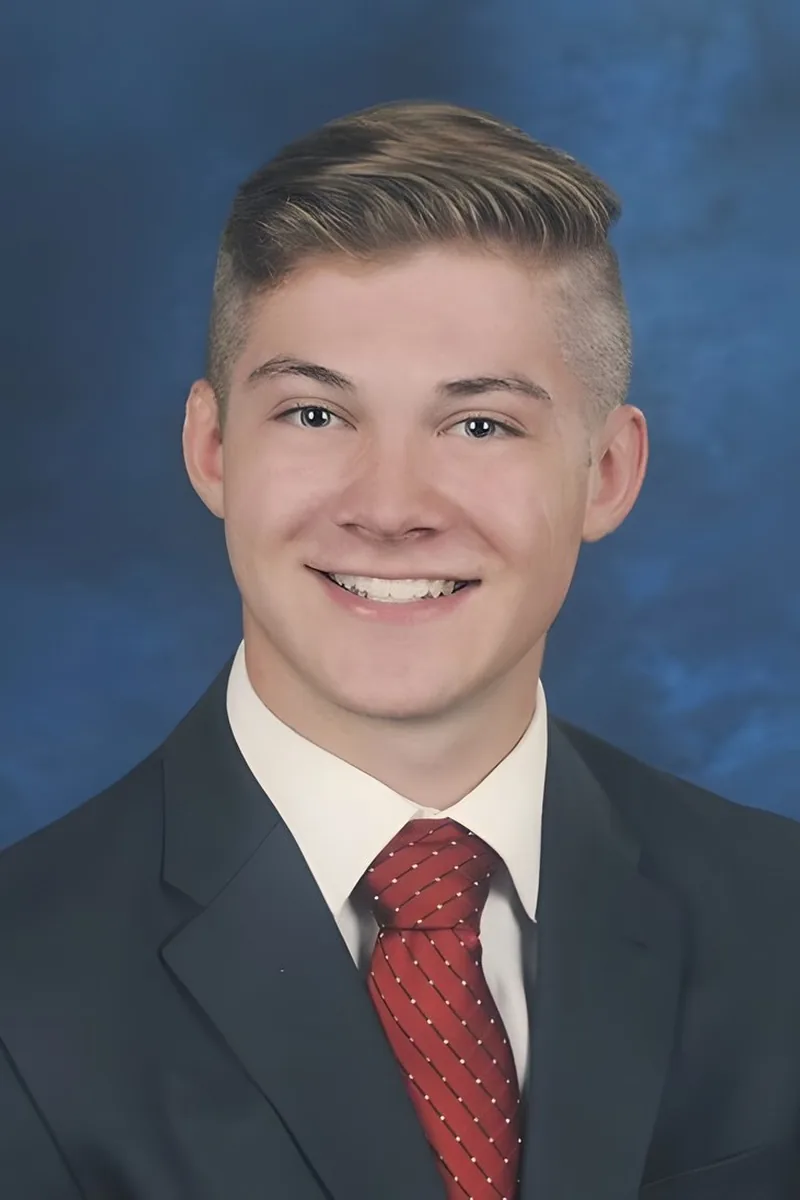
I'm from upstate New York and I love to be outside, play guitar, and work out. I have 3 siblings, so I'm used to helping people strengthen their skills and learn new ones. I love most math classes, and I'm attending Boston College in the Carroll School of Management Honors Program. I intend on majoring in finance and mathematics. I look forward to working with you!
The ACT Science section is less about knowing chemistry or biology and more about interpreting graphs, tables, and conflicting experimental viewpoints under time pressure. Sarah scored a 35 ACT composite and treats this section as a data-literacy exercise, teaching students to identify variables and trends quickly without getting distracted by unfamiliar scientific jargon. Her 5.0 rating speaks to how well that approach lands.
Most students overthink the ACT Science section because they assume it requires deep content knowledge — it doesn't. Dana treats it as a data interpretation exercise, teaching students to read graphs, compare experimental setups, and identify conflicting viewpoints without getting lost in unfamiliar terminology. She scored a 36 composite and finds this section is often where students see the fastest score jumps once they shift their approach.
Most students panic when they see the ACT Science section, but it's really a test of graph interpretation, data comparison, and experimental design reasoning — not science knowledge. Liz teaches students to isolate variables in tables, read conflicting viewpoints passages like arguments rather than textbook chapters, and answer questions in under a minute each. Her 34 ACT composite and years directing tutors at a Boston middle school mean she knows how to break these skills into repeatable steps.
The ACT Science section is really a data interpretation exam disguised in lab coats, and Vivian teaches it that way — breaking down graphs, tables, and conflicting viewpoints without assuming any specialized science knowledge. Her perfect 36 composite came from mastering exactly this kind of strategic reading under time pressure.
I'm not tutoring, I love walking through New York for design inspiration and taking carpentry, metalworking, and illustration classes.
The ACT Science section barely tests science knowledge — it tests whether you can read a graph, compare two experimental setups, and draw a conclusion under time pressure. Sharan's 36 composite and her premed science background at Cornell mean she can teach both the data-interpretation shortcuts the section demands and the underlying biology or chemistry when a question does require content knowledge.
I am an aspiring applied mathematician, with particular interest in image processing and climate science. I graduated in May 2017 from Washington University in St. Louis with a bachelor's in physics and mathematics, and am beginning a PhD program in September 2017 at the University of Chicago in Computational and Applied Mathematics. I've tutored introductory physics students for three years and enjoyed it thoroughly, as a chance to help other students while revisiting fundamental concepts to enhance my own knowledge. I'm eager to continue reaching out and helping students of math and physics to succeed and, furthermore, to appreciate the beauty and power of these subjects.
Most students panic when they see ACT Science passages full of unfamiliar terminology, but the section is really a data-interpretation exercise. Richard teaches students to ignore jargon, read graphs first, and identify conflicting variables before touching the questions — a systematic method that turns a confusing section into one of the most improvable. He earned a 36 ACT composite and brings physics coursework that makes the experiment-based passages feel intuitive.
I am currently interviewing for medical school for matriculation in August 2017.
Most of ACT Science isn't really science — it's data interpretation disguised as biology, chemistry, and physics. Robert treats the section like a reading exercise, teaching students to pull trends from graphs, compare experimental setups, and ignore the jargon that's designed to slow them down. His own 36 composite came from exactly this approach, and he walks students through the handful of questions that do require outside science knowledge so nothing catches them off guard.
Treat the ACT Science section like a data-interpretation exercise, not a science exam — that's the approach Aaron takes after earning a 36 composite. His biochemistry background at Columbia means he can quickly explain the underlying science when it does matter, but he spends most of the time teaching students to extract trends from graphs and resolve conflicting viewpoints in under a minute per question.
I'm Solange - a recent graduate from Harvard where I studied Sociology & Women's Studies. I've been tutoring for eight years now, and have worked with a wide range of ages and in a wide range of subjects. Some of my specialties are college prep/test taking II worked in the admissions office on campus); social sciences; and literature/writing.
Michelle's 35 ACT composite came from treating the Science section as a speed-reading exercise — identifying what each figure measures, matching it to the question, and moving on before the passage's technical language becomes a distraction. Her Religious Studies background actually reinforced this skill: evaluating competing interpretive frameworks is structurally identical to the conflicting viewpoints passages that trip most students up. Rated 4.9 by students.
I'm a recent graduate from the University of Pennsylvania who studied Linguistics and Deaf Studies. I eventually hope to work towards breaking down barriers between the Deaf and hearing worlds and encouraging greater focus on reforming Deaf education practices.
The ACT Science section is really a data-interpretation exam disguised as biology and chemistry. Yocheved teaches students to ignore the jargon, zero in on graphs and tables, and identify the one variable each question actually cares about — an approach grounded in her own 34 composite score experience.
I am originally from Alabama and graduated from Birmingham-Southern College with a BA in English Language and Literature. Immediately after undergrad, I relocated to New York City to pursue my law degree at Fordham University. After earning my Juris Doctor and passing the NY bar exam, I worked for five years as a litigator in New York. In 2009, I took the opportunity to fulfill a lifetime dream to live abroad and moved to South America. Upon arriving in Chile, I worked as an ESL teacher for children and adults as well as an editor of investment research and corporate trainer. I love language and am passionate about helping others learn to speak, write and read in a more effective way. Language is a tool, and I truly believe anyone can learn to use it better. I'm excited to be back in the US and eager to work with motivated students.
Hi! My name is Alexandra, and I am a Princeton University Neuroscience major with 5+ years of tutoring experience. I specialize in SAT/ACT/PSAT prep and have successfully taught topics ranging from computer science and basic sciences to elementary reading and writing and college essay writing. In high school, I scored a perfect 36 on the ACT on my first attempt, a perfect 1520 on the PSAT/NMSQT, won "finalist" status in the National Merit Scholarship competition, and was a medalist in the New York Science Olympiad. As an undergraduate at the top-ranked university, I focus specifically on standardized test preparation, including the SAT, ACT, and PSAT. I have an understanding of the structure and timing of the exams and the strategic approaches that are required to achieve top scores. I have successfully supported students in improving their performance through individualized study plans because I understand that not all students can use the same approaches to succeed. My approach emphasizes effective time management and a mastery of recurring question types. Outside of college test preparation, I have tutored students ages 5 to 17 in a variety of topics. A common teaching approach I use is to introduce new concepts with example problems that we work through together. I then explain each strategy and help the student through another problem, encouraging them to explain their thinking step by step. Finally, I let the student tackle a problem independently. Once a student can articulate why a method works, they are truly ready to apply it on their own. While this method suits many students, I understand that everyone learns differently and pride myself on being adaptable within and outside of lessons.
I'm currently a sophomore at Stony Brook University and a member of the 8-year Scholars for Medicine Program there. I recently graduated from Stuyvesant High School in downtown Manhattan and absolutely love city life. I've had many experiences teaching kids of all ages here and abroad. I tutor subjects in math, science, and english/writing. I also tutor for the ACT(35) and SAT (2160) standardized tests. I love teaching and meeting new people so I would be glad to offer my service to you. Thank you!
I'm a sophomore in Vassar college right now. I'm currently a psych major with an English minor as well as premed. I've been tutoring since my second year of high school and enjoy it immensely. I've tutored kids from elementary school all the way to high school. The subject I'm particularly confident in are English/Reading, but I also enjoy SAT and ACT math, psychology, and biology!
I am an incoming student at Washington University in St. Louis. I have been passionate about teaching ever since I had the opportunity to teach at an Indian public school in 2018. It's one of my favorite activities the gives me genuine joy. Hopefully, I'll be able to make teaching fun for you too! Let's succeed together!
I'm working towards my PhD in Marine Science at Stony Brook University (NY), doing research in the field of marine biogeochemistry. That's a bit of a mouthful, but basically it means I study the way living things interact with the chemistry of the ocean, and how that interaction gets recorded in mud and rock. Based on this expertise, I enjoy tutoring in general science, chemistry, and earth science.
I'm Sam! I am a sophomore at Cornell University where I study the world of labor and employment and work as a volunteer EMT. I am motivated to help students learn new things and overcome challenging obstacles. I have experience tutoring, working with kids in one-on-one and group settings, and I am dedicated, patient, and creative.
The ACT Science section is really a data interpretation exam dressed up in lab coats. Shachi, who scored a 35 composite, shows students how to extract trends from graphs, compare competing hypotheses in Conflicting Viewpoints passages, and ignore the intimidating scientific jargon that's designed to slow them down.
Most students panic when they see ACT Science passages full of unfamiliar terminology, but Emma reframes the section as a data-interpretation exercise. Her neurobiology background at Harvard means she's spent years extracting conclusions from graphs, tables, and conflicting research viewpoints — exactly what the ACT Science section tests. She teaches students to ignore the jargon and zero in on trends, variables, and experimental design.
I am a graduate of Yale University, where I studied Political Science with Urban Studies, wrote and edited for a monthly magazine, and worked at the Yale University Art Gallery. I spent the last year as a Fulbright Teaching Fellow in Bogota, Colombia.
Most students panic when they see the ACT Science section, but the secret is that it barely tests science knowledge — it tests whether you can read graphs, compare experimental setups, and draw conclusions from conflicting data. Carmen walks students through each passage type (data representation, research summaries, conflicting viewpoints) with a systematic method for extracting answers without getting lost in jargon. She scored a 35 ACT composite using exactly this approach.
Most students panic when they see an ACT Science passage full of unfamiliar terminology, but the section is really a data-interpretation exercise in disguise. Matthew runs an immunology research lab at Columbia, so reading graphs, interpreting experimental controls, and evaluating conflicting hypotheses is literally his day job. He teaches students to ignore the jargon and zero in on trends in tables and figures — the skill that unlocks 90% of the questions.
I'm a graduate of Columbia College Chicago; after exploring many fields of interest (writing, linguistics, computer science, and more), I completed a Bachelor of Fine Arts degree in Fashion Design graduating Cum Laude.
Most students panic when they see the ACT Science section's dense graphs and conflicting-viewpoint passages, but the section is really a reading comprehension test in disguise. Chelsey, who earned a 35 composite, teaches students to extract data points from tables and figures systematically, ignoring the intimidating scientific jargon and zeroing in on what each question actually asks.
Most students panic when they see the ACT Science section's dense graphs and conflicting-viewpoint passages, but the section is really a speed-reading exercise disguised as science. Mo treats it that way — teaching students to extract trends from data tables and figures without getting lost in unfamiliar terminology. His 35 composite score and background in both science and finance give him a data-literate approach that clicks quickly.
I'm a recent Stanford graduate (Electrical Engineering and Computer Science), and have been working at a major Management Consulting firm for a few years now. I personally scored a 2360 (out of 2400) on the SAT and 35 on the ACT and was successful in gaining admission to several top universities. I'm looking forward to helping you improve your scores towards improving your chances at getting in to your dream school.
The ACT Science section isn't really a science test — it's a test of how quickly you can read graphs, interpret conflicting viewpoints, and pull relevant data from dense passages. Grace scored a 35 ACT composite and teaches students to treat each Science passage as a data-reading exercise, zeroing in on axes, trends, and experimental controls before even looking at the questions. Rated 5.0 by students.
I am ready to help all students by answering their questions and frequently addressing some questions to them....
I am a current undergraduate student at the Macaulay Honors College at Hunter College, where I received a full tuition merit scholarship. I am pursuing a Bachelor of Arts in Biochemistry, as well as minoring in English. For years, I have tutored high school students in preparation for New York State Regents Exams, as well as elementary school and middle school students, mainly in English, Mathematics, and Biology. I enjoy exposing students to different learning techniques to allow them to discover their unique learning style. I find that this is especially important for younger students, who benefit from visuals, hands-on interaction, and interesting analogies. Thus, I customize my teaching methods to each individual student.
Nicolas's philosophy training actually translates well here — the Conflicting Viewpoints passages on ACT Science are essentially argument analysis, requiring students to identify where two researchers disagree and why, which is what philosophy majors do constantly. He teaches students to map each scientist's claim before looking at a single question, turning the trickiest passage type into the most predictable. His 35 ACT composite confirms the method works under real test conditions.
I am comfortable working through the needs of students with disabilities, learning or otherwise. I pride myself on my ability to tailor lessons to particular students, finding the pedagogical methods that work best for the individual.
I am a graduating senior at Barnard College of Columbia University, earning my Bachelor of Arts in Sociology and Urban Teaching. I am a certified middle and high school history teacher, but also have over 4 years of experience teaching elementary-aged students. I love working with all subjects, but especially in English and History. I can't wait to work with you!
I am a Master of Architecture candidate at Columbia University with a Bachelor of Arts in Physics from Colgate University. While I tutor several subjects, I am very passionate about mathematics and physics because of the tangible progress which I am able to help students achieve, and I enjoy working with students of all ages and abilities. I have been a mathematics and physics tutor for the last eight years and have worked with students enrolled in middle school, high school, and university courses. As a tutor I work to build my students confidence and independence. In my spare time, I enjoy drawing and playing volleyball and tennis.
Testimonials
Because the right ACT Science tutor makes all the difference.
Average Session Rating – Based on 3.4M Learner Ratings
Practice ACT Science
Free practice tests, flashcards, and AI tutoring for ACT Science
Nearby ACT Science Tutors
Other Albany Tutors
Related Test Prep Tutors in Albany
Frequently Asked Questions
The ACT Science section tests your ability to interpret data, understand scientific concepts, and reason through experimental scenarios—not memorized science facts. You'll encounter three question types: data representation (graphs and tables), research summaries (experimental setups), and conflicting viewpoints (competing scientific theories). Success requires strong reading comprehension and logical thinking as much as science knowledge.
You have 35 minutes to answer 40 questions, which works out to about 52 seconds per question—one of the tightest time constraints on the ACT. Many students struggle with pacing because they spend too long reading passages or second-guessing answers. Personalized 1-on-1 instruction helps you develop efficient strategies, like identifying which questions require careful reading versus quick data lookup, so you can maximize your score without rushing.
Start by taking a full-length practice test under timed conditions and reviewing every question you missed or guessed on. Look for patterns: Are you struggling with data representation questions? Do conflicting viewpoints passages confuse you? Are certain science topics (biology, chemistry, physics) harder? Varsity Tutors connects you with tutors who can analyze your practice test results, pinpoint specific weaknesses, and create a targeted study plan to address them.
Score improvement depends on your starting point and how consistently you practice. Students who work with personalized tutoring typically see 2-4 point improvements on the Science section within 4-6 weeks of focused study, though gains vary based on your baseline and effort level. The key is identifying your specific weak areas—whether that's interpreting graphs, understanding experimental design, or managing time—and practicing strategically rather than just doing more problems.
Effective strategies include: reading the question before the passage to know what to look for, skimming passages quickly rather than reading every word, and prioritizing question types based on your strengths. For data representation questions, focus on the graphs and tables first. For research summaries, understand the experiment's purpose quickly. For conflicting viewpoints, identify the key difference between theories. A tutor can help you practice these strategies on real ACT questions so they become automatic on test day.
Test anxiety often stems from feeling unprepared or uncertain about strategies. Building confidence through consistent practice with timed questions and learning proven test-taking techniques reduces anxiety significantly. Personalized tutoring also helps you understand why you're missing questions—whether it's a knowledge gap, pacing issue, or careless mistake—so you can address the root cause rather than just worrying about the score. Many students find that knowing exactly what to expect and having a solid strategy makes test day feel much more manageable.
Most students benefit from taking 3-5 full-length practice tests under timed conditions, spaced throughout their study period. This gives you enough repetition to identify patterns and track improvement without burnout. Between full tests, focus on targeted practice with specific question types or topics. Tutors can recommend which practice tests to use, help you review your results thoroughly, and guide you on which areas deserve more focused practice based on your performance.
Your first session typically includes a diagnostic assessment—either reviewing a recent practice test or taking a timed Science section—so the tutor can understand your baseline score, identify your strongest and weakest question types, and learn about your goals. From there, you'll work together to create a personalized study plan that targets your specific needs, whether that's mastering data interpretation, improving pacing, or building confidence. This tailored approach ensures your tutoring time is spent on what actually moves your score.
Let’s find your perfect tutor
Answer a few quick questions. We’ll recommend the right plan and match you with a top 5% tutor.