Award-Winning Radioactive Dating Tutors
serving Queens, NY
Who needs tutoring?
FEATURED BY


TUTORS FROM
- YaleUniversity
- PrincetonUniversity
- StanfordUniversity
- CornellUniversity
Award-Winning Radioactive Dating Tutors serving Queens, NY
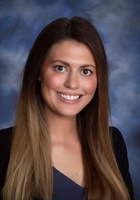
Certified Tutor
8+ years
Emily
I am currently a fourth year medical student in Indianapolis. I completed my undergraduate education at Indiana University Bloomington, where I majored in Biology and Spanish. I also completed two minors in Mathematics and Chemistry. While at IU, I worked for the Department of Mathematics and Depart...
Indiana University-Bloomington
Bachelor of Science, Biology, General
Indiana University-Purdue University-Indianapolis
Doctor of Medicine, Community Health and Preventive Medicine

Certified Tutor
Max
I am in the process now of applying for PhD programs in Computational Biology. I have done research in the field of freshwater ecology and am anticipating the publication of a paper I co-authored in the next several months.
Ball State University
Bachelors, Biology, General

Certified Tutor
16+ years
John
I'm a huge Red Sox fan and love watching detective shows when I have free time.
University of St Thomas
Bachelor of Fine Arts, English/Drama
American Academy of Dramatic Arts
Associates, Acting

Certified Tutor
5+ years
Ishan
I am a current sophomore at Rensselaer Polytechnic Institute, where I am majoring in Biology as part of the 7 Year Accelerated Medical Program. I am also minoring in Healthcare Economics and Policy. My favorite subjects in school are Chemistry, Biology, and Math, but I also enjoy the process of writ...
Rensselaer Polytechnic Institute
Bachelor of Science, Biology, General
Albany Medical College
Doctor of Medicine, Premedicine

Certified Tutor
6+ years
Ilesh
I am a recent grad from Georgia Tech, majoring in Industrial and Systems Engineering (an intersection of math, computer science, and business) and minoring in Business and Technology. I am originally from Columbus, OH, but chose to come down to Atlanta after getting a full-ride scholarship from Geor...
Georgia Institute of Technology-Main Campus
Bachelor of Science, Industrial Engineering

Certified Tutor
6+ years
Rahul
I am a recent graduate of Cornell University, where I received a B.S. in Chemical Engineering and graduated Magna Cum Laude. Over the past several years, I have worked with students from diverse backgrounds and experiences tutoring thermodynamics (my personal favorite), chemistry, and math. I have a...
Cornell University
B.S. in Chemical Engineering

Certified Tutor
9+ years
Vansh
I am currently pursuing a Bachelors of Science in Aerospace Engineering at the Georgia Institute of Technology. I am also a graduate of the high school International Baccalaureate Program. I have informal experience tutoring high school physics, but am most passionate about tutoring students for the...
Georgia Institute of Technology-Main Campus
Bachelor of Science, Aerospace Engineering

Certified Tutor
5+ years
Benjamin
I am a 2023 graduate of the University of Notre Dame with a Finance/Economics major and a minor in Innovation and Entrepreneurship. I am a passionate student in the math and business realms, as I enjoy the intuitiveness of the former and the real-world potential of the latter. During classes in midd...
University of Notre Dame
Bachelor of Science in Finance and Economics (minor: Innovation and Entrepreneurship)
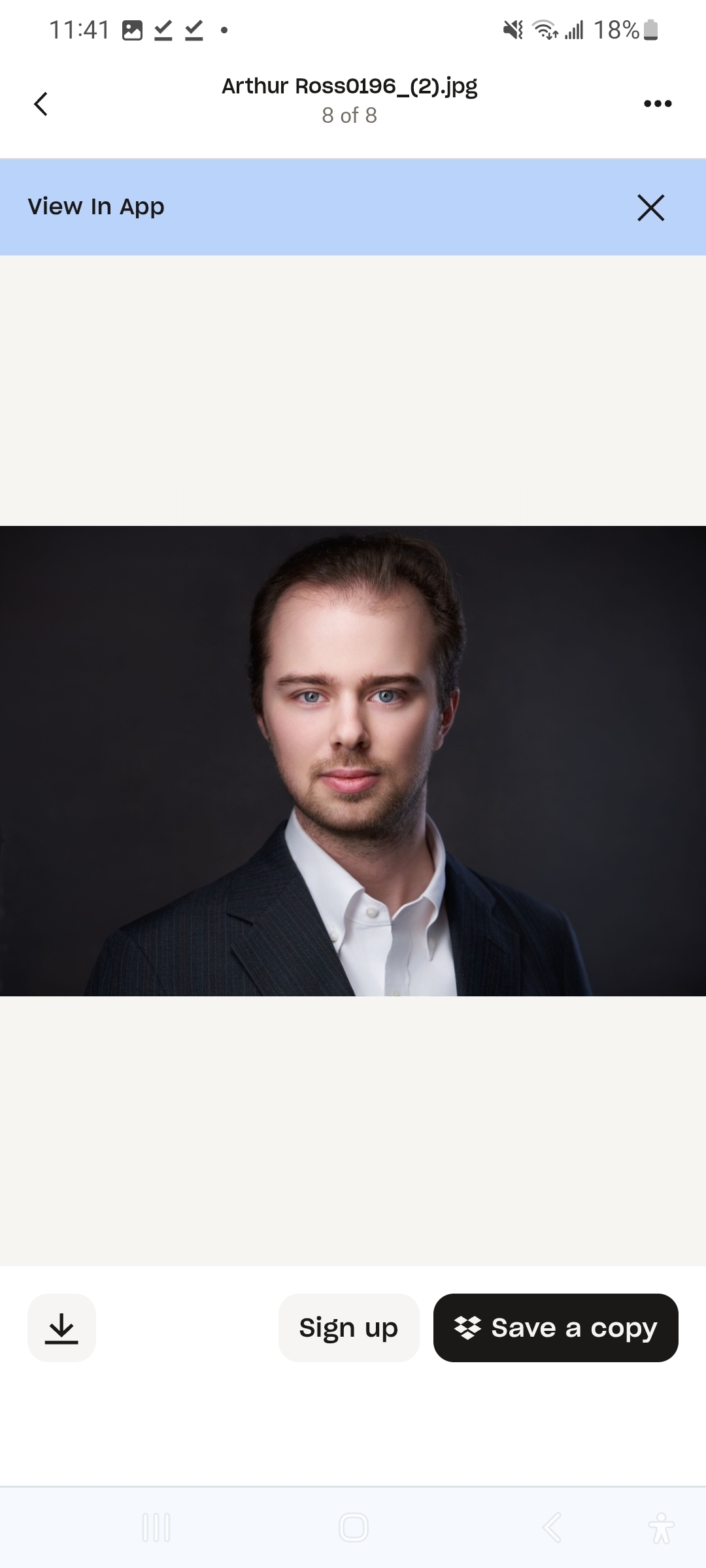
Certified Tutor
5+ years
Arthur
I am available to tutor in a broad range of subjects, though I am most passionate about Economics, History, and Civics. Please feel free to contact me and I would be happy to arrange a session.
Middlebury College
Bachelor in Arts, Economics

Certified Tutor
6+ years
Rhea
I am a current student at the University of Chicago. I am working towards a Bachelor of Science in Biological Sciences, and I am on the pre-medical track. I am extremely passionate about tutoring, and I have several years of experience tutoring students in my high school's learning center in various...
University of Chicago
Bachelor of Science, Biology, General
Nearby Radioactive Dating Tutors
Other Queens Tutors
Related Science Tutors in Queens
Frequently Asked Questions
Radioactive dating is a method used to determine the age of rocks, fossils, and other materials by measuring the decay of radioactive isotopes within them. This technique is fundamental to geology, archaeology, and physics because it provides scientists with accurate timelines for understanding Earth's history, dating ancient artifacts, and validating geological events.
For students in Queens studying this topic, understanding radioactive dating connects concepts from chemistry (atomic structure, decay), mathematics (exponential decay equations), and earth science (geological timescales). It's a key concept tested in regents exams and advanced science courses.
Students often struggle with several aspects of radioactive dating:
- Half-life calculations: Understanding how to use the half-life formula and apply it to solve age-determination problems
- Exponential decay: Grasping the mathematical concept that decay follows an exponential curve rather than a linear pattern
- Isotope identification: Knowing which isotopes are used for dating different materials (carbon-14 for organic matter, potassium-40 for rocks, etc.)
- Real-world application: Connecting abstract decay concepts to practical scenarios like dating fossils or volcanic rocks
Personalized 1-on-1 instruction helps address these specific gaps and builds confidence with practice problems tailored to your learning pace.
Half-life mastery requires practice with the decay formula and understanding what each variable represents. The key is working through progressively challenging problems: starting with straightforward calculations (how much remains after one half-life?), then moving to multi-step problems, and finally to word problems that require you to identify the isotope and calculate age.
Effective strategies include creating visual timelines showing decay at each half-life interval, practicing with different isotopes to see patterns, and using graphing to understand the exponential curve. Many students benefit from spacing out practice over multiple sessions rather than cramming—this helps solidify the concept through retrieval practice.
Exam preparation should focus on understanding both the conceptual framework and the calculation skills. Review your course materials to identify which isotopes and dating methods are emphasized, then practice exam-style questions under timed conditions. Pay attention to how questions are worded—some ask about remaining amounts, others about elapsed time, and still others require you to work backward from percentages.
Work through past exams or practice tests to identify patterns in question types and build familiarity with time management. Create a reference sheet (if allowed) listing common isotopes, their half-lives, and their applications. Connect radioactive dating to related concepts like atomic structure and conservation of mass to deepen your understanding.
Different isotopes are suited for dating different materials based on their half-lives and the age range you're trying to determine. Carbon-14 (half-life ~5,730 years) is used for organic materials like wood, bone, and artifacts up to about 50,000 years old. Potassium-40 (half-life ~1.3 billion years) works for dating rocks and geological events spanning millions of years. Uranium-235 and Uranium-238 have even longer half-lives and are used for the oldest materials.
The rule of thumb: choose an isotope where the material's age represents several half-life cycles—this ensures measurable decay while maintaining accuracy. When studying for exams, create a reference chart matching isotopes to materials and time ranges, then practice identifying which isotope applies to different scenarios.
A tutor can break down radioactive dating into manageable pieces, starting with your specific gaps. Whether you struggle with the conceptual foundations (what decay means), the math (solving exponential equations), or the applications (identifying which isotope fits a scenario), personalized instruction targets exactly what you need. Tutors can also adjust pacing—slowing down on challenging concepts and accelerating through material you already grasp.
Beyond explaining concepts, tutors help you develop problem-solving strategies, review exam-style questions to build confidence, and practice calculations until they become automatic. This targeted approach is especially valuable for complex topics like radioactive dating that combine multiple disciplines.
Radioactive dating bridges several science areas: atomic structure and nuclear chemistry (understanding why atoms decay), mathematical modeling (exponential functions and logarithms), geology (understanding Earth's age and rock formation), and archaeology (dating artifacts and human history). These connections mean that strengthening your understanding in one area supports learning in others.
When studying radioactive dating, look for these connections explicitly. Review atomic models and nuclear reactions, practice exponential decay in math class, and apply the concept to real geological examples. This holistic approach deepens comprehension and helps you see how different subjects relate—a perspective that's valuable for both exams and real-world scientific thinking.
Connect with Radioactive Dating Tutors in Queens
Get matched with local expert tutors