Award-Winning Japanese Tutors
serving Queens, NY
Japanese
Tutors in Queens
Private 1-on-1 tutoring, weekly live classes for academic support, test prep & enrichment, practice tests and diagnostics, and more to elevate grades and test scores.
Based on 3.4M Learner Ratings
UniversitiesSchools & Universities
DeliveredHours Delivered
ProficiencyGrowth in Proficiency
Who needs tutoring?
No obligation. Takes ~1 minute.

Learning Japanese means juggling three writing systems, unfamiliar grammar structures, and a set of politeness registers that don't exist in English. Katharine brings a methodical, pattern-oriented mindset to breaking down concepts like particle usage, verb conjugation groups, and kanji radicals so that each lesson builds logically on the last.
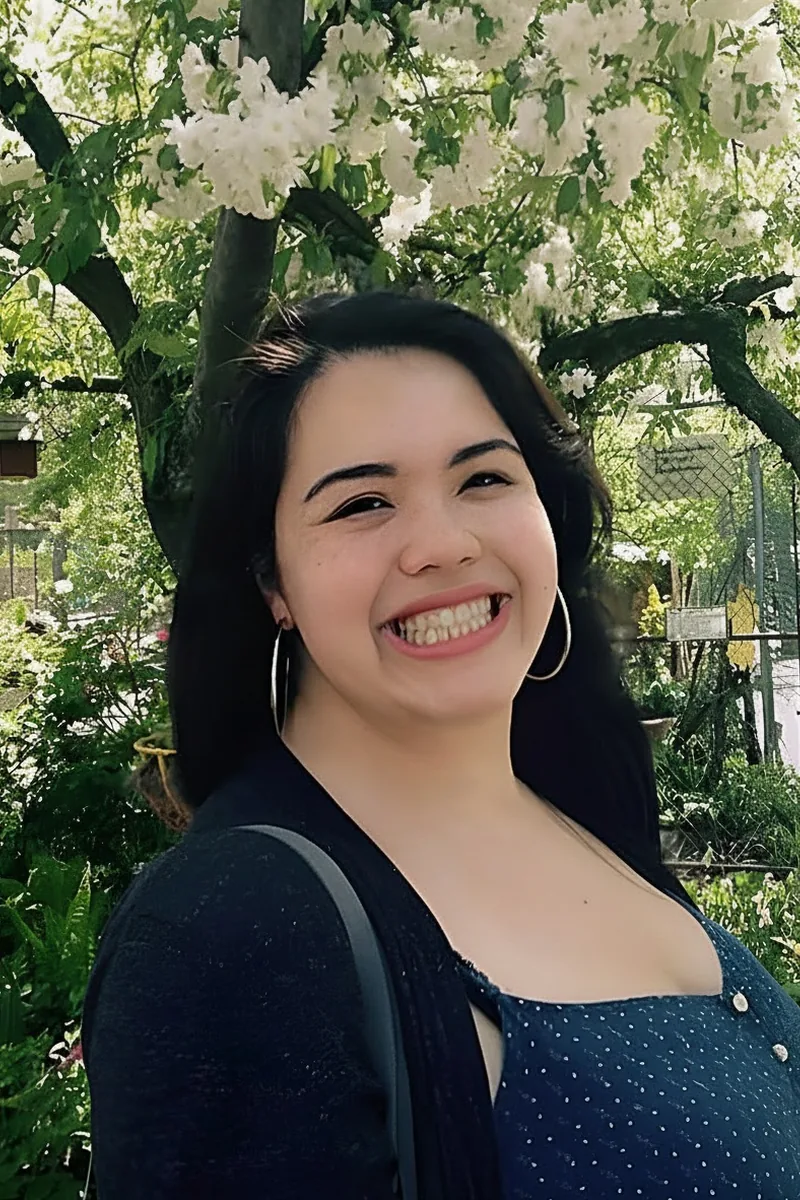
Though her degrees are in biology and science education, Sarah lists Japanese among her interests and brings a teacher's instinct for breaking complex systems into learnable parts — useful when students are wrestling with hiragana stroke order or the logic behind particle placement. Her 5.0 rating and four years of classroom teaching mean she knows how to pace a lesson and adjust when something isn't landing.
Having taught himself Japanese alongside his formal studies in public policy and education, James knows firsthand where English speakers get tripped up — especially with particles, basic verb conjugation, and the leap from hiragana to katakana. His education background means he's trained to spot where understanding breaks down and adjust his explanations on the fly, which is exactly what beginners need when nothing about Japanese grammar maps onto what they already know.
Studying Japanese as a minor at Columbia — with plans to eventually work in Japan's renewable energy sector — Shin uses the language as a living tool, not just a classroom exercise. He teaches everything from hiragana and katakana basics to intermediate grammar patterns like ~てしまう and ~ことにする, adjusting to each student's level and building real conversational confidence alongside written accuracy.
Learning Japanese means juggling three writing systems, unfamiliar sentence structures, and layers of politeness that don't exist in English. Aki breaks down hiragana, katakana, and basic kanji recognition alongside grammar patterns like particle usage and verb conjugation, building reading and conversational skills in parallel.
Hi! It's Wataru. I am originally from Japan and have been living in New York since 2000. I had a career as an industrial newspaper pressman/editor in Tokyo so that I know newspaper level strict grammar and manner of business speech. I watch anime and I can talk about Japanese subculture with you if you like. I have been teaching Japanese language in person and online. I have taught from beginners to JLPT N3 certificate prep students. I've taught American, Canadian, English, Indian, German, Australian, Mexican, and so on. Teaching is one of my way to feel the joy of supporting people. I'll help you master the language and dive into Japanese culture and subculture. Once you start to think in Japanese, you will notice that your way of communication changes. English is good for business, law, and science while Japanese is more about sharing feelings. The waiters in Japan may be reluctant to serve your table, but my students prepare well to make them feel at ease and they have fantastic travel in Japan.
I am an experienced tutor and teacher from Okinawa, Japan who recently graduated from Brown University and now lives in Brooklyn.
I am currently finishing my thesis. For the past two years I was an adjunct instructor at The City College of New York, teaching statistics and introductory neuroscience, where I learned the importance of communicating complicated concepts clearly at an individualized level. All of my classes performed above average, and I discovered how satisfying it is to help people understand difficult ideas. I've found that by creating a good rapport with my students I am able to more effectively impart difficult concepts to them while causing them less stress. My passion is people, which first led me to study psychology, leading to my work in statistics, and later into teaching.
I'm back at school at NYU, studying for a more general liberal arts degree.
As a dedicated language tutor with several years of experience, I bring both expertise and enthusiasm to every lesson. I specialize in Chinese, Japanese, and basic Arabic, and I have had the privilege of guiding students of diverse ages and backgrounds through their language-learning journeys.
Learning Japanese means juggling three writing systems, unfamiliar sentence structures, and particles that don't map neatly onto English — Rex tackles each layer separately so students can build real reading and conversational ability. His communication design background also gives him a unique perspective on how visual layout and typography work in Japanese media, which keeps lessons engaging and culturally grounded.
Damien studied Asian studies at Cornell, where Japanese language and culture were central to his coursework. He approaches the language by grounding grammar patterns — particles like は versus が, verb conjugation groups, and sentence-ending forms — in real context so they stick. Rated 5.0 by students, he makes the jump from textbook exercises to actual comprehension feel manageable.
A drama degree might not scream Japanese fluency, but John's literary work — he's a section editor for the Los Angeles Review of Books and literary manager for two theater companies — means he's deeply attuned to how language shapes meaning, tone, and register. That sensitivity to nuance transfers directly to navigating Japanese's layered politeness levels and context-dependent sentence endings. Rated 5.0 by students.
Holding a degree in Japanese Studies, Andrew brings deep familiarity with not just hiragana, katakana, and kanji but also the cultural context that shapes how the language actually works — keigo politeness levels, sentence-ending particles, and the logic behind counter words. He connects grammar patterns to real conversation so students internalize structures instead of just drilling flashcards.
Learning Japanese means juggling three writing systems, a grammar structure that's the reverse of English, and cultural nuances that change how you speak depending on who you're talking to. Natasha taught Japanese at the high school level and lived in Japan teaching in elementary schools, giving her the kind of practical fluency that makes hiragana drills, particle usage, and conversational practice feel grounded in real life. She's 5.0-rated and works with beginners through advanced learners.
I'm a student at Brown University with an eclectic set of interests. I am trilingual, analytical, and creative and look forward to tutoring you! :)
As a native Japanese speaker with over fifty years of fluency in reading, writing, and conversation, Hatsuki teaches the language the way it's actually used — from particle usage and keigo (honorific speech) to the nuances between hiragana, katakana, and kanji in everyday contexts. She currently lives in the U.S. with her family, giving her a natural understanding of where English speakers stumble with Japanese grammar and pronunciation.
Most students stall in Japanese once they move past hiragana and katakana into kanji recognition and grammatical particles like は versus が. Wahala minors in Japanese at Indiana University Bloomington and treats the language as a system to decode — connecting sentence structure, verb conjugation patterns, and cultural context so that reading and conversation reinforce each other.
I am open to tutoring in a broad range of subjects, including Algebra, Spanish I/II, ESL and Biology (SAT II, AP, and MCAT).
Briana minored in Japanese at Michigan State, giving her a grounded understanding of the language's grammar patterns, particle usage, and writing systems — hiragana, katakana, and introductory kanji. She approaches Japanese as someone who learned it systematically in an academic setting, which means she can explain the "why" behind structures that often confuse English speakers.
Emily minored in Japanese at Texas A&M and continues to engage with the language through media and self-study. She teaches hiragana, katakana, and foundational grammar patterns like particle usage with the same structured approach she applies to her other languages, making the writing systems feel systematic rather than overwhelming.
Testimonials
Because the right Japanese tutor makes all the difference.
Average Session Rating – Based on 3.4M Learner Ratings
Other Queens Tutors
Related Languages Tutors in Queens
Frequently Asked Questions
Speaking practice is one of the biggest challenges for self-taught Japanese learners, since you need a conversation partner to develop fluency. Varsity Tutors connects you with expert tutors who provide dedicated speaking practice tailored to your level—whether you're working on pronunciation, natural conversation patterns, or confidence in real-world scenarios. Unlike classroom settings where speaking time is limited, personalized 1-on-1 instruction gives you consistent opportunities to speak, receive immediate feedback, and adjust your approach in real time.
Japanese verb conjugation can feel overwhelming because verbs change based on tense, politeness level, and context—and there are irregular verbs to memorize too. The key is moving beyond memorizing patterns to understanding how conjugations actually function in sentences. Tutors help you connect grammar rules to real usage, practice conjugations in natural conversation contexts, and build fluency through repeated exposure and targeted practice. This combination of explanation and practical application helps the patterns stick faster than textbook study alone.
The Japanese government defines 2,136 jōyō kanji (common use characters) for everyday reading and writing. However, you don't need to master all of them at once—focusing on the most frequently used kanji first (roughly 500-1000) will cover most everyday reading. Efficient kanji study combines visual recognition practice, writing practice, and contextual learning where you see characters used in real sentences and vocabulary. Personalized tutoring helps you prioritize which kanji to focus on based on your goals and current level, and keeps your study strategy aligned with your progress.
Japanese language is deeply connected to cultural norms around politeness, respect, formality levels, and social hierarchy—and these patterns affect how you speak in different situations. For example, the same idea can be expressed very differently depending on who you're talking to and the context. Understanding cultural context helps you use appropriate language naturally and avoid misunderstandings. Tutors for students in Queens can teach you not just what to say, but when and how to say it, incorporating cultural examples and real-world scenarios that help you communicate authentically.
Native speakers use natural speech patterns—including contractions, dropped particles, and rapid pronunciation—that differ significantly from textbook Japanese. Plus, you're processing unfamiliar sounds and intonation patterns while trying to recognize vocabulary and grammar simultaneously. Building listening skills requires exposure to authentic content and targeted practice distinguishing similar sounds, recognizing patterns in natural speech, and developing ear training. Tutors provide real-world listening practice and can slow down, repeat, and explain specific phrases to help you bridge the gap between textbook language and natural conversation.
Conversational fluency in Japanese typically requires around 600-750 hours of focused study and practice, depending on your starting point and how consistently you study. However, the path to fluency is rarely linear—early on, you might make rapid progress in basic communication, then hit plateaus as you tackle more complex grammar and vocabulary. Personalized tutoring accelerates your progress by targeting your specific weak points, providing regular speaking practice, and keeping you motivated with clear milestones. Your timeline also depends on how much you practice outside tutoring sessions, so consistent daily study combined with regular tutoring sessions helps you reach your goals faster.
When you connect with Varsity Tutors, you'll be matched with an expert tutor whose teaching style and expertise align with your goals—whether you're preparing for an exam, building conversational skills, or starting from scratch. Your tutor will assess your current level, understand what you want to achieve, and create a personalized learning plan that targets your specific challenges. Sessions focus on the skills you need most, whether that's speaking practice, grammar reinforcement, listening comprehension, or cultural context, with consistent feedback and progress tracking to keep you moving forward.
Let’s find your perfect tutor
Answer a few quick questions. We’ll recommend the right plan and match you with a top 5% tutor.