Award-Winning Pre-Calculus Tutors
serving Austin, TX
Pre-Calculus
Tutors in Austin
Private 1-on-1 tutoring, weekly live classes for academic support, test prep & enrichment, practice tests and diagnostics, and more to elevate grades and test scores.
Based on 3.4M Learner Ratings
UniversitiesSchools & Universities
DeliveredHours Delivered
ProficiencyGrowth in Proficiency
Who needs tutoring?
No obligation. Takes ~1 minute.

Teaching game theory to advanced middle schoolers in Hong Kong meant Carter had to make concepts like optimization, strategic equilibrium, and functional reasoning accessible — skills that map directly onto the pre-calculus toolkit of analyzing function behavior, interpreting graphs, and building toward limits. His economics degree from Brown kept him deep in the quantitative side of social science, where polynomial and logarithmic models aren't abstract exercises but everyday working tools. Holds a 5.0 rating and a 1570 SAT.
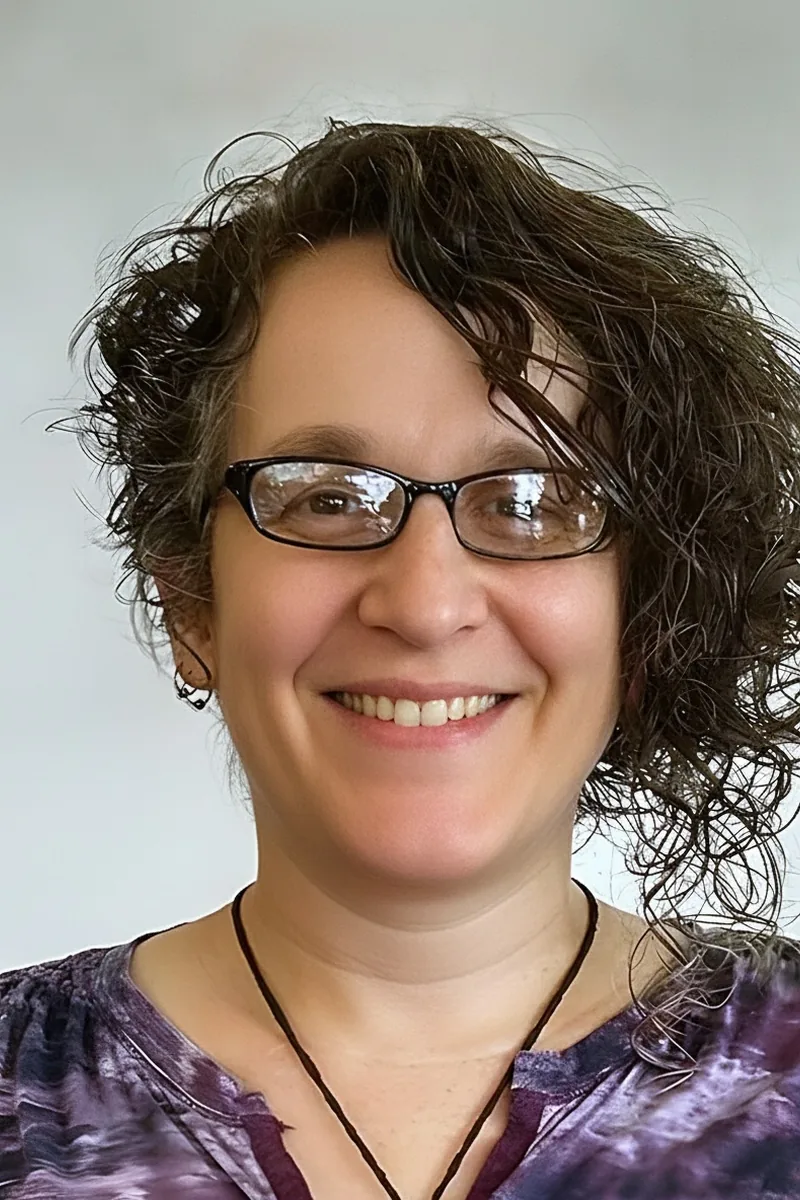
Trig identities, rational functions, and the unit circle all converge in Pre-Calculus, making it one of the most concept-dense courses before college math. Christina approaches each topic by connecting it forward — showing how a limit definition or a polar coordinate will reappear in calculus and physics — so the material sticks instead of feeling like disconnected formulas.
The leap into Pre-Calculus is often where students realize they can't rely on memorized shortcuts anymore — trigonometric identities, limits intuition, and complex polynomial behavior all demand genuine understanding. Duy's approach is to walk through the reasoning behind each concept so the mechanics follow naturally rather than feeling like arbitrary rules.
Electrical engineering at the honors level means Tim didn't just pass through pre-calculus — he pressure-tested every concept in it, from sinusoidal analysis and complex number operations to the function transformations that power circuit modeling. He teaches the course knowing exactly which skills carry forward into calculus and differential equations, so students build real understanding of why identities and graphs behave the way they do. His 35 ACT and 5.0 rating back that up.
Trigonometric functions, polar coordinates, and parametric equations aren't abstract for Alicia — they're tools she used daily while studying architecture and building technology at MIT. She teaches pre-calculus by connecting each concept to the geometric and physical reasoning behind it, so students see the logic instead of memorizing formulas. Her 5.0 rating speaks to how well that approach lands.
Discrete math is Laila's stated favorite, but that love for logical structure is exactly what makes her effective at pre-calculus — she treats topics like sequences, function composition, and trigonometric identities as puzzles with internal logic rather than formulas to memorize. Her math degree from UT Austin means she's worked through these concepts rigorously and recently, and she teaches them with an eye toward the calculus course waiting on the other side. Her 1480 SAT and 4.5 rating round out the picture.
Computational engineering at UT Austin fuses calculus, linear algebra, and aerospace modeling — which means Atharva passed through pre-calculus not as a standalone course but as the launchpad for everything that followed. He zeroes in on the conceptual bridges students tend to miss, like why polynomial end behavior matters for limits or how mastering rational functions now prevents confusion in calculus later. His 33 ACT and 5.0 rating back up the approach.
Chemical engineering at UT Austin means Ria solves problems daily that hinge on the polynomial, rational, and trigonometric relationships pre-calculus students are just starting to piece together — reaction rate models, heat transfer curves, process optimization. She zeroes in on how function transformations and compositions actually work mechanically, building each idea from the algebra underneath so the jump to calculus feels like a natural next step rather than a cliff. Holds a 5.0 rating from students.
Puzzles and pattern recognition come naturally to Diana — she's the kind of thinker who spots the structure underneath a problem before reaching for a formula, which is exactly the skill that separates students who survive pre-calculus from those who actually understand it. Her 1540 SAT and 34 ACT confirm sharp quantitative instincts, and her teaching range from pre-algebra through calculus means she can trace a tricky rational function or transformation back to the simpler algebra a student already trusts.
Andrew's dual-degree path — three years of liberal arts at Ohio Wesleyan before finishing biomedical engineering at WashU — means he learned to explain mathematical ideas clearly long before he needed them for circuit analysis and signal processing. That communication-first instinct is especially useful in pre-calculus, where topics like rational functions, composite transformations, and trigonometric identities often get taught as disconnected procedures instead of a coherent buildup toward calculus. Rated 5.0 by students.
The jump into pre-calculus — trigonometric identities, limits, and complex functions — trips up even strong math students who coasted through earlier courses. Thomas tackles these topics by connecting each new concept back to the algebraic reasoning students already know, making the transition to calculus feel like a natural next step rather than a cliff.
Rakhi's applied math degree means she didn't just pass through pre-calculus — she built on it daily, using trigonometric models, sequences, and composite functions as core tools in more advanced coursework. That depth shows when she explains something like a tricky identity verification or a piecewise function's continuity, because she can trace exactly where each skill leads. Rated 4.8 by students.
Pre-calc is really about building the toolkit — function behavior, polynomial end behavior, rational expressions, sequences — that makes calculus feel manageable instead of overwhelming. Lloyd treats each topic as a preview of where it leads, so students understand why they're learning it rather than just checking boxes. His data science background at Rochester means he uses these foundational ideas constantly.
Eight years of tutoring high school math — from pre-algebra through calculus — means William has watched hundreds of students hit the same pre-calculus stumbling blocks: the moment rational functions start behaving unpredictably, or when trigonometric graphs demand a kind of visual reasoning that algebra never required. His literature master's might seem unrelated, but parsing complex layered structures is exactly what function analysis asks for, and his 1590 SAT confirms the quantitative skill behind that analytical instinct. He's especially sharp at bridging the gap between comfortable algebraic manipulation and the abstract function thinking that calculus will demand.
Having worked as a lead math tutor at Kumon while pursuing biomedical engineering at UT Austin, Muhammad has walked dozens of students through the exact transition point where algebra ends and calculus begins — the territory pre-calculus occupies. He zeroes in on building real comfort with function transformations and trigonometric reasoning, two areas where shaky understanding quietly derails students once derivatives enter the picture. His engineering coursework keeps these concepts in active rotation, not stored away as distant memories.
The jump from algebra to calculus is where most students lose confidence — limits, composite functions, and rational expressions all pile up at once. Panagiotis breaks pre-calculus into the specific skills that actually matter for what comes next, drawing on his dual focus in physics and math at UT Austin to show how each concept connects forward.
The jump to pre-calculus is where many students first encounter limits of their algebraic intuition — suddenly they're juggling trigonometric identities, polar coordinates, and sequences all in one semester. Aayush's math degree gave him deep fluency with these bridging topics, and he's skilled at showing how each concept connects forward to calculus. He makes the logic behind formulas visible so students aren't just memorizing unit circle values.
Biochemistry training means Samir spent semesters working through the exact function families pre-calculus covers — exponential kinetics, logarithmic pH scales, sinusoidal waveforms — before calculus and organic chemistry demanded he use them fluently. He digs into the mechanics of graph transformations and inverse functions by connecting each concept to the algebra students already have down, closing gaps before they compound. Holds a 5.0 rating from students.
The jump to pre-calculus is where students first encounter the abstract reasoning — limits of trigonometric identities, polar coordinates, parametric equations — that defines higher math. Jaxon approaches each of these topics by grounding them in visual and mechanical intuition, drawing on the way his engineering courses demand fluency with these exact skills. He walks through problems step by step until the underlying logic clicks.
Most pre-calculus students hit a wall not because the individual topics are hard, but because nobody connects them — logarithms feel unrelated to trig, which feels unrelated to sequences. Max's approach is to treat each chapter as a different view of the same underlying idea about how functions behave, so that by the time a student reaches limits in calculus, the transition feels natural. His psychology training gives him an edge in diagnosing exactly where a student's understanding breaks down and rebuilding from that point.
Most pre-calc struggles come down to one thing: the jump from manipulating numbers to thinking in terms of functions — and Rowdy's computer science training is built entirely on that kind of abstract reasoning. He tackles topics like domain restrictions, composite functions, and sequence behavior by connecting them to the programming logic he uses daily, which makes the algebra-to-calculus bridge feel less like a leap. His 34 ACT and 5.0 rating back it up.
Trigonometric identities, limits, and the behavior of rational functions all converge in pre-calculus, and students who just memorize formulas tend to hit a wall once calculus begins. Bonita approaches these topics the way her physics and math coursework at UT Austin demands — by connecting each concept to the reasoning behind it so the transition to calculus feels natural.
Researching genetic regulation of biological pathways means Spencer constantly models with exponential growth, logarithmic decay, and periodic behavior — the exact function families that dominate pre-calculus. He unpacks topics like rational expressions and trig identities by tying them to the quantitative reasoning he uses in his molecular biology work at UT, which gives students a concrete anchor for otherwise abstract material.
Thompson's mechanical engineering background means he's solved hundreds of problems where pre-calculus was the bottleneck — setting up trigonometric relationships for force analysis, manipulating parametric equations for motion profiles, and modeling system behavior with rational and polynomial functions. He zeroes in on graph transformations and composite functions by tying them to the physical systems where they actually matter, giving students a reason to care about the algebra underneath. Rated 4.8 by students.
Running a free AP Calculus prep class at his local New Jersey library for two years — where every student scored a 4 or 5 — gave Siddhant an unusually clear picture of exactly which pre-calculus skills make or break a student's readiness for what's next. As a math major at UT Austin, he zeroes in on the specific gaps in trigonometric reasoning and function behavior that quietly derail students once limits and derivatives enter the picture. His 34 ACT and 4.7 rating reflect a teaching style built on that bridge-building perspective.
Having earned a 1530 SAT while studying political science — not engineering or math — Derek knows what it takes to master quantitative material through disciplined study rather than disciplinary immersion. He tackles pre-calculus by zeroing in on the algebraic reasoning underneath topics like rational expressions and polynomial behavior, making sure each concept locks into place before layering on complexity. His honors coursework at UC Santa Barbara built the structured analytical habits he brings to every session.
A math and Spanish double major from Goucher who's now tackling a mechanical engineering master's at UT Austin, Katrina knows pre-calculus from every angle — the pure math theory, the applied engineering reality, and the moment when polynomial long division or rational function analysis suddenly needs to make sense fast. She zeroes in on building the algebraic fluency and graphical intuition that make the jump to calculus feel like a natural next step rather than a cliff. Her approach leans heavily on having students construct their own problem-solving logic rather than mimic worked examples.
I am a graduate petroleum engineering student at The University of Texas at Austin. My graduate research is focused on modeling friction losses between the drill string and wellbore during drilling operations. I did my undergrad at UT as well and majored in petroleum engineering and Plan II Honors (an interdisciplinary honors liberal arts program).
Second-year medical school at Baylor means Michelle is neck-deep in the quantitative reasoning that pre-calculus builds — rate-of-change intuition for physiology, logarithmic models for acid-base chemistry, and exponential functions for everything from bacterial growth to drug clearance. Her biochemistry degree from Rice cemented the algebraic and trigonometric groundwork she now draws on daily, so she teaches these topics as someone who genuinely needed them to stick. A 1570 SAT confirms the mathematical precision behind her approach.
Differential equations, calculus, and physics all live on Bidyut's teaching roster — which means he knows exactly which pre-calculus skills (and which specific weak spots) will matter most once students move forward. His biomedical engineering training at Johns Hopkins keeps him fluent in the trigonometric, exponential, and composite function reasoning that pre-calc demands, and he teaches those topics by connecting them to the applied problems where sloppy understanding actually costs you. A 36 ACT and 5.0 rating back up the depth he brings.
Cognitive science at Rice trained Adam to think about how people learn abstract patterns — which is exactly what pre-calculus demands when students hit the wall between comfortable algebra and the conceptual leap to limits and derivatives. He zeroes in on building intuition around function transformations and trigonometric reasoning, connecting each new idea to the cognitive scaffolding that makes it stick. His 34 ACT confirms the quantitative chops behind that approach.
William's computer science coursework at Rice means he regularly implements the functions, transformations, and trigonometric relationships that pre-calculus students are still learning to read on paper — he's coded them, graphed them, and debugged them. That hands-on fluency lets him explain topics like composite functions or logarithmic behavior by tracing the logic step by step, so the algebra feels like it's going somewhere. His 1540 SAT confirms the mathematical precision behind his approach.
Having TA'd Calculus I and II at Rice, Sakibul knows exactly which pre-calculus skills — polynomial end behavior, trig identities, rational function analysis — make or break a student's transition into calculus, and he teaches backward from those pressure points. His graduate work in computational and applied mathematics keeps these concepts active in his daily problem-solving, so he explains them with the fluency of current use rather than distant memory.
Computational mathematics at Rice means Vinson isn't just passing through pre-calculus topics — he's building on them daily, using the same function families, limit intuitions, and trigonometric structures in his upper-level coursework. He's particularly sharp at demystifying the shift from algebraic manipulation to functional thinking, especially when students hit the wall around rational functions and their asymptotic behavior. Rated 4.8 with a 36 ACT behind him.
The jump from algebra to pre-calculus is where a lot of students lose their footing — suddenly they're dealing with trigonometric identities, composite functions, and logarithmic properties that don't yield to the same plug-and-chug strategies. Eric's economics and computer science coursework at Dartmouth keeps him actively using these tools for modeling and analysis, so he teaches them as building blocks with clear purpose rather than isolated chapters. His 34 ACT and 5.0 rating back that up.
A PhD chemical engineer doesn't forget the math that got him there — Steven still thinks in terms of the rate equations, equilibrium models, and periodic functions that pre-calculus introduces, because his entire career was built on them. He zeroes in on the conceptual bridge between algebra and calculus, particularly how logarithmic and exponential relationships actually behave rather than just how to manipulate them on paper. Rated 4.9 by students.
Mathematical economic analysis — Kenan's concentration — lives in the space where pre-calculus concepts like optimization, rate-of-change intuition, and logarithmic modeling become practical tools for understanding markets and policy. He teaches topics like function transformations and asymptotic behavior by connecting them to the economic models where they actually matter, giving students a reason to care about what the algebra is doing. His 1530 SAT confirms the quantitative grounding behind that approach.
Most tutors on this page come from STEM backgrounds — Molly's angle is different. Her communication training sharpens the skill pre-calculus students underestimate most: translating word problems into the right function model, whether that's setting up a logarithmic equation from a decay scenario or interpreting what a rational function's asymptote actually means in context. She also teaches algebra, calculus, and SAT math, so she knows the full arc these concepts follow.
The jump into pre-calculus means juggling trigonometric identities, polar coordinates, and limits for the first time — often all in the same semester. Layla's biomedical engineering coursework at Brown requires exactly this kind of math daily, so she teaches these topics as interconnected tools rather than isolated chapters. Her 5.0 rating speaks to how clearly she makes that web of concepts click.
Working in a UTHealth research lab, Emily regularly encounters the exponential and logarithmic relationships that form the backbone of pre-calculus — modeling reaction rates, analyzing growth curves, and interpreting data that behaves nonlinearly. Her triple-major background in biochemistry and cell biology means she can trace each function family back to a real phenomenon, turning abstract graphs into something students can visualize. She's especially sharp at bridging the gap between the algebra students already know and the functional reasoning calculus will demand.
Testimonials
Because the right Pre-Calculus tutor makes all the difference.
Average Session Rating – Based on 3.4M Learner Ratings
Practice Pre-Calculus
Free practice tests, flashcards, and AI tutoring for Pre-Calculus
Nearby Pre-Calculus Tutors
Other Austin Tutors
Related Math Tutors in Austin
Frequently Asked Questions
Pre-Calculus shifts from memorizing procedures to understanding the deeper concepts behind them. You'll move beyond just solving equations to analyzing functions, understanding their behavior, and seeing how different mathematical ideas connect. This conceptual foundation is essential for calculus, where you'll need to think about rates of change and limits rather than just plugging numbers into formulas.
Many students find trigonometry challenging—especially understanding unit circles, identities, and how trig functions relate to real-world applications. Graphing transformations, logarithms, and complex numbers also trip up students who haven't fully internalized function behavior. Word problems that require translating real situations into mathematical models are another frequent pain point. A tutor can help you see the patterns in these topics and build confidence in your problem-solving approach.
Showing your work reveals your thinking process and helps identify exactly where misunderstandings happen—not just whether your final answer is right or wrong. In Pre-Calculus, the method matters as much as the answer because you're building skills you'll rely on in calculus. When you work with a tutor, they can see your approach and help you develop cleaner, more efficient problem-solving strategies while catching conceptual gaps early.
Word problems require translating English into mathematical language—a skill that takes practice and strategy. Start by identifying what you know, what you're looking for, and which functions or equations might model the situation. Many students benefit from working through problems systematically with a tutor who can show you how to break down complex scenarios and choose the right approach. Over time, you'll start recognizing patterns and build confidence tackling unfamiliar problems.
Pre-Calculus requires both procedural fluency and conceptual understanding, and a tutor can address gaps in either area. They'll work at your pace, explain concepts multiple ways until they click, and help you see connections between topics like functions, trigonometry, and exponentials. With personalized 1-on-1 instruction, you can focus on your specific challenges—whether that's building confidence, mastering particular topics, or preparing for exams—rather than keeping up with a class pace.
Your first session is about getting to know each other and understanding where you stand. A tutor will ask about your current struggles, which topics feel solid, and what your goals are—whether that's improving your grade, preparing for the AP exam, or building confidence. They'll likely work through a problem or two to see your approach and thinking style, then create a plan tailored to your needs. This foundation helps them customize future sessions for maximum impact.
Absolutely. Math anxiety often stems from past experiences or feeling lost in class, and personalized tutoring directly addresses both. Working with a tutor in a low-pressure environment lets you ask questions freely, make mistakes safely, and build understanding at your own pace. As you start seeing patterns, solving problems correctly, and understanding the 'why' behind concepts, confidence naturally grows. Many students find that focused, supportive tutoring transforms their relationship with math.
Yes. Varsity Tutors connects you with expert tutors who understand Pre-Calculus curriculum and can work with different textbooks and approaches used across Austin's 24 school districts. Whether your school uses a traditional, integrated, or standards-based approach, a tutor can align their instruction with what you're learning in class while also filling gaps and deepening your understanding. This ensures tutoring reinforces and accelerates your classroom learning.
Let’s find your perfect tutor
Answer a few quick questions. We’ll recommend the right plan and match you with a top 5% tutor.