Award-Winning Executive Functioning Tutors
serving McAllen, TX
Executive Functioning
Tutors in McAllen
Private 1-on-1 tutoring, weekly live classes for academic support, test prep & enrichment, practice tests and diagnostics, and more to elevate grades and test scores.
Based on 3.4M Learner Ratings
UniversitiesSchools & Universities
DeliveredHours Delivered
ProficiencyGrowth in Proficiency
Who needs tutoring?
No obligation. Takes ~1 minute.
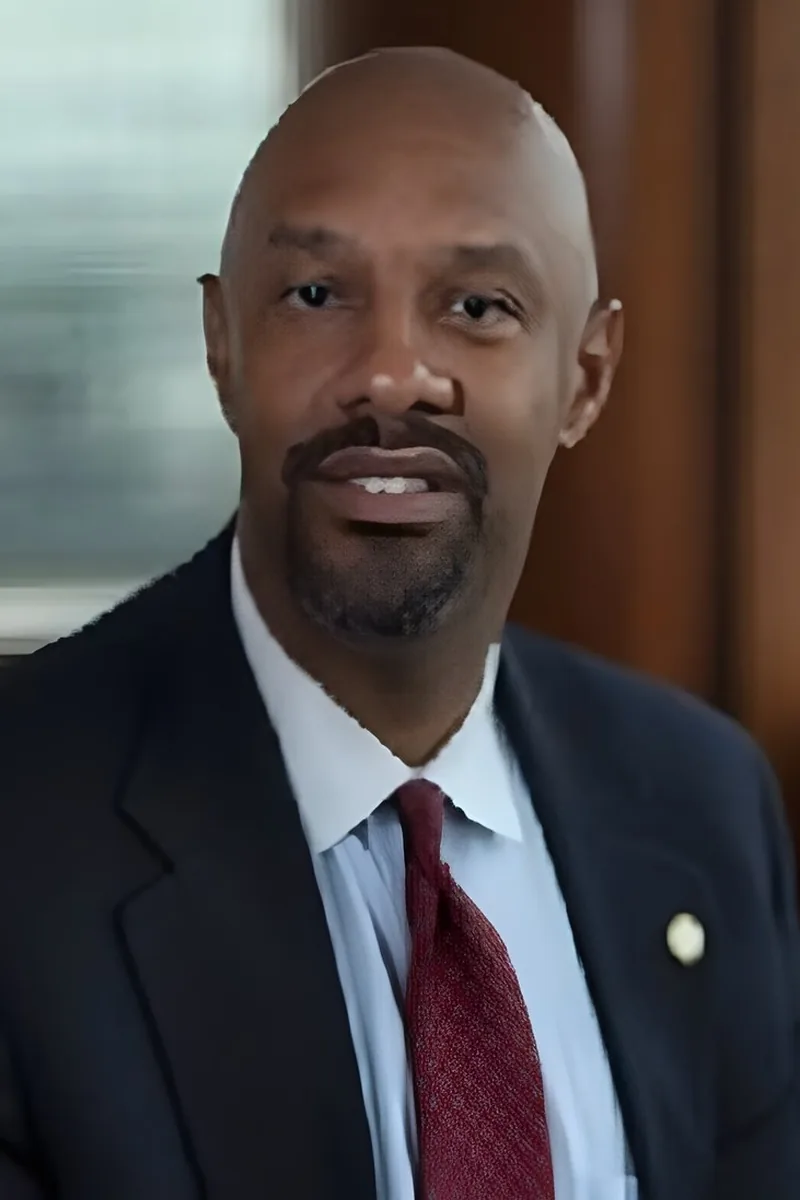
Planning a multi-step project or breaking a semester's worth of material into a weekly study schedule requires the same structured thinking Andrew used throughout his engineering and MBA programs. He teaches students concrete systems for prioritizing tasks, managing time, and organizing materials so that deadlines stop feeling like emergencies. Rated 4.8 by students and families.

I hold a Bachelor's degree in Cognitive Neuroscience from Brown University and am currently completing a PhD in Psychology. My tutoring style is structured, supportive, and warm. I focus on breaking big goals into manageable steps, building realistic study routines, and helping students develop systems they can actually maintain. I emphasize executive function skills such as planning, time management, task initiation, and follow-through, while integrating mindfulness-based strategies to support focus, reduce anxiety, and improve confidence. Whether working with a younger student or an adult learner, my goal is to help students feel capable, organized, and increasingly independent in their learning.
Claire teaches concrete systems — color-coded planners, task-chunking methods, priority matrices — rather than vague advice about "staying organized." Her background across a wide range of academic subjects means she can tailor these executive functioning strategies to whatever coursework a student is actually struggling to manage, from essay deadlines to exam prep schedules.
Hello! I am an Arizona State University graduate with a Bachelors of Science in Biological Science. My academic background is grounded in both technical problem-solving and a deep curiosity about how systems, whether digital or human, function. Outside the classroom, I've had the opportunity to work with students across a range of ages and abilities, from mentoring engineering and premed undergraduates at ASU to tutoring high schoolers in SAT/ACT prep, as well as K-12 students through Teach for America. I am comfortable with a range of subjects and am willing to work to meet your needs. Below are some of courses I have successfully tutored for in the past. K12 Subjects Elementary School (K5) Math (Basic Arithmetic, Word Problems) Reading & Phonics Writing & Grammar Science Social Studies Study & Organization Skills Middle School (68) Pre-Algebra Algebra I General Science (Life, Earth, Physical) English Language Arts (Reading, Writing) U.S. History & World History Intro to Coding / Computer Science High School (912) Algebra I & II Geometry Trigonometry Pre-Calculus Calculus AB/BC Biology (General, Honors) Chemistry (General, Honors) Physics (Conceptual, Algebra-Based) English Literature & Composition Essay Writing & Editing U.S. History & World History Psychology Economics & Government Health / Human Development Ethics / Philosophy Study Skills / Test Prep Standardized Test Prep SAT: Math, Reading, Writing & Language, Essay ACT: Math, Science, English, Reading, Essay PSAT MCAT (Content review & strategy) TOEFL / ESL (Certified ESL experience) AP Subjects AP Biology AP Chemistry AP Physics 1 AP Environmental Science AP Calculus AB AP Statistics AP English Language and Composition AP English Literature and Composition AP Psychology AP U.S. History AP World History AP U.S. Government & Politics AP Human Geography AP Macroeconomics / Microeconomics AP Computer Science Principles AP Seminar / Research College-Level Subjects STEM & Premed General Biology I & II Cell Biology Genetics Human Anatomy & Physiology General Chemistry I & II Organic Chemistry I & II Biochemistry Physics I & II (Algebra-Based) Calculus I & II Statistics (Introductory / Biostats) Humanities & Social Sciences Intro to Psychology Intro to Sociology Scientific Writing & Critical Thinking Medical Ethics Bioethics Philosophy of Science / Biology Research Writing & Academic Essays Business & Economics Intro to Macroeconomics Intro to Microeconomics Principles of Finance Financial Literacy / Budgeting Basics
Allison's Master's in Education from George Washington University centered on instructional design — figuring out why information doesn't stick and restructuring the process so it does, which is essentially what executive functioning coaching requires. She applies that design thinking to help a student reverse-engineer a stalled essay or a missed deadline, identifying whether the breakdown was in task initiation, time estimation, or material organization, then building a repeatable system around it. Her broad teaching range across writing, math, and test prep means those systems get tested against real coursework, not hypothetical scenarios.
A PhD in philosophy trains you to hold complex arguments in your head, sequence multi-part proofs, and manage long-term research without external scaffolding — Christine now unpacks those same cognitive skills for students who struggle with planning, task initiation, and self-monitoring. Her breadth across math, writing, and business subjects means she can embed executive functioning strategies directly into whatever assignment a student is actually stuck on, whether it's a geometry problem set or a college essay draft.
Planning a multi-step assignment, managing time across subjects, keeping materials organized — these are skills most schools expect but rarely teach explicitly. Charles's counseling psychology training gives him concrete strategies for building these executive functioning habits, from using visual task breakdowns to teaching students how to self-monitor their own focus and prioritize effectively.
As a dedicated tutor with over 5 years of experience, I hold a Bachelor's degree in Psychology and Sociology from Tulane University, which informs my approach to understanding student needs. I specialize in subjects such as Algebra, Psychology, and American History, and I am passionate about fostering a supportive learning environment where students can thrive. My teaching philosophy centers on building strong relationships with my students, using tailored strategies that cater to their unique learning styles. I find great joy in helping students develop their executive functioning skills and confidence, enabling them to achieve academic success. Outside of tutoring, I enjoy reading and exploring new educational resources, which keeps my methods fresh and engaging.
My goal is to ensure every student I tutor understands math and builds the confidence to bring about fundamental changes about how they solve problems, even if they haven't seen it before.
I've helped several hundred students in a wide variety of subjects, from executive functioning to computer science to standardized testing. I also help students with general support in math and English. Most of my students are around 9-17, but I work well with students who are older and a little younger as well. I also work very well with students who have specific obstacles or requirements, such as neurodiversity support or schedules that change a lot. Most of my background is in computer science, from my college major to my experience hands-on over the past 10 years. Regardless of the subject, I believe every student's needs are unique and every student is able to achieve great things with the right preparation and support. My number one goal is to provide that whenever I can, both to the student and to their parents. I communicate with parents outside of sessions a lot to establish their expectations, better understand students, and recommend ways they can directly support their children in their journey as well.
All students can learn, however, not all students learn the same way. The key to learning and the most important part of any teachers job is helping students understand how they learn best. That is what I do well.
Jennifer's M.Ed. in Curriculum and Instruction trained her to design structured learning sequences — a skill she now applies to teaching students how to plan multi-step projects, estimate time for assignments, and organize materials across classes. Her experience spanning elementary through college-level work means she calibrates these systems to each student's actual academic demands, building routines around real homework and deadlines rather than abstract exercises. Rated 5.0 by clients.
Testimonials
Because the right Executive Functioning tutor makes all the difference.
Average Session Rating – Based on 3.4M Learner Ratings
Nearby Executive Functioning Tutors
Other McAllen Tutors
Frequently Asked Questions
Executive functioning refers to the mental processes that help us plan, organize, manage time, focus attention, and regulate emotions—skills essential for academic success and daily life. Students with strong executive functioning can break down assignments into steps, meet deadlines, and stay organized, while weaknesses in these areas often lead to procrastination, lost work, and difficulty following multi-step directions. With McAllen's average class size of about 18 students per teacher, personalized instruction in executive functioning can target your child's specific gaps and build the foundational skills they need to thrive.
Students often struggle with time management (underestimating how long tasks take), organization (losing assignments or materials), working memory (holding multiple instructions in mind), and task initiation (getting started on difficult or boring work). Many also have trouble with emotional regulation—getting frustrated when they make mistakes or overwhelmed by large projects. These challenges aren't about intelligence; they're about the brain's ability to manage and coordinate tasks, and they respond well to targeted strategies and practice with personalized guidance.
In a classroom setting, teachers must address the needs of 15-20+ students with varying executive functioning levels, making it difficult to provide individualized strategy practice. Personalized 1-on-1 instruction allows a tutor to assess your child's specific challenges, teach targeted strategies (like breaking projects into smaller steps or using visual organizers), and practice these skills with immediate feedback in real time. This focused approach helps students internalize strategies faster and apply them across subjects and settings—from homework to test-taking to managing their backpacks.
Elementary students (K-5) should develop basic organization, follow two-step directions, and begin managing simple assignments. Middle school students (6-8) need stronger time management, the ability to track multiple assignments, and strategies for breaking larger projects into parts. High school students (9-12) should independently plan long-term projects, manage their schedules, and regulate emotions during academic stress. If your child is falling behind these expectations, personalized instruction can help close the gap and prevent these foundational gaps from affecting their GPA and college readiness.
Students typically see improvements in assignment completion rates, homework submission on time, organization of materials and digital files, ability to start tasks without procrastination, and reduced anxiety around deadlines. Many also experience better grades as a result of stronger study habits and test preparation strategies. Progress is measurable—you'll notice your child using checklists independently, breaking projects into steps without prompting, and managing their time more effectively within 4-6 weeks of consistent personalized instruction.
The first session focuses on assessment and building rapport. A tutor will ask about your child's specific challenges—where they struggle most, what strategies they've tried, and what their goals are. They'll observe how your child approaches a task, ask about their daily routines, and identify patterns. From there, the tutor creates a personalized plan targeting your child's biggest pain points, whether that's morning routines, homework organization, project planning, or test preparation. This foundation ensures that every subsequent session builds on what actually works for your child.
Look for tutors with experience working with students who have executive functioning challenges, familiarity with evidence-based strategies (like time-blocking, visual organizers, and task checklists), and ideally background in education, psychology, or coaching. The best tutors can explain why strategies work, adapt them to your child's learning style, and teach your child to use them independently rather than becoming dependent on the tutor. Varsity Tutors connects you with experienced tutors who specialize in executive functioning and can provide references and background information.
Start by reaching out to Varsity Tutors and describing your child's specific challenges—whether it's organization, time management, task initiation, or something else. You'll get matched with a tutor who has experience addressing those exact issues and can work with your child's schedule. Most students begin with 1-2 sessions per week, and you'll see progress quickly as strategies are introduced and practiced. The first step is a conversation about what your child needs most, so don't hesitate to share details about where they're struggling.
Let’s find your perfect tutor
Answer a few quick questions. We’ll recommend the right plan and match you with a top 5% tutor.