Award-Winning Middle School Math Tutors
serving McAllen, TX
Middle School Math
Tutors in McAllen
Private 1-on-1 tutoring, weekly live classes for academic support, test prep & enrichment, practice tests and diagnostics, and more to elevate grades and test scores.
Based on 3.4M Learner Ratings
UniversitiesSchools & Universities
DeliveredHours Delivered
ProficiencyGrowth in Proficiency
Who needs tutoring?
No obligation. Takes ~1 minute.
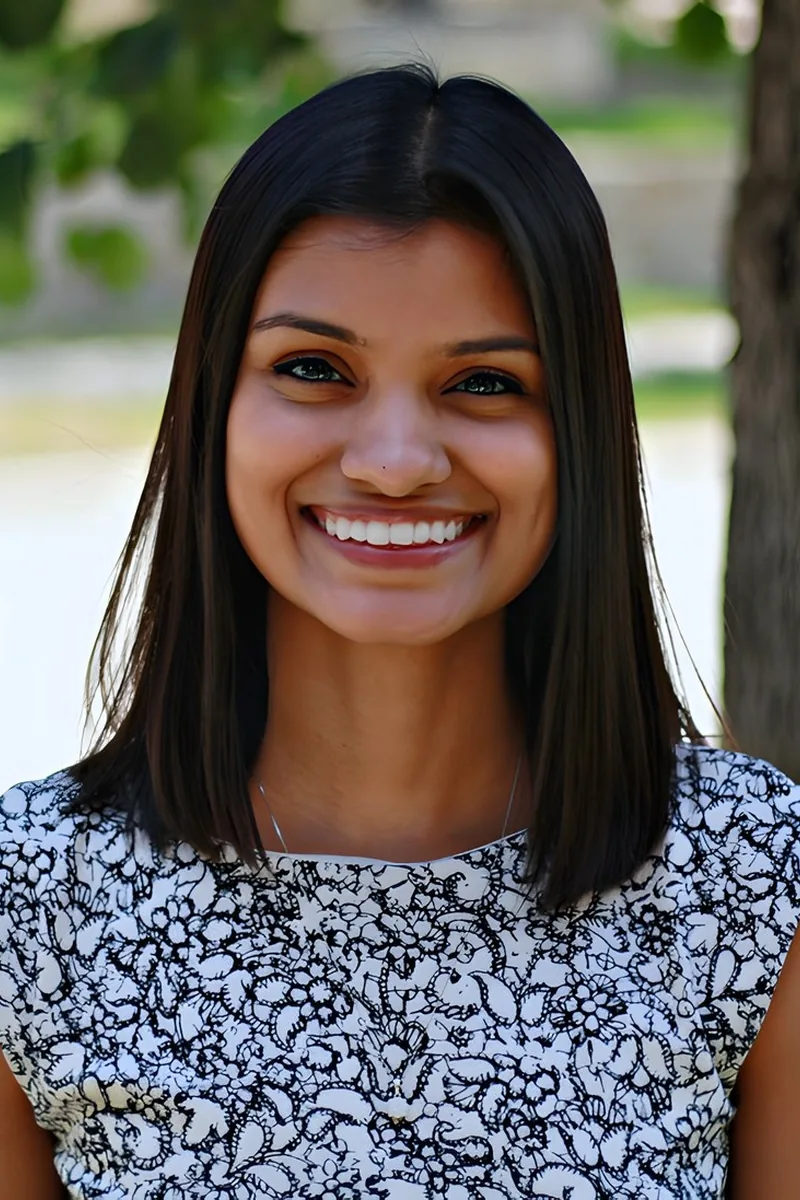
The middle school math years — ratios, proportions, integer operations, intro to linear equations — set the trajectory for everything that comes after. Sugi approaches these topics by building the reasoning behind each procedure, so a student doesn't just cross-multiply but understands why it works. Rated 5.0 by her students, she keeps sessions structured without making them feel like a lecture.

The jump from elementary math to middle school math introduces fractions, decimals, ratios, and negative numbers all at once, and it's easy for gaps to snowball. Maggie has spent years working with middle schoolers on exactly this transition, pinpointing where a concept broke down and rebuilding fluency from that point forward. Her 5.0 rating speaks to how well that approach lands with students and families.
Economics majors spend their days building models out of exactly the kind of math middle schoolers are learning — graphing relationships, manipulating equations, interpreting data — so Mackenzie can show students where skills like proportional reasoning and solving for unknowns actually lead. Her 35 ACT score speaks to rock-solid fundamentals, and she's particularly effective at helping kids organize their scratch work so careless mistakes stop eating into their grades. Rated 4.8 by students.
As experienced and passionated educator with a Bachelor's degree in Computer Science from Rice University, I am passionate about empowering students to achieve their academic goals. With over 3 years of tutoring experience in subjects such as AP Computer Science A, Machine Learning, and SAT Math, I adapt to different learning styles and create a supportive learning environment. My teaching philosophy centers on personalized instruction, where I connect with each student to understand their unique learning styles and challenges. I take pride in guiding students through the complexities of computer science and college application essays, equipping them with the skills they need for future success. Outside of tutoring, I enjoy exploring new technologies and engaging in coding projects to improve my teaching approach.
Cognitive science at Rice taught Adam how people actually learn — how working memory handles new information, where misconceptions form, and what makes a concept stick versus vanish after the test. He applies that understanding directly when teaching topics like integer operations and early equation-solving, adjusting his explanations based on how a student is thinking, not just whether they got the right answer. His 34 ACT and math tutoring background mean the content itself is second nature, so his attention stays on the learner.
Fractions, ratios, and proportional reasoning are the skills that quietly determine whether a student thrives or struggles in every math class that comes after middle school. William spent time tutoring younger students at his high school and at-risk youth programs, so he's practiced at making these foundational topics feel approachable rather than intimidating. He keeps sessions relaxed and builds confidence alongside competence.
The jump from elementary math to middle school math piles on new territory fast: ratios, negative numbers, coordinate graphing, basic geometry. Paul's economics background means he's comfortable translating abstract math into real-world examples — percentages become budgets, rates become speed problems, and the math starts to make sense.
Biochemistry at Rice means Sajel solves equations and manipulates variables every day in coursework — so the pre-algebraic skills middle schoolers are developing around expressions, fractions, and ratios are things she uses constantly and can explain with genuine fluency. Her 35 ACT score speaks to sharp quantitative instincts, and having tutored a younger sibling through similar material gives her a practical sense of where kids this age tend to get stuck and how to unstick them.
Fractions, ratios, and proportional reasoning trip up a lot of middle schoolers not because the math is hard, but because it's often taught as disconnected procedures. Aadith ties these concepts together so students see how multiplying fractions and setting up ratios are really the same kind of thinking. His physics and math background at Rice means he's full of real-world examples that make abstract ideas click.
English and computer science at Carleton College might seem like an unlikely combination for middle school math, but the CS side means Meagen thinks in logic, sequences, and variables every day — exactly the reasoning that kicks in when students move from arithmetic into pre-algebra. She scored a 34 on the ACT, so the quantitative skills are genuine, and her 5.0 rating suggests she communicates them clearly. Her strength is in making the abstract notation of expressions and equations feel like a language students can actually read.
Getting a sixth or seventh grader comfortable with variables, negative numbers, and basic geometric reasoning sets the trajectory for everything that follows in math. Ainsley has tutored middle school students through state standardized test prep and knows how to make abstract ideas concrete — using visual models and real-world examples that stick. She also has specific experience supporting students with dyslexia and ADHD.
Fractions, ratios, and integer operations tend to trip students up not because they're hard, but because earlier gaps in number sense compound quietly over time. Patricia is especially good at pinpointing exactly where a concept went sideways and rebuilding understanding from that point forward. Her patience and structured approach make even topics like proportional reasoning and basic geometry click.
Fractions, ratios, and proportional reasoning trip up a lot of middle schoolers because the concepts feel abstract until someone connects them to something concrete. Tegan's experience tutoring middle school students means she knows exactly where those stumbling blocks are and how to reframe problems so they click. Rated 4.9 by students.
Premed neuroscience coursework at Rice means Aditi is neck-deep in the quantitative reasoning that middle school math is quietly building toward — she can show a student working through ratios or basic equations exactly how that same logic reappears in science and beyond. Her 1570 SAT score speaks to her own comfort with math under pressure, and her psychology training gives her a practical sense of how to reframe a confusing problem so it actually lands. Rated 4.8 by students.
Having earned a 1410 SAT — a score that demands solid quantitative reasoning — Iselee knows the foundational skills middle schoolers need to lock in, particularly around fractions, decimals, and the transition into working with variables. Her Spanish degree sharpened her ability to teach systematic rule-following (verb conjugations and mathematical operations aren't as different as they sound), and she brings that same structured, step-by-step clarity to breaking down pre-algebraic concepts. Rated 4.8 by students.
At the middle school level, math confidence matters almost as much as math skill — a student who shuts down at fractions or proportional reasoning carries that anxiety into every future course. Sakibul has tutored since high school and approaches these foundational topics with patience, using visual models and real-world scenarios to make ratios, percentages, and integer operations feel intuitive rather than intimidating.
The jump from arithmetic to algebraic thinking is one of the biggest shifts in a student's math life, and it happens in middle school. Zhengdong takes concepts like proportional reasoning, integer operations, and introductory equations and ties them to tangible problems — distances, speeds, simple machines — drawing on his physics background to make abstract ideas feel concrete.
The jump from fifth-grade arithmetic to ratios, proportions, and negative numbers can feel enormous. Raj tackles middle school math by connecting each new idea to something concrete — using proportions to scale a recipe, or plotting coordinates to map out a room — so the abstraction doesn't outpace understanding. He's a firm believer that repetition with varied problems is what actually locks concepts in.
Biomedical engineering at Brown means Layla solves problems daily that start with the same building blocks middle schoolers are learning — ratios, geometry, and setting up equations from scratch. She's particularly strong at teaching students how to translate a real scenario into a mathematical setup, a skill that pays off long before engineering school. Rated 5.0 by students.
A decade of teaching students with learning differences — including a full year at a private academy for students with disabilities — gave Emily a deep toolkit for breaking down concepts like integer operations and proportional reasoning in multiple ways until one clicks. Her Classics training at Texas A&M built the kind of precise, logical thinking that transfers surprisingly well to mathematical problem-solving, and she brings that same rigor to middle school math. Rated 5.0 by students.
I am a graduate of the University of Texas at Dallas who is passionate about helping students. I am currently on my gap year before starting medical school this summer and am taking this time to tutor and teach! I have several years of tutoring experience working with K-12 students and adult learners.
At the middle school level, math confidence matters as much as math skill — one bad experience with fractions or proportional reasoning can snowball for years. Emily tackles concepts like ratios, integer operations, and early equation-solving with patience and concrete examples drawn from science and everyday life. She's the kind of tutor who makes a sixth grader feel smart rather than stuck.
I am most passionate about biology and chemistry. I am a firm proponent of education, believing it to be absolutely necessary for an improved quality of life, and I try to impart this appreciation to all of my students.
Kendall scored a 1580 on the SAT, which means the foundational skills middle schoolers are building right now — integer operations, proportional reasoning, solving multi-step equations — are second nature to her. She's particularly good at showing students how to organize their work on paper so they can catch their own mistakes, a habit that pays dividends once math gets faster in high school. Rated 4.9 by families.
Fractions, ratios, and proportions are where mathematical thinking either clicks or stalls — and Nivedina knows from experience that the right explanation at the right moment makes all the difference. Her chemistry and engineering background means she can show middle schoolers exactly how concepts like percentages and basic equations show up in real science, making abstract numbers feel concrete.
The middle school math years are when students go from straightforward computation to reasoning about proportions, negative numbers, and basic equations. Molly tackles these transitions by walking through the "why" behind each rule, which keeps students from relying on shortcuts that fall apart in harder problems later.
Ratios, proportional reasoning, and introductory equation-solving are the skills that quietly determine whether a student thrives or stalls in high school math. Kenan digs into the logic behind each operation — why cross-multiplying works, what a negative number actually represents — so middle schoolers carry understanding forward instead of just memorized steps.
Fractions, ratios, and proportional reasoning trip up a lot of middle schoolers not because the math is hard, but because the concepts are often taught too abstractly. Jennifer connects these ideas to real scenarios — unit pricing, recipe scaling, sports statistics — so the logic clicks before the formulas come out. Her 4.9 rating from students speaks to how well that approach lands.
From fractions and ratios to introductory geometry and linear equations, middle school math covers a huge range of ideas in a short time. Si tackles each topic by writing out every step so students can see exactly where their reasoning goes right or wrong. His 5.0 rating speaks to an approach that adapts to how each learner processes new material.
The jump from arithmetic to algebraic thinking is one of the biggest conceptual leaps in all of math, and it happens in middle school. John makes that transition concrete — turning abstract ideas like variables and proportional reasoning into problems students can visualize and talk through, building the kind of number sense that pays off for years.
Between fractions, decimals, ratios, and early geometry, middle school math piles up concepts fast — and gaps at this stage tend to snowball. Mingee breaks each topic into concrete steps and connects them to real-world problems so the reasoning sticks, not just the procedure. Her 5.0 rating speaks to how well that approach lands with students.
From ratios and proportions to introductory geometry and basic equation solving, middle school math covers a huge range of topics in a short time. Natalie tutors Rice University athletes in math and has developed a knack for identifying which specific skill gaps are causing confusion downstream. She keeps sessions structured but conversational, so students actually voice where they're getting stuck.
Fractions, ratios, and proportional reasoning trip up more middle schoolers than almost any other topic — and they're the exact skills that make or break high school math readiness. Malcolm breaks these concepts into concrete, visual steps that click, drawing on the same logical precision his biochemistry training at Rice demands daily.
Ratios, proportions, and integer operations trip up a lot of middle schoolers because the math suddenly feels more abstract than anything they've seen before. Amanda teaches these concepts through real-world scenarios drawn from her elementary classroom experience, building the bridge between arithmetic and the algebraic thinking that comes next. Rated 5.0 by students.
The jump from elementary to middle school math catches a lot of students off guard, especially when ratios, proportional reasoning, and basic equation-solving all land at once. Kim breaks these topics into manageable steps and figures out which specific gaps — often hiding in fractions or decimal operations — are causing the bigger struggles. Her 5.0 rating speaks to how well that diagnostic approach works.
Fractions, ratios, and pre-algebra concepts click faster when a tutor can explain the same idea three different ways — and Madeline's extensive experience tutoring math at the elementary and middle school level means she's built a toolkit of exactly those explanations. She tailors her approach to each student's learning style, whether that means visual models for proportional reasoning or step-by-step walkthroughs of integer operations.
From fractions and ratios to early linear equations, middle school math covers a huge range of skills that all need to click before high school. Misael approaches each topic by identifying exactly where a student's reasoning breaks down — whether it's proportional thinking or translating word problems into expressions. His 1420 SAT score speaks to the kind of mathematical fluency he brings to every session.
Theresa breaks middle school math into manageable pieces, whether that's proportional reasoning, coordinate graphing, or early work with equations. As a biomedical engineering major at Rice, she connects abstract concepts to tangible examples — like how ratios show up in real medical device design — so the material actually sticks. Rated 5.0 by students.
The jump from arithmetic to algebraic thinking is one of the biggest conceptual shifts in all of math, and it happens in middle school. Casey tackles topics like proportional reasoning, integer operations, and basic equation-solving by grounding each one in concrete examples before moving to abstract notation. She's the kind of tutor who will create extra challenge problems when a student is ready to push further.
Having studied child development at Vanderbilt alongside her art history work, Sarah understands how kids at this age actually process new abstractions — which matters when a sixth grader hits fractions of fractions or negative numbers for the first time. She leans on that developmental knowledge to pace lessons around how a student is thinking, not just what they're getting wrong. Her SAT score of 1430 confirms the math fundamentals are solid, and she brings a calm, structured approach to building each concept onto the last.
Testimonials
Because the right Middle School Math tutor makes all the difference.
Average Session Rating – Based on 3.4M Learner Ratings
Nearby Middle School Math Tutors
Other McAllen Tutors
Related Math Tutors in McAllen
Frequently Asked Questions
Middle school math often marks a shift from learning procedures to understanding why those procedures work—and that transition can feel overwhelming. Students frequently struggle with word problems, multi-step equations, graphing, and geometric reasoning. Many also develop math anxiety when they can't immediately see how concepts connect to what they've already learned. Personalized tutoring helps students slow down, ask questions without pressure, and build the conceptual foundation that makes advanced math feel manageable.
Your first session is about building a foundation for success. Tutors will assess your current understanding, identify specific challenges (whether it's showing work clearly, tackling word problems, or grasping abstract concepts), and learn about your learning style. From there, they'll create a personalized plan that targets your needs while aligning with your school's curriculum. Most students leave the first session feeling heard and with a clearer sense of how to approach their next assignment.
Showing work helps teachers—and tutors—understand your thinking, not just your answer. It reveals where confusion happens and makes it easier to catch small mistakes before they become bigger problems. When you learn to show your work clearly, you're also training yourself to think step-by-step, which is essential for tackling complex, multi-step problems. Tutors can work with you on organizing your work in ways that make sense to you while meeting your teacher's expectations.
Varsity Tutors connects you with tutors who are familiar with the major textbooks and approaches used in McAllen schools, including those in the MISD and PSJA districts. Tutors can align their instruction with your specific curriculum, whether your school uses traditional textbooks, online platforms, or a blended approach. If you share your textbook, assignments, or curriculum materials, tutors can tailor their explanations and practice problems to match exactly what you're learning in class.
Math anxiety is real, and it often stems from feeling rushed or misunderstood—neither of which happens in personalized tutoring. Working 1-on-1 with a tutor gives you space to ask questions, make mistakes safely, and learn at your own pace without judgment. As you start seeing patterns and understanding *why* math works the way it does, confidence naturally builds. Many students discover that math anxiety decreases significantly once they have someone who can explain concepts in a way that clicks for them.
Graphing and equations require connecting visual, algebraic, and conceptual understanding—and that's exactly where personalized tutoring shines. Tutors can help you see how an equation translates to a graph, why slope and intercepts matter, and how to approach problems strategically. They'll work with you on common stumbling blocks like identifying ordered pairs, understanding negative slopes, and solving systems of equations. With practice and clear explanations, graphing shifts from mysterious to manageable.
Pricing varies based on the tutor's experience, your location in McAllen, and how frequently you meet. Varsity Tutors offers flexible options to fit different budgets and schedules—whether you need weekly sessions to build foundational skills or intensive support before a big test. Contact us for a personalized quote and to discuss what frequency and duration would work best for your goals.
Many students notice a shift in their understanding within the first few weeks—they start seeing connections between concepts and feel more confident tackling assignments. Grade improvements typically follow as confidence builds and study strategies improve, though the timeline depends on how frequently you meet and how much you practice between sessions. Consistent, focused tutoring with regular practice tends to show the strongest results, often within 4-6 weeks of starting.
Let’s find your perfect tutor
Answer a few quick questions. We’ll recommend the right plan and match you with a top 5% tutor.